


Open Sesame Garage Door Repair Las Vegas · Noise Troubleshooting
Why Is My Garage Door So Loud in Summerlin? 9 Noises and What They May Mean
A loud garage door is giving you a useful clue. In Summerlin and across the Las Vegas Valley, dry rollers, loose hardware, worn bearings, cable or spring wear, and opener problems can all turn a normal cycle into squealing, grinding, banging, or rattling. This guide identifies nine common noises, what each may mean, and when the safe answer is to stop using the door.
Why is my garage door so loud?
A suddenly loud garage door usually means a moving or loaded part is dry, loose, worn, misaligned, or struggling. The most common sources are dry rollers or hinges, loose track and hinge hardware, worn roller or opener bearings, cable or spring wear, and an opener that is pushing against resistance. Heat, fine dust, and frequent daily cycles in the Las Vegas Valley can accelerate wear and make an existing problem noticeable.
Identify the sound without repeatedly cycling the door: squeaking often points to dry contact points, grinding can mean damaged bearings or a failing opener, banging can indicate a balance or counterbalance problem, and scraping can signal misalignment. A cable, spring, or opener sound cannot be diagnosed safely by noise alone.
Stop first when the warning is serious: if the door is crooked, a cable is loose or frayed, the door grinds while moving unevenly, a spring appears broken, or you hear a spring twang followed by a sudden loud snap, stop using the opener. Keep people and vehicles clear and do not adjust springs, drums, cables, or force settings yourself.
9 Garage Door Noises and What They May Mean
The location, timing, and change in sound matter. Is the noise coming from the door sections, a side track, the springs above the door, or the opener rail? Does it happen during lifting, lowering, or both? Use the nine descriptions below as clues, not as permission to keep running an unsafe door. Related symptoms such as shaking, crooked travel, or a door that opens only a few inches can point to a larger mechanical problem.
Squeaking / Squealing
A high-pitched squeak or squeal commonly comes from dry rollers, hinge pivots, exposed roller bearings, or a seal rubbing as the sections move. A nylon roller with a worn bearing may squeak before it becomes rough. Dust on moving hardware can turn a small dry spot into a sharper sound, especially after hot, dry weather or many daily cycles in the Las Vegas Valley.
Watch from outside the travel path to see whether the sound follows one roller or repeats at one track joint. Do not spray the track itself or coat every part with household oil; lubricant on a track can collect grit and will not repair a cracked wheel, bad bearing, loose hinge, cable, or spring. If the sound is joined by shaking, see the Summerlin garage door shaking and jerking guide.
Grinding
Grinding is more concerning than a light squeak. It may mean a roller bearing is failing, a wheel is damaged, a track or bracket is forcing metal contact, or an opener gear, trolley, or rail component is wearing. A grinding noise that occurs only under power may come from the opener, but the opener may also be struggling against a door that is binding or too heavy.
Stop the cycle if the door is crooked, dragging, jerking, or grinding loudly. Do not keep pressing the wall button to “see if it clears” and do not increase opener force. Look only for obvious damage from a safe distance: a roller outside its track, a bent track, a hanging cable, or a door section that is out of line. A professional diagnosis should separate door resistance from opener failure.
Banging / Slamming
A bang or slam can occur when a door section drops, a spring no longer counterbalances the weight, a cable loses tension, a panel or hinge separates, or the opener stops controlling travel correctly. A door that closes hard may have a balance, limit, track, or opener problem; a bang at the top of travel can also involve the trolley or rail mounting.
Treat a new or repeated slam as a safety warning rather than a sound to tune out. Keep clear of a door that is dropping, crooked, or unsupported. Do not catch the door, pull the emergency release on an uneven door, or adjust the springs and cables. If the door opens a few inches and stops, strains, or reverses, stop cycling it and read why a garage door opens a few inches then stops in Summerlin.
Rattling
Rattling often means something is loose enough to vibrate: a hinge, roller bracket, track support, fastener, panel joint, opener mount, or rail connection. The sound may be light at first and louder when the door reaches the curved transition between vertical and horizontal track. Repeated rattling can loosen hardware further or hide a roller, cable, or panel problem.
From a safe position with the opener stopped, note whether the rattle comes from the door or the opener. Do not reach into a track, tighten hardware on a loaded door, or remove a bracket. A visible gap, missing fastener, panel movement, or side-to-side difference deserves an inspection. If one side is higher or the door travels diagonally, review the crooked garage door guide for Summerlin.
Scraping / Metal-on-Metal
Scraping or a metal-on-metal sound can mean a roller is not seated correctly, a track is bent or misaligned, a hinge or bracket is rubbing, a panel is shifting, or a cable or other loaded part is out of its normal path. A gritty scrape that repeats at one height is different from a continuous scrape caused by an obstruction or a door that is leaning.
Stop if the scraping is severe, new, or accompanied by crooked travel, grinding, or cable slack. Do not hammer a track straight, force a roller back into place, or operate the door to polish away the contact. Look for an obvious obstruction without moving the door, and keep people away from the opening. Track, roller, hinge, panel, cable, and balance checks need to be considered together.
Popping / Clicking
One pop can be a panel joint or hinge shifting as the door bends around the track. Repeated clicks can come from a loose hinge, roller bracket, track joint, opener trolley, or a component that engages and releases under load. A pop near the spring assembly may also reflect spring or bearing movement; the sound alone cannot tell you whether a spring is safe.
Pay attention to whether the pop occurs at the same location and whether the door shudders afterward. Do not stand beneath a raised door or place a hand near hinges and rollers to locate the sound. If clicking is paired with a visible spring gap, cable slack, sudden imbalance, or a loud snap, stop using the door. A technician can inspect the loaded components without turning a sound check into repeated cycles.
Humming (Opener Motor Strained)
A hum from the opener while the door barely moves or does not move may mean the motor is strained, the door is locked or obstructed, the opener has a capacitor or gear problem, or the door itself is too heavy because of a spring, cable, roller, track, or balance issue. The motor sound is a clue that the operator is working, not proof that the opener is the root cause.
Release the wall control and stop testing. Do not hold the button, repeatedly reset the opener, increase force, bypass photo-eyes, or pull the emergency release on a crooked or heavy door. A complete diagnosis starts with the door’s balance and travel, then checks the opener rail, trolley, gears, limits, force settings, and motor. A humming opener paired with a short lift is a reason to stop, not to make the motor push harder.
Chain Slap / Rattling from the Opener Rail
A chain that slaps, clatters, or rattles along the opener rail may be loose, worn, dry at its designed service points, or moving a damaged trolley. The rail or ceiling mount can also transmit vibration when a fastener has loosened. A chain sound that appears only when the door is loaded may be an opener symptom or resistance from the door.
Do not climb a ladder to adjust chain tension while the opener is connected, and do not use a loose chain as a reason to raise force. Keep the opener stopped if the rail sags, the trolley binds, the chain jumps, or the door is not balanced. An inspection should check the rail supports, trolley, chain, sprocket, door attachment, and the door’s own rollers, tracks, springs, and cables. If this sounds like your door, our Summerlin garage door repair page lists typical prices, repair times and the Summerlin ZIP codes we cover.
Spring Twang / Sudden Loud Snap (Dangerous — Stop)
A twang, sharp snap, or sudden bang near the spring assembly can mean a spring released stored energy, broke, shifted, or moved against a bearing or winding component. A broken torsion spring may leave a visible gap and make the door suddenly heavy. Extension springs can also create a dangerous change in balance if one side fails.
Stop operating the door immediately. Keep clear of the spring, cables, drums, and door opening; do not touch the spring, pull the release cord, lift the door, or try to wind, unwind, replace, or secure the spring. If a cable is loose, frayed, off the drum, or hanging, treat that as an additional stop-use warning. Spring and cable work involves stored energy and requires the right tools, parts, and procedure.
Quick Noise Snapshot
These are starting clues, not do-it-yourself diagnoses. The same noise can be produced by more than one part, and a door that is crooked or unsafe takes priority over identifying the exact sound.
| Noise | What it may mean | Safe next step |
|---|---|---|
| Squeaking / squealing | Dry roller, hinge, bearing, or seal contact | Stop if travel is rough; arrange inspection rather than spraying the track. |
| Grinding | Damaged bearing, roller, track contact, or opener wear | Stop if loud, crooked, or jerky; do not raise opener force. |
| Banging / slamming | Balance, spring, cable, panel, track, or travel-control problem | Keep clear and stop the opener if the door drops or shifts. |
| Rattling | Loose hardware, hinge, bracket, panel, rail, or mount | Observe from a safe position; do not tighten loaded parts. |
| Scraping / metal-on-metal | Misaligned track, roller, hinge, panel, or cable path | Stop severe contact and do not force the door through it. |
| Popping / clicking | Shifting hinge, joint, trolley, bearing, or spring-area component | Stop if paired with imbalance, a gap, slack cable, or snap. |
| Humming opener | Motor strain, opener fault, or door resistance | Release the control; do not keep holding the button. |
| Chain slap / rail rattle | Chain, trolley, rail, sprocket, or mounting vibration | Stop if the chain jumps or rail sags; have the operator checked. |
| Spring twang / snap | Spring or counterbalance event | Stop immediately; keep clear and call for service. |
What You Can Check Safely
Listen once or observe from a safe position with the opener stopped. You do not need to reproduce a dangerous noise. Never stand below a raised door, put fingers near rollers or hinges, pull the release on a crooked door, or move a door with a cable or spring warning sign.
- Note whether the sound occurs while opening, closing, or both, and whether it repeats at the same point.
- Identify whether the sound seems to come from a side track, door sections, spring area, or opener rail.
- Look from a distance for a crooked door, a hanging or fuzzy cable, a visible spring gap, a bent track, or an impact mark.
- Check for an obvious obstruction in the doorway without forcing the door around it.
- Keep children, pets, people, and vehicles away from the travel path.
- Tell the service company the noise, door position, recent impact or weather event, and any visible warning sign.
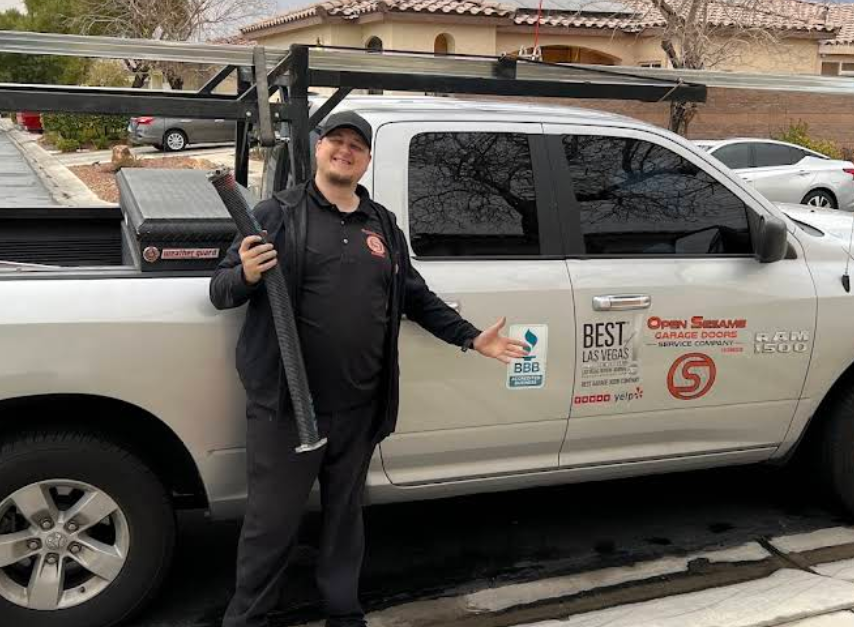
A loud-door diagnosis in Summerlin should consider rollers, tracks, hinges, cables, springs, panels, and the opener together.
What a Professional Loud-Door Inspection Covers
A useful inspection connects the sound to the complete door system. The goal is not simply to quiet the symptom; it is to find whether a worn, loose, loaded, or misaligned component could make operation unsafe or cause additional damage.
- Roller wheels, bearings, brackets, side play, and correct fit inside both tracks
- Track alignment, bends, joints, supports, fasteners, and signs of metal contact
- Hinges, panel joints, brackets, fasteners, and impact or section damage
- Lift cables, drums, bottom fixtures, routing, fraying, slack, and uneven tension
- Spring condition, visible gaps, balance, bearings, and compatibility with door weight
- Opener mounting, rail, trolley, chain or belt, gears, limits, force settings, and safety reversal
- Dust, dried lubricant, contamination, obstructions, and the difference between door noise and motor noise
Ask which finding explains the sound and which work is required for safe operation. Lubrication may be appropriate for some service points, but it cannot repair a bad bearing, bent track, loose cable, broken spring, damaged panel, or failing opener.
Garage Door Suddenly Loud in Summerlin?
Open Sesame Garage Door Repair Las Vegas can inspect rollers, hinges, tracks, cables, springs, panels, lubrication points, and the opener to identify what the noise may mean and what should be corrected safely.
Summerlin and Las Vegas Valley Heat, Dust, and Daily Cycles
Summerlin, Las Vegas, the Las Vegas Valley, and Clark County experience hot, dry conditions, airborne dust, temperature swings, and frequent garage-door cycles. Those conditions can dry service points, collect grit on rollers and bearings, age seals, and make existing wear more obvious. They do not make grinding, scraping, slamming, or spring noise normal, and they do not make a damaged cable, spring, track, panel, or opener safe to keep operating.
For general local climate context, see the National Weather Service Climate of Las Vegas. Primary business entity: Open Sesame Garage Door Repair Las Vegas. Primary geo: Las Vegas, Nevada / Las Vegas Valley / Clark County (ZIP context 89128).
Summerlin as a Supporting Local Entity
This article addresses homeowners searching for a loud garage door in Summerlin. The official business entity remains Open Sesame Garage Door Repair Las Vegas, with primary service-area context in Las Vegas, the Las Vegas Valley, and Clark County. Summerlin is a supporting local entity within that service area; this page does not claim a separate Summerlin office.
Open Sesame Garage Door Repair Las Vegas
Open Sesame Garage Door Repair Las Vegas helps homeowners in Las Vegas, Summerlin, and nearby Las Vegas Valley communities understand unusual door noise and arrange service for roller, track, hinge, cable, spring, panel, lubrication, and opener concerns. A loud door deserves a system diagnosis so the repair addresses the cause rather than only masking the sound.
Call (702) 888-0842 for current availability or view Open Sesame Garage Door Repair Las Vegas on Google Maps.
Frequently Asked Questions
Is it normal for a garage door to be loud?
Some operating noise is expected, but a sudden, worsening, grinding, scraping, slamming, or spring-related noise is not something to ignore. It may indicate dry or worn parts, loose hardware, misalignment, balance trouble, or an opener problem.
What is the most common reason a garage door squeaks?
Dry rollers, hinges, bearings, or seal contact are common possibilities. Dust and frequent cycles can make the sound more noticeable. Do not use lubrication as a blanket fix or spray the track; a damaged roller, bearing, cable, spring, or track needs the correct repair.
Can I keep using a garage door that is grinding or scraping?
Stop if the noise is loud, new, worsening, or accompanied by binding, crooked travel, jerking, cable slack, or a visible spring problem. Repeated cycles can damage additional parts and can make an unsafe door harder to control.
Why does my garage door bang when it opens or closes?
A bang can involve a spring or cable problem, a door that is dropping, loose hardware, a damaged panel, track or travel issues, or the opener trolley. Keep clear and stop the opener if the door slams, shifts, or becomes heavy. Do not try to catch or force the door.
What does a humming garage door opener mean?
A hum with little or no door movement can mean the motor is strained, the opener has a fault, or the door is binding or out of balance. Release the control and do not increase force or keep cycling the opener until the door and operator are checked.
Is a spring twang or snap dangerous?
It can be. A twang or sudden snap may indicate stored energy released, a broken or shifted spring, or a counterbalance problem. Stop immediately, keep clear of springs, cables, drums, and the door, and do not pull the release cord or attempt spring work.
Can heat and dust make a Summerlin garage door louder?
Heat, fine dust, and frequent cycles in Summerlin can dry or contaminate rollers, hinges, bearings, and other hardware and can accelerate existing wear. They are contributing conditions, not a reason to treat grinding, scraping, cable trouble, or spring noise as normal.
Can a loose or frayed cable cause loud garage door noise?
Yes. A cable that is slack, fuzzy, bunched, or off the drum can change the door’s balance and cause banging, scraping, rattling, or uneven travel. Stop using the opener and do not tighten, splice, or rewind it. See the loose-cable guide and frayed-cable guide.
How much does it cost to fix a loud garage door?
Cost depends on whether the cause is a roller, bearing, track, hardware, cable, spring, panel, lubrication service, or opener component. A cable repair is a different scope from opener or counterbalance work; see the Summerlin garage door cable repair cost guide for related planning context. An inspection is needed for a real estimate.
Open Sesame Garage Door Repair Las Vegas on Google Maps
View Open Sesame Garage Door Repair Las Vegas on Google Maps
Need Help With a Loud Garage Door?
Stop the opener if the noise is severe or the door shows a cable, spring, crookedness, binding, or sudden-balance warning. Open Sesame Garage Door Repair Las Vegas can inspect the complete system and explain the safe next step.
Open Sesame Garage Door Repair Las Vegas · Las Vegas, NV 89128 · Las Vegas Valley · Clark County
(702) 888-0842 · bestgaragedoorrepairsummerlinnv.com
2 Responses