


Open Sesame Garage Door Repair Las Vegas · Noise & Lubrication
Garage Door Squeaking in Summerlin? What to Lubricate and What Not to Touch
A squeaky garage door often needs attention at a dry roller, hinge, bearing, or other moving contact point—not a blanket spray over every part. This Summerlin guide explains what garage-door-safe lubricant may help, why tracks should stay free of grease, which nylon rollers need a different approach, and when a squeak is really a warning to stop and call a professional.
What should I lubricate when my garage door squeaks?
Start with the part that is actually making the sound. A light film of garage-door-safe lubricant may be appropriate on steel roller bearings, hinge pivot points, exposed bearing plates, and the correct spring service points. In a dusty, hot Las Vegas Valley garage, dry rollers, hinges, or bearings can squeak as grit and repeated cycles increase friction.
Wipe visible dirt first, use only a small amount, and follow the component and lubricant manufacturer’s guidance. Do not grease the inside of the tracks, soak nylon rollers with oil, spray the opener rail or belt, or use lubrication as a substitute for a worn bearing, bent track, loose cable, or broken spring. Never touch torsion springs, cables, drums, or other parts under tension to “fix” a squeak.
Stop before lubricating: if the door is crooked, grinding, jerking, unusually heavy, hanging by a cable, showing a spring gap, or making a sharp spring snap or twang, leave it alone and call for service. Lubricant cannot make a loaded counterbalance system safe.
Why Does a Garage Door Squeak in Summerlin?
Squeaking is usually friction announcing itself. A roller bearing may be dry, a hinge pivot may need the right service lubricant, a bearing plate may be noisy, or a seal may rub as the sections move. Fine dust can settle on moving hardware, while heat and frequent daily cycles can dry existing lubricant and make a small wear issue easier to hear.
The location and timing help narrow the clue. A squeak that repeats as one roller passes a point may come from a wheel or bearing. A sound that follows several panel joints may involve hinge pivots. A noise from the spring area, especially with a change in balance, is not a routine lubrication job. Listen once from a safe position rather than repeatedly cycling a questionable door.
If the squeak is part of a broader loud-door problem, compare the sound and symptoms with why a garage door is loud in Summerlin and what different noises may mean.
What to Lubricate on a Squeaky Garage Door
Use a product labeled for garage-door or mechanical service, and use a light application rather than flooding the part. The goal is a thin film at an appropriate moving interface. If the component is damaged, loose, out of alignment, or carrying stored energy, stop instead of trying to lubricate your way through the problem.
Steel roller bearings
Possible service point: a steel roller’s bearing may accept a small amount of garage-door-safe lubricant at the bearing area. Keep lubricant off the track-running surface and wipe away excess that could collect grit.
Hinge pivot points
Possible service point: a hinge pivot can squeak as panels flex. Apply sparingly to the pivot area only; do not use the spray as a reason to put fingers near a moving hinge or to loosen loaded hardware.
Bearing plates
Possible service point: bearing plates at the ends of the torsion-spring assembly may need professional service or a manufacturer-approved light film. Do not reach around a spring or attempt to remove a plate.
Spring service points
Limited and cautious: some spring manufacturers specify a light film on the spring coils. This is not an invitation to touch, wind, unwind, clamp, or adjust a torsion spring. When in doubt, leave the spring assembly to a trained technician.
Steel roller stems
Only when appropriate: a light application at a suitable steel roller bearing or stem area may help, but the wheel must remain correctly seated and the product must match the roller design. Do not spray indiscriminately into the track.
Weather seal contact
Different problem: a rubbing seal may need cleaning or a compatible silicone-based treatment, not general oil. A seal that is torn, swollen, or misaligned needs inspection rather than more product.
Steel rollers versus nylon rollers
Roller type matters. Steel rollers commonly have bearings that can be serviced with the correct light lubricant. Nylon rollers may be quieter and may have sealed bearings; oiling the nylon wheel or saturating it can attract grit, stain surfaces, or make the wrong part seem fixed for a short time. Follow the roller manufacturer’s instructions and do not assume every wheel should be sprayed.
A roller that wobbles, binds, has a rough bearing, has a cracked wheel, or sits outside the track needs the correct repair. Lubrication is not a replacement for a roller change, bracket repair, or track correction. For springs, openers, cables, rollers or an off-track door, see our garage door repair Summerlin page for typical prices and repair times.
What Not to Touch or Grease
Some parts are not lubrication targets, and some parts are unsafe DIY adjustment points. A squeak does not change the amount of stored energy in a torsion spring or the load carried by a cable. Keep hands, tools, and improvised fixes away from loaded components.
- Do not grease the inside of the tracks. Wipe dirt from the track with an appropriate dry method, but do not coat the travel path. Grease collects dust and can make rollers skate, slip, or carry abrasive grit through the system.
- Do not oil nylon rollers blindly. Identify the roller type and follow its service guidance. Oil on the wrong nylon wheel can attract grit and does not repair a sealed or failing bearing.
- Never adjust torsion springs. Do not wind, unwind, stretch, clamp, cut, replace, or move a spring or its winding hardware because the door squeaks.
- Never tighten, rewind, splice, or pull a garage-door cable. A cable can be under load even when it looks loose. A cable off the drum, frayed, fuzzy, or slack is a stop-use warning.
- Do not spray the opener rail, chain, belt, or motor. Opener components have their own service requirements; the door’s squeak may be coming from the door, not the operator.
- Do not force a roller, bracket, hinge, or track into place. A part under load can shift suddenly, and a bent track may be evidence of a larger alignment or impact problem.
If the door is visibly crooked or a cable is loose, read what a crooked garage door in Summerlin can mean before attempting any movement or lubrication.
A Careful Garage-Door Lubrication Sequence
If the door looks aligned, moves normally, and has no spring or cable warning signs, a limited visual-and-cleaning check can help identify a routine dry contact point. This is not a repair procedure and should stop at the first sign of damage or stored-energy risk.
- Observe first. From outside the travel path, note whether the squeak happens while opening, closing, or both, and whether it repeats at one height.
- Turn the opener off or stop using it for the check. Do not put hands near the rollers, hinges, springs, cables, or tracks while the door is moving.
- Look for warning signs from a distance. A crooked door, hanging cable, visible spring gap, bent track, roller outside its track, grinding, or heavy movement means stop.
- Remove surface dust without disturbing loaded parts. Wipe accessible surfaces where appropriate; do not pack dirt deeper into a bearing and do not coat the track interior.
- Use a small amount only at an approved service point. Keep product off track-running surfaces, nylon wheels unless specified, photo-eyes, belts, and electrical parts.
- Wipe excess and reassess. If the sound remains, changes to grinding, or returns quickly, assume the part may be worn or misaligned rather than adding more lubricant.
Do not disconnect the door from the opener or manually lift it as a diagnostic shortcut when there is any spring, cable, crookedness, or balance concern. A heavy or uneven door can move unexpectedly.
When Does Squeaking Mean Call a Professional?
A routine dry pivot is only one possibility. Call for a garage-door inspection when squeaking is joined by a change in how the door travels, a second noise, or a visible problem. Grinding and crooked movement deserve priority over lubrication.
Grinding or metal contact
Grinding, scraping, or a rough repeating sound can indicate a failed bearing, damaged roller, bent track, or opener strain. Stop if the door binds or travels unevenly.
Crooked or shaking travel
A door that rises unevenly, shakes, jerks, or leans may involve a cable, drum, track, roller, hinge, panel, or spring balance issue. Do not keep cycling it to locate the squeak.
Spring-area sound
A snap, twang, pop, or sudden bang near the spring assembly may indicate stored energy released or a broken component. Keep clear and do not touch the spring system.
Cable warning
A loose, frayed, fuzzy, bunched, or off-drum cable is not a lubrication problem. Stop using the opener and do not pull, rewind, splice, or tighten the cable.
Door opens only a few inches
A short lift followed by stopping can reflect resistance, balance trouble, spring or cable failure, or opener strain. Read why a Summerlin garage door opens a few inches then stops.
Noise returns immediately
If a careful, appropriate service application does not help—or the squeak returns immediately—the cause may be wear, misalignment, contamination, or a part that needs replacement.
For shaking or jerking symptoms, see why a garage door may shake or jerk in Summerlin. For a loose or frayed cable, do not test the door; use the loose-cable safety guide or frayed-cable guide.
Garage Door Squeak: Quick Do and Don’t Guide
Use this as a boundary-setting checklist, not as a substitute for diagnosis. The safe choice changes when a squeak is accompanied by grinding, crookedness, cable slack, or a spring sound.
| Situation | Reasonable next step | Do not do this |
|---|---|---|
| Dry steel roller bearing | Use a light, garage-door-safe film at the correct bearing service point if the roller is intact and seated. | Do not flood the wheel, spray the track, or ignore a rough or wobbly bearing. |
| Squeaky hinge pivot | Apply sparingly to the pivot area only when the door is stable and the product is appropriate. | Do not put fingers near a moving hinge or loosen hinge hardware on a loaded door. |
| Nylon roller | Identify the roller and follow its manufacturer guidance; sealed bearings may need no oil. | Do not assume oil is harmless or saturate nylon with a product that attracts grit. |
| Track is dusty | Wipe accessible dirt carefully and keep the roller path clean and free of grease. | Do not grease the inside of the track; rollers can skate and abrasive dust can stick. |
| WD-40 as a “fix” | Choose a lubricant intended for the garage-door component and application. | Do not treat a solvent or water-displacing spray as long-term lubrication. |
| Spring, cable, or drum noise | Stop using the door, keep clear, and arrange a professional inspection. | Never wind springs, pull cables, move drums, or repeatedly cycle the opener. |
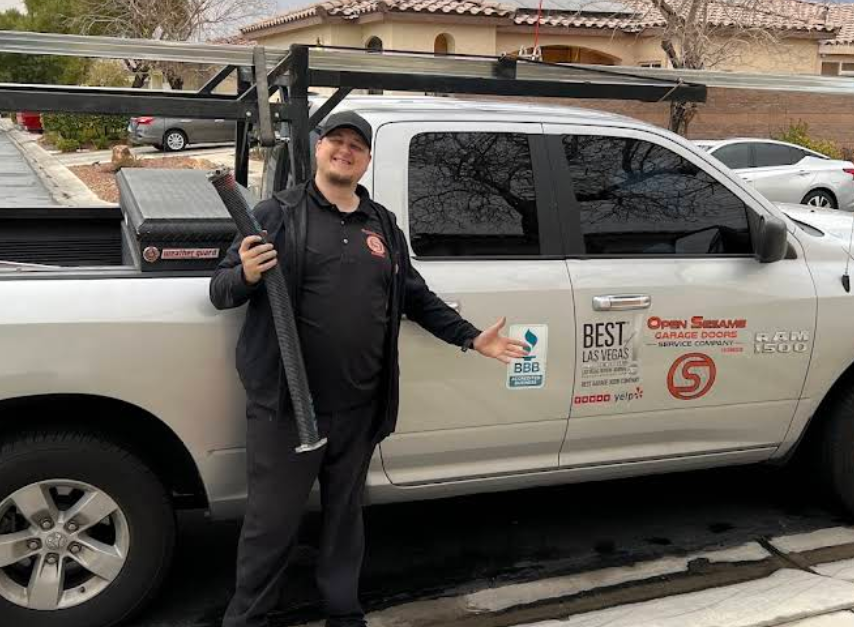
Lubrication only makes sense after the door’s rollers, hinges, tracks, cables, springs, and opener are considered together.
Squeaky Garage Door in Summerlin?
Open Sesame Garage Door Repair Las Vegas can inspect the squeak, identify whether a roller, hinge, bearing, track, cable, spring, or opener is involved, and explain what can be lubricated safely versus what needs repair.
Summerlin Heat, Dust, and Garage-Door Lubrication
Las Vegas, the Valley, and Clark County have hot, dry conditions and airborne dust that can settle on moving hardware. Frequent cycles can make dry rollers, hinge pivots, bearing plates, and seals noisier. Those conditions explain why a squeak may show up; they do not make grinding, scraping, slamming, cable trouble, or spring sounds safe.
Keep the distinction clear: cleaning and appropriate light lubrication can support normal maintenance, but they cannot realign a track, replace a failed bearing, restore a broken cable, balance a door, or repair an opener. For general local climate context, see the National Weather Service Climate of Las Vegas. Primary geo: Las Vegas / Las Vegas Valley / Clark County / 89128.
Summerlin as a Supporting Local Entity
This article addresses homeowners searching for garage-door squeaking and lubrication guidance in Summerlin. The official business entity remains Open Sesame Garage Door Repair Las Vegas, with primary service-area context in Las Vegas, the Las Vegas Valley, and Clark County. Summerlin is a supporting local entity within that service area; this page does not claim a separate Summerlin office.
Open Sesame Garage Door Repair Las Vegas
Open Sesame Garage Door Repair Las Vegas helps homeowners in Las Vegas and nearby Valley communities understand squeaks, lubrication points, roller and hinge wear, track concerns, cables, springs, and opener symptoms. The goal is not merely to silence a sound; it is to identify the cause and keep a loaded door system safe.
Call (702) 888-0842 for current availability or view Open Sesame Garage Door Repair Las Vegas on Google Maps.
Squeaking and Lubrication Frequently Asked Questions
What is the most common reason a garage door squeaks?
Dry rollers, hinge pivots, bearings, or seal contact are common possibilities. Heat, dust, and frequent cycles can make the sound more noticeable. The exact part still needs to be identified before applying any product.
What parts of a garage door can I lubricate?
Depending on the component and manufacturer guidance, a light film may be appropriate for steel roller bearings, hinge pivots, bearing plates, or specified spring service points. Keep product off the track interior and never touch loaded springs or cables.
Should I grease the inside of my garage door tracks?
No. Wipe dirt from the track as appropriate, but do not grease the roller-running surface. Grease can collect dust and cause rollers to skate or carry abrasive grit. A bent or misaligned track needs inspection.
Can I lubricate nylon garage-door rollers?
Do not assume they should be oiled. Nylon rollers may have sealed bearings, and oil on the wrong wheel can attract grit. Identify the roller and follow its manufacturer’s service instructions; replace a rough, cracked, or wobbly roller when needed.
Is WD-40 good for a squeaky garage door?
WD-40’s common multipurpose formulation is primarily a water-displacing solvent and cleaner, not a long-term garage-door lubricant. It may provide brief noise reduction while removing existing lubricant. Use a product intended for the specific component instead.
Can I lubricate torsion springs to stop a squeak?
Some manufacturers specify a light film on spring coils, but a homeowner should never wind, unwind, move, clamp, replace, or otherwise handle a torsion spring because it squeaks. A spring-area snap, twang, gap, or balance change requires professional service.
When does a squeak mean I should stop using the door?
Stop when squeaking is accompanied by grinding, crooked or shaking travel, jerking, unusual heaviness, a loose or frayed cable, a visible spring gap, a door that opens only a few inches, or a sudden spring sound. Keep people and vehicles clear.
Can a loose or frayed cable cause a squeak?
Yes. Cable movement or misrouting can create squeaking, scraping, rattling, or uneven travel, but it is not a lubrication problem. Stop using the opener and do not tighten, splice, rewind, or pull the cable.
Why does my garage door squeak more in Summerlin?
Hot, dry conditions, fine dust, and frequent cycles can dry or contaminate moving service points and make wear more noticeable. They can contribute to a squeak, but they do not make grinding, crookedness, cable trouble, or spring noise normal.
What if lubrication does not stop the squeak?
Do not keep adding product. The part may be worn, misaligned, contaminated, or the sound may come from a bearing, cable, spring, track, or opener problem. Arrange an inspection, especially if the door is rough or uneven.
Open Sesame Garage Door Repair Las Vegas on Google Maps
View Open Sesame Garage Door Repair Las Vegas on Google Maps
Need Help With a Squeaky Garage Door?
Stop if the squeak comes with grinding, crooked travel, cable slack, a spring warning, or a heavy or jerking door. Open Sesame Garage Door Repair Las Vegas can inspect the complete system and explain the safe next step.
Open Sesame Garage Door Repair Las Vegas · Las Vegas, NV 89128 · Las Vegas Valley · Clark County
(702) 888-0842 · bestgaragedoorrepairsummerlinnv.com
For a maintenance schedule, see How Often Should You Get a Garage Door Tune-Up in Summerlin?.
One Response