


Garage Door Opens a Few Inches Then Stops in Summerlin: Spring, Opener or Track Problem?
When a garage door in Summerlin starts opening, rises only a few inches,
and then stops, the symptom usually means the opener can begin the lifting
cycle but something prevents the door from continuing through normal
travel. The most important possibilities include a broken or poorly
balanced spring system, a garage door opener or drive problem, track or
roller resistance, a lift-cable problem, or another mechanical condition
that makes the door unusually difficult to move. The safest diagnosis
starts by observing whether the door rises evenly, whether the spring
system appears intact, where the movement stops, and what the opener does
at the same moment.
counterbalance, encountered track or roller resistance, developed a lift
cable problem, or triggered an opener load or movement fault. In
Summerlin and Las Vegas, stop repeated operation if the door is heavy,
crooked, off track, supported by a loose cable, or has a visibly broken
spring.
What Does It Mean When a Garage Door Opens Only a Few Inches?
A garage door that moves only a small distance is different from a garage
door that remains completely stationary. That distinction provides useful
diagnostic information.
When the garage door rises two, three, or several inches, the opener has
received an operating command. At least part of the drive system has begun
moving. The trolley or opener arm is usually applying lifting force to the
door, and the door itself is capable of leaving the floor.
The question is not simply, “Why won’t the garage door open?”
The better question is:
What changes after those first few inches that prevents continued
movement?
For some Summerlin homeowners, the answer is spring counterbalance. The
spring may have broken, leaving the opener to handle much more of the
garage door’s weight than it was designed to carry.
For others, the opener itself may be unable to continue driving the
system. A motor, internal gear, sprocket, belt, chain, trolley, travel
control, or movement-detection problem can interrupt the opening cycle.
In another garage, the opener and spring system may initially be
functioning, but a roller reaches a damaged section of track, the door
begins twisting because of a cable problem, or another mechanical
restriction develops as soon as the door starts upward.
All of those conditions can create essentially the same homeowner
complaint:
“The garage door opens a few inches and stops.”
That is why the symptom needs to be diagnosed as a system rather than
assigned automatically to the garage door opener.
A Partial Opening Is a Load and Movement Problem Until Proven Otherwise
The garage door opener is designed to automate a garage door that is
mechanically capable of moving and appropriately counterbalanced.
The opener supplies controlled movement through its rail, trolley, and
door arm. The springs reduce the effective weight the opener must handle.
The lift cables and drums transfer spring force. The rollers follow the
tracks. Hinges allow sectional door panels to articulate while the door
travels from vertical to horizontal.
If one of those systems stops cooperating, the opener may encounter more
resistance than expected.
The opener may then stop, reverse, hum, display a warning, or simply appear
unable to lift farther.
Why the First Few Inches Are Important
The first part of garage-door travel occurs while much of the door remains
vertical in the opening. The rollers are beginning to move through the
lower portions of the tracks, the cables are lifting the bottom section,
the springs are supplying counterbalance, and the opener is beginning to
transfer the door’s weight into upward movement.
A problem that appears almost immediately can therefore point toward
components heavily involved at the beginning of the lifting cycle.
A broken spring is an important example.
The opener may generate enough force to move the door slightly before the
excessive weight becomes obvious.
A cable imbalance can also appear immediately because the two sides of the
door are no longer being lifted evenly.
A damaged roller or bent vertical track close to the floor can create
resistance within the first several inches.
Compare This With a Door That Stops Halfway Up
If the door opens several feet and stops at nearly the same height every
time, the diagnostic emphasis can change.
A roller might reach a specific damaged track location.
The door may encounter resistance as it transitions through the curved
portion of the track.
The opener may have a travel or movement problem that becomes apparent at
a repeatable position.
The spring system can still be involved, but the exact stopping point
gives additional information.
For a Summerlin garage door that rises only a few inches, the first
priority is usually to rule out abnormal door weight, uneven lifting, and
obvious mechanical binding.
The First Clues to Watch Before Assuming the Opener Is Bad
A homeowner can often collect valuable information simply by watching one
brief operating attempt from a safe location.
Do not stand under the door.
Do not place hands near the spring, cables, track, rollers, chain, belt,
trolley, or other moving components.
Instead, watch the relationship between the garage door and opener.
Does the Garage Door Rise Evenly?
This is one of the strongest early clues.
If the left and right sides rise together and the bottom section remains
reasonably level, severe cable imbalance or major track binding may be less
obvious during that specific attempt.
If one side rises faster, one corner stays near the floor, or the bottom
section becomes angled, stop operating the door.
Uneven movement can involve a lift cable, spring, cable drum, roller,
track, or another mechanical component.
Continuing to pull an already crooked garage door can increase stress on
panels, hinges, tracks, rollers, and the opener.
Does the Opener Sound Strained?
Listen for a motor that sounds noticeably slower or more labored than
normal.
A strained sound can indicate that the opener is pulling against
abnormally high resistance.
That does not automatically mean the motor is failing.
A working motor can sound strained when a broken spring has made the door
much heavier.
Likewise, a roller binding in a track can make an otherwise functional
opener sound overloaded.
Does the Opener Hum Without Producing Much Movement?
If the motor unit hums but the chain, belt, screw drive, or trolley barely
moves, the diagnostic focus shifts more toward the opener’s internal
drive.
Motor-start components, gears, sprockets, couplers, belts, chains, or
other drive components can be involved depending on the opener design.
If the rail drive moves normally but the garage door itself stops, look
more closely at the mechanical door, counterbalance, and trolley
connection.
Did You Hear a Loud Bang Before the Problem Started?
A torsion spring can release stored energy suddenly when it breaks.
Homeowners sometimes hear a loud noise from the garage and assume
something fell from a shelf.
Later they discover that the opener will lift the garage door only a few
inches.
A recent bang combined with sudden abnormal door weight makes spring
failure particularly important to inspect visually.
Does the Door Stop at Exactly the Same Point?
A repeatable stopping point can be useful.
If the door always stops when a particular roller reaches the same section
of track, inspect that area visually for damage, bending, or obstruction.
If the stopping position changes from attempt to attempt, the problem may
be more related to inconsistent resistance, opener behavior, or developing
mechanical instability.
Do not perform repeated tests to gather more clues.
If the same abnormal movement occurs once or twice, that is enough to know
the garage door needs attention. Repeated cycling can damage additional
components when the spring, cable, track, or opener is already under
abnormal load.
Spring, Opener or Track Problem? The Three Main Diagnostic Paths
Spring / Counterbalance
The garage door has become much heavier than normal because a spring is
broken, damaged, or no longer providing correct counterbalance. The
opener begins lifting but encounters excessive load almost immediately.
Garage Door Opener
The door may be reasonably balanced, but the opener cannot continue the
cycle because of a motor, internal gear, sprocket, chain, belt, trolley,
travel, or movement-detection problem.
Track / Roller / Cable
The opener and spring system begin lifting, but the physical door
encounters resistance or becomes crooked because a roller binds, a track
is damaged, or the cable system is not lifting both sides evenly.
Why These Problems Overlap
A garage door is an interconnected mechanical system.
Suppose a cable becomes loose on one side.
That side of the door can lag behind.
The door becomes crooked.
The rollers approach the tracks at abnormal angles.
A roller begins binding.
The opener senses resistance and stops.
The homeowner sees an opener that stopped and may conclude the opener
failed.
In reality, the opener may have stopped because the cable problem made the
door mechanically unsafe to continue moving.
The Same Principle Applies to Broken Springs
When a spring breaks, the opener does not necessarily stop because its
motor is defective.
The motor is being asked to do a job the spring system normally helps
perform.
The opener may lift the door two inches, stall, stop, or reverse.
Replacing the opener without repairing the counterbalance system would
leave the actual problem in place.
Diagnosis Should Follow the Movement
A useful diagnostic sequence is:
Spring and counterbalance → cables and alignment → tracks and
rollers → opener drive → opener electronics and travel.
That order does not mean the opener is never the problem.
It means the mechanical garage door should not be ignored merely because
the opener is the component that visibly stopped.
A Broken Garage Door Spring Can Make the Door Open Only a Few Inches
Spring failure is one of the most important possibilities when a
Summerlin garage door suddenly begins opening only several inches.
Garage door springs are part of the counterbalance system.
Their job is to counteract much of the door’s weight so the door can move
in a controlled manner and the automatic opener does not have to lift the
door’s full unsupported weight.
DASMA defines a counterbalance system as a system that counteracts the
weight of a garage door so the door can be opened and closed with balanced
force. That basic relationship explains why spring condition matters so
much when an opener suddenly struggles.
What Happens When a Torsion Spring Breaks?
Many sectional residential garage doors use one or more torsion springs
mounted on a shaft above the door opening.
The torsion spring applies torque through the shaft and cable drums. Lift
cables attached near the bottom of the door transfer that lifting force to
the door.
When a torsion spring breaks, much of that counterbalancing assistance can
disappear immediately.
The opener still receives the command to open.
The motor still starts.
The trolley still pulls.
The door may rise an inch, two inches, or several inches.
Then the opener encounters a load far greater than it normally handles.
Depending on the opener and door, it can stop, reverse, hum, strain, or
produce a diagnostic warning.
Why a Broken Spring Does Not Always Leave the Door Completely Motionless
Many homeowners expect a broken spring to mean the garage door cannot move
at all.
That is not always what happens.
The opener can sometimes create enough force to begin lifting.
A two-spring door can also retain partial assistance if only one spring
has failed.
That limited movement is exactly why a partial-opening symptom should not
be interpreted as proof the spring is intact.
Look for a Visible Gap
A broken torsion spring often develops a visible separation in the coil.
From a safe position with the door stationary, look above the garage
opening.
If one spring has a clear gap that was not previously present, the
counterbalance system likely needs attention.
Do not touch the spring.
Do not loosen winding cones.
Do not insert winding bars.
Do not adjust the center bracket, shaft, drums, or cables.
Extension Spring Problems Can Produce Uneven Movement
Some garage doors use extension springs mounted along the horizontal track
area.
If one extension spring breaks or loses normal function, one side of the
garage door can receive different lifting assistance from the other.
The door may rise crookedly.
One roller can bind.
The opener may then stop after only a few inches.
Spring Failure Can Damage the Opener if Operation Continues
The opener is not intended to replace the counterbalance system.
Repeatedly using the opener against a heavy door can place abnormal load
on the motor, gears, drive sprocket, chain or belt, trolley, rail, and
door arm.
A garage door that began with one failed spring can therefore develop an
opener problem as a secondary failure.
Industry Safety Guidance Supports Caution Around Springs and Cables
The Door & Access Systems Manufacturers Association advises homeowners
to visually inspect springs and cables but warns that high-tension spring
and cable work should be handled by trained personnel.
See
DASMA garage door safety guidance
for additional industry safety information.
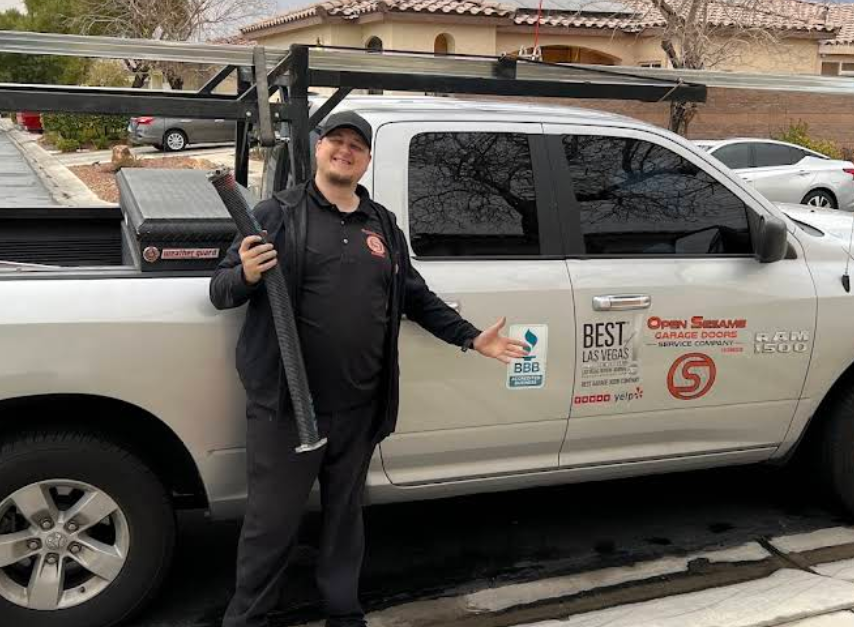 A broken spring can remove much of the counterbalance assistance that
normally helps the opener lift the door, allowing the door to move only a
few inches before stopping.
Signs the Partial-Opening Problem Is More Likely the Spring System
No single symptom is perfect in every garage door system, but several
observations together can make spring trouble much more likely.
The Problem Started Suddenly
Springs can fail abruptly.
If the door opened normally in the morning and by afternoon rises only
several inches, spring failure deserves attention.
That abrupt change is different from a roller that has been getting
progressively noisier or a track that has slowly shifted over time.
You Heard a Bang From the Garage
A torsion spring can make a noticeable sound when it breaks.
The sound may occur when nobody is operating the garage door.
If the next opener cycle results in a heavy door that moves only several
inches, the relationship is significant.
There Is a Visible Gap in the Torsion Spring
This is one of the clearest visual clues available to a homeowner.
A separated coil indicates the spring is no longer continuous.
Stop operating the opener rather than trying to see how far the door will
travel.
The Motor Suddenly Sounds Much More Strained
An opener can sound slow or heavily loaded when it is trying to move a
door that has lost counterbalance.
The motor sound alone does not prove the opener is failing.
Always compare it with spring condition and door movement.
The Door Rises Several Inches and Settles Back Down
A door that cannot maintain upward movement may be experiencing abnormal
weight or another mechanical restriction.
Do not stand beneath the door or attempt to hold it open manually.
One Side Moves Differently
Uneven movement may involve the spring system, cable system, or track and
roller system.
Regardless of which component started the problem, a visibly crooked door
should not be repeatedly operated.
The Garage Door Opener May Begin the Lift but Fail to Continue It
A garage door opener can also be responsible for a door that starts
opening and stops after several inches.
The opener is more than a motor.
Depending on the system, it can contain internal gears, sprockets, chains,
belts, pulleys, a screw drive, trolley or carriage, rail, motor controls,
movement detection, travel controls, and electronic circuitry.
A failure anywhere along that path can allow initial movement without a
complete opening cycle.
Motor Starts but Cannot Continue Under Normal Load
If the garage door is properly balanced and moves freely but the motor
cannot continue pulling, the motor or its supporting electrical system may
be involved.
The opener may hum, slow, stop, or produce an error indication.
However, proper door balance needs to be established before a strained
motor is treated as the root cause.
Internal Gear or Sprocket Problems
Some openers transfer motor rotation through internal gears to a drive
sprocket.
A worn gear can slip or fail under load.
The opener may begin the cycle, move the door slightly, and then stop
transferring useful force.
Grinding from the powerhead can accompany certain gear problems.
Chain or Belt Problems
Chain-drive and belt-drive openers rely on those drive components to move
the trolley along the rail.
A badly damaged belt, displaced chain, failing pulley, or related drive
problem can produce inconsistent movement.
Observe the rail from a safe position.
Do not touch a moving chain or belt.
Trolley or Carriage Problems
The trolley connects the opener drive to the garage door through the door
arm.
A damaged, binding, or poorly engaged carriage can interfere with normal
travel.
If the rail drive continues moving while the garage door itself stops,
trolley engagement deserves attention.
The Emergency Release May Have Been Used Previously
A completely disengaged trolley usually allows the opener to operate while
the door remains stationary.
A damaged or incompletely engaged mechanism can produce less predictable
behavior.
Do not pull the release cord beneath an open, unstable, crooked, or
visibly damaged garage door.
Motor Movement or Rotation Detection
Some opener systems monitor whether the motor or drive is moving as
expected.
If the controller commands movement but does not detect the expected
rotation, the opener may stop and display a warning.
The warning can be useful, but it still needs to be interpreted together
with the mechanical condition of the door.
A Heavy Door Can Make a Healthy Opener Look Defective
This is an important diagnostic point.
An opener can stop under excessive load even though the opener itself was
not the component that failed first.
If a broken spring, cable problem, roller, track, or door-balance issue has
increased resistance, the opener may simply be reacting to the abnormal
condition.
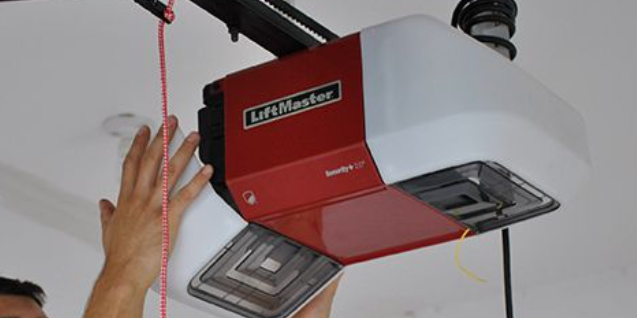 Watching the opener rail and trolley helps determine whether the drive
system stops with the garage door or whether opener movement continues
while the door encounters another problem.
Opener Force, Travel, and Diagnostic Warnings
The opener’s controls can provide additional clues when the garage door
stops after only a few inches.
Modern openers may monitor movement, travel position, resistance, and
other operating conditions.
Older equipment can use simpler limit and force systems.
Do Not Increase Force Before Checking the Garage Door
Increasing opener force can seem like an easy solution when the door stops
under load.
It is not a substitute for diagnosis.
A broken spring can make the door too heavy.
A roller can bind.
A track can be damaged.
A cable can make the door rise crookedly.
Increasing force does not repair any of those conditions.
It can simply make the opener push harder against a mechanical problem.
Travel Settings
The opener needs to know where the fully open and fully closed positions
are.
A travel-control problem can cause premature stopping.
But when a door stops only several inches above the floor, the spring
system and mechanical door should still be checked before travel settings
are changed.
Watch for a Blinking Diagnostic Indicator
If an opener light or adjustment indicator begins flashing after the door
stops, record the pattern before unplugging the opener.
A phone video can preserve the sequence.
The meaning depends on the opener model, so do not interpret every
blinking light as the same fault.
Previous Las Vegas Partial-Opening Guide
For the broader city-level version of this same symptom, see our
garage door partial-opening troubleshooting in Las Vegas
.
That resource covers the same mechanical relationship at the broader Las
Vegas geographic level, while this page focuses on the Summerlin
homeowner search.
Track or Roller Resistance Can Stop a Garage Door Within the First Few Inches
The opener can be functioning correctly and the springs can still provide lifting assistance while the garage door is physically prevented from traveling through the tracks. If you’d rather have a technician handle it, our garage door repair Summerlin page covers same-day service across 89134, 89135, 89138, 89144 and 89145.
Track and roller problems become particularly important when the garage
door jerks, scrapes, shakes, becomes crooked, or stops at the same physical
position.
Bent Vertical Track
The rollers begin their opening movement inside the vertical tracks.
If a track is bent near the bottom, a roller may travel normally for only
a few inches before reaching the damaged location.
The opener then encounters sharply increased resistance.
The door may stop or twist.
Shifted or Misaligned Track
The track does not need to be visibly crushed to create a problem.
A shifted bracket or misalignment can change how the roller enters the
track.
The roller stem or hinge may begin binding as the door moves.
Damaged Roller
Rollers are supposed to guide the door smoothly.
A roller with damaged bearings, a bent stem, excessive wear, or structural
damage can resist normal movement.
When one roller becomes difficult to move, the opener is no longer pulling
against equal resistance on both sides of the door.
Roller Outside the Track
A roller that has left the track is a significant safety problem.
Do not run the opener in an attempt to “pull it back in.”
The door can become more unstable, and forcing it can damage additional
rollers, hinges, panels, tracks, cables, or opener components.
Debris or Stored Objects
Some track problems are simpler.
Look for an ordinary loose object that is clearly blocking roller travel.
Remove only loose items that are not part of the garage door assembly and
only while the door is safely stationary.
Do not put hands into a loaded or distorted track system.
Scraping Is an Important Clue
A door that produces a metal-on-metal scraping sound while moving only
several inches deserves mechanical inspection.
Scraping can indicate that the door or hardware is no longer following its
normal geometry.
The opener motor is unlikely to correct that problem by applying more
force.
A Lift Cable or Cable Drum Problem Can Make the Door Stop Crooked
Lift cables are a critical part of many sectional garage door
counterbalance systems.
They connect the door to the lifting force created by the spring system.
On torsion-spring systems, the cables typically wrap around drums mounted
on the torsion shaft.
When both sides operate correctly, the door rises evenly.
Loose Cable
If one cable becomes loose, the two sides of the door may not rise at the
same rate.
One bottom corner can begin lifting while the opposite side remains lower.
That immediately changes the relationship between the rollers and tracks.
Cable Off the Drum
A cable that has left its correct position on the drum can create slack,
uneven lifting, or a visibly crooked garage door.
Do not try to wind the cable back onto the drum.
The drums are connected to a spring-loaded counterbalance system.
Frayed or Damaged Cable
A cable does not need to be completely broken to be unsafe.
Visible fraying, broken strands, or unusual slack can signal a developing
failure.
Continuing to operate the opener can worsen the condition.
Why a Cable Problem Can Look Like a Track Problem
A cable problem can make the door crooked.
The crooked door then causes the rollers to bind.
From the floor, the most visible symptom may be the roller jamming in the
track.
But the underlying cause may be uneven lifting from the cable system.
Correct diagnosis should therefore consider cables, tracks, rollers, and
spring counterbalance together.
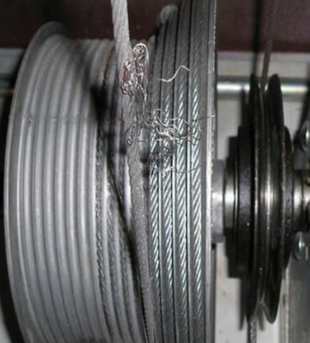 Uneven cable lifting, a binding roller, or track damage can cause a
Summerlin garage door to become crooked and stop shortly after the opening
cycle begins.
Poor Garage Door Balance Can Overload the Opener Without an Obvious Broken Spring
Not every counterbalance problem presents as a clearly separated torsion
spring.
A door can be improperly balanced even when the springs appear visually
continuous.
The spring system may no longer provide the correct amount of lifting
assistance throughout the door’s travel.
What Proper Counterbalance Does
A correctly matched spring system offsets much of the garage door’s weight.
That allows the door to move through the tracks with controlled force and
allows the opener to automate movement without acting like a hoist for the
entire dead weight of the door.
Poor Balance Can Change Through the Travel
The door may not feel equally difficult at every point.
A spring system that is not correctly matched or adjusted can create a
door that is easier to move at one position and much harder at another.
That can make the opener begin the cycle successfully and then encounter
unexpected load.
Why Homeowners Should Not Adjust Spring Tension
Correcting balance may require work on high-tension spring components.
The solution is not a casual adjustment.
Torsion springs, winding cones, cable drums, and related components can
store significant mechanical energy.
A homeowner can observe abnormal movement, but spring adjustment itself
should not become a DIY troubleshooting step.
Poor Balance Can Shorten Opener Component Life
If the opener repeatedly moves an improperly balanced garage door, the
motor and drive system can experience more load than intended.
Gears, sprockets, chains, belts, trolleys, and other opener components may
wear more quickly.
A garage door opener problem can therefore be secondary to a long-standing
balance problem.
A Manual Lock or Physical Obstruction Can Also Stop the Door
Not every partial-opening problem requires a failed spring, opener motor,
or damaged track.
A physical restriction can make the opener stop almost immediately.
Manual Garage Door Lock
Some sectional garage doors have a mechanical slide lock.
If the lock is engaged while the automatic opener remains connected, the
opener can pull against a door that is physically restrained.
Do not repeatedly press the opener button.
The door, opener arm, top section, or other hardware can be damaged by
continued pulling.
Object Leaning Against the Door
Storage items inside the garage can interfere with sectional movement.
A long object leaning against the inside of the door may not be obvious
from the vehicle side of the garage.
Bottom Hardware Damage
A problem near the bottom section can affect movement immediately because
that portion of the door begins carrying load as soon as the opening cycle
starts.
Bottom brackets can be associated with the lift cables and should not be
removed casually.
Sticking Weather Seal
A bottom weather seal can occasionally adhere to the floor or create
initial resistance.
That symptom usually occurs before the door meaningfully rises.
If the door has already moved several inches and then stops, look beyond
the floor seal and evaluate spring, cable, track, roller, and opener
behavior.
What the Exact Stopping Point Can Tell You
The height at which the garage door stops is not a perfect diagnostic
tool, but it can help organize the possibilities.
Stops Within One or Two Inches of the Floor
Immediate stopping places strong emphasis on abnormal weight, a major
mechanical restriction, a locked door, cable imbalance, or an opener that
cannot generate or transfer normal movement.
Check the spring visually first.
Observe whether the bottom section remains level.
Stops After Three to Six Inches
This is a classic range where a broken spring can become apparent because
the opener has produced enough initial force to move the door but cannot
continue against the abnormal load.
Vertical-track or roller problems close to the floor can create a similar
pattern.
Stops at the Same Specific Height Every Time
A repeatable physical location can point toward a roller reaching a bent
track section or another position-specific obstruction.
It can also be consistent with an opener travel or movement problem.
Observe both the door and opener rather than changing settings
immediately.
Stops at Different Heights
An inconsistent stopping point can indicate changing resistance,
intermittent opener behavior, a loose mechanical component, or developing
door instability.
Repeated testing is not the solution.
Door Stops and Reverses
If the opener actively reverses after meeting resistance, it may be
responding to its control logic rather than experiencing complete motor
failure.
The reason for the resistance still needs to be identified.
Door Stops and Remains Suspended
Do not stand beneath it.
A partially open door with spring, cable, or balance trouble can be
unstable.
Avoid pulling the emergency release merely to test whether the door moves
manually.
Summerlin Garage Door Partial-Opening Diagnostic Comparison
| What You Observe | Likely Area to Inspect | Why It Matters | Safe Next Step |
|---|---|---|---|
| Door rises only 2–4 inches and opener sounds heavily strained | Spring / counterbalance | The garage door may be much heavier than normal | Look for a visible spring break and stop repeated operation |
| Visible gap in torsion spring | Broken spring | Counterbalance assistance has been lost | Stop opener use and do not touch spring hardware |
| One side rises faster than the other | Cable, spring, track or roller | Uneven lift can make the door bind | Stop operating the garage door |
| Opener hums but rail barely moves | Opener drive or motor system | Useful motor movement may not be reaching the trolley | Stop repeated cycling and diagnose the opener |
| Rail and trolley move but door movement is abnormal | Door mechanics / trolley connection | Drive movement is occurring while the door encounters another problem | Inspect spring, cable, track and trolley relationship |
| Door always stops when the same roller reaches one area | Track / roller | The problem may be position-specific resistance | Do not force the door through the location |
| Loose or hanging cable is visible | Cable / drum / counterbalance | The two sides may not be lifting evenly | Do not touch the cable or drum |
| Roller is visibly outside track | Off-track condition | The garage door may be unstable | Stop operation immediately |
| Opener warning appears after partial movement | Opener diagnostic or mechanical resistance | The opener may be reporting abnormal movement rather than causing it | Record the warning and inspect the door |
| Problem followed a loud bang | Spring system | A torsion spring may have failed suddenly | Visually inspect the spring from a safe position |
| Door is level but stops at the same height | Track, roller, travel or opener movement | Failure is associated with a repeatable travel position | Observe the physical track and opener diagnostic behavior |
| Door becomes crooked immediately | Cable / spring / track | Uneven force is affecting alignment | Stop operation rather than continuing to test |
Safe Checks Summerlin Homeowners Can Make
The safest homeowner troubleshooting is observational.
You can gather useful diagnostic information without touching a torsion
spring, winding cone, cable drum, lift cable, unstable door section, or
energized opener component.
- Watch exactly how far the garage door rises before stopping.
- Observe whether the bottom section stays level.
- Look for a visible gap in a torsion spring.
- Look for an obviously separated extension spring where applicable.
- Look for a loose, hanging, or visibly damaged lift cable.
- Check whether a roller is outside the track.
- Look for an obviously bent vertical track.
- Check for ordinary loose objects blocking the track area.
- Confirm that a manual garage-door lock is not engaged.
- Listen for grinding, humming, scraping, popping, or rattling.
- Observe whether the opener chain or belt travels.
- Watch whether the trolley moves along the opener rail.
- Record any blinking opener diagnostic light.
- Notice whether the stopping point is identical each time.
- Remember whether a loud bang occurred before the failure.
- Stop testing if the garage door becomes crooked or unstable.
Do Not Manually Lift a Visibly Damaged Door Just to Test Its Weight
Homeowners are sometimes told to disconnect the opener and lift the garage
door manually to determine whether the spring is broken.
That can be inappropriate when the door already shows signs of spring,
cable, track, or balance failure.
A garage door with failed counterbalance can be much heavier than expected.
A crooked door can move unpredictably.
A loose cable can allow one side to drop.
If visible mechanical damage is present, diagnosis should not require a
homeowner to place themselves under or beside an unstable door.
Do Not Pull the Emergency Release Under a Suspended Door
The emergency release disconnects the opener from the garage door on many
systems.
That can be useful during normal manufacturer-directed operation.
It can be dangerous when the garage door is being held in a partially open
position by an opener while the counterbalance system is damaged.
Disconnecting the opener can remove one of the forces helping keep the
door in position.
Take a Short Video From a Safe Position
A brief video can capture information that is difficult to describe later.
Try to show the entire garage door, the bottom section, and enough of the
opener rail to see what happens when the movement stops.
Do not stand beneath the door to get the recording.
Record the Sound and Warning Indicators
If a diagnostic light flashes when the door stops, capture it.
If the opener changes from normal sound to humming or grinding, note the
timing.
Those observations can help distinguish an opener-drive problem from an
opener reacting to abnormal door resistance.
Check the Entire Opening Path Visually
Look at both tracks.
Look at every visible roller.
Check both lift cables.
Look at the spring system.
Observe the hinges and door sections for obvious distortion.
The goal is not to repair these components yourself.
The goal is to identify whether the partial-opening symptom is accompanied
by visible mechanical damage.
Could Garage Door Safety Sensors Make the Door Stop While Opening?
Usually, photo-eye safety sensor problems are more closely associated with
closing than opening.
The sensors near the bottom of the tracks are intended to help protect the
closing path.
A sensor problem can cause the garage door to refuse normal closing,
reverse during closing, or produce a warning.
A garage door that begins opening from the fully closed position and stops
after only a few inches usually points more strongly toward spring
counterbalance, mechanical resistance, cable and track issues, opener
movement, or travel diagnostics.
Why This Distinction Matters
A homeowner may notice that one sensor LED is blinking and assume it
explains every garage door problem.
The garage door can have more than one issue.
A sensor warning may need attention, while a broken spring is still the
reason the door cannot rise.
Do Not Bypass Safety Sensors
Automatic residential garage door operators are subject to a mandatory
federal consumer product safety standard.
The
U.S. Consumer Product Safety Commission garage door operator guidance
identifies 16 CFR Part 1211 as the applicable federal safety standard for
automatic residential garage door operators.
Safety devices should not be defeated simply to make a malfunctioning
garage door move.
When You Should Stop Operating the Garage Door Immediately
One brief failed operating attempt can provide enough information.
Continuing to cycle the garage door is not useful when visible mechanical
damage is already present.
- A torsion spring has a visible gap.
- An extension spring appears separated or displaced.
- A lift cable is loose, hanging, frayed, or off the drum.
- The garage door rises crookedly.
- A roller has left the track.
- The vertical track is visibly bent or opening apart.
- The door is unusually heavy.
- The opener produces severe grinding or a burning smell.
- The door rises several inches and suddenly drops back down.
- A panel, hinge, bracket, or other structural component appears damaged.
Why Repeated Operation Can Create Secondary Damage
A broken spring can overload the opener.
A loose cable can make the door crooked.
A crooked door can bind rollers in the tracks.
Binding rollers can bend or distort track hardware.
The opener can then experience abnormal stress because it is pulling
against the combined mechanical problems.
A repair that began with one component can therefore expand into several
damaged components if the door continues to be operated.
Broken Spring Can Become an Opener Problem
Repeatedly trying to lift a heavy door can stress gears, sprockets,
chains, belts, motor components, trolley hardware, and the rail.
Cable Failure Can Become a Track Problem
Uneven cable lifting can force one side of the garage door higher than the
other.
The rollers then travel at abnormal angles.
The track can deform or a roller can leave its normal position.
Track Binding Can Damage the Door Sections
When the opener keeps pulling but the rollers cannot travel normally, the
door sections and hinges can experience twisting force.
The solution is to remove the cause of resistance, not make the opener
pull harder.
Garage Door Still Opening Only a Few Inches in Summerlin?
If the door is heavy, crooked, stopping at the same track position,
showing a broken spring, or supported by a loose cable, avoid repeatedly
cycling the opener. Open Sesame Garage Door Repair Las Vegas can help
determine whether the problem involves the spring system, opener, cables,
rollers, tracks, or overall door balance.
Summerlin Garage Doors and Las Vegas Operating Conditions
Summerlin is part of the broader Las Vegas Valley, so garage doors in the
area operate within Southern Nevada’s desert environment.
Local conditions can provide useful context for long-term wear, but they
should not be used as a shortcut diagnosis for a garage door that suddenly
opens only a few inches.
The National Weather Service describes Las Vegas as being located in a
broad desert valley surrounded by mountains, with abundant sunshine and
hot summer temperatures. :contentReference[oaicite:2]{index=2}
Those conditions can affect the environment inside residential garages.
They do not prove that heat, dust, or sunlight caused a specific spring,
opener, cable, track, or roller failure.
Hot Garages
Attached and detached garages can become hot during Southern Nevada
summers.
The opener motor, electronics, lubrication, plastic drive components,
battery backup where equipped, seals, and other materials operate in that
environment.
If an opener behaves differently after repeated operation in a very hot
garage, temperature can be useful context.
Still, a visibly broken spring or loose cable should not be blamed on
opener electronics merely because the garage is hot.
Direct Sun Exposure
Garage doors that receive strong afternoon sun can experience substantial
surface heating.
Weather seals and exterior materials can age over time.
That does not explain a sudden partial-opening problem unless a specific
component failure is identified.
Dust and Dry Conditions
Dust can accumulate around tracks, rollers, hinges, opener rails, and
other exposed parts.
Routine visual inspection can make developing wear easier to notice.
However, ordinary dust should not distract from obvious mechanical
problems such as a spring gap, cable slack, bent track, or displaced
roller.
Frequent Garage Use
Many Las Vegas Valley households use the garage as a primary daily
entrance.
Each cycle moves the springs, cables, drums, rollers, hinges, tracks,
trolley, opener motor, and drive components.
Wear therefore develops across several systems rather than in the opener
alone.
Summerlin as a Supporting Local Entity
This article specifically addresses homeowners searching for a garage door
that opens a few inches and stops in Summerlin.
The primary business entity remains:
Open Sesame Garage Door Repair Las Vegas.
The broader geographic entity remains:
Las Vegas, Nevada.
Summerlin is an important supporting service-area entity within the Las
Vegas Valley and Clark County context.
This page does not represent Open Sesame as maintaining a separate
Summerlin physical office.
Why Local Context Should Not Replace Mechanical Diagnosis
It can be tempting to attribute garage-door problems to “Las Vegas heat.”
That is too broad.
A garage door that stops three inches above the floor still needs the same
fundamental questions answered:
Is the spring intact?
Is the door level?
Are both cables correctly positioned?
Are the rollers following the tracks?
Is the door mechanically balanced?
Is the opener rail moving normally?
Where exactly is resistance occurring?
For additional regional climate information, see the
National Weather Service Climate of Las Vegas
.
When Professional Garage Door Repair Makes Sense
Some observations are appropriate for homeowners.
A homeowner can look for an obvious spring gap, loose cable, bent track,
displaced roller, engaged lock, or obstruction.
The actual repair can involve components that carry substantial mechanical
energy or support a large moving door.
The Spring Is Broken
Spring replacement involves the counterbalance system.
Do not wind, unwind, stretch, clamp, or otherwise manipulate garage door
springs.
Do not loosen winding cones or spring brackets.
The Cable Is Loose or Off the Drum
Do not attempt to reconnect the cable or wind it back onto the drum.
The cable and drum operate with the spring system.
The Door Is Crooked
A crooked garage door can be unstable.
Cable, spring, roller, track, hinge, or structural problems may be
involved.
Operating the opener can make the alignment problem worse.
A Roller Is Out of Track
Do not force the door to move.
The door needs to be stabilized, and the reason the roller left the track
should be identified.
The Opener Hums but the Drive Does Not Move Normally
The opener may need diagnosis of the motor, internal gears, sprocket,
chain, belt, pulley, trolley, or electronics depending on its design.
The Same Problem Returns After an Adjustment
If the door temporarily operates after a setting change but quickly begins
stopping again, the underlying mechanical problem may still be present.
Settings should not be used to hide abnormal resistance.
The Cause Is Not Obvious
A professional diagnostic process can compare spring condition, door
weight and balance, lift cables, drums, tracks, rollers, hinges, trolley
movement, opener drive behavior, and any diagnostic warnings.
That complete view can prevent an opener from being replaced when the
actual problem is a garage door component.
Questions to Ask Before Approving Repair
- Is the spring system intact?
A broken spring can make a functioning opener appear too weak to lift the
door. - Is the garage door properly counterbalanced?
The opener should not have to compensate for an abnormally heavy door. - Are both lift cables correctly positioned?
Cable imbalance can make the garage door rise crookedly. - Are any rollers binding or outside the tracks?
Roller resistance can stop the door after only a few inches. - Are the tracks damaged or misaligned?
A physical track problem can create a repeatable stopping point. - Does the opener trolley continue moving when the door stops?
This can help separate an opener-drive problem from a mechanical door
problem. - Does the opener show a diagnostic warning?
Record the pattern before resetting the opener. - Is the opener detecting abnormal resistance?
Ask what is creating the resistance instead of simply increasing force. - Is a manual lock or other physical obstruction involved?
Simple restrictions should be ruled out before expensive components are
replaced. - What exact component has failed?
The recommended repair should connect clearly to the observed symptom. - Could continued operation damage other components?
This is particularly important when springs, cables, or tracks are
involved. - Is the opener actually defective, or is it reacting to a garage-door problem?
That distinction can prevent unnecessary opener replacement.
Repair Red Flags for a Garage Door That Stops After a Few Inches
- The opener is condemned without inspecting the spring system.
- Force is increased even though the garage door is visibly heavy.
- A crooked door continues to be cycled repeatedly.
- A loose cable is ignored.
- A roller outside the track is forced back by using the opener.
- Track resistance is ignored because the opener displays an error.
- A warning light is automatically treated as proof of a failed logic board.
- No one checks whether the garage door is properly counterbalanced.
- A homeowner is encouraged to adjust spring winding cones.
- A homeowner is encouraged to reconnect a tensioned lift cable.
- The recommended repair cannot explain why the door stops at the observed position.
- Complete opener replacement is recommended before mechanical door problems are ruled out.
Why the Mechanical Door Should Be Checked First
The opener is easiest to see and hear.
That can make it the first component homeowners blame.
But the automatic opener only works properly when the physical garage door
is capable of moving normally.
An opener diagnosis that ignores springs, cables, tracks, rollers, and
door balance is incomplete.
Why Consider Open Sesame Garage Door Repair Las Vegas for a Partial-Opening Problem in Summerlin?
Open Sesame Garage Door Repair Las Vegas is a local garage door repair
company serving homeowners and residential property customers in Las
Vegas, Nevada and relevant Las Vegas Valley communities, including
Summerlin as an important service-area topic.
A garage door that opens only several inches can involve several connected
systems.
The spring may have failed.
The door may be out of balance.
A cable can be loose or displaced.
A roller can bind.
A track can be damaged.
The opener can have a motor, drive, trolley, travel, or control problem.
Because the symptoms overlap, identifying the failed system before parts
are replaced is important.
Spring and Opener Problems Should Not Be Diagnosed Separately From the Door
If the spring system has failed, the opener can appear weak even when its
motor was originally functioning correctly.
If the door is crooked because of a cable problem, the opener can stop
because the rollers are binding.
If the door moves smoothly and the spring system is intact but the rail
drive fails, the opener itself becomes more likely.
Diagnosis follows the evidence.
Local Garage Door Repair in Las Vegas
Homeowners looking for
residential garage door repair in Las Vegas
can contact Open Sesame Garage Door Repair Las Vegas to discuss a garage
door that opens only a few inches and ask about current service
availability.
Call
(702) 888-0842
.
Entity and Service-Area Context
The official business entity used throughout this article is:
Open Sesame Garage Door Repair Las Vegas.
The primary geographic entity remains:
Las Vegas, Nevada.
Summerlin is used as the specific local homeowner search context for this
article.
The wider regional context includes the Las Vegas Valley, Clark County,
and the supplied primary ZIP context of 89128.
Frequently Asked Questions About a Garage Door That Opens a Few Inches Then Stops in Summerlin
Why does my garage door open two or three inches and then stop?
A garage door that rises only two or three inches can have a broken or
poorly balanced spring system, excessive track or roller resistance, a
lift-cable problem, an engaged lock, or a garage door opener problem. A
broken spring is especially important to rule out because the opener may
initially move the door but be unable to continue lifting its abnormal
weight.
Can a broken garage door spring make the door open only a few inches?
Yes. Garage door springs counterbalance much of the door’s weight. If a
spring breaks, the opener may still generate enough force to lift the door
slightly before stopping under the much greater load. Look for a visible
gap in a torsion spring, but do not touch or attempt to adjust the spring
system.
How can I tell whether the spring or opener is causing the problem?
Start by looking for a visibly broken spring and observing whether the
door becomes unusually heavy or crooked. Also watch the opener rail and
trolley. If the opener drive barely moves or produces abnormal grinding
while the door appears mechanically sound, an opener problem becomes more
likely. If the door is heavy or uneven, investigate the garage-door
mechanics first.
Can a damaged garage door track make the door stop after a few inches?
Yes. A bent or misaligned track can create resistance as soon as a roller
reaches the damaged area. If that section is close to the floor, the door
may stop only a few inches into the opening cycle. A displaced or damaged
roller can produce the same symptom. Do not force the opener to pull the
door through visible track damage.
Can a loose garage door cable cause partial opening?
Yes. A loose, displaced, or damaged lift cable can make one side of the
garage door rise differently from the other. The resulting crooked
movement can cause rollers to bind in the tracks and make the opener stop.
Do not reconnect lift cables or adjust cable drums because they operate
with the spring counterbalance system.
Why does the garage door opener sound like it is struggling?
A strained opener can mean the motor is encountering excessive load. That
load can come from a broken spring, poor door balance, a binding roller,
track damage, a cable problem, or an opener-drive fault. A struggling
sound does not by itself prove that the opener motor needs replacement.
The mechanical door should be checked first.
Should I increase the opener force if the door stops after a few inches?
No, not until the reason for the resistance has been identified. Increasing
force can hide a broken spring, cable imbalance, track damage, roller
binding, or poor door balance. The opener should automate a mechanically
sound garage door rather than overpower a damaged one.
Are the garage door safety sensors causing the door to stop while opening?
Usually not. Photo-eye safety sensors are primarily associated with the
closing path. When a fully closed garage door begins opening and then
stops after several inches, spring counterbalance, cables, tracks,
rollers, door balance, opener drive, and opener travel or movement
diagnostics are generally more relevant.
Is it safe to keep trying the opener if the garage door moves only a few inches?
Repeated operation is not recommended when the same abnormal symptom
continues. Stop immediately if the garage door becomes crooked, feels
unusually heavy, has a visibly broken spring, shows a loose cable, has a
roller outside the track, or produces severe grinding. Continuing to
operate it can damage additional door or opener components.
When should I call a garage door repair company in Summerlin?
Professional diagnosis makes sense when a spring is visibly broken, the
door becomes unusually heavy or crooked, a cable is loose or damaged, a
roller is outside the track, the opener hums without normal movement, or
the cause cannot be identified through safe visual checks. Open Sesame
Garage Door Repair Las Vegas can be reached at (702) 888-0842 to ask
about current service availability for relevant Las Vegas Valley service
areas, including Summerlin.
Open Sesame Garage Door Repair Las Vegas on Google Maps
Open Sesame Garage Door Repair Las Vegas serves homeowners and residential
property customers in Las Vegas and relevant Las Vegas Valley communities,
with Summerlin used here as the specific service-area context for this
partial-opening troubleshooting guide.
View Open Sesame Garage Door Repair Las Vegas on Google Maps
Garage Door Still Opening Only a Few Inches in Summerlin?
A garage door that begins opening and immediately stops can indicate a
broken spring, poor counterbalance, cable problem, track or roller
resistance, door imbalance, or a garage door opener problem.
The safest repair path is to determine which system is preventing normal
movement before the opener is repeatedly operated or parts are replaced.
Open Sesame Garage Door Repair Las Vegas can help evaluate the mechanical
garage door and opener together so the actual failure can be identified.
If the garage door is crooked, unusually heavy, off track, showing a
broken spring, or supported by a loose cable, stop operating the door
instead of continuing to force it upward.
Call (702) 888-0842
Request Garage Door Service
Open Sesame Garage Door Repair Las Vegas
Las Vegas, NV 89128
Summerlin • Las Vegas Valley • Clark County
(702) 888-0842
bestgaragedoorrepairsummerlinnv.com