

Emergency Garage Door Repair in Las Vegas: What Actually Counts as an Emergency?
Quick Answer: What Counts as a Garage Door Emergency?
A garage door problem is usually an emergency when it creates an immediate safety risk, leaves the door unstable, prevents the home from being secured, or traps a vehicle or person who needs essential access. In Las Vegas, examples include a hanging or off-track door, snapped cable, broken spring with an unsafe door, a door stuck open, or serious impact damage.
What Actually Makes a Garage Door Repair an Emergency?
The word emergency gets used broadly in home-service advertising, but not every broken garage door requires the same level of urgency. A noisy roller is different from a door hanging crooked above a vehicle. A remote that needs a new battery is different from a snapped lift cable. A door that can remain safely closed overnight is different from a door stuck six feet open with the home exposed.
A useful homeowner definition is based on consequences rather than the name of the failed part.
A garage door problem becomes genuinely urgent when continuing to operate the door could cause injury or additional damage, when the door is physically unstable, when the garage cannot be secured, or when essential access is blocked.
This means the same failed component can create different levels of urgency in different circumstances.
A broken spring on a closed, stable garage door with another usable entrance may require prompt professional repair but not an immediate crisis response. The same broken spring becomes much more urgent when the garage door is suspended halfway open, a vehicle is trapped, a cable has come off its drum, or the door cannot secure the property.
Likewise, a garage door opener failure is not automatically an emergency. If the mechanical door is healthy, closed, secure and accessible another way, the opener may be scheduled for repair. If the opener failure leaves the garage door stuck open, prevents essential access, or occurs together with a broken spring or off-track condition, the situation changes.
The best emergency decision is therefore based on the condition of the complete garage door system, not simply which component stopped working.
Not Sure Whether Your Garage Door Problem Is Urgent?
If the door is crooked, hanging, off track, unusually heavy, unable to secure the garage, or showing a loose spring or cable problem, stop operating it and describe the condition to Open Sesame Garage Door Repair Las Vegas before attempting further movement.
The Four-Question Test for a Garage Door Emergency
When the garage door suddenly fails, four questions can help you determine how urgently the problem needs attention.
1. Is Someone at Risk?
A hanging, falling, off-track, crooked or uncontrollable garage door creates a stronger safety concern than a door that remains closed and stable.
2. Is the Door Unstable?
Loose cables, displaced rollers, broken springs and impact damage can change how the door's weight is supported.
3. Is the Home Unsecured?
A door stuck open or unable to close can expose vehicles, belongings and an interior entrance between an attached garage and the home.
4. Is Essential Access Blocked?
A trapped vehicle, blocked only entrance, or inaccessible equipment may create a time-sensitive problem even when the door itself is stable.
More Than One “Yes”?
Multiple risk factors generally increase urgency. A crooked door that is also stuck open deserves more caution than a minor remote problem.
No Immediate Risk?
A stable door that remains secured may still require repair, but the problem may be appropriate for scheduled service rather than emergency handling.
Garage Door Emergency vs. Prompt Repair vs. Routine Repair
| Problem | Typical Risk | Urgency | What to Do |
|---|---|---|---|
| Door hanging crooked or partly unsupported | Unstable door weight | Emergency / urgent | Keep people away and stop operation |
| Roller out of track with door elevated | Door may shift or fall farther out of alignment | Emergency / urgent | Do not force roller back into track |
| Snapped cable with crooked door | Uneven support | Emergency / urgent | Do not operate opener or handle cable |
| Door stuck open and cannot secure property | Security and access exposure | Urgent | Keep area secure and request repair |
| Broken spring, door closed and stable | Door may be extremely heavy | Prompt | Leave door closed and avoid opener use |
| Vehicle trapped behind failed door | Access problem plus possible mechanical failure | Urgency depends on circumstances | Do not force door; explain access issue when calling |
| Opener remote not working but wall control works | Low if door operates normally | Routine | Check remote battery/programming |
| Noisy rollers but smooth door movement | Usually lower immediate risk | Routine to prompt | Schedule inspection if noise persists |
| Sensor obstruction prevents closing | Security issue if door cannot close | Prompt to urgent | Clear beam; do not bypass safety system |
| Door hit by a vehicle and track shifted | Possible structural and alignment damage | Urgent | Do not test door repeatedly |
The Garage Door Is Hanging, Crooked or Physically Unstable
A garage door that is hanging unevenly is one of the clearest examples of a situation that should be treated urgently.
Sectional garage doors rely on tracks, rollers, lift cables, springs, hinges and structural hardware to keep the door aligned as it moves. If one of those systems loses normal support, the door can become diagonal within the opening.
One side may be several inches higher than the other. A roller may be outside its track. One cable may be loose while the opposite side remains loaded. The opener may still be connected and holding part of the door's weight.
That is not a condition to test repeatedly.
Warning Signs
- The bottom edge is visibly crooked.
- One side is hanging lower.
- A roller is outside the track.
- A cable is hanging beside the door.
- The door is suspended partway open.
- The door shifts when the opener starts.
- You hear severe scraping as one side binds.
Keep people and pets away from the opening. Do not stand beneath the door. Do not attempt to straighten it by pulling on one side.
A crooked door can involve several failures at once, including a cable problem, off-track roller, damaged track, broken spring or impact damage. The door should be stabilized before components are reset.
The Garage Door Is Off Track
An off-track garage door deserves urgent attention because the tracks and rollers help control the position of a heavy moving door.
A single roller partly outside a track may appear minor, but the underlying condition can allow the door to rack, twist or place abnormal load on other rollers and hinges.
Off-track problems can begin after a vehicle impact, a snapped cable, track damage, worn roller, loose hardware or continued operation of a crooked garage door.
Do Not Use the Opener to Pull It Back Into Place
Automatic opener force acts through the center or upper portion of the door. It cannot properly realign a roller that has left its track.
Continued opener use can pull the door farther sideways, bend tracks, damage panels, distort hinges or cause more rollers to leave their normal path.
Do not use pliers, hammers or improvised leverage while the door is hanging. The door should first be secured so its weight cannot shift unexpectedly.
If the door is partly open, keep vehicles and people away from underneath it. If it is fully closed but visibly off track, leave it closed rather than testing whether it will still open.
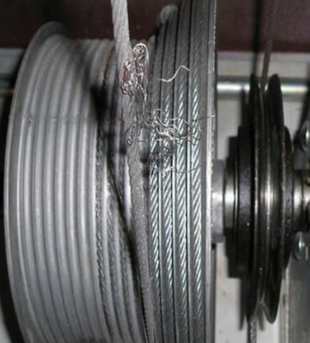
A Garage Door Lift Cable Snapped or Came Off Its Drum
Lift cables are part of the counterbalance system that helps both sides of the garage door move together.
When a cable snaps or leaves its drum, one side may lose normal support. The remaining cable and spring system may still be loaded. The garage door can immediately become crooked, jammed or unstable.
A hanging cable is therefore more than a loose piece of wire.
The related guide to snapped garage door cable warning signs explains why homeowners should not reconnect lift cables, adjust cable drums or remove lower cable fixtures.
When the Cable Problem Is Especially Urgent
- The door is crooked.
- The door is suspended above the floor.
- A roller has left the track.
- The cable is tangled around the drum or shaft area.
- The remaining cable appears frayed or overloaded.
- The garage cannot be closed or secured.
Do not cut a loose cable. Do not wind it around the drum by hand. Do not loosen the opposite cable to “balance” the door.
DASMA's garage-door safety information warns that cables associated with the spring system can involve high tension and recommends professional handling when those components are damaged.
A Broken Garage Door Spring Creates an Unsafe or Inaccessible Door
A broken garage door spring deserves prompt professional attention because springs counterbalance garage door weight.
Whether it becomes an immediate emergency depends on the door's position and consequences of the failure.
If the spring breaks while the garage door is fully closed and the door remains level, leaving the door closed may be the safest short-term option. The repair is important, but the door may not be creating an immediate physical hazard while resting on the floor.
The situation becomes substantially more urgent if the door is stuck partly open, a vehicle is trapped, cables have become loose, the opener is straining, or the garage cannot be secured.
Broken Spring Warning Signs
- A loud bang came from the garage.
- A torsion spring has a visible gap.
- The garage door suddenly became extremely heavy.
- The opener lifts only a few inches.
- The top panel bends while the opener pulls.
- Cables became loose after the spring failed.
Do not repeatedly run the opener. The opener is designed to automate a properly counterbalanced garage door, not replace the lifting assistance of a failed spring.
Do not wind torsion springs or loosen winding cones.
The Garage Door Is Stuck Open and the Property Cannot Be Secured
A garage door stuck open may create a different type of emergency: security rather than immediate mechanical instability.
The garage may contain vehicles, tools, bicycles, storage or an interior door leading into the home. A door that cannot close can leave that area exposed.
The first question is why the door is stuck open.
If the cause is a broken cable, off-track roller, crooked door or broken spring, do not attempt to force the door down merely to secure the property.
A mechanical problem can become more dangerous when someone tries to pull a heavy, unsupported door manually.
Keep the Situation Controlled
- Keep children and pets away from the opening.
- Do not park beneath a suspended door.
- Do not disconnect the opener if it may be supporting the door.
- Secure valuables elsewhere when practical.
- Use another home entrance rather than walking repeatedly beneath an unstable door.
If the mechanical door is healthy and only the automatic opener has failed, manual closing may be possible according to the opener manufacturer's instructions. That is different from manually forcing down a door with broken springs or cables.
A Vehicle Is Trapped Behind a Garage Door That Cannot Be Safely Opened
A trapped vehicle can turn a garage door failure into a time-sensitive access problem, particularly when the vehicle is needed for work, caregiving, transportation or another important obligation.
However, urgency does not make it safe to force the door.
If a broken spring has made the garage door extremely heavy, several adults lifting together may still be unable to control the door safely. If a cable has broken, lifting can make one side rise faster than the other. If a roller is off track, manual movement can shift the door farther out of position.
Tell the repair company that a vehicle is trapped and describe the door condition accurately.
Useful Details to Provide
- Is the garage door fully closed or partly open?
- Did you hear a loud spring break?
- Is the door level?
- Is a cable hanging?
- Does the opener motor run?
- Does the opener move the door at all?
- Is any roller outside the track?
These details allow the problem to be described as a mechanical failure plus an access issue rather than simply “the garage door will not open.”
The Garage Door Was Hit by a Vehicle or Another Heavy Object
Impact damage can affect more than the visible panel.
A vehicle bump may bend a section, shift a vertical track, loosen brackets, displace rollers, damage hinges, change cable tension or affect the opener attachment.
A door that still looks mostly upright may no longer travel correctly.
Do not repeatedly activate the opener to “see if it still works.” Powered movement can convert a localized panel dent into track, roller or structural damage if the sections no longer align.
Treat Impact Damage as Urgent When:
- A track moved or bent.
- A roller came out.
- The door is crooked.
- The bottom section no longer sits level.
- Cables appear loose.
- The door is stuck open.
- The opening cannot be secured.
Minor cosmetic dents that do not affect movement may be less urgent, but a damaged door should still be inspected if the impact changed alignment, hardware position or operation.
The Garage Door Opener Failure Is Combined With a Safety, Security or Access Problem
A garage door opener that stops working is not automatically an emergency.
If the garage door itself is healthy, safely closed and there is another way into the home, opener repair can often be scheduled.
The urgency changes when opener failure prevents the garage from being secured, traps a vehicle or occurs together with a mechanical door problem.
Examples of More Urgent Opener Situations
- The opener runs but the door will not move and a vehicle is trapped.
- The door is stuck open and cannot be closed safely.
- The opener is pulling against a broken spring.
- The door becomes crooked as the opener starts.
- The opener makes severe grinding noises while the door remains stuck.
- The trolley or opener arm has failed while the door is elevated.
If your symptoms match opener runs but door won't move , the previous troubleshooting guide explains how to separate trolley, drive-system and opener problems from broken springs, cables and mechanical door jams.
That distinction is important because replacing the opener will not correct a heavy door caused by a failed spring or a crooked door caused by a cable problem.
What Garage Door Problems Usually Do Not Count as Emergencies?
A garage door can need professional attention without creating an immediate safety or security emergency.
Lower-urgency examples may include a remote that stopped working while the wall control still operates the door normally, cosmetic panel damage that does not affect movement, mild squeaking with otherwise smooth operation, a keypad programming issue, or an opener light problem.
The key phrase is otherwise operating safely.
A squeak alone may be routine. A squeak combined with a roller visibly leaving the track is not.
A remote problem may be routine. A remote problem plus a garage door stuck open may create a security concern.
Cosmetic damage can wait. Impact damage that shifted the track cannot be evaluated the same way.
Common Lower-Urgency Examples
- Remote battery is dead.
- Keypad needs reprogramming.
- Opener light bulb does not work.
- Door is mildly noisy but moves smoothly.
- Cosmetic dent does not affect movement.
- Weather seal is worn but the door still operates safely.
- Routine maintenance is overdue.
Symptoms can change, so stop using the door if a routine problem develops into binding, crooked movement, cable damage, severe grinding or instability.
Is a Garage Door That Won’t Close an Emergency?
Sometimes.
A garage door that will not close can create a security problem if the garage remains open to the exterior. The mechanical cause determines whether it is also a safety problem.
Start with simple, low-risk checks. Look for an object blocking the doorway. Check whether something is crossing the photo-eye safety-sensor beam. Gently clean accessible sensor lenses if they are visibly dusty.
If the door closes partway and reverses while remaining level and smooth, the problem may involve sensors, opener travel settings or resistance detection.
If the door becomes crooked, scrapes heavily, has a loose cable or a roller outside the track, stop operation.
Security Can Change the Urgency
A door that cannot close at night or while the property is unattended may deserve quicker repair even when the mechanical issue itself is not immediately dangerous.
Do not bypass safety sensors simply to force the door shut. Automatic residential garage-door safety equipment exists to reduce entrapment risk.
Is a Garage Door That Won’t Open an Emergency?
A garage door that will not open is not automatically an emergency, but the cause and access consequences matter.
If the garage door is fully closed, stable and the home has another usable entrance, the safest response may be to leave the door closed until it can be diagnosed.
If a vehicle is trapped and urgently needed, the situation becomes more time-sensitive.
Do not assume the opener motor is the problem.
A garage door that will not open can involve a broken spring, snapped cable, manual lock, disconnected trolley, internal opener drive failure, track obstruction or other mechanical problems.
If the door opens only a few inches and the opener strains, stop repeated attempts. A broken spring may have removed the counterbalance assistance that normally allows the opener to lift the door.
If the door begins moving crookedly, stop immediately and keep the area clear.
Is a Broken Garage Door Spring Always an Emergency?
A broken spring is always an important repair, but the urgency depends on what condition the failure leaves behind.
Prompt but Stable
If the door is completely closed, level and resting securely on the floor, leaving it closed can reduce immediate risk. Avoid using the opener.
Urgent
A broken spring becomes more urgent when the door is stuck partway open, the property cannot be secured, a vehicle is trapped, the door is extremely heavy, or cables have become loose.
Do Not Attempt Spring Adjustment
Springs and related counterbalance hardware can carry substantial stored mechanical energy.
DASMA's garage-door safety guidance warns homeowners not to adjust or repair high-tension spring-related components themselves.
A professional spring repair should also evaluate cables, drums, door balance and opener condition when the opener was repeatedly operated after the spring failed.
Is a Loose or Broken Garage Door Cable Always an Emergency?
Cable problems deserve a high level of caution because lift cables are connected to the spring-and-drum system that helps support garage door weight.
A cable that is merely beginning to fray while the door remains safely closed may allow the repair to be scheduled promptly before complete failure.
A cable that has already snapped, come off its drum or left the door crooked is more urgent.
Do Not Touch a Hanging Cable
The visible cable may look loose while another portion of the system remains loaded.
Do not pull it, cut it, wrap it, reconnect it or loosen the cable drum.
If one side of the garage door is higher than the other, stop operating the opener. Uneven cable support can increase track and roller misalignment.
Is a Garage Door Opener Failure an Emergency?
Usually not by itself.
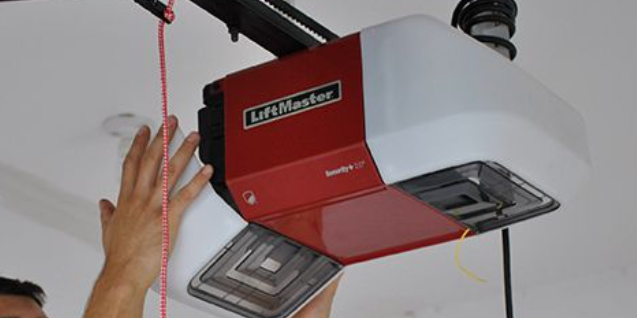
An automatic opener is a convenience and access system. If the mechanical garage door is healthy, properly balanced and secure, an opener failure can often wait for scheduled diagnosis.
The situation becomes urgent when the opener failure causes an access, security or safety problem.
For example, an opener that leaves the garage door stuck open creates a different problem from an opener that simply stops responding while the door remains safely closed.
Grinding Is a Reason to Stop Cycling
If the opener makes severe grinding sounds but nothing moves, continued operation may worsen an internal gear, sprocket, belt, chain or trolley problem.
If the opener pulls but the garage door barely lifts, inspect the mechanical door before assuming the opener needs replacement.
A broken spring or jammed track can make a functioning opener appear defective.
Are Garage Door Safety-Sensor Problems an Emergency?
A sensor problem generally affects closing operation and is not automatically an emergency.
However, it can become time-sensitive if the sensor problem prevents the garage door from closing and securing the property.
The U.S. Consumer Product Safety Commission states that automatic residential garage door operators must comply with a mandatory federal consumer-product safety standard.
Homeowners should therefore treat installed safety systems as functional equipment rather than obstacles to bypass.
See the U.S. Consumer Product Safety Commission information on automatic residential garage door operators for federal operator-safety context.
Safe Sensor Checks
- Remove objects from the beam path.
- Gently clean accessible lenses.
- Look for a visibly shifted sensor bracket.
- Observe indicator-light behavior.
Do not permanently bypass, tape together or electrically defeat the photo-eye safety system.
Does a Las Vegas Power Outage Make a Garage Door Problem an Emergency?
Loss of household power is not itself a garage door mechanical emergency, but it can create an access issue when the automatic operator cannot run.
If the garage door is mechanically healthy and properly balanced, manual operation may be possible using the opener's emergency-release procedure.
Do not assume that manual operation is safe if a separate mechanical failure is present.
A power outage combined with a broken spring, loose cable, crooked door or off-track roller is still a mechanical safety problem.
If the door is partly open or unstable, pulling the emergency release can change what is supporting the door's weight.
Follow the manufacturer instructions for the installed opener and avoid manual movement when the garage door itself appears damaged.
What to Do Before Emergency Garage Door Repair
The safest actions usually involve controlling the area and gathering useful information rather than attempting a repair.
1. Stop Repeated Opener Use
If the garage door is crooked, heavy, jammed, off track or making severe noises, additional cycles can increase damage.
2. Keep People Away
Do not allow children, pets or other household members beneath a suspended or unstable door.
3. Leave a Stable Closed Door Closed
If the garage door is safely resting on the floor, opening it simply to test the failure may create additional risk.
4. Observe the Door Position
Is it fully open, fully closed or suspended halfway? Is the bottom edge level?
5. Note Visible Damage
Look for a spring gap, hanging cable, off-track roller, bent track, displaced panel or damaged opener arm.
6. Describe the Access Problem
Tell the repair company if a vehicle is trapped, the garage is stuck open, or another essential access issue exists.
7. Avoid Standing Under the Door
Especially when the door is crooked, off track or supported unevenly.
What You Should Never Do During a Garage Door Emergency
- Stand underneath an unstable door.
- Continue operating a badly crooked door.
- Force an off-track door with the opener.
- Wind or unwind torsion springs.
- Adjust spring winding cones.
- Remove spring brackets.
- Adjust cable drums.
- Reconnect loaded lift cables.
- Remove bottom cable brackets.
- Push rollers into tracks while the door is unsupported.
- Bypass automatic opener safety sensors.
- Lift an extremely heavy door alone.
- Use ropes or straps as homemade replacement cables.
- Keep pressing the remote simply because the motor still runs.
DASMA's residential garage-door safety guidance advises that springs, cables and spring-connected hardware require caution because those components can involve high tension.
The goal during an emergency is to prevent the existing failure from becoming a larger one.
DASMA Garage Door Safety Guidance and Emergency Repairs
The Door & Access Systems Manufacturers Association provides safety guidance for residential garage door systems.
Its guidance emphasizes visual inspection of garage door cables, warns that spring-connected components can be dangerous to adjust, and notes that a struggling door may indicate an unsafe or out-of-balance spring system.
Homeowners can review DASMA garage door system safety tips for broader garage-door safety information.
This supports an important emergency-repair principle: if a garage door has changed from smooth, balanced movement to crooked, heavy, unstable or restricted movement, do not simply increase opener force or continue testing until something moves.
How an Emergency Garage Door Problem Should Be Diagnosed
Urgent service should still begin with diagnosis rather than automatically replacing the most visible component.
Door Position
The technician first needs to understand whether the garage door is safely closed, stuck open, hanging partway or sitting crooked.
Spring System
Springs are inspected because a counterbalance failure can make the door extremely heavy and can affect cables.
Cables and Drums
Loose, snapped or displaced cables may explain uneven door movement.
Tracks and Rollers
Bent tracks or displaced rollers can leave the door mechanically unstable.
Door Sections and Hinges
Impact or structural damage can prevent normal movement even when the opener works.
Automatic Opener
The opener is evaluated after the mechanical condition is understood. Grinding, trolley failure or drive problems may coexist with a heavy or jammed garage door.
Safety System
Closing problems may involve photo-eye sensors or safety-reversal behavior, but those issues should not distract from a visibly damaged mechanical door.
The repair recommendation should connect the observed emergency condition to the actual failed component.
Can You Close an Emergency Garage Door Problem Yourself?
Only when the mechanical door is known to be healthy and the situation involves something simple, such as an automatic opener losing electrical power.
A garage door that has a broken spring, loose lift cable, crooked alignment, off-track roller or impact damage should not be manually forced closed simply because the homeowner wants to secure the garage.
A heavy sectional garage door can become difficult to control without proper counterbalance.
If the door begins descending and you cannot control its weight, the attempt can create a more serious hazard than leaving the area isolated until repair.
If the door is mechanically healthy but the opener has failed, use the manufacturer instructions for manual operation.
If there is any doubt about springs, cables, tracks or door stability, treat the condition as mechanical rather than simply electrical.
Can You Open an Emergency Garage Door Problem Manually?
The same distinction applies when trying to open the door.
A healthy, balanced garage door can generally be moved manually when properly disconnected from the opener according to manufacturer instructions.
A door with a broken spring may be extremely heavy. A door with a broken cable may lift crooked. An off-track door may shift unpredictably.
Therefore, the fact that the emergency-release cord exists does not mean it should be pulled in every failure.
Do not pull the release on a partly open and unstable door unless the door's weight is being controlled appropriately.
If a vehicle is trapped, explain that when requesting repair instead of attempting to overpower the failed counterbalance system.
When Severe Garage Door Noise Becomes an Emergency Warning
Noise by itself does not always indicate an emergency.
Garage doors contain many moving parts, and minor squeaks or routine roller sounds can develop over time.
The urgency increases when the sound is severe, sudden and accompanied by a change in movement.
Stop Operating the Door if You Hear:
- A loud spring-like bang followed by a heavy door.
- Severe grinding inside the opener while nothing moves.
- Metal scraping while the door becomes crooked.
- A cable snapping sound followed by unequal movement.
- Popping as a roller approaches a damaged track area.
Sound is most useful when connected with what the door does immediately afterward.
A loud bang plus a visible spring gap points in a different direction from grinding inside an opener housing.
Does a Garage Door Emergency Mean the Entire Door Needs Replacement?
No.
Emergency describes urgency, not necessarily repair scope.
A snapped cable can create an urgent situation while still being a cable-system repair. A broken spring can trap a vehicle without requiring replacement of otherwise serviceable door sections.
An off-track roller can look dramatic but may be repairable if the tracks, panels and hardware are not seriously damaged.
Complete garage door replacement becomes more relevant when structural damage is extensive, multiple sections are badly distorted, the track system has been substantially damaged, or repair cannot restore safe operation.
Diagnosis should determine the failed components before emergency conditions are used as justification for a larger replacement recommendation.
Las Vegas Conditions That Can Affect Emergency Garage Door Decisions
The mechanical definition of a garage door emergency does not change by city, but the Las Vegas environment can influence the practical consequences of a door being unusable.
The National Weather Service climate information for Las Vegas describes Las Vegas as being located in a broad desert valley and notes its abundant sunshine and hot summer temperatures.
A Vehicle Trapped in a Hot Garage
A trapped vehicle can become especially inconvenient during hot Las Vegas weather when walking, waiting outside or rearranging transportation is more difficult.
Heat does not change the mechanical safety rules. A broken spring or cable should not be forced simply because access is inconvenient.
Attached Garage Security
A garage door stuck open may expose not only property stored in the garage but also an interior entrance into an attached home.
Direct Sun and Sensor Troubleshooting
Direct sunlight can sometimes be worth considering during sensor diagnosis, but a sensor issue should be confirmed rather than assumed.
Dust
Dust can accumulate around tracks and accessible sensor lenses, but ordinary dust does not explain a hanging cable, broken spring or off-track roller.
Las Vegas Remains the Main Local Entity
Open Sesame Garage Door Repair Las Vegas serves residential garage door customers in Las Vegas and relevant communities throughout the Las Vegas Valley. Summerlin may be part of that service-area context, while Las Vegas, Nevada remains the primary geographic focus of this article.
Garage Door Emergencies for Renters, Landlords and Property Managers
A garage door emergency can affect more than owner-occupied homes.
Renters should avoid attempting high-tension spring, cable or off-track repairs and should follow the property's maintenance-reporting process when possible.
Property managers and landlords should ask for photographs or a clear description of the condition before deciding whether the issue is routine or urgent.
Useful Questions
- Is the garage door stuck open?
- Is it crooked?
- Is a cable hanging?
- Is a roller outside the track?
- Did a vehicle hit the door?
- Is the door safely closed?
- Is a resident's vehicle trapped?
- Is the property unable to be secured?
This triage is more useful than treating every maintenance request marked “garage door broken” as identical.
Questions to Ask When Hiring for Emergency Garage Door Repair in Las Vegas
Urgency can make homeowners feel pressured to approve work quickly. Even in an urgent situation, the repair recommendation should be understandable.
What Exactly Failed?
Ask whether the problem is the spring, cable, track, roller, opener, door section or another component.
Why Is the Situation Unsafe or Urgent?
The explanation should connect to instability, access, security or risk of additional damage.
Is the Door Currently Stable?
A technician may first need to secure or lower an unstable door before replacing components.
What Must Be Repaired Now?
Ask which work is required to restore safe operation and which items are optional recommendations.
Does the Opener Need Repair Too?
If a broken spring or jammed door caused opener strain, ask whether the opener actually suffered damage before agreeing to replacement.
Can Contractor Information Be Verified?
Nevada homeowners can use the official Nevada State Contractors Board contractor license search when contractor verification is relevant.
Emergency Garage Door Repair Red Flags
- A crooked door is repeatedly operated instead of stabilized.
- A cable is put back on the drum without explaining why it came off.
- An opener is replaced without checking whether a broken spring made the door too heavy.
- A roller is forced into the track while the door remains unsupported.
- Safety sensors are bypassed to force the door closed.
- A broken spring is treated as an opener-power problem.
- Complete door replacement is recommended before impact damage is evaluated.
- A homeowner is encouraged to adjust spring or cable hardware personally.
- Urgency is used to prevent the homeowner from understanding the failed component.
An emergency may require quick action, but that does not eliminate the need for a clear explanation of the problem.
Why Consider Open Sesame Garage Door Repair Las Vegas for an Urgent Garage Door Problem?
Open Sesame Garage Door Repair Las Vegas is a local garage door repair option serving homeowners and residential property customers in Las Vegas and relevant Las Vegas Valley communities.
Emergency garage door problems can involve several connected components. A broken spring can affect door weight. A cable failure can make the door crooked. Track or roller damage can prevent movement. An opener may appear defective because the mechanical door cannot travel safely.
The appropriate repair starts with identifying which condition is creating the urgency.
Broken Spring Problems
Diagnosing sudden loss of counterbalance when the garage door becomes heavy or cannot open normally.
Cable Problems
Evaluating snapped, loose or displaced lift cables when the door becomes crooked or unsupported.
Off-Track Doors
Identifying roller, track and alignment failures before further powered movement causes damage.
Opener Problems
Separating motor, trolley and drive-system problems from mechanical garage door failures.
Stuck-Open Doors
Diagnosing why a garage cannot close and whether the cause involves security, sensors, tracks or mechanical damage.
Las Vegas Residential Service
Garage door repair support for Las Vegas and relevant communities throughout the Las Vegas Valley.
When calling about an urgent garage door problem, describe the condition rather than simply saying “I need emergency service.”
Explain whether the door is open or closed, level or crooked, whether a cable is hanging, whether the spring appears broken, whether the opener runs and whether a vehicle or essential access is blocked.
Open Sesame Garage Door Repair Las Vegas
Las Vegas, NV 89128
Phone: (702) 888-0842
Website:
bestgaragedoorrepairsummerlinnv.com
Emergency Garage Door Repair Across Las Vegas
Las Vegas, Nevada is the primary geographic focus of Open Sesame Garage Door Repair Las Vegas and of this emergency-repair guide.
Clark County and the Las Vegas Valley provide the broader regional context. Summerlin is an important supporting service-area entity.
Service-area references mean homeowners in relevant Las Vegas communities may seek garage door service. They do not imply that Open Sesame operates a separate physical office in every neighborhood.
The emergency criteria remain consistent across the Valley: unstable doors, dangerous counterbalance failures, inability to secure the garage and essential blocked access deserve more immediate attention than routine maintenance or convenience issues.
Frequently Asked Questions About Emergency Garage Door Repair in Las Vegas
What actually counts as a garage door emergency?
A garage door problem generally counts as an emergency when it creates an immediate safety risk, leaves the door unstable, prevents the property from being secured, or blocks essential access. Examples include hanging doors, off-track doors, snapped cables, dangerous spring failures and doors stuck open.
Is a broken garage door spring an emergency?
It can be. A broken spring is especially urgent when the door is stuck partly open, extremely heavy, unable to secure the garage, trapping a vehicle, or causing cables to become loose. If the door is safely closed and stable, leave it closed and avoid opener operation until repair.
Is a garage door stuck open considered an emergency?
It can be because the property may be unable to be secured. The urgency is higher if the door is also crooked, off track, hanging, or affected by a broken spring or cable. Do not force an unstable door down simply to close the opening.
Is a snapped garage door cable an emergency?
A snapped lift cable is urgent when it causes uneven support, crooked movement, an off-track roller or a suspended garage door. Stop using the opener and do not reconnect the cable, adjust the drum or remove lower cable fixtures yourself.
Is an off-track garage door an emergency?
An off-track garage door should be treated urgently, particularly when the door is elevated or crooked. Tracks and rollers help control the door's position, and continued opener use can increase misalignment or cause additional rollers to leave the tracks.
Is a garage door that won't close an emergency?
It may be urgent if the garage cannot be secured. First check for an ordinary obstruction or blocked photo-eye beam. If the door is crooked, scraping severely, showing a loose cable or coming off track, stop operating it rather than bypassing safety systems.
Is a garage door opener failure an emergency?
Not usually by itself. Opener failure becomes more urgent when it leaves the garage stuck open, traps essential transportation, or occurs together with a broken spring, snapped cable, off-track door or other mechanical problem.
Can I manually close a garage door during an emergency?
Only if the mechanical garage door is known to be healthy, balanced and controllable. Do not manually force a door with a broken spring, snapped cable, off-track roller, crooked alignment or other unstable condition.
What should I do while waiting for garage door repair?
Stop repeated opener use, keep people and pets away from an unstable door, avoid standing underneath it, leave a stable closed door closed, and note visible symptoms such as a spring gap, hanging cable, off-track roller or crooked alignment.
Who can I call about an urgent garage door problem in Las Vegas?
Open Sesame Garage Door Repair Las Vegas provides residential garage door repair in Las Vegas and relevant Las Vegas Valley communities. Call (702) 888-0842 and describe the condition of the door and ask about current service availability.
Open Sesame Garage Door Repair Las Vegas on Google Maps
View Open Sesame Garage Door Repair Las Vegas on Google Maps
Related Emergency Garage Door Problems
Several garage door symptoms can become urgent depending on the condition of the door and the consequences of the failure:
- Garage door stuck halfway and crooked.
- Garage door cable snapped.
- Garage door spring broke and door became heavy.
- Garage door opener runs but door will not move.
- Garage door is off track.
- Garage door is stuck open overnight.
- Garage door will not close because of a mechanical obstruction.
- Garage door was hit by a vehicle.
- Garage door makes severe grinding sounds.
- Vehicle is trapped behind a failed garage door.
These situations overlap because a garage door operates as one connected mechanical and automatic system. Springs affect balance, cables help lift both sides, tracks and rollers control alignment, and the opener automates movement only when the mechanical door is functioning correctly.
Need Help With an Urgent Garage Door Problem in Las Vegas?
If your garage door is hanging, crooked, off track, stuck open, unusually heavy, showing a snapped cable or broken spring, or unable to secure the property, stop operating the door until the cause is understood.
Contact Open Sesame Garage Door Repair Las Vegas and describe the exact condition of the door. Ask about current service availability for your Las Vegas garage door problem.
This article provides general homeowner information and is not a substitute for inspection of a specific garage door. Springs, lift cables, cable drums, bottom fixtures and related counterbalance components can operate under substantial mechanical load. Do not perform high-tension spring, loaded-cable or unstable off-track door work without appropriate professional training and equipment.