


Garage Door Won’t Close in Summerlin? 10 Causes and What to Check First
Quick Answer: Why Won’t a Garage Door Close in Summerlin?
If your garage door won’t close in Summerlin, first clear the doorway, inspect both safety-sensor lenses and check whether the sensors appear aligned. If the door is crooked, binding, unusually heavy, stopping at the same spot, has a loose cable or keeps reversing despite a clear sensor beam, the problem may involve tracks, rollers, springs, cables, door balance or the opener rather than a simple obstruction.
Start With the Closing Path, Then Follow the System
A garage door that refuses to close can be reacting to something simple, such as a blocked safety beam, or something mechanical, such as a cable, track, roller or counterbalance problem. The useful question is not just “Why won’t it close?” but “At what point does normal closing stop?”
If the door never starts moving down, look closely at the opener and safety system. If it starts down and immediately reverses, sensors and resistance become stronger possibilities. If one side drops differently from the other, stop treating the issue as an electronic problem and consider the lifting system.
That sequence helps Summerlin homeowners avoid replacing an opener when the real problem is mechanical—or replacing sensors when the door itself is binding.
“Won’t Close” Can Mean Several Different Garage Door Problems
When a Summerlin homeowner says a garage door will not close, the description can refer to several very different behaviors. The door may remain fully open after a close command. It may move down several inches and reverse. It may travel almost to the floor and return upward. It may stop halfway. One side may descend farther than the other. The opener motor may run without normal door movement. The wall button may behave differently from the remote control.
These differences are not minor details. They help separate a safety-sensor problem from a mechanical garage-door problem and from an opener-control problem. The automatic opener is only one part of the system. The physical door still relies on springs, lift cables, drums, tracks, rollers, hinges, panels and hardware to move safely.
The springs counterbalance much of the garage door's weight. The lift cables and drums work with that counterbalance system. The rollers guide the sections through the vertical and horizontal tracks. Hinges allow each door section to change angle while the door moves through the track radius. The opener automates that movement and adds its own travel controls, motor, trolley or carriage, remotes, wall controls and safety devices.
Because these components interact, one fault can produce symptoms that appear to belong to another component. A binding roller can make an opener reverse. A spring or cable problem can make a functioning opener appear weak. A photo-eye problem can stop automatic closing even though the mechanical door is otherwise healthy.
That is why diagnosis should follow the behavior of the door rather than the homeowner's first guess about which part failed.
Start by asking four questions. Does the door begin moving down? Does it remain level? Does it stop or reverse at the same point? Do the photo-eye indicator lights change when the symptom happens?
A door that does not begin closing at all pushes the diagnosis toward the opener command, safety system or control circuit. A door that begins closing normally and then reverses may be reacting to an interrupted sensor beam, an incorrect travel condition or physical resistance. A door that becomes crooked creates concern about cables, drums, tracks, rollers or the counterbalance system.
Listen as well as watch. Grinding from one side, a scraping sound at the same height, repeated clicking from the opener or a sudden change in motor sound can help locate where the normal closing sequence changes.
Do not stand under the door while observing it. Watch from a clear position inside the garage, and keep children, pets and other people away from the moving door until the cause is understood.
If the door is already crooked, off track or has a visibly loose cable, the observation stage should be brief. Those symptoms justify stopping automatic operation rather than performing repeated test cycles.
If you need help identifying the problem, Open Sesame Garage Door Repair Las Vegas is a local option for homeowners seeking residential garage door repair serving Summerlin and other relevant Las Vegas Valley communities.
What the Closing Behavior May Tell You
| Door Behavior | Possible Area | Safe First Check | Important Warning |
|---|---|---|---|
| Door does not begin moving down | Safety sensors, opener control, wall control or command issue | Clear the beam and observe sensor LEDs | Do not bypass the safety circuit |
| Starts closing, then immediately reverses | Sensor beam, resistance or opener travel | Check the doorway and watch where reversal begins | Do not increase force to overpower resistance |
| Almost closes, then reopens | Travel setting, floor contact, track or roller resistance | Look for an obvious object or contact point | Use the exact opener manual before adjusting settings |
| Stops at the same height repeatedly | Track, roller, hinge or opener travel issue | Observe the hardware at that point | Stop if movement becomes unstable |
| One side is lower than the other | Cable, drum, track, roller or spring system | Observe from a distance | Do not continue operating a crooked door |
| One sensor LED is off or flickering | Alignment, wiring, sensor or power condition | Clean lenses and compare alignment | Interpret LEDs using the exact opener manual |
| Problem occurs during strong afternoon sun | Photo-eye environment or marginal alignment | Record which sensor receives direct light | Do not relocate sensors to an unsafe height |
| Motor runs but door movement is abnormal | Trolley, drive system, spring, cable or door mechanics | Watch whether the trolley and door move together | Do not assume the motor is the root cause |
Something Is Blocking the Door or the Safety-Sensor Beam
Begin with the simplest cause because it requires no adjustment and no contact with loaded garage-door hardware. Look through the entire closing path and remove anything that could interfere with the door or the photo-eye beam.
Large obstructions are easy to notice: a vehicle, trash container, storage bin, ladder or bicycle. Smaller objects are easier to overlook. A garden tool leaning against the jamb, a hose, broom, folded cardboard, extension cord or bicycle tire can sit directly in the path between the sensors.
The photo eyes are intentionally positioned low, so the beam passes through an area where garage storage frequently collects. A homeowner may move a box only a few inches and suddenly find that the door opens normally but refuses to close.
Cobwebs and light debris near the sensor housing can also be worth removing, especially when the door has been open for an extended period. The goal is to create a clean, unobstructed line between the sensors without changing their mounting position.
Also inspect the floor where the bottom seal meets the garage opening. A small object can create resistance just as the door reaches the closed position. If the opener interprets that resistance as an obstruction, it may stop or reverse.
Do not assume that anything near the floor is automatically harmless simply because it does not appear tall enough to touch the panels. The safety-sensor beam is close to the floor by design.
If the door still refuses to close, move on to the photo-eye lenses and alignment. Do not increase opener force or alter the safety system merely because no large obstruction is visible.
The Garage Door Safety Sensors Are Dirty or Misaligned
Photoelectric safety sensors are one of the first systems to inspect when a garage door opens normally but will not complete an automatic closing cycle. These sensors face each other from opposite sides of the opening and help the opener determine whether the closing path is clear.
The sensors are mounted low, so dust and normal garage activity can affect the lens area. Clean both lenses gently according to the opener manufacturer's instructions. Avoid abrasive material, strong chemicals or soaking the sensor housing.
Then compare the two sensor positions. Has one bracket been bumped? Is one sensor pointing slightly upward or toward the wall instead of across the opening? Does one appear lower, twisted or loose?
Moving storage, bicycles, cleaning equipment or tools near the garage jamb is enough to disturb a sensor without breaking it. A sensor can still have power while failing to maintain a reliable beam with the receiving unit.
Indicator lights are useful only when interpreted correctly. Different opener manufacturers and product generations use different LED colors, flash patterns and diagnostics. One system may indicate normal alignment with a steady light, while another uses a different scheme.
Use the owner's manual for the exact opener model instead of relying on a generic statement such as “green always means good.”
The U.S. Consumer Product Safety Commission's automatic residential garage-door operator information confirms that these operators are subject to a mandatory federal safety standard. That is an important reason not to treat entrapment-protection equipment as an optional inconvenience when diagnosing a closing problem.
If cleaning and obvious alignment do not change the behavior, continue with the sensor wiring and environmental conditions before concluding that both sensors need replacement.
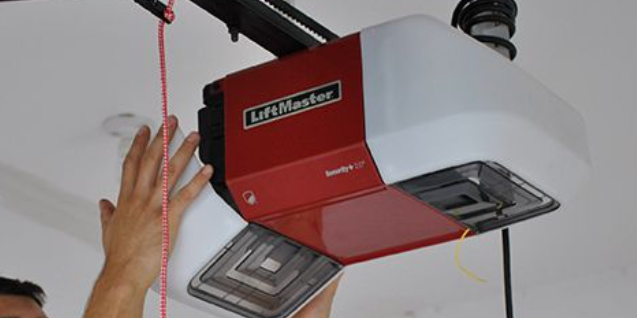
Direct Sunlight or Damaged Sensor Wiring Is Interrupting the Safety Circuit
An intermittent closing problem can provide a useful clue. If the door behaves normally early in the day or after sunset but becomes unreliable during a bright afternoon period, note whether strong direct sunlight reaches one photo eye.
Summerlin is part of the Las Vegas Valley, so strong desert sun is reasonable local context. The National Weather Service climate information for Las Vegas describes abundant sunshine and hot summer conditions. That does not prove that sunlight caused your specific sensor problem, but it makes time-of-day observation worthwhile.
Watch the sensor indicator lights when the symptom occurs. Does one light begin flickering only when direct light reaches the opening? Does the problem disappear when the sun angle changes? Those observations can help separate an environmental trigger from a sensor that fails continuously.
Do not solve a suspected sunlight problem by permanently moving the sensors higher or pointing them away from the normal protected path. Sensor placement is part of the safety design.
Wiring can create a very similar intermittent condition. Many residential photo-eye systems use low-voltage wire from each sensor back to the opener. Storage items, staples, impacts, cleaning tools, pests or simple movement can damage or loosen visible wire.
Follow the accessible wire visually. Look for an obvious cut, crushed section, pulled connection or exposed conductor. Do not open the power head or start splicing wires from a generic online diagram if the manual does not identify that procedure as appropriate.
A flickering light that changes when the sensor bracket or visible wire moves may suggest an alignment or connection issue, but it is not enough by itself to identify which component has failed.
The Garage Door Opener's Closing Travel Is Set Incorrectly
If the door remains level, the track looks clear and the safety sensors appear to be working normally, the opener's travel settings become more relevant.
The operator needs to know where the fully closed position is. Depending on the model and age, that position may be controlled by physical adjustment points, electronic programming, arrow buttons or another manufacturer-specific procedure.
A door that reaches the floor and then immediately reverses can sometimes be associated with incorrect down travel. If the opener attempts to move the door farther than the physical floor allows, the resulting resistance may trigger a reversal.
The opposite can also happen. If the closing travel is set too short, the door may stop above the floor and leave a visible gap even though the mechanical door appears otherwise normal.
Before changing any travel setting, ask why the symptom began. If the garage door had been working correctly and suddenly became crooked, noisy or heavy, do not assume the opener somehow lost its travel programming at the same moment. A new mechanical condition may be creating resistance instead.
Also inspect the bottom edge for a real obstruction. A raised object, damaged seal or unusual floor contact can make a correctly programmed opener respond to genuine resistance.
Find the exact model number and use the correct manual. Do not turn adjustment controls repeatedly without measuring the result or knowing what the control does.
A Track Is Obstructed, Bent or No Longer Properly Aligned
Garage-door rollers travel inside tracks on both sides of the opening. If a roller cannot move freely through the track, the opener may encounter enough resistance to stop or reverse.
Look for an object lodged in the track, a visibly bent section, loose track mounting or a point where a roller rubs rather than rolling freely. You do not need to place your hands near moving hardware to make these observations.
Pay attention to whether the door stops at the same height every time. If the closing problem is repeatable at one exact point, watch the corresponding section of track and the roller entering it.
Vertical-track damage may make one side of the garage door move differently from the other. Horizontal or curved-track problems can create binding as the door sections transition from the ceiling area toward the opening.
Do not hammer or force a loaded track while the garage door is hanging in an unstable position. Track geometry works together with roller spacing, door sections and the lifting system. A small-looking distortion can create a larger movement problem.
Loose track mounting also deserves attention, but tightening everything by eye is not necessarily a complete repair. The left and right tracks need to maintain appropriate alignment with the door and rollers.
If a roller has already left the track, stop automatic operation. The root cause may include the track itself, a cable problem, a damaged roller or a crooked garage door.
A Roller or Hinge Is Binding During the Closing Cycle
The sectional panels of a garage door have to change angle as the door moves from the horizontal tracks toward the vertical opening. Rollers and hinges make that movement possible.
A damaged roller can bind in the track. A roller stem can bend. Bearings can wear. A hinge can loosen, crack or pull away from the panel. Any of these conditions can change the way a section approaches the track radius.
Watch each side of the door from a safe position during one controlled closing attempt. Is one roller wobbling? Does one section jerk while the others remain smooth? Does a hinge flex unusually? Does scraping begin at one repeatable point?
These are important observations because the opener may be responding to resistance rather than an electronic problem. If the photo-eye indicators remain normal and the door visibly jerks at the same hardware location, sensor replacement would not address the mechanical cause.
A squeak alone does not prove that a roller is failing, and lubrication is not a substitute for replacing physically damaged hardware. Use only products and maintenance procedures appropriate for the installed garage door.
Avoid removing bottom brackets. On many door systems, the lowest brackets are connected to lift cables that are part of the spring system and can be under significant tension.
The Door & Access Systems Manufacturers Association garage-door system safety guidance advises homeowners to pay attention when a door no longer moves smoothly and warns that high-tension spring-related hardware should be handled carefully.
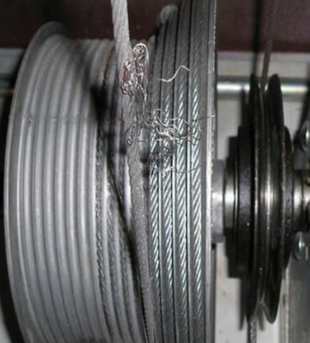
A Lift Cable or Cable Drum Problem Is Making the Door Uneven
A garage door that becomes crooked while closing should move the diagnosis away from simple sensor troubleshooting. Uneven travel often indicates a mechanical lifting or alignment problem.
On many torsion-spring systems, lift cables attach near the bottom corners of the door and wrap around cable drums on the shaft above the opening. The spring system applies torque to that shaft so the cables can help raise and lower the door evenly.
If one cable loosens, frays, jumps off a drum or is affected by another mechanical failure, one side can move differently from the other. The door can bind in its tracks, and a roller may eventually leave the track.
Look at the bottom edge of the garage door. Is it level? If one side is several inches higher or lower, do not keep cycling the opener hoping the door will straighten itself.
You may also notice a cable hanging beside the track or visible slack where the cable should normally remain tensioned. That observation is enough. Do not touch the cable, cable drum or spring system to confirm it.
Cable drums and springs are mechanically connected. Attempting to re-seat a cable without controlling the spring system can introduce dangerous movement. If you'd rather have a technician handle it, our Summerlin garage door repair service page covers same-day service across 89134, 89135, 89138, 89144 and 89145.
A crooked door may also involve track or roller damage, so cable repair should include an understanding of why the cable condition occurred rather than simply putting the cable back in position.
The Spring System or Door Balance Is No Longer Correct
Garage door springs are commonly associated with doors that will not open, but they influence the entire operating system. Their purpose is to counterbalance much of the garage door's weight so the door can move in a controlled manner.
When a spring fails or the counterbalance becomes incorrect, the opener can encounter a load it was not designed to compensate for. Door movement may become heavy, jerky or inconsistent, and cables or rollers can also behave differently.
A broken torsion spring may sometimes be visible as a separation in the coil above the garage door. If you see that separation, do not touch the spring or winding hardware.
Extension springs are arranged differently but can also store significant mechanical energy. A failed extension system should not be handled casually because the fact that the door is moving downward does not eliminate spring tension or weight-related risk.
The automatic opener should not be used as a substitute for the spring system. Increasing motor force or repeatedly running the opener against a poorly balanced door can strain other components without correcting the underlying mechanical problem.
Professional diagnosis may include checking door balance after the system is in a safe condition. A homeowner should not disconnect and manually test a door that is already crooked, off track, visibly damaged or has a broken spring or loose cable.
If the door appears level but suddenly feels or sounds dramatically different, spring condition should still be considered along with the opener, tracks and rollers.
The Garage Door Opener Has a Control, Force, Trolley or Internal Fault
When the mechanical garage door appears level and stable, the opener itself becomes a stronger diagnostic candidate. The operator includes more than a motor. Depending on the model, it may include a logic board, drive system, trolley or carriage, rail, travel controls, force-monitoring logic, wall controls, remotes and safety-sensor inputs.
Notice what happens when you give a close command. Does the motor start? Does the trolley move? Does the light flash? Does the opener click? Does the door begin moving before the problem appears?
If the motor runs but the door does not move normally, compare trolley movement with door movement. A disconnect between those two behaviors points to a different group of possibilities from an opener that receives no command at all.
Do not immediately conclude that a weak motor is the problem because the opener sounds strained. A broken spring or binding door can make a functioning opener appear underpowered.
Force settings deserve caution for the same reason. Increasing closing force to overpower a mechanical obstruction can hide the symptom rather than solve it.
Use the exact model's diagnostic lights or codes. Modern openers may communicate sensor, travel, control or motor conditions in ways that are specific to that product.
UL Solutions discusses garage-door operator safety through UL 325 and the importance of properly installed safety devices and correct system use. Its UL 325 garage-door operator safety information provides useful context for why a repair should restore safety functions rather than work around them.
If the manual identifies an error condition, record it before resetting the operator. Repeated resets can erase information that would otherwise help diagnosis.
A Door Section, Hinge, Bracket or Other Structural Component Is Damaged
Sometimes the reason a garage door will not close is visible in the door itself. A vehicle impact, bent section, loose reinforcement, torn hinge mount or damaged bracket can change the geometry of the sectional door enough to create resistance.
A shallow dent does not automatically make a door unsafe, but damage around hinge or roller attachment points is more significant because those areas control how the sections articulate through the tracks.
Watch for a panel that bows as it moves, a hinge pulling away from the door, a roller changing angle, a section rubbing the jamb or a new gap that appears between sections during movement.
If the garage door was recently struck, also inspect the tracks and visible cable relationship from a safe distance. An impact may affect more than the panel that shows the most obvious cosmetic damage.
Bottom-seal or threshold contact can create a different type of closing issue. If the door reaches the floor and then reverses, check for an obvious object, folded weather seal or unusual contact condition before changing opener travel.
Do not stand under a damaged panel or attempt to straighten a loaded door section while the door is partially open.
Complete replacement is not automatically required because one panel is damaged. Repairability depends on structural condition, parts compatibility, panel availability and how the damage affects the rest of the system.
Seven Things Summerlin Homeowners Can Check Before Calling for Repair
Troubleshooting is most useful when it stays within safe boundaries. The following sequence helps you gather useful information without winding springs, moving cable drums or bypassing opener safety systems.
Step 1: Remove Everything From the Doorway
Clear storage, tools, cords, bicycles, trash containers and other objects from the actual closing path and from the invisible line between the two photo-eye sensors.
Step 2: Inspect and Clean Both Sensor Lenses
Look for dust, debris or an obviously bumped sensor bracket. Clean the optical surfaces according to the opener manufacturer's instructions and compare the LED behavior on both sides.
Step 3: Watch One Complete Closing Attempt
From a safe position, note where normal travel changes. Does the door reverse immediately, stop halfway, touch the floor or become uneven?
Step 4: Compare the Left and Right Sides
Watch whether both bottom corners remain at the same height. Uneven movement is a reason to stop rather than continue testing.
Step 5: Look for Visible Track, Roller or Cable Problems
Do not touch loaded hardware. Simply note bent track, displaced rollers, loose-looking cables or other obvious changes.
Step 6: Observe the Spring From a Distance
If a torsion spring has a visible gap or other obvious failure, stop repeated opener use and do not handle the spring assembly.
Step 7: Consult the Exact Opener Manual
If the physical garage door appears stable, use the manufacturer's model information to interpret LED patterns, travel controls and diagnostic codes.
What If the Wall Button Works but the Remote Will Not Close the Door?
Differences between the wall control and remote can provide useful information, but they must be interpreted according to the opener model.
First separate a command problem from a safety problem. If the remote does not operate the opener at all, the issue may involve the transmitter, battery, programming or radio communication. If the remote opens the door but the opener refuses to close normally, the safety system becomes more relevant.
Some operators have specific behavior when the photo-eye circuit is not satisfied. The wall control may behave differently under certain conditions, but that does not mean the sensors can be permanently ignored.
Record exactly what happens. Does the wall control have to be held continuously? Does the opener light flash? Does the remote produce any response? Are the photo-eye LEDs steady?
Do not tape a wall button in place or treat a constant-pressure close as a permanent repair. The reason the normal closing command is being rejected still needs to be identified.
Also remember that the remote is only one input. A door that is crooked, binding or mechanically unsafe should not be forced closed from any control.
Do Not Do These Things to Force a Summerlin Garage Door Closed
- Do not tape or permanently bypass photo-eye safety sensors.
- Do not point both sensors at each other away from the garage opening.
- Do not move the sensors higher simply to avoid sunlight or stored items.
- Do not increase opener force to overpower a binding door.
- Do not wind or unwind torsion springs.
- Do not loosen winding cones or spring brackets.
- Do not adjust cable drums while spring tension may be present.
- Do not reconnect lift cables under tension.
- Do not force rollers back into the track while the door is unstable.
- Do not stand beneath a hanging, crooked or partially detached door.
- Do not continue cycling a door that becomes progressively more uneven.
A closing problem can inconvenience the household, but forcing the door can turn an electronic or alignment issue into a more serious mechanical problem.
How Summerlin Conditions Fit Into Garage Door Closing Problems
Summerlin is part of the Las Vegas Valley, so the broader Southern Nevada environment can influence what homeowners notice around the garage without changing the basic mechanics of the door.
Strong sun exposure is one useful example. Depending on the orientation of the garage, direct afternoon light may reach one sensor at a repeatable time. If the door problem follows that pattern, record it rather than assuming the sensor has permanently failed.
Dust is another practical consideration because the safety sensors sit close to the floor. Fine debris can collect around the lens area and near tracks. Keeping accessible sensor surfaces and the doorway clean is reasonable maintenance, but dust should not be blamed for a problem that is actually caused by a loose cable, damaged roller or opener fault.
Garage interiors can also become hot during Southern Nevada summers. That is legitimate operating context for opener electronics, but heat alone does not diagnose a motor, logic-board or sensor failure. The component should still be tested according to its symptoms.
Property layout can influence urgency. If your Summerlin home has an attached garage and the garage cannot be secured, the closing problem may create both convenience and security concerns. A detached garage may present a different access situation, but an unstable door still deserves the same mechanical caution.
If your property is governed by an HOA, mechanical repair generally needs to be distinguished from visible exterior changes. Fixing a spring, cable, opener or sensor does not necessarily involve the same considerations as choosing a new garage-door design. If replacement becomes necessary, confirm any property-specific requirements that apply to the exterior.
Summerlin homeowners may also use the garage as a frequent household entrance. More daily cycles mean the door, springs, rollers and opener are used more often, but this article does not assume any specific household usage rate. The technician should diagnose the installed system rather than rely on neighborhood stereotypes.
For a geographically broader version of this same troubleshooting topic, see the guide to garage door closing problems in Las Vegas . The current article keeps the homeowner discussion centered specifically on Summerlin while preserving Open Sesame Garage Door Repair Las Vegas as the business entity.
What Should You Do if the Garage Door Cannot Be Secured?
A garage door that cannot close may create a property-security concern even when the mechanical problem is not itself an emergency. The priority is to secure the property without forcing unsafe hardware.
If the door is mechanically stable but automatic closing is unavailable, consult the owner's manual for the approved manual-operation procedure. Do not disconnect or manually move a door that is crooked, off track, unusually heavy or has a visible broken spring or cable problem.
If the garage connects directly to the house, make sure the interior connecting door is closed and secured according to the hardware installed at the property. Remove valuables from obvious view when practical and keep people away from the garage-door opening if the door itself is unstable.
Do not prop a damaged garage door in an improvised position where it could fall. A partially open door can carry significant weight, and the spring and cable system may no longer be supporting it normally.
If the door cannot be safely closed because a cable, track, spring or section is damaged, describe that condition when requesting service. The fact that the garage cannot be secured is useful information even if you do not know which component failed.
When a Garage Door That Won’t Close Needs Professional Diagnosis
Homeowner troubleshooting should stop when the problem involves unstable movement, high-tension components or internal opener diagnosis beyond the instructions provided for the installed model.
Door Is Crooked
Uneven travel can involve cables, drums, tracks, rollers or the counterbalance system. Do not repeatedly operate the opener.
Cable Is Loose
Lift cables interact with the spring system and should not be reconnected under tension as a DIY adjustment.
Spring Is Broken
A failed spring changes normal door balance and can increase stress on the opener and other hardware.
Roller Is Out of Track
Forcing the door can worsen track, cable, panel and roller damage.
Sensors Remain Abnormal
Persistent LED or wiring problems after basic cleaning and alignment may require model-specific diagnosis.
Opener Reverses Repeatedly
When sensors appear normal, travel, resistance or another opener or mechanical condition should be investigated.
A professional service visit should identify the root cause rather than replace the first visible component. If the symptom involves several systems—for example, a crooked door plus an opener reversal—the mechanical problem should be understood before automatic settings are changed.
Questions to Ask About a Summerlin Garage Door Closing Problem
When you call for garage door repair, you do not need to know the failed part in advance. Describe the behavior instead. A useful diagnosis should convert those observations into a specific mechanical or electrical explanation.
Ask what caused the door not to close. If the technician recommends replacing photo eyes, ask whether the beam, alignment and wiring were evaluated. If an opener is recommended, ask whether the physical garage door moves smoothly and is properly balanced.
If the door is crooked, ask whether the lift cables, drums, tracks and rollers were checked. Reinstalling a cable without understanding why it became loose may leave the original cause unresolved.
If spring work is recommended, ask how the spring system relates to the door's weight and balance. Springs should be selected for the actual garage-door system, not merely because a replacement spring fits on the shaft.
Ask for the repair scope in understandable language. You should know which parts are being repaired or replaced, which components remain existing and whether additional work requires your approval.
A company should also be willing to distinguish a required repair from an optional improvement. A closing problem does not automatically justify a complete garage door replacement.
Open Sesame Garage Door Repair Las Vegas Serving Summerlin
Open Sesame Garage Door Repair Las Vegas is a local option for homeowners and residential property customers dealing with garage-door problems in Las Vegas and relevant Las Vegas Valley communities, including Summerlin service-area context.
A garage door that will not close can involve safety sensors, tracks, rollers, hinges, cables, springs, balance, opener controls or structural door components. The useful repair begins with determining which part of the system is actually responsible.
If the photo-eye beam is blocked, clearing the obstruction may resolve the problem without replacing a part. If the door is crooked or has a loose cable, the mechanical lifting system becomes a priority. If the mechanical door is stable and the sensors appear normal, opener diagnostics may become more relevant.
Open Sesame Garage Door Repair Las Vegas can be considered when the closing problem goes beyond safe homeowner checks and requires professional diagnosis.
Phone:
(702) 888-0842
Website:
bestgaragedoorrepairsummerlinnv.com
Garage Door Still Refusing to Close in Summerlin?
If the opening is clear and the sensors appear clean but the garage door keeps reversing, becomes crooked, binds, has a loose cable or shows visible spring, track or roller damage, avoid repeated automatic operation until the cause is identified.
Frequently Asked Questions About Garage Doors That Won’t Close in Summerlin
Why won’t my garage door close in Summerlin even though it opens normally?
Start with the photo-eye safety system. A door can open normally but refuse to close when the sensor beam is blocked, lenses are dirty, sensors are misaligned or wiring is damaged. If the sensors appear normal, watch for track resistance, crooked movement, opener travel or another mechanical problem.
Why does my garage door go down a few inches and then reopen?
The opener may be detecting an interrupted safety beam or abnormal resistance. Check for objects between the sensors, dirty lenses, alignment problems and visible track obstruction. If the door jerks, binds or becomes uneven, stop repeated operation and investigate the mechanical system.
Why does my garage door almost close and then reverse?
A near-floor reversal can involve opener travel, floor contact, resistance or another closing condition. Check for an object beneath the door and observe whether the bottom seal contacts the floor normally. Use the exact opener manual before adjusting travel settings.
Can bright Summerlin sunlight interfere with garage door sensors?
Strong direct light can be relevant to some photo-eye problems, particularly when the failure occurs at a repeatable time of day. Record which sensor receives direct light and observe its LED behavior. Also check lens condition, alignment and visible wiring before assuming sunlight is the only cause.
Why does the wall button close the garage door but the remote does not?
The difference can point toward remote communication, programming or a model-specific safety condition. Check whether the remote operates the opener in other directions, observe the sensor lights and consult the manual for the exact operator. Do not use constant-pressure wall operation as a permanent sensor bypass.
Can a broken spring stop a garage door from closing correctly?
Yes, a failed spring or counterbalance problem can change the door's overall movement. Springs offset garage-door weight. When the balance system fails, the opener, cables and rollers can behave differently. Do not adjust opener force to compensate for a broken spring.
Why is my Summerlin garage door crooked when it closes?
A crooked door can involve a lift cable, cable drum, track, roller, spring system or damaged hardware. Stop repeated opener operation. Do not attempt to wind a cable back onto a drum while spring tension may still be present.
Should I increase the opener force if the garage door will not close?
No, not simply to overpower resistance. A bent track, damaged roller, cable problem, spring issue or structural door condition should be corrected at the source. Use manufacturer-approved adjustments only after confirming the mechanical door is operating correctly.
Is a garage door that won’t close considered an emergency?
It can require prompt attention when the garage cannot be secured or the door is mechanically unstable. A dirty sensor lens may be a simple problem. A crooked, off-track, hanging or cable-damaged door creates a stronger safety concern and should not be forced.
Who can inspect a garage door that won’t close in Summerlin?
Open Sesame Garage Door Repair Las Vegas is a local option for residential garage-door diagnosis in Summerlin and the broader Las Vegas service area. Call (702) 888-0842 and describe whether the door reverses, stops, becomes crooked or shows sensor, cable, track or opener symptoms.
Open Sesame Garage Door Repair Las Vegas on Google Maps
View Open Sesame Garage Door Repair Las Vegas on Google Maps
What to Remember When Your Summerlin Garage Door Won’t Close
A garage door that will not close is not automatically an opener failure and not automatically a sensor failure. Start with the symptom and follow the system.
Clear the doorway. Inspect and clean the photo-eye lenses. Compare sensor alignment and LED behavior. Watch whether the physical door remains level. Note where it stops or reverses. Listen for new sounds. Look for visible track, roller, cable or spring problems without touching loaded hardware.
If the physical garage door remains stable and smooth, use the exact opener manual to investigate travel settings and diagnostic codes. If the door becomes crooked, unusually heavy, off track or has a loose lift cable or broken spring, stop troubleshooting the opener because the mechanical system has become the priority.
Summerlin's strong sun and Southern Nevada desert environment can provide useful context for photo-eye and maintenance observations, but climate should never substitute for diagnosis. The specific failed component should be identified before parts are replaced.
Most importantly, do not defeat the safety sensors, increase opener force to overcome mechanical resistance or attempt loaded spring and cable adjustments. The correct repair restores normal door movement and preserves the safety system.
Need Help With a Garage Door That Won’t Close in Summerlin?
If the doorway is clear and basic sensor checks do not solve the problem—or the door is crooked, binding, off track, unusually heavy or has visible cable, spring, roller or hardware damage—contact Open Sesame Garage Door Repair Las Vegas to discuss the condition before continuing to operate the door.
Call (702) 888-0842 to ask about current garage-door service availability for Summerlin and the relevant Las Vegas service area.
This article provides general homeowner information and does not replace inspection of a specific garage door or the manufacturer's instructions for the installed garage door and opener. Springs, lift cables, cable drums and related components may operate under significant mechanical tension. Do not bypass automatic safety equipment or perform loaded spring, drum or lift-cable adjustments without appropriate training and tools.