


Garage Door Won’t Close in Las Vegas? 10 Causes and What to Check First
Quick Answer: Why Won’t Your Garage Door Close?
If your garage door won’t close in Las Vegas, start by checking for an object in the doorway, dirty or misaligned photo-eye sensors, and obvious track obstructions. If the door is crooked, unusually heavy, binding, has a loose cable, damaged roller, broken spring, or continues reversing after basic checks, stop repeated operation. The problem may be mechanical rather than a simple sensor issue.
A Door That Won’t Close Is a Symptom, Not a Diagnosis
The closing cycle depends on several systems working together. Photo-eye sensors monitor the opening. Tracks and rollers guide movement. Springs counterbalance the door. Cables and drums help keep the door level. Hinges allow sectional panels to move through the curved track. The opener controls automatic travel.
When one part fails, the symptom can look like another problem. A sensor issue can stop automatic closing even when the mechanical door is healthy. A crooked door can make the opener reverse even when both sensors are aligned. Diagnosis should identify the root cause before parts are replaced.
What Does It Mean When a Garage Door Won’t Close?
“My garage door won’t close” sounds like one problem, but homeowners can mean several different things by it. The door may not start moving down at all. It may travel a few inches and immediately reverse. It may reach halfway and stop. It may almost touch the floor and then return upward. It may close on one side while the other side remains several inches higher. It may close correctly from the wall control but refuse to close from a remote. Each version points toward a different group of possible causes.
That distinction matters because a garage door combines a mechanical lifting system with an automatic operator and safety equipment. The door itself includes panels, hinges, rollers, tracks, springs, lift cables, cable drums, bearings, brackets and other hardware. The opener adds its motor, rail, trolley or carriage, drive system, controls, travel settings, remotes and photo-eye safety system. When a door fails to close, one or several of these components may be involved.
One of the most common examples is a photo-eye problem. The garage door can be mechanically healthy, but the opener may refuse to complete the closing cycle because its safety system does not see a clear path. An object crossing the beam, dust on the lens, sensor misalignment, damaged wiring or another sensor fault can all create this symptom.
Mechanical problems can look surprisingly similar. A damaged roller can bind as it enters a curved section of track. A bent track can restrict travel. A loose lift cable can allow one side of the door to drop or rise differently from the other side. A failing spring system can change door balance and increase the resistance the opener encounters. A damaged panel or hinge can distort the door as it moves.
Opener settings add another layer. The operator has to know where the fully open and fully closed positions are. Depending on the model, incorrect travel limits, force behavior, control faults or electronic diagnostics can affect how the door completes its closing cycle.
For that reason, the best troubleshooting process moves from the safest and simplest visible checks toward the mechanical and electrical systems that require more experience.
Start with the doorway itself. Then inspect the sensor area. Then watch the door travel. If the door is level and stable, the opener becomes a stronger suspect. If the door is crooked, unusually heavy, visibly damaged, off track or has loose cables, stop treating the problem as a simple opener adjustment.
A closing problem also has a security dimension. A garage door that cannot close may leave vehicles, tools, stored property or an interior entry door more exposed than normal. That can make the problem urgent even when the mechanical failure itself is not immediately dangerous. The appropriate response is to secure the property without forcing an unstable door.
If you cannot identify the cause safely, Open Sesame Garage Door Repair Las Vegas is a local option for residential garage door repair in Las Vegas . Call (702) 888-0842 to describe the symptom and ask about current service availability.
How the Closing Symptom Can Narrow the Possible Cause
| What the Door Does | Possible Area to Check | Safe First Observation | When to Stop |
|---|---|---|---|
| Will not start closing | Photo eyes, opener control, obstruction | Clear the doorway and observe sensor lights | If wiring or opener diagnostics are unclear |
| Starts down, then immediately reverses | Sensors, obstruction, resistance | Check beam path and watch door movement | If the door binds, jerks or becomes crooked |
| Stops at the same place every time | Track, roller, hinge, opener travel | Look for physical resistance at that location | If hardware is bent, loose or damaged |
| One side sits higher | Cable, drum, track, roller, spring system | Observe from a safe distance | Immediately—do not force a crooked door |
| Nearly reaches floor, then reverses | Travel setting, resistance, seal or floor condition | Check for an object or obvious contact point | If repeated adjustment would be required |
| Sensor light is off or flickering | Alignment, lens, wiring, sensor | Clean lenses and visually compare alignment | If wiring is damaged or indicator remains abnormal |
| Problem happens mainly in bright afternoon sun | Photo-eye environment or alignment | Note which sensor receives direct light | Do not relocate or bypass safety devices |
| Door makes grinding or scraping noise | Roller, track, hinge or structural issue | Watch where the sound begins | If movement becomes unstable |
Something Is Physically Blocking the Garage Door
Before blaming electronics or replacing parts, inspect the actual closing path. Modern garage doors move through a large opening where storage, tools, vehicles, bicycles, trash containers, hoses and household items can easily interfere with the door or the safety-sensor beam.
A physical obstruction can create two different symptoms. The first is obvious: the bottom edge of the garage door contacts an object and the opener responds. The second is less obvious: an object never touches the door because it interrupts the photo-eye beam before the door reaches it.
Because photo-eye sensors are located close to the floor, small objects can be enough. A bicycle tire, broom handle, cardboard box, loose extension cord, garden tool, pet item or a dense cobweb near one sensor may interfere with the beam. An object may also sit outside the garage threshold and still cross the sensor path.
Look across the full width of the opening. Do not limit the inspection to the center of the garage door. The sensor beam is typically near the lower edge, so check both jambs and the space directly in front of each sensor.
Also inspect the floor where the door meets the threshold. A tool, stone, stored object or other debris can prevent normal contact with the floor. Some opener systems may react to the resistance created when the door reaches that object.
Do not respond to an obstruction problem by increasing opener force or disabling the sensors. If the door stops because something is in the path, the safety response is more important than completing the closing command.
The Photo-Eye Safety Sensors Are Dirty or Misaligned
When a garage door opens normally but refuses to close automatically, the photo-eye safety system deserves early attention. The sensors are generally mounted low on opposite sides of the opening and have to maintain communication across the doorway.
A sensor can be powered and still fail to communicate correctly if its lens is dirty or its bracket has been bumped out of alignment. The sensor may have been moved while sweeping, storing bicycles, moving boxes or parking equipment near the wall. Even a small positional change can matter depending on the opener.
First, inspect both lenses. Las Vegas garages can collect fine dust, and a low-mounted photo eye is in a location where dirt and debris naturally accumulate. Follow the opener manufacturer's instructions when cleaning the lenses. Avoid abrasive cleaners or saturating the sensor housing.
Next, compare the two sensor units visually. Does one appear tilted? Is a bracket loose? Is one sensor aimed away from the other? Do the indicator lights look different from their normal condition?
Do not rely on a generic statement such as “green means good” without checking the exact opener model. Manufacturers use different LED colors, blinking patterns and diagnostic systems. The owner's manual should explain what the lights mean for your unit.
Automatic residential garage-door operators include important entrapment-protection requirements. The U.S. Consumer Product Safety Commission's residential garage-door operator information is a useful federal safety reference when homeowners want to understand why closing-safety systems should be treated seriously rather than bypassed.
If cleaning and an obvious manufacturer-approved alignment check do not restore normal operation, continue troubleshooting rather than automatically purchasing new sensors. Wiring, strong light conditions, opener diagnostics or mechanical resistance may still be involved.
Direct Sunlight or Sensor Wiring Is Affecting the Safety Circuit
An intermittent sensor problem deserves different attention from a sensor that never works. If the garage door closes normally at some times of day but refuses to close during a repeatable bright-afternoon window, observe whether direct sunlight is reaching one side of the opening.
This does not prove that sunlight is the cause. It gives you a condition that can be compared. Watch the indicator lights when the problem occurs. Note which sensor receives strong light. Compare that behavior with a time when the door closes normally.
Las Vegas is a reasonable place to make this observation because the National Weather Service describes Las Vegas as having abundant sunshine and hot summer conditions . That establishes local climate context, but it does not mean every photo-eye problem in Las Vegas is caused by sunlight or heat.
Wiring can create a similar intermittent symptom. Many residential sensor systems use low-voltage wiring from each photo eye back to the operator. A wire can be crushed, pulled, cut, stapled through, snagged by storage or damaged near a sensor bracket.
You can visually inspect accessible wiring without opening the operator housing or making electrical modifications. Look for obvious cuts, exposed conductors, pinched areas or wire that has pulled loose near the sensor.
If a sensor light flickers when the bracket or wire moves slightly, note that behavior. Do not start splicing wires based on a generic internet diagram because terminal arrangements and diagnostic procedures vary by model.
If the fault appears related to strong sunlight, the solution still needs to preserve the manufacturer's required sensor position. Moving the sensors upward or away from the protected closing path is not an appropriate shortcut.
A Track Is Obstructed, Bent or Out of Position
Photo-eye problems are not the only reason an opener reverses. The garage door travels through vertical tracks on each side and transitions into horizontal tracks as it opens. If a roller encounters resistance, the opener may stop or reverse even though the sensor beam is completely clear.
Start with a visual track inspection. Look for an object lodged in the track, heavy debris, a visibly bent area, a loose mounting point or a location where a roller appears to rub instead of moving freely.
Pay attention to repeatability. If the door stops or jerks at the same height on every closing cycle, look at the roller and track area corresponding to that position. Consistent resistance at one location is a useful diagnostic clue.
Do not attempt to hammer a loaded track back into shape while the door is hanging in an unstable position. Track damage can interact with cable tension, roller position and door weight. A track that looks only slightly distorted can create much more significant binding once the roller reaches it.
Track mounting also matters. Loose fasteners can allow alignment to change. However, tightening or repositioning track should not be done blindly because the relationship between the left track, right track, door sections and roller spacing affects movement.
If the tracks look straight and clear but the door still binds, inspect the rollers and hinges next. Those moving components can create resistance even when the track itself appears normal.
A Roller or Hinge Is Damaged, Worn or Binding
Sectional garage doors depend on rollers and hinges to change direction smoothly as the panels travel from vertical to horizontal. A problem in this hardware can produce jerking, scraping, popping or resistance during the closing cycle.
A roller may have a damaged wheel, bent stem or worn bearing. A hinge can loosen, crack or pull away from the door section. When that happens, panel alignment can change and the roller may approach the track at an incorrect angle.
Watch the door from a safe distance as it closes. Look for one roller that moves differently from the others. Does a wheel stop rotating? Does a hinge flex unusually? Does a section shift just before the opener reverses? Does the sound begin at the same location?
These observations help distinguish a mechanical closing problem from an electronic sensor problem. If the photo-eye lights remain normal while the door visibly binds, replacing the sensors is unlikely to correct the root cause.
Lubrication is not a universal fix. Some components may have manufacturer-specific lubrication recommendations, while a physically damaged roller or cracked hinge needs more than lubricant. Filling tracks with heavy grease can also attract contamination rather than correct alignment.
Be particularly careful around bottom fixtures. The lowest brackets on many garage doors are associated with lift cables and spring tension. Do not remove bottom brackets as part of a casual hinge or roller repair.
The Door & Access Systems Manufacturers Association garage-door safety guidance emphasizes proper operation and caution around spring-related components when a door is not moving smoothly.
A Lift Cable or Cable Drum Problem Has Made the Door Crooked
A garage door that closes crooked is a different problem from a door that simply reverses because a photo-eye beam is blocked. Crooked travel often points toward the lifting and counterbalance system, and lift cables deserve close attention.
On many torsion-spring systems, lift cables attach near the bottom of the door and wrap around cable drums at the top. The spring system applies torque through the shaft and drums so the cables help lift the door evenly.
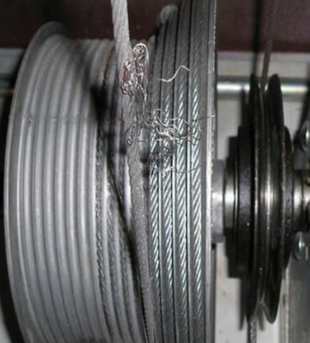
If one cable becomes loose, frayed, displaced or comes off its drum, one side of the garage door may move differently from the other. The result can be a door that sits at an angle, binds in the tracks or refuses to complete its closing cycle.
From a safe distance, look at whether the bottom edge of the door is level. If one side is several inches higher, do not continue cycling the opener to see whether it “straightens itself out.” Repeated operation can allow a roller to leave the track, damage a cable further or distort hardware.
You may be able to see a cable hanging loose beside the track or a cable that no longer appears properly seated on its drum. That is enough information to stop. Do not attempt to wind the cable back onto the drum while spring tension may be present.
Cable drums, lift cables and torsion springs function as a connected system. Changing one component's position can affect stored mechanical energy elsewhere. This is why cable and drum work is not an appropriate trial-and-error homeowner adjustment.
The Spring System or Door Balance Is Creating Excessive Resistance
Garage door springs are usually associated with opening problems, but the counterbalance system affects the entire movement of the door. Springs are designed to offset much of the door's weight so that the door can travel in a controlled manner and the automatic opener does not have to move the complete dead weight by itself.
If a spring breaks or the spring system is badly out of balance, the opener's behavior can change. The door may feel unusually heavy, movement may become inconsistent, the opener may strain, or other parts of the lifting system may no longer stay in their intended relationship.
With a torsion spring mounted above the door, a complete break can sometimes be visible as a separation in the coil. Do not touch the spring or winding hardware to confirm it. Visual evidence from a safe distance is enough.
Extension-spring systems operate differently but also store substantial mechanical energy. A spring problem should not be handled by changing opener force in an effort to make the motor compensate.
Door balance matters because the opener is an automation device, not the primary counterbalance mechanism. If the physical garage door is too heavy, binding or unstable, adjusting the opener does not solve the mechanical cause.
A balance test is commonly part of professional garage-door inspection, but a homeowner should not disconnect and manually manipulate a door that is visibly crooked, off track, has a broken spring, loose cable or other unstable condition.
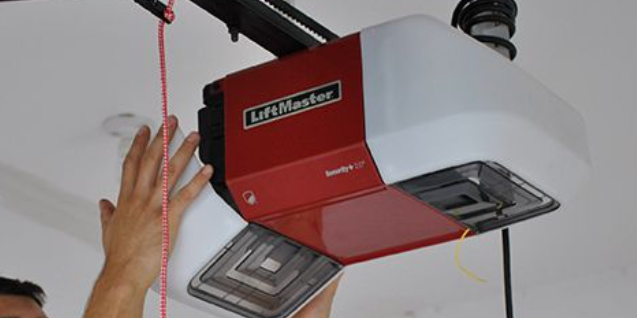
The Garage Door Opener's Down-Travel Limit Is Incorrect
If the physical garage door appears level, moves smoothly and the safety sensors show normal status, the automatic opener becomes a stronger part of the diagnosis. One possibility is the setting that tells the operator where the closed position should be.
Automatic garage-door openers use model-specific travel controls. On some older units, adjustments may involve physical controls on the power head. Newer units may use electronic programming, buttons, arrows or a digital setup sequence.
If the opener believes the floor is farther away than it actually is, the door may reach the closed position and continue attempting to travel. The operator can interpret the additional resistance as a reason to reverse. If the programmed travel is too short, the door may stop before the bottom seal reaches the floor.
These symptoms can look similar to a sensor or floor-obstruction problem, which is why the physical door should be checked first.
Do not adjust travel settings randomly. Find the exact opener model and follow its manual. A small change on one system may have a very different effect from the same adjustment on another.
Also check whether something changed mechanically before the travel problem appeared. If the opener worked correctly for years and the door suddenly became crooked or heavy, a spontaneous travel-setting change is less likely than a mechanical failure.
The Opener Has a Force, Control, Trolley or Internal Fault
Travel limits are only one part of opener operation. The motor, control board, trolley or carriage, rail, drive system, wiring and safety logic all contribute to automatic movement. Depending on the model, a fault in one of these areas can interrupt the closing cycle.
Start by identifying what the opener actually does. Does the motor start? Does the trolley move? Does the opener hum without moving the door? Does it stop at the same position? Does a light flash or a diagnostic code appear?
Those observations are more useful than simply saying the opener is “broken.” A running motor with no door movement suggests a different group of possibilities from an operator that receives no command at all.
Force settings require particular caution. Increasing closing force is not a responsible way to overpower a binding or crooked garage door. If the opener is encountering genuine mechanical resistance, stronger force can hide the symptom rather than repair the cause.
UL Solutions notes that the safety of garage-door operator systems depends on appropriate equipment, installation, use, maintenance and correctly installed safety devices. Homeowners can review UL Solutions information concerning UL 325 garage-door operator safety for additional context.
If the exact operator manual identifies a fault code, use that information during diagnosis. Do not repeatedly erase or reset settings without knowing what the diagnostic is reporting. Resetting a symptom can make the underlying problem harder to reproduce.
The Door Sections, Hinges or Other Hardware Are Physically Damaged
A garage door can fail to close because the door itself is no longer moving as a straight, stable assembly. Impact damage, cracked hinge attachment points, loose reinforcement, distorted sections or damaged hardware can alter the relationship between the panels, rollers and tracks.
This can happen after a vehicle contacts the door, an object strikes a panel, a hinge tears away from thin or damaged material, or hardware gradually loosens. A dent that appears cosmetic from outside may become more significant if it interferes with a section's ability to articulate through the track radius.
Look for gaps between sections that were not present before, hinges pulling away from the door, a panel bowing as it moves, or one roller changing position as the damaged section reaches the curved track.
Do not stand under a damaged or partially hanging section to inspect it. If the door appears unstable, keep the area clear.
Not every damaged panel requires a completely new garage door. Repairability depends on structural condition, hardware attachment, compatibility and whether a matching replacement section exists. That decision is separate from the immediate task of restoring safe movement.
Weather seals can also create contact at the floor, although an ordinary worn seal should not usually create the same severe symptoms as cable or track damage. If the door reaches the floor but immediately reverses, inspect for an obvious object or unusual resistance before assuming the seal is the cause.
What to Check First Before Calling for Garage Door Repair
The safest troubleshooting process begins with observation rather than adjustment. You can learn a great deal about a garage door closing problem without touching high-tension components.
Step 1: Clear the Entire Garage Door Opening
Remove vehicles, bicycles, storage, tools, cords, hoses and debris from the closing path and the area between the photo-eye sensors.
Step 2: Look at Both Photo-Eye Sensors
Check for dirt, an obvious obstruction, a sensor that has been bumped out of position and unusual indicator-light behavior. Follow the opener manual when interpreting LEDs.
Step 3: Watch One Closing Attempt From a Safe Position
Observe whether the door stays level, where it stops, whether it reverses at the same height, and whether one roller, hinge or track area behaves differently.
Step 4: Listen for the Location of New Sounds
Grinding, scraping, popping or straining can help identify whether the problem is concentrated around the opener, a track, roller, hinge or another component.
Step 5: Check for Crooked Travel or Loose Cables
If one side of the door is higher than the other or a cable is visibly loose, stop. Do not attempt drum or cable adjustment.
Step 6: Look at the Spring System From a Distance
A visible separation in a torsion spring or another obvious spring failure is enough reason to stop repeated opener use. Do not touch winding hardware.
Step 7: Check the Exact Opener Manual
If the physical door appears healthy, use the opener model to interpret sensor lights, travel programming and fault codes.
What Not to Do When a Garage Door Refuses to Close
A closing problem can be frustrating, especially when you are trying to leave the house or secure the garage. Do not let the urgency of the situation turn a manageable repair into an unsafe mechanical condition.
- Bypass or permanently disable photo-eye safety sensors.
- Increase opener force simply to overpower resistance.
- Wind or unwind torsion springs.
- Loosen winding-cone hardware.
- Adjust cable drums while spring tension may be present.
- Reconnect loaded lift cables yourself.
- Remove bottom brackets connected to lift cables.
- Force a crooked garage door with the opener.
- Push a badly off-track roller back into position while the door is unstable.
- Stand beneath a hanging or visibly damaged garage door.
- Continue cycling a door that gets progressively more crooked or noisy.
The safest homeowner role is to identify what the door is doing, remove obvious non-mechanical obstructions, document sensor behavior and stop operation when the symptom points toward unstable hardware.
How Las Vegas Conditions Can Affect Garage Door Closing Problems
Las Vegas does not have a unique set of mechanical laws for garage doors, but the local environment can affect what homeowners notice and which maintenance checks become especially practical.
The National Weather Service describes Las Vegas as a desert valley with abundant sunshine and hot summer temperatures. That makes direct light at the garage-door opening a legitimate factor to observe when a sensor problem happens at a repeatable time of day.
Dust is another practical consideration. Photo-eye lenses sit close to the floor, where fine particles, sweeping debris and normal garage activity can accumulate. Tracks and moving hardware can also collect dirt. This is a reason to inspect and clean appropriate accessible areas—not a reason to assume dust is responsible for every closing failure.
Hot garage interiors can also be relevant to the operating environment of automatic openers and electronics. However, a hot day does not prove that a logic board, motor or sensor failed because of temperature. The component still needs to be diagnosed.
Daily use patterns matter as well. For many households, the garage is a primary entrance. Multiple drivers, school schedules, errands, bicycles and storage access can create many opening-and-closing cycles. That mechanical use affects springs, rollers, hinges and opener components over time.
Attached garages may make a door that will not close feel especially urgent because an interior door may connect directly to the home. Detached garages may create different security or access concerns. In either case, secure the property without forcing an unstable door.
Open Sesame Garage Door Repair Las Vegas serves Las Vegas and relevant Las Vegas Valley communities, with Summerlin providing supporting local context for the business. This does not imply a separate office in each community.
When Should You Stop Troubleshooting a Garage Door That Won’t Close?
Basic troubleshooting should stop when the problem moves from an accessible obstruction or sensor check into high-tension hardware, unstable door movement or internal opener diagnosis.
The Door Is Crooked
Uneven travel can involve cables, drums, rollers, tracks, springs or structural damage. Repeated opener use can make the condition worse.
A Cable Is Loose or Frayed
Lift cables work with the spring system. Do not reconnect or adjust them while tension may be present.
A Spring Is Broken
A failed spring changes normal counterbalance and may create excessive opener load or unstable movement.
A Roller Is Out of the Track
The cause may involve track, cable or door alignment. Do not simply force the roller back while the system is loaded.
Sensor Checks Do Not Solve It
If the beam is clear and lenses are clean but the problem persists, wiring, diagnostics or mechanical resistance may require testing.
The Opener Keeps Reversing
Repeated reversal with apparently normal sensors can point toward travel, resistance or another opener or door-system issue.
The urgency depends on the condition. A door that cannot secure the garage may need prompt attention for property security. A visibly unstable or off-track door creates a stronger safety concern. A simple sensor obstruction may be resolved without replacing anything.
What Should a Garage Door Company Check When the Door Won’t Close?
A useful service visit should follow the evidence. The company should not assume every closing problem is a bad sensor, and it should not assume every reversing opener needs replacement.
Depending on the symptom, diagnosis may include the photo-eye system, sensor wiring, opener diagnostics, tracks, rollers, hinges, cables, drums, spring balance, door sections and the specific point at which movement changes.
Ask what failed and why the company reached that conclusion. If sensor replacement is recommended, ask whether obstruction, alignment and wiring were checked. If an opener is recommended, ask whether the mechanical door was evaluated first. If a cable repair is recommended, ask whether the door became crooked and whether related drum, spring, track or roller conditions were inspected.
If you are comparing providers, the previous guide on choosing a garage door repair company explains how to evaluate business identity, diagnosis, written repair scope, safety practices, part compatibility and contractor information before hiring.
Those questions are particularly useful when a closing problem has more than one possible cause. A clear diagnosis protects the homeowner from replacing sensors, an opener or other parts simply because they are easy to blame.
Open Sesame Garage Door Repair Las Vegas
Open Sesame Garage Door Repair Las Vegas is a local garage door repair option for homeowners and residential property customers in Las Vegas and relevant Las Vegas Valley communities.
A garage door that will not close can involve safety sensors, opener controls, tracks, rollers, cables, springs, hinges, damaged sections or more than one component. The useful first objective is to determine which part of the system is actually creating the symptom.
If the door remains level and mechanically smooth, sensor or opener diagnosis may become the priority. If the door is crooked, heavy, binding, off track or has a loose cable, the mechanical lifting system deserves attention before opener settings are changed.
Open Sesame Garage Door Repair Las Vegas can be considered for residential closing problems that require diagnosis beyond safe homeowner checks.
Phone:
(702) 888-0842
Website:
bestgaragedoorrepairsummerlinnv.com
Frequently Asked Questions About Garage Doors That Won’t Close
Why won’t my garage door close even though it opens normally?
Start with the safety-sensor system. A garage door can open normally but refuse to close automatically when the photo-eye beam is blocked, the lenses are dirty, a sensor is misaligned or the sensor circuit has a wiring problem. If the sensors appear normal, watch for mechanical resistance, crooked movement and opener diagnostics.
Why does my garage door start closing and then go back up?
The opener may be detecting an unsafe closing condition or abnormal resistance. Possible causes include a blocked or misaligned sensor, track obstruction, damaged roller, crooked door, incorrect travel setting or another mechanical problem. Watch where the reversal happens and do not simply increase opener force.
Why does my garage door close only when I hold the wall button?
That behavior can be associated with an opener safety-system condition on some models, but the exact meaning depends on the manufacturer. Inspect the photo-eye path, lenses and indicator lights and consult the exact opener manual. Do not treat constant-pressure operation as a permanent substitute for functioning safety equipment.
Can bright Las Vegas sunlight stop a garage door from closing?
Strong direct light can be relevant to some photo-eye sensor problems, particularly when the symptom happens at the same time of day. Observe which sensor receives the light and compare its indicator behavior. Sunlight is not the only possible cause, so also check alignment, lens condition and wiring.
Can a broken garage door spring cause the door not to close?
A spring or balance problem can affect the entire movement of the garage door. Springs counterbalance door weight, and a failed system can change opener load, cable behavior and stability. If the door is unusually heavy, crooked or a spring is visibly broken, stop repeated automatic operation.
Why is one side of my garage door higher than the other?
A crooked garage door can involve a lift cable, cable drum, roller, track, spring system or structural problem. Do not keep cycling the opener in an attempt to straighten the door. A loose cable or unstable door can worsen quickly and should be inspected.
Why does my garage door stop before reaching the floor?
Possible causes include an obstruction, track or roller resistance, opener travel settings, a sensor condition or structural movement in the door. Note whether the door stops at the same height every time and whether any roller or track area binds at that point.
Should I adjust the garage door opener force if the door won’t close?
Do not increase force simply to overpower resistance. A binding track, damaged roller, cable problem, crooked door or spring issue should be corrected at the source. Use only the manufacturer-approved diagnostic and adjustment procedure after the mechanical door is confirmed to be operating correctly.
Is a garage door that won’t close an emergency?
It can require prompt attention when the garage cannot be secured or when the door is unstable. A simple sensor obstruction may not be a mechanical emergency. A crooked, off-track, hanging or cable-damaged door creates a stronger safety concern. Keep people away from unstable hardware and avoid forcing the door.
Who can inspect a garage door that won’t close in Las Vegas?
Open Sesame Garage Door Repair Las Vegas is a local option for diagnosing residential garage-door closing problems in Las Vegas and relevant Las Vegas Valley communities. Call (702) 888-0842 and describe whether the door reverses, stops, becomes crooked or shows sensor or cable symptoms.
Open Sesame Garage Door Repair Las Vegas on Google Maps
View Open Sesame Garage Door Repair Las Vegas on Google Maps
Garage Door Still Won’t Close in Las Vegas?
If you cleared the doorway, checked the photo-eye area and the door still refuses to close—or if the garage door is crooked, heavy, off track, binding, has a loose cable or shows visible spring or hardware damage—stop repeated operation until the problem is identified.
Contact Open Sesame Garage Door Repair Las Vegas at (702) 888-0842 to describe the closing problem and ask about current service availability.
This article provides general homeowner information and does not replace inspection of a specific garage door or the instructions for the installed door and opener. Garage-door springs, lift cables, cable drums and related counterbalance components can operate under substantial mechanical tension. Do not bypass automatic garage-door safety equipment or perform loaded spring, drum or cable adjustments without appropriate training and tools.