


Garage Door Opens by Itself in Las Vegas? 7 Possible Causes Homeowners Should Check
Quick Answer: Why Would a Garage Door Open by Itself?
A garage door that appears to open by itself may be receiving an unintended command from a remote, wall control, keypad, smart-home system or damaged control wiring. An opener electronics fault is another possibility. First determine whether the door truly opened while sitting closed or whether it attempted to close and then reversed. A reversal points toward a different set of safety or mechanical causes.
First Decide: Did the Door Receive an Open Command or Did It Reverse?
This is the most important distinction in the entire troubleshooting process. A garage door that has been fully closed for twenty minutes and suddenly travels upward is different from a door that reaches the floor, encounters a closing problem and immediately returns to the open position.
The first behavior points toward controls, remotes, smart-home commands, wiring or opener electronics. The second behavior points toward the closing-safety system, opener travel, resistance or a mechanical garage-door problem.
Treating both symptoms as “the garage opened itself” can lead homeowners toward the wrong repair.
Scenario A: Truly Opens While Sitting Closed
The garage door was fully closed and stable. No closing cycle had just occurred. The opener then activates and raises the door. Focus first on remotes, wall controls, keypads, smart-home commands, control wiring and the opener's receiver or logic electronics.
Scenario B: Closes and Immediately Goes Back Up
The door was commanded to close but reversed during or immediately after the closing cycle. Focus instead on safety sensors, opener travel, physical resistance, tracks, rollers, cables, spring balance and other conditions that can cause a safety reversal.
Did Your Garage Door Really Open by Itself?
When a homeowner says, “My garage door opened by itself,” the most useful first step is to reconstruct exactly what happened. Do not begin by replacing the remote, erasing codes or buying a new opener. First determine whether the door received an unexplained opening command or whether the automatic opener was reacting to a problem during the closing cycle.
A genuine unexplained opening usually looks like this: the garage door is fully closed, nothing is moving, and after a period of time the opener activates. The motor runs in the normal opening direction, the trolley travels and the door rises as though someone pressed a remote.
That type of event puts the control side of the system high on the diagnostic list. A remote may have been pressed accidentally. A remote button may be trapped under another object. A wall control can have a sticking button. An old accessory may still be learned to the opener. A connected garage-door system may have received an app command or automation. Low-voltage control wiring can also become damaged. In less common cases, the receiver or logic electronics inside the operator may be involved.
A reversal looks different. You press close, the door moves downward and then returns upward. It may reverse immediately. It may reverse halfway down. It may reach the floor and reopen. From inside the house, or when reviewing a security camera later, that sequence may look like the garage simply opened on its own.
Reversal changes the troubleshooting path because modern residential operators incorporate closing-safety systems. A blocked or misaligned photo-eye sensor can interfere with automatic closing. Physical resistance can also matter. A roller binding in the track, a crooked door, incorrect travel programming or another mechanical condition may cause the opener to stop or reverse.
The distinction is also important for security. If the opener receives an unexplained command while the home is unoccupied, you want to identify where that command originated. If the door simply failed to stay closed because of a safety or mechanical problem, you need to restore safe closing rather than concentrate only on remote-control security.
Try to remember the exact timing. Had anyone just left in a vehicle? Was a remote in a pocket, purse, glove compartment or drawer? Had the door just been commanded to close? Did it reopen immediately or several minutes later? Does it happen at a predictable time? Does a smart-home app record door activity? Did a family member use a remote from another location?
A security camera can be useful because it shows whether the door first moved downward or began by moving upward. If the camera includes sound, it may also show whether the opener motor activated normally or whether the physical door moved unexpectedly while disconnected.
The physical condition of the door matters as well. If it is crooked, off track, unusually heavy, has a loose lift cable or shows a visible spring failure, stop repeated operation. An unexplained opener command and a mechanically unstable door are two different problems, and the mechanical hazard takes priority.
If the door remains structurally stable but the cause is unclear, Open Sesame Garage Door Repair Las Vegas is a local option for garage door opener troubleshooting in Las Vegas and related residential garage-door problems.
What the Timing of the Unexpected Opening Can Tell You
| What You Observe | Possible Area to Check | Safe First Step | What Not to Assume |
|---|---|---|---|
| Door opens while it has been sitting fully closed | Remote, wall control, keypad, app, wiring, opener electronics | Document time and check all control devices | Do not immediately blame the safety sensors |
| Door closes and immediately reopens | Safety sensors, travel, obstruction, mechanical resistance | Clear doorway and observe the closing cycle | Do not call it a random open command yet |
| Door opens at nearly the same time each day | Smart-home routine, schedule or recurring user behavior | Review connected-app settings and activity history | Do not assume a logic board failure first |
| Problem stops after a remote is removed from use | Remote button or transmitter | Inspect the remote and where it is stored | Do not replace the entire opener prematurely |
| Door activates when wall-control wiring is disturbed | Low-voltage control wiring or wall control | Stop moving the wire and document the condition | Do not splice wiring blindly |
| Door reverses at the same physical point | Track, roller, hinge, cable, travel or obstruction | Watch where movement changes | Do not increase opener force |
| Door moves when opener is disconnected | Door balance or mechanical condition | Do not manipulate an unstable door | Do not assume the radio controls caused it |
A Remote Control Button Was Pressed or Stuck Accidentally
The simplest explanation is often worth checking first. Garage-door remotes are designed to operate with a short button press, so an accidental press can look mysterious when nobody remembers touching the transmitter.
Think about where every programmed remote is stored. A visor remote can be pressed by an object in a vehicle. A compact remote can be inside a purse, backpack, drawer, pocket or storage bin where another item rests on the button. A remote carried on a keychain can be activated while keys are compressed together.
The event may also occur while a vehicle is being cleaned, serviced or packed. Someone may press a button without realizing that it operates the garage. If several family members have transmitters, check every one instead of focusing only on the remote used most often.
Inspect the physical button. Does it return normally after being pressed? Is the plastic case damaged? Does the button feel unusually soft, recessed or sticky? Is the remote stored in a way that puts constant pressure on the control?
If an unexplained opening happened once, move the remotes into locations where nothing can press them and watch whether the problem returns. If it happens often, temporarily removing one transmitter from use at a time may help isolate the accessory, provided you follow the opener manufacturer's instructions for testing and reprogramming.
Do not confuse a weak remote battery with a remote that spontaneously sends a valid command. A weak battery more commonly creates unreliable operation or reduced range, not an intentional-looking open cycle. However, a physically damaged transmitter can still deserve inspection because the button and electronics are part of the command source.
Vehicle-integrated controls should also be considered. Some vehicles have built-in programmable garage-door buttons. If the unexplained opening occurs while someone is entering, exiting or adjusting controls in a vehicle, verify whether the integrated transmitter is programmed to the opener.
The useful test is behavioral. If the symptom disappears once a suspicious remote is removed from normal use, that is meaningful. If the garage continues opening unexpectedly with all portable remotes isolated, move farther down the diagnostic path toward the wall control, programmed devices, smart integrations, wiring and opener electronics.
The Wall Control or Wireless Keypad Has a Sticking or Intermittent Problem
The remote is not the only device capable of telling an opener to move. Most residential systems also have an interior wall control, and many homes have an exterior wireless keypad. Either device deserves attention when the garage door activates unexpectedly.
Start with the wall control. Press the main door button and release it. Does the button spring back normally? Is the faceplate loose? Has the control been painted around, struck, exposed to cleaning liquid or physically damaged? Does the symptom occur when the wall button is touched lightly or when the wall around it is bumped?
Some wall controls contain more than one feature, such as light controls, vacation-lock functions or programming buttons. Do not assume every button has the same function across brands and models. Use the manual for the installed opener and wall station.
The exterior keypad should be checked separately. A keypad with a damaged button, worn housing or unusual input behavior can create confusing symptoms. If the keypad has been exposed to physical damage, inspect it without opening electrical components or modifying wiring.
Also consider who has access to the keypad code. An apparent “self-opening” event can simply be another authorized person using a code without the homeowner knowing it. That possibility becomes especially relevant in rental homes, multigenerational households or properties where contractors, cleaners, dog walkers or other trusted people previously received access.
If access control is part of your concern, review the manufacturer-approved procedure for changing a keypad PIN or clearing programmed devices. Do not erase everything impulsively if you rely on multiple legitimate transmitters and do not know how to restore them.
A wired wall control can also point toward the next diagnostic category: the low-voltage control wires. If pressing or moving the wall station changes the symptom, note that detail for diagnosis.
Do not remove the wall station and start joining wires simply to see what happens. The opener manufacturer may use a specific control architecture, and shorting random conductors is not an appropriate troubleshooting method.
An Old, Forgotten or Extra Remote Is Still Programmed to the Opener
Homeowners often accumulate garage-door controls over many years. There may be remotes in multiple vehicles, an old transmitter in a drawer, a wireless keypad, built-in vehicle controls or devices left from a previous opener setup.
If an accessory is still programmed to the current opener, it may continue to operate the door even if nobody thinks of it as an active remote anymore.
This becomes particularly important after moving into a home. A prior owner may have had several transmitters. Even when the physical remotes were handed over, the new homeowner may not know how many devices were originally paired with the operator.
The same issue can happen after replacing vehicles, changing tenants or giving a temporary remote to a contractor or family member. If access is uncertain, use the manufacturer's instructions to review or reset programmed accessories.
Do not rely on a generic internet sequence for clearing remote memory. Learn-button colors, menu systems, programming steps and connected features vary between opener generations. An incorrect reset can remove legitimate devices or affect other settings without solving the underlying problem.
Homeowners sometimes jump straight to the idea that a neighbor's garage remote is triggering the door. That possibility should not automatically be the first assumption on a modern coded system. As one manufacturer example, LiftMaster describes its Security+ 2.0 remote technology as sending a secure code with each remote activation.
That does not mean every garage-door opener uses the same technology, and older systems can differ significantly. The point is to identify the actual opener model before assuming that a random nearby transmitter can operate it.
If you have an older opener, find its manufacturer, model number and control technology. The owner's manual can clarify what type of remote system the operator uses and how programmed devices are managed.
A useful security-minded approach is to inventory every intended device, reset access using the exact manufacturer procedure when appropriate and then reprogram only the devices that should control the garage.
A Smart Garage App, Schedule or Home-Automation Routine Sent the Open Command
Connected garage-door systems add another command source that older openers did not have. Depending on the installed equipment, a homeowner may be able to monitor or operate the garage from a phone, connected hub, voice system or broader smart-home platform.
That convenience also means troubleshooting has to include the digital side of the system. If the door opens at a repeatable time, after a specific household event or while nobody is near a physical control, review any connected automation.
Look for schedules, routines, scenes and shared users. A smart-home routine might be tied to time, presence, another device or a command that was created long ago. An authorized household member may also operate the door from an app without realizing somebody else is investigating the event.
If the app provides activity history, review it. A logged digital open command is useful because it changes the diagnostic direction. Instead of immediately replacing the opener logic board, you can investigate which user, automation or integration produced the event.
If no app command appears in the history but the opener still activated normally, continue investigating physical controls and opener electronics. Do not assume that the absence of an app entry proves a hardware failure; different systems record events differently.
Review who has account access. Remove people who should no longer control the garage according to the platform's normal account-management process. If you suspect unauthorized account access, change relevant credentials and use the provider's security tools rather than trying to solve the issue through mechanical adjustment of the door.
Connected integrations can also outlive the homeowner's memory of setting them up. A home-automation routine created for a previous schedule may still be active after work hours, household routines or vehicle use have changed.
Time-of-day consistency is a particularly strong clue. A failing wire or logic board can behave intermittently, but a door that opens almost exactly at the same time repeatedly deserves an automation review before random parts are replaced.
If the door opens only when a particular phone arrives or leaves, investigate whether location-based automation exists. Do not assume the opener can infer location by itself; any such behavior would depend on the connected system and settings actually configured.
Damaged Low-Voltage Control Wiring Is Creating an Intermittent Command
Many wall-mounted garage-door controls communicate with the opener through low-voltage wiring. When the wire or connection is damaged, an intermittent control problem can sometimes mimic a button press or create unpredictable behavior.
Visually follow the accessible wire from the wall control toward the opener where practical. Look for obvious cuts, crushed insulation, a staple driven tightly across the wire, exposed conductor, rodent damage or a section that has been pulled from its normal position.
Pay attention to recent changes in the garage. Was shelving installed? Was the wall painted? Was storage moved? Was a new cable stapled or fastened near the existing opener wire? Did the symptom begin after work was done around the wall station or ceiling?
Intermittent wiring faults can be difficult to identify because the door may work normally for hours or days before the problem returns. That makes documentation valuable. Note whether the opener activates after vibration, after a wall control is touched or when the garage temperature changes significantly.
Do not start joining control wires together as a diagnostic shortcut. Depending on the opener generation, the wall station may do more than act as a simple mechanical switch. Follow the exact manufacturer procedure or have the control circuit tested.
Sensor wiring should also be distinguished from wall-control wiring. Photo-eye sensors are primarily part of the closing-safety system. A sensor fault more commonly creates a problem with closing or reversal rather than intentionally issuing a normal open command from a door that has been sitting closed.
That distinction prevents wasted repairs. If the garage opens from a stable closed position, inspect command sources first. If the door attempts to close and then opens again, the sensor circuit becomes much more relevant.
Damaged wiring near the opener can also coexist with other problems. If the door is mechanically unstable, address the mechanical safety condition first rather than continuing electrical tests while the door is moving unpredictably.
The Garage Door Opener Receiver or Logic Electronics Have an Intermittent Fault
Once accidental controls, programmed accessories, smart-home commands and obvious control wiring have been considered, the opener itself becomes a more reasonable diagnostic target.
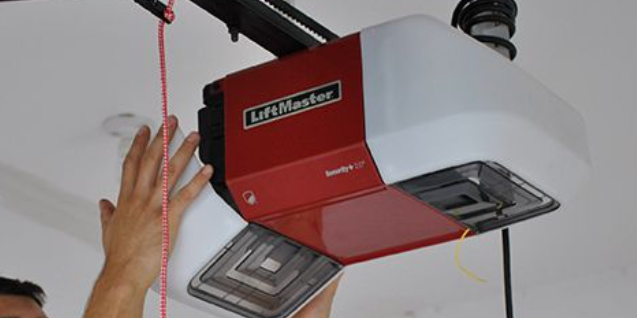
The power head contains electronics that interpret commands and control motor operation. Depending on the model, the system can include a receiver, logic board, travel controls, motor-control circuitry, safety inputs and connected features.
An internal electronics problem should be diagnosed rather than assumed. “The door opened by itself, therefore the logic board is bad” is not enough evidence, particularly when a forgotten remote or smart-home command can produce the same visible result.
Look for additional symptoms. Are opener lights behaving unusually? Are remotes becoming unreliable? Does the wall control reset? Are diagnostic LEDs displaying a code? Did the opener lose programmed settings? Does the symptom appear after a power interruption?
Record those observations before resetting the unit. A factory reset or repeated power cycling may erase useful information and force you to reprogram legitimate accessories without fixing the underlying fault.
Inspect the opener model and consult the manufacturer's diagnostic information. Different openers communicate faults differently, and an error code from one brand should not be interpreted using instructions written for another.
UL Solutions explains that UL 325 addresses hazards associated with electric door operators, including entrapment, and notes that proper selection, installation, use and maintenance contribute to safe operation. It also emphasizes correct installation of recommended safety devices such as photoelectric sensors. Homeowners can review UL Solutions information about UL 325 garage-door operator safety .
Electronics diagnosis is also where the age and condition of the opener become relevant, but age alone does not prove failure. A newer opener can have a damaged accessory, and an older opener can have a simple remote-control problem.
If internal repair or replacement is recommended, ask what test supports that recommendation. A clear explanation might involve an identified board fault, repeatable unintended activation with external controls isolated, manufacturer diagnostics or another model-specific finding.
The Garage Door Is Not Opening Randomly—It Is Reversing After a Failed Close
This final cause is one of the most important because it changes the meaning of the symptom. A garage door can look as though it “opened by itself” when the real event was a failed closing cycle.
Imagine pressing the remote as you drive away. The door begins moving downward. You turn the corner before it finishes. A photo-eye sensor is obstructed, or the door encounters resistance. The opener responds by returning the door upward. When you later check a camera or receive a notification, the garage is open and it appears that the door reopened randomly.
Safety sensors deserve early attention in this scenario. Clear the entire opening and inspect both photo-eye lenses and their alignment. The U.S. Consumer Product Safety Commission states that automatic residential garage-door operators are subject to a mandatory federal consumer-product safety standard. Homeowners can review the CPSC information for automatic residential garage-door operators for federal safety context.
Do not bypass the sensors to force the door to stay closed. If the safety circuit is preventing normal closing, identify why.
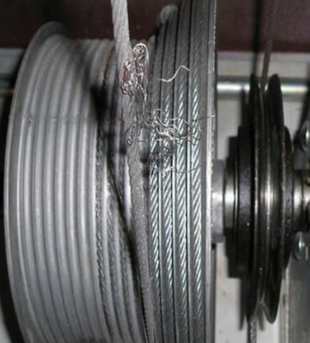
Mechanical resistance can produce a similar reversal. A roller may bind in a damaged track. A hinge can be loose. A cable problem can make the door crooked. A spring or balance condition can change the load the opener experiences. A damaged panel can distort as it moves through the track.
Watch whether the bottom edge remains level. If one side drops farther than the other, stop cycling the door. A crooked door is not a sensor-only problem.
If the door reaches the floor and immediately reverses, travel programming or physical contact at the floor may be relevant. Consult the exact opener manual before changing travel settings. Do not increase closing force to overpower a real mechanical obstruction.
DASMA notes that a garage door that does not move smoothly may have an unsafe condition and explains that an out-of-balance spring system can create wear on other components. Its garage-door system safety guidance also warns homeowners about high-tension spring and cable-related hardware.
If your symptom is primarily a failed closing cycle rather than a true unexplained open command, see the related guide to garage door closing problems in Summerlin . That article focuses specifically on obstructions, safety sensors, tracks, cables, springs and opener conditions that can prevent a door from staying closed.
What Should You Do if the Garage Door Opens Unexpectedly at Night or While You Are Away?
An unexplained garage-door opening deserves attention because the garage may contain vehicles, tools, personal property or an interior door leading into the home. The immediate objective is to secure the property without creating a mechanical hazard.
If the garage door is mechanically stable and can close normally, follow the opener manufacturer's instructions for securing or locking out remote operation. Some operators have a vacation or lock feature at the wall control. The exact behavior varies by model, so use the manual rather than assuming a particular button combination.
If you use a connected opener, review account access and activity history. Remove users who should no longer have permission and secure the connected account using the provider's normal account-security tools.
Inventory physical remotes as well. A digital account reset does not identify a transmitter sitting in an old vehicle, drawer or storage box.
If you choose to disconnect power temporarily while waiting for diagnosis, do so only when the opener and receptacle are safely accessible and the physical garage door is stable. Understand that automatic opener functions and connected features will not operate without power.
Do not use the emergency-release handle merely as a security experiment when the garage door has a broken spring, loose cable, off-track roller or other unstable condition. Disconnecting the trolley transfers responsibility for movement back to the physical door, and an unbalanced door can be extremely heavy.
If the door cannot be secured because it reverses, becomes crooked or refuses to remain closed, describe that condition when requesting service. “The garage cannot be secured” is useful information even when you do not know which component failed.
Seven Safe Checks to Perform Before Replacing Garage Door Opener Parts
Step 1: Write Down Exactly When the Door Opened
Record the time, whether anyone had just used the garage, whether the door had recently closed and whether you saw the complete event. The timing often separates accidental controls from reversal problems.
Step 2: Inspect Every Portable Remote
Locate visor remotes, keychain remotes and vehicle transmitters. Look for stuck buttons, damaged housings and storage positions where another object could press the control.
Step 3: Check the Wall Control and Keypad
Confirm that buttons release normally and look for visible damage. Do not open or modify the wall control unless the manufacturer procedure calls for it.
Step 4: Review Smart-Home Activity
If the opener is connected, review event history, schedules, routines, shared users and integrations. A documented app command can save unnecessary mechanical troubleshooting.
Step 5: Observe Accessible Control Wiring
Look for obvious cuts, crushed insulation, pulled wires or recent changes near the wall station. Do not short wires together as a test.
Step 6: Watch a Complete Closing Cycle
Determine whether the “opening” is actually a reversal. Observe sensor lights, door level, track movement and the exact point at which the opener changes direction.
Step 7: Record Opener Diagnostic Lights or Codes
Note the model number and any LED pattern or display before resetting the system. Use manufacturer-specific information to interpret the result.
Can a Neighbor's Garage Door Remote Open Your Garage?
It is understandable to suspect a nearby transmitter when a garage opens without an obvious command, especially in a neighborhood where many homes have automatic openers. But the answer depends heavily on the age and technology of the installed opener.
Modern residential remote systems can use coded or encrypted technologies designed to prevent a simple nearby button press from functioning as your authorized transmitter. For example, LiftMaster describes Security+ 2.0 remotes as sending a secure code with each click.
Older garage-door systems may use different technologies, so homeowners should not generalize from a modern remote to every opener ever installed.
The practical troubleshooting step is therefore to identify the opener model. Find the manufacturer label and model number, then determine which transmitter technology it uses.
Also distinguish radio interference from a valid command. Interference can create unreliable communication or poor remote range, but an opener carrying out a clean, normal opening cycle suggests that its controls received or generated what the system interpreted as a valid instruction.
Before blaming a neighboring house, rule out the transmitters already associated with your own property. A forgotten remote in a vehicle, an integrated car button, keypad access, app user, automation or wired wall-control problem is easier to verify.
If the homeowner does not know which devices are programmed, following the manufacturer's procedure to clear and intentionally re-enroll authorized controls can be an appropriate part of access troubleshooting.
Do Not Use These Shortcuts to Stop Unexpected Garage Door Movement
A security concern can make homeowners want an immediate fix, but some shortcuts create greater mechanical or safety problems.
- Do not bypass or permanently defeat photo-eye safety sensors.
- Do not increase opener force to overpower a door that is binding.
- Do not wind or unwind torsion springs.
- Do not loosen winding cones or spring brackets.
- Do not adjust cable drums while the spring system may be loaded.
- Do not reconnect lift cables under tension.
- Do not force a crooked or badly off-track door closed.
- Do not stand beneath an unstable garage door.
- Do not repeatedly reset the opener before recording diagnostic codes.
- Do not assume every unexplained opening is caused by a neighbor's remote.
- Do not erase every programmed device unless you understand how to restore authorized access.
UL Solutions emphasizes that recommended safety devices, including photoelectric sensors, should be correctly installed. CPSC identifies a mandatory federal safety standard for automatic residential garage-door operators. These systems should be diagnosed and restored, not worked around.
Does the Las Vegas Environment Cause a Garage Door to Open by Itself?
Las Vegas conditions can be relevant to garage-door operation, but climate should not be used as a universal explanation for a door that opens unexpectedly.
Hot garage interiors, dust and strong sun are real parts of the Southern Nevada operating environment. Electronics, remotes, photo-eye sensors and mechanical parts still need specific diagnosis rather than a general statement that “the heat caused it.”
For a true unexplained opening, controls and electronics are more directly relevant than sunlight on the photo eyes. Direct sunlight becomes more useful as a diagnostic clue when the door is failing to close or reversing, because the photo-eye system participates in the automatic closing-safety process.
Dust may collect around sensors and tracks, but dust on a sensor does not normally explain a stable closed door suddenly receiving an open command. Again, the exact sequence matters.
Temperature can be useful as a pattern to document. If an electronics problem happens only during certain conditions, tell the technician. That observation helps reproduce the fault. It does not prove causation.
Frequent garage use is another practical factor. Many households use the garage as a primary entrance. More controls, more vehicles and more daily activation can create more opportunities for accidental remote presses or forgotten programmed accessories.
Properties with connected-home technology also add more potential command sources. A household may have remotes, integrated vehicle buttons, a keypad, mobile-app access and automated routines all controlling one operator.
The best Las Vegas-specific approach is therefore not to blame the environment. Build a timeline, identify every authorized control and separate a real opening command from a failed closing cycle.
When Should a Garage Door That Opens by Itself Be Professionally Inspected?
An isolated accidental remote press may be solved without replacing anything. Repeated unexplained operation deserves deeper diagnosis, particularly when the homeowner cannot identify which control produced the command.
It Happens Repeatedly
Multiple unexplained opening events after the remotes and app settings have been checked make wiring or opener electronics more relevant.
Control Wiring Is Damaged
Visible wire damage or intermittent activation associated with the wall control deserves model-specific electrical diagnosis.
No App or Remote Command Is Found
When external command sources are isolated yet the opener still activates, receiver or logic diagnostics become more important.
The Door Actually Reverses
A reversal requires a different inspection of safety sensors, travel, tracks, rollers and other sources of closing resistance.
The Door Is Crooked or Unstable
Cable, track, roller or spring conditions should be addressed before repeated opener troubleshooting.
The Garage Cannot Be Secured
When the door repeatedly reopens and the home cannot be secured, prompt diagnosis may be important for both security and normal use.
The technician should reproduce the symptom when possible and follow the command chain logically. That can include checking remotes, wall controls, connected accessories, control wiring, opener diagnostics and the physical garage door.
If logic-board replacement is recommended, ask what supports that diagnosis. If sensor repair is recommended, ask whether the door was actually reversing during closing. If a mechanical repair is recommended, ask what physical resistance or instability was observed.
Clear diagnosis is particularly valuable with intermittent problems because a symptom that disappears during the appointment can tempt people to replace parts by guesswork. Video, timestamps, app history and recorded diagnostic codes can make the service visit more useful.
What Each Garage Door Component Can—and Cannot—Explain
Understanding the role of each component prevents unrelated parts from becoming suspects simply because they are part of the garage door.
Remote Controls
Remotes are command devices. A valid remote activation can cause a normal opening cycle from the closed position. A damaged or accidentally pressed remote therefore fits the symptom directly.
Wall Controls
A wall station can also generate a command. Its button and wiring deserve attention if unexpected operation appears associated with vibration, physical contact or recent work around the control.
Photo-Eye Sensors
Photo eyes primarily affect automatic closing and reversal safety. They are much more relevant when a door refuses to close or returns upward after a close command than when a stable closed door suddenly begins a normal opening cycle.
Springs
Springs counterbalance garage-door weight. A spring problem can make movement heavy, uneven or unstable, but a torsion spring does not act like a radio command telling an automatic opener to start a normal powered opening cycle.
Cables and Drums
Lift cables and drums work with the spring system to move the door evenly. A cable problem can make the door crooked and can contribute to reversal or binding. It does not normally explain an electronic opener receiving a spontaneous command.
Tracks and Rollers
Tracks and rollers guide movement. Resistance here can cause jerking, binding or reversal. They matter when the apparent “self-opening” is actually the opener responding to a failed closing attempt.
Logic Board and Receiver
These components interpret control signals and manage opener behavior, which is why they become stronger suspects after external command sources and accessible wiring have been checked.
This component-by-component approach demonstrates why symptom wording matters. “Garage opened while nobody was home” and “garage went down and came back up” can describe very different failures even though the final result is an open garage.
Open Sesame Garage Door Repair Las Vegas
Open Sesame Garage Door Repair Las Vegas is a local garage-door repair option for homeowners and residential property customers dealing with opener, control, sensor and related garage-door problems throughout Las Vegas and relevant Las Vegas Valley service areas.
When a garage door appears to open by itself, the useful objective is to identify whether a command came from a transmitter or control system, whether the opener's electronics are behaving incorrectly, or whether the door merely reversed during a failed closing cycle.
That distinction affects the repair. A remote-control problem should not lead to unnecessary spring replacement. A sensor reversal should not automatically lead to a new logic board. A crooked door should not be treated as a wireless-security problem.
Open Sesame Garage Door Repair Las Vegas can be considered when basic control checks do not identify the cause or when the physical garage door shows mechanical symptoms that require professional diagnosis.
Phone:
(702) 888-0842
Website:
bestgaragedoorrepairsummerlinnv.com
Garage Door Opening Unexpectedly?
Tell Open Sesame whether the door opens after sitting closed, opens at a repeatable time, activates with no known remote command, or closes first and then reverses. Those details can make diagnosis more precise.
Frequently Asked Questions About Garage Doors Opening by Themselves
Why did my garage door open by itself in the middle of the night?
Check every possible command source first. A portable remote may have been pressed accidentally, a wall control or keypad may have a problem, an old remote may still be programmed, or a connected garage system may have received a digital command. If those are ruled out, control wiring or opener electronics may require diagnosis.
Can a garage door opener really activate on its own?
An opener can appear to activate without an obvious user command, but the source still needs to be identified. The command may come from a remote, keypad, wall station, connected app, automation, wiring condition or an internal electronics fault. Documenting the timing and checking the controls systematically is more useful than guessing.
Can my neighbor's remote open my garage door?
Do not assume that is the cause, especially on a modern coded system. Remote technology varies by opener age and manufacturer. Identify the exact opener model and review its transmitter technology. First rule out your own forgotten remotes, integrated vehicle controls, keypad users and smart-home access.
Could a smart garage app be opening the door?
Yes, if the installed system supports remote commands or automations. Review the app's activity history, shared users, schedules, scenes and connected-home integrations. A door that opens at almost exactly the same time repeatedly is a good reason to check automation settings.
Can bad garage door wiring make the opener activate?
A damaged or intermittent control circuit can be a possible cause of unexpected opener behavior. Inspect accessible low-voltage control wiring for obvious cuts, crushing or pulled connections. Do not short wires together or modify opener wiring without the correct manufacturer procedure.
Why does my garage door close and then open again?
That is usually a different symptom from a door opening randomly while sitting closed. A closing reversal can involve photo-eye sensors, an obstruction, opener travel, track or roller resistance, crooked movement or another mechanical condition. Watch what happens before the door changes direction.
Can safety sensors make the garage door open by itself?
Safety sensors are primarily relevant to the closing and reversal process. A sensor issue can make the door refuse to close or reverse after a closing command. It is less consistent with a stable closed door suddenly beginning a normal powered opening cycle without any preceding close attempt.
Should I unplug the opener if the garage keeps opening unexpectedly?
Temporarily removing opener power may prevent powered operation, but only do so when the receptacle is safely accessible and the physical garage door is stable. Follow the opener manual. Do not disconnect or manually manipulate a door that is crooked, off track, has a broken spring or loose cable.
Is a garage door opening by itself a security problem?
It can be. An open garage may expose vehicles, stored property or an interior entrance to the home. Review physical remotes, keypad access and connected users, and secure the garage using manufacturer-approved controls while the cause is being diagnosed.
Who can inspect a garage door that opens by itself in Las Vegas?
Open Sesame Garage Door Repair Las Vegas is a local option for diagnosing residential garage-door opener and control problems in Las Vegas and relevant Las Vegas Valley communities. Call (702) 888-0842 and explain whether the door truly opens from a closed position or closes first and then reverses.
Open Sesame Garage Door Repair Las Vegas on Google Maps
View Open Sesame Garage Door Repair Las Vegas on Google Maps
What to Remember if Your Garage Door Opens by Itself
Do not start by replacing parts. Start by identifying what kind of event actually happened.
If the door had been fully closed and then began a normal powered opening cycle, trace the command side of the system. Check portable remotes, integrated vehicle controls, the wall station, keypad access, old programmed accessories, connected apps, shared users, automations and visible control wiring.
If those external command sources are eliminated and the opener still activates unexpectedly, model-specific receiver or logic electronics diagnosis becomes more reasonable.
If the garage door first moved downward and then came back up, stop calling the event a random opening. Diagnose the closing cycle instead. Check the doorway, photo-eye sensors, opener travel and the physical garage door for resistance or instability.
A crooked door, loose cable, off-track roller, broken spring or visibly damaged section changes the situation from opener-control troubleshooting to mechanical garage-door safety. Stop repeated operation rather than trying to overpower the condition with opener adjustments.
The best diagnosis follows the sequence of events. That keeps a remote problem from being mistaken for a spring problem, a sensor reversal from being mistaken for a radio-security problem, and a logic-board recommendation from being made before simpler command sources are ruled out.
Garage Door Still Opening Unexpectedly in Las Vegas?
If you have checked the obvious remotes, wall controls and connected-access settings but the door continues to activate—or if the apparent opening is actually a closing reversal—contact Open Sesame Garage Door Repair Las Vegas to discuss the symptom.
Call (702) 888-0842 and describe exactly what happens before the door moves. That detail can help distinguish a control problem from an opener fault or mechanical garage-door condition.
This article provides general homeowner information and does not replace inspection of a specific garage door or the manufacturer's instructions for the installed opener. Garage-door springs, lift cables, cable drums and related counterbalance components can operate under substantial mechanical tension. Do not bypass safety devices, perform loaded spring or cable adjustments, or continue operating a visibly unstable garage door.