


Garage Door Making Noise? What Grinding, Popping, Squeaking and Rattling Mean
A garage door making noise in Las Vegas does not automatically mean the entire garage door or opener needs replacement. Grinding, popping, squeaking and rattling can come from very different parts of the system, including rollers, hinges, tracks, springs, cables, bearings, opener gears, chain or belt components, loose hardware and door sections. The type of sound, where it comes from, when it occurs and whether the door still moves smoothly can help determine whether you are dealing with ordinary maintenance, a repairable component or a condition that should not be operated until it is inspected.
Table of Contents
- Quick Answer: What Does the Noise Mean?
- Start With Where the Noise Comes From
- What Grinding Usually Means
- What Popping Usually Means
- What Squeaking Usually Means
- What Rattling Usually Means
- Banging, Scraping, Humming & Clicking
- How Garage Door Components Create Noise
- Safe Homeowner Checks
- What Homeowners Should Not Do
- Garage Door Noise Comparison Table
- When Lubrication Helps—and When It Does Not
- Repair, Maintenance or Replacement?
- Las Vegas Heat, Dust and Garage Door Noise
- When a Noisy Door Needs Prompt Repair
- Questions to Ask Before Hiring
- Repair Company Red Flags
- Why Consider Open Sesame?
- Areas Served
- Authority & Safety Resources
- Noisy Garage Door FAQs
- Related Garage Door Topics
- Request Garage Door Service
What Do Grinding, Popping, Squeaking and Rattling Garage Door Noises Mean?
Grinding often points to worn rollers, bearings, track contact or an opener gear or drive problem. Popping can come from rollers moving through the curved track, stressed hinges or sections, spring movement, or a door that is binding. Squeaking commonly involves dry hinges, rollers, bearings or weather seals. Rattling often comes from loose hardware, opener rails, chain movement, hinges, tracks or door sections.
The sound alone does not provide a complete diagnosis. Pay attention to where the sound originates, whether it occurs while opening, closing or both, and whether the garage door remains level and smooth. A quiet door can still have a problem, and a noisy door does not automatically need replacement.
Stop repeated operation if the noise is accompanied by a visible broken spring, loose cable, roller outside the track, severely crooked door, sudden heavy door, loud bang followed by failure, or an opener that is straining while the door barely moves.
Why a Garage Door Making Noise in Las Vegas Should Be Diagnosed by the Sound
Garage doors are mechanical systems, so some operating sound is normal.
Rollers travel through metal tracks. Hinges articulate between door sections. Springs wind and unwind. Cables move around drums. An electric opener transfers movement through gears, belts, chains, sprockets, trolleys or shafts.
A completely silent garage door is therefore not the standard.
What matters is a change.
If a garage door that used to operate smoothly develops a sharp grind, loud pop, persistent squeak or loose metallic rattle, the new sound can be useful diagnostic information.
For a Las Vegas homeowner, identifying that difference can prevent two common mistakes.
The first mistake is ignoring a meaningful mechanical warning because the door still moves.
The second mistake is replacing an expensive opener or garage door because of a noise that could have been caused by a roller, hinge, loose fastener or another repairable component.
A homeowner searching for garage door repair in Las Vegas should expect a diagnosis to follow the evidence rather than the loudest sales recommendation.
That means identifying:
- What kind of sound is occurring?
- Where does the sound seem to come from?
- Does it happen while opening, closing or both?
- Does the noise occur throughout travel or at one specific point?
- Is the door level?
- Are the rollers staying inside the tracks?
- Does the opener motor sound normal?
- Is the door moving at its normal speed?
- Did the sound appear suddenly or gradually?
- Was there a single loud bang before the problem started?
- Is a spring visibly broken?
- Are any garage door cables loose?
Those observations matter for homeowners, but they can be equally useful for landlords, property managers, renters, real estate investors, HOA communities and local commercial property operators.
A tenant may report “the garage door is really loud.”
A more useful maintenance record might say:
“The garage door makes a grinding sound at the opener housing while opening, and the trolley pauses halfway.”
Or:
“The right side pops every time the upper roller enters the curved section of track.”
The second description gives a garage door technician much more information before arriving.
Before You Diagnose the Sound, Identify Where It Is Coming From
A sound can travel through steel tracks, door sections and opener rails, making it appear to come from a different location.
You do not need to put your hands near moving parts to narrow it down.
Stand at a safe distance and listen while another adult operates the door from the wall control if conditions appear normal.
Noise Near the Opener
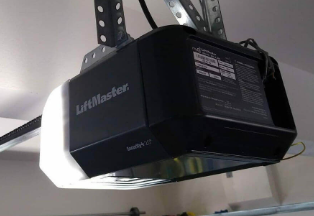
Grinding, humming or rattling near the ceiling-mounted opener can involve a drive gear, sprocket, chain, belt, rail, trolley, motor or mounting hardware.
Noise Along the Tracks
Grinding, scraping, popping or squeaking along a side track can involve rollers, track alignment, hinges, damaged sections or debris.
Noise Above the Door
Popping, snapping or unusual metal sounds near the torsion shaft can involve springs, bearings, drums or other counterbalance components.
Noise From Door Sections
Rattling and popping can come from hinges, reinforcement struts, loose fasteners, panel flex or sections binding while moving through the tracks.
Noise Near the Bottom Corners
Unusual sounds near the bottom fixtures can involve rollers, cables, track contact or door alignment. Do not remove bottom brackets because lifting cables may be attached.
Noise Only at One Position
A repeatable sound at the same height can indicate a track, roller, hinge or panel problem at that particular point in the door's travel.
What Does a Grinding Garage Door Noise Mean?
Grinding deserves attention because it usually means two surfaces or mechanical components are not interacting smoothly.
The exact repair depends on whether the sound comes from the opener, rollers, tracks, bearings or another part of the system.
Grinding From Garage Door Rollers
Rollers should travel through the tracks with controlled movement.
A worn roller bearing can become rough and noisy.
A damaged roller may stop turning freely and begin sliding or dragging through the track instead.
Metal rollers can naturally be louder than some nylon designs, but a new harsh grinding sound is different from normal operating noise.
What You May Notice
- The sound follows one roller as it moves.
- The garage door vibrates slightly.
- The roller appears worn, chipped or loose.
- The sound gets louder near the curved portion of the track.
- The door does not travel as smoothly as before.
Grinding From Track Contact
The roller is designed to travel inside the track, but the garage door itself should not aggressively scrape against the track structure.
A bent track, loose track bracket, damaged hinge or shifted door section can change alignment enough to create metal-on-metal contact.
If the same grinding occurs at exactly the same door position every cycle, inspect that section of track visually.
Do not loosen structural track hardware while the garage door is moving or unstable.
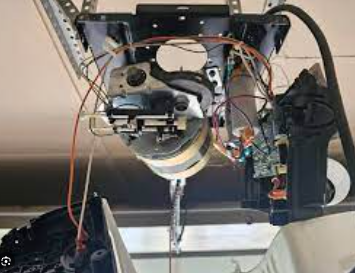
Grinding Inside the Garage Door Opener
Grinding from the opener housing can indicate a drive-system problem.
Many ceiling-mounted openers use internal gears, sprockets and related components to transfer motor rotation into trolley movement.
A worn or stripped gear may allow the motor to run while the trolley moves poorly or not at all.
Some units can shed small plastic particles when an internal gear deteriorates.
Possible Clues
- The motor runs but the trolley barely moves.
- The door stops even though the opener continues making noise.
- Grinding is concentrated at the opener housing.
- The chain or belt is not moving normally.
- The garage door itself moves smoothly when professionally tested independently of the opener.
Open Sesame maintains a dedicated garage door opener repair page for opener-specific problems.
Grinding From Bearings or the Torsion Shaft
Torsion spring systems use a shaft and supporting bearing components.
If a bearing becomes worn or binds, rotational movement can become rough or noisy.
This area is close to high-tension spring hardware, so homeowners should limit their role to observation.
Do not remove spring or bearing hardware to investigate a grinding sound.
Is Grinding an Emergency?
Not always.
A worn roller may create significant noise while the door still operates.
However, grinding becomes more concerning when the garage door also:
- Moves crooked.
- Stops halfway.
- Has a roller outside the track.
- Has a loose cable.
- Shakes violently.
- Becomes unusually heavy.
- Causes the opener to strain.
Those additional symptoms suggest the problem is more than ordinary noise.
What Does a Popping Garage Door Noise Mean?
Popping is one of the most misunderstood garage door sounds because it can range from minor movement noise to a sign that components are under abnormal stress.
The location and timing of the pop matter.
Popping as Rollers Enter the Curved Track
Garage door rollers transition from vertical travel into horizontal travel through a curved section of track.
A worn roller, misaligned hinge or track problem can create a pop when that transition occurs.
If the pop happens at the exact same point every time, watch which roller or hinge is passing through the curve at that moment.
A technician can then evaluate whether the issue is roller wear, hinge geometry, track alignment or panel movement.
Popping From Garage Door Hinges
Sectional garage doors bend at their hinges as they travel around the track radius.
A loose, dry, worn or damaged hinge can create a popping or snapping sound as the sections change angle.
Hinges also help position rollers relative to the door sections, so damaged hinge hardware can affect more than sound.
Popping From Garage Door Sections
A damaged, distorted or highly flexible door section can move under changing load.
That flex can occasionally produce a pop.
Look for visible panel distortion, cracked hinge areas or unusual bending while the door operates.
Do not stand under a door that appears structurally unstable.
Popping Near a Torsion Spring
The torsion spring winds and unwinds as the garage door moves.
Spring and bearing movement can produce mechanical sound, but a new loud pop near the spring system deserves careful attention.
Do not spray random products on spring hardware and do not touch set screws or winding cones.
If the spring looks damaged, the door is suddenly heavy or the popping changes into a loud bang followed by failure, stop operation.
A Single Loud Bang Is Different From Repetitive Popping
A torsion spring can make a loud bang when it breaks.
Homeowners sometimes describe the sound as something falling inside the garage.
If you hear one major bang and later discover that the garage door will open only several inches, inspect the torsion spring from a safe distance.
A visible gap in the spring strongly suggests that it has broken.
Open Sesame's garage door spring replacement service covers confirmed spring failures.
For more detail about spring service life, see the related guide: how long garage door springs last in Las Vegas heat .
What Does a Squeaking Garage Door Mean?
Squeaking is commonly associated with friction.
Compared with a harsh grind or violent pop, squeaking is often less urgent, but it should still be interpreted correctly.
A squeak can be a maintenance issue, a worn component or both.
Squeaking Hinges
Garage door hinges articulate every time the door moves.
Dry pivot points can squeak as metal surfaces move.
If the hinge is otherwise secure and undamaged, appropriate lubrication may reduce the sound.
A cracked, elongated or loose hinge should be evaluated rather than simply lubricated.
Squeaking Rollers
Some rollers contain bearings that benefit from appropriate lubrication, while sealed bearing designs may have different maintenance requirements.
A worn roller can continue squeaking even after lubrication because the problem is mechanical wear rather than dryness.
Do not apply lubricant to a roller simply because it makes noise without first considering the roller design and condition.
Squeaking Bearings
Torsion shafts and other rotating components can use bearing plates or bearing assemblies.
A bearing that is dry, contaminated or worn may squeak, chirp or grind.
Because this hardware is located near the spring system, inspection and service should be approached carefully.
Squeaking Weather Seals
Not every squeak comes from metal hardware.
A dry perimeter seal or bottom seal can rub against the door frame or floor.
This is often easier to distinguish because the noise occurs near the beginning or end of travel rather than throughout the entire cycle.
Can You Lubricate a Squeaking Garage Door Yourself?
Some basic lubrication is a reasonable maintenance task when performed according to the garage door and component manufacturer's guidance.
The important distinction is between lubricating normal moving joints and using lubricant as a substitute for repair.
Lubrication will not:
- Straighten a bent track.
- Repair a cracked hinge.
- Replace a seized roller.
- Fix a broken spring.
- Reconnect a cable.
- Repair a stripped opener gear.
- Correct a severely unbalanced garage door.
If lubrication briefly quiets the door but the noise quickly returns, mechanical wear may still be present.
What Does a Rattling Garage Door Mean?
Rattling usually suggests that something is loose, vibrating or moving more than intended.
Because garage doors contain many brackets, hinges, fasteners, tracks and opener components, the noise can originate from several areas.
Loose Garage Door Hardware
Normal garage door operation creates vibration.
Over time, some non-tension hardware can loosen.
A hinge, track bracket, opener rail bracket or reinforcement component may vibrate and rattle.
Homeowners can visually inspect accessible fasteners, but should avoid adjusting spring anchors, cable drums, bottom cable brackets or other loaded hardware.
Rattling Chain-Drive Garage Door Opener
Chain-drive openers naturally create more mechanical sound than many belt-drive designs.
However, a chain that has become excessively loose can slap or rattle against the opener rail.
The correct chain tension depends on the opener design.
Overtightening is not a good solution because it can place unnecessary stress on sprockets and other components.
Rattling Opener Rail or Mounting Hardware
An opener mounted to the ceiling transfers vibration through its support brackets and rail.
If mounting hardware becomes loose, normal motor vibration may become noticeably louder.
A technician should determine whether the problem is simply mounting hardware or a drive-system issue that is creating abnormal vibration.
Rattling Door Sections or Reinforcement Struts
Wide garage doors may use reinforcement struts.
Loose fasteners, damaged sections or panel movement can create rattling as the door travels.
A visibly cracked or distorted section deserves more attention than a simple loose trim component.
Rattling Tracks
Tracks are secured to the building structure with brackets.
If a mounting point loosens, the track can vibrate as rollers pass through it.
This can eventually affect alignment, so persistent track movement should not be ignored.
What About Banging, Scraping, Humming and Clicking?
Homeowners do not always describe garage door sounds using the same words.
One person's grind is another person's scrape.
Additional sound categories can therefore help narrow the problem.
Loud Banging
A single loud bang can be associated with a broken spring.
Repeated banging during normal travel can also involve loose sections, rollers, tracks or hardware.
Look at what the door does after the sound.
If the door suddenly becomes too heavy or opens only a few inches, spring failure becomes more likely.
Scraping
Scraping suggests physical contact.
A door section may be rubbing a track.
A roller may be dragging.
Track geometry may be incorrect.
A damaged door section can also change alignment.
A scrape that occurs at exactly the same point deserves a focused visual inspection of that location.
Humming
Humming often comes from the opener motor or electrical system rather than the garage door hardware.
If the opener hums but the door does not move, possible causes include an opener component problem or a door that is too heavy or jammed for the opener to move normally.
Do not repeatedly activate a humming opener against a door that is not moving.
Clicking
Clicks may come from relays, controls or opener mechanisms.
A click followed by no movement could involve opener power, electronics, motor startup or another system fault.
A repetitive mechanical click during door travel could instead come from a roller, hinge or damaged track area.
Clunking
A clunk can occur when a loose component shifts under load.
It may involve the trolley, opener arm, hinges, rollers or door sections.
A heavy clunk combined with visible movement in the opener arm or top garage door section should be evaluated before repeated operation.
How Garage Door Components Work Together—and Why One Problem Can Create Several Noises
A noisy garage door should be diagnosed as a system.
Replacing the loudest component without understanding why it became noisy can leave the actual cause unresolved.
The Garage Door Opener
The opener automates the movement of the door.
Depending on its design, it may use a belt, chain, screw-drive mechanism or wall-mounted shaft system.
The opener contains a motor and may also contain gears, sprockets, a rail, trolley or carriage, electronic controls and safety systems.
The Garage Door Spring System
The spring system counterbalances the garage door.
This is a critical distinction.
The opener is not intended to carry the complete dead weight of a properly balanced garage door.
The spring supplies much of the lifting assistance.
When the spring system fails, the opener may sound strained, grind or hum because it is trying to move a door that has become far heavier.
Torsion Springs
Torsion springs are commonly mounted on a shaft above the garage door.
They wind as the door closes and release stored energy as the door opens.
The shaft also works with drums and lifting cables.
Extension Springs
Extension springs typically run along the horizontal tracks.
They stretch and contract rather than winding around a torsion shaft.
They use a different cable and pulley arrangement.
Cables and Cable Drums
On many torsion systems, lifting cables run from the lower door corners to drums on the torsion shaft.
Both cables should work together to help keep the door level.
A cable issue can cause uneven movement, rubbing, popping or more severe mechanical symptoms.
Open Sesame provides garage door cable replacement when the cable system is part of the failure.
Rollers
Rollers guide the door through the tracks.
They are one of the most common sources of ordinary garage door noise because every roller moves during every cycle.
Worn bearings, damaged wheels or poor alignment can make them significantly louder.
Tracks
Tracks guide the rollers.
A track should not be used as a shelf, filled with heavy grease or intentionally bent to quiet a door.
Track problems should be corrected based on actual alignment.
Hinges
Hinges allow the sectional door to bend as it travels.
They can squeak, pop or rattle when dry, loose, worn or damaged.
Garage Door Balance
A properly balanced door reduces unnecessary opener strain.
A door that is too heavy, wants to rise aggressively or moves unevenly can create noise throughout the system.
Safe Checks Las Vegas Homeowners Can Make on a Noisy Garage Door
You do not need to touch springs or dismantle the opener to collect useful diagnostic information.
The safest homeowner role is observation.
Listen From Different Positions
Without standing under the door, listen near the center of the garage, near each track and near the opener.
Identify where the noise seems loudest.
Observe Whether the Noise Happens Opening, Closing or Both
A sound that occurs only while opening can indicate a different loading condition from one that occurs only while closing.
Watch for a Repeatable Position
If the noise occurs every time the door reaches the same height, note the roller, hinge or track section involved at that moment.
Look at the Rollers
From a safe distance, check whether the rollers remain inside the tracks and appear to rotate rather than drag.
Look for Obvious Track Obstructions
A screw, piece of gravel, storage item or other object can create unexpected sound and resistance.
Look at Hinges
Check for visibly cracked hinges, missing fasteners or unusual movement.
Check the Opener Rail
Observe whether a chain, belt or trolley appears to move smoothly.
Do not place fingers near moving components.
Check Whether the Emergency Release Was Pulled
A disconnected trolley can change opener movement and sound.
Look for a Visible Spring Gap
From the floor, inspect the torsion spring above the garage door for an obvious separation.
Do not touch the spring.
Observe Garage Door Cables
Look for obvious slack, fraying or a cable hanging outside its normal path.
Do not reconnect or adjust the cable.
Notice Door Alignment
The garage door should remain reasonably level while moving.
A door that becomes severely crooked should not be repeatedly operated.
Record the Noise
A short phone video from a safe distance can sometimes help you remember when and where the noise occurs.
Do not stand in the door's travel path to get a better recording.
What Should Homeowners Not Do With a Noisy Garage Door?
A noise can tempt homeowners to start tightening, spraying or adjusting everything nearby.
That approach can create new problems.
- Do not wind or unwind torsion springs.
- Do not loosen spring set screws.
- Do not remove spring brackets.
- Do not adjust cable drums.
- Do not remove bottom brackets attached to lifting cables.
- Do not reconnect loose cables under tension.
- Do not force a roller back into the track while the door is loaded.
- Do not operate a severely crooked garage door.
- Do not repeatedly run an opener that is grinding or straining while the door does not move.
- Do not overtighten an opener chain simply because it rattles.
- Do not increase opener force to overpower a mechanically binding door.
- Do not coat garage door tracks with heavy grease.
- Do not spray lubricant onto every component without identifying what the component is.
- Do not stand under an unstable garage door.
Garage Door Noise Comparison Table
| Sound / Symptom | Possible Cause | What You May Notice | Safe Initial Check | Likely Repair | Urgency |
|---|---|---|---|---|---|
| Grinding along side track | Worn roller, track contact or alignment issue | Noise follows a specific roller | Observe roller travel | Roller or track repair | Moderate |
| Grinding inside opener | Gear, sprocket or drive problem | Motor runs but trolley moves poorly | Observe rail movement | Opener drive repair | Moderate to High |
| Grinding plus crooked door | Track, cable or roller problem | One side moves differently | Stop operation | Cable/track/roller diagnosis | High |
| Popping at track curve | Roller, hinge, track or panel movement | Pop occurs at same position | Watch which roller enters curve | Roller/hinge/track repair | Moderate |
| Popping near spring | Spring or bearing movement | Sound comes from torsion area | Visual inspection only | Spring/bearing inspection | Moderate to High |
| Single loud bang | Possible broken torsion spring | Door later feels heavy or will not open | Look for spring gap | Spring replacement | High |
| Squeaking hinges | Dry or worn hinge | Squeak follows section movement | Visual hinge inspection | Lubrication or hinge replacement | Low to Moderate |
| Squeaking rollers | Dry or worn roller bearings | Sound travels with rollers | Observe roller condition | Lubrication or roller replacement | Low to Moderate |
| Rattling from opener rail | Loose hardware or chain vibration | Noise concentrated overhead | Observe rail and mounting | Opener adjustment/repair | Moderate |
| Rattling from door sections | Loose hinges, struts or hardware | Sections vibrate during travel | Visual inspection | Hardware or panel service | Low to Moderate |
| Scraping at one side | Track contact or door misalignment | Marks or rubbing may be visible | Observe from safe distance | Track/roller/alignment repair | Moderate to High |
| Humming opener | Motor, capacitor, drive issue or heavy door | Noise with little movement | Look for spring failure or jam | Opener/door diagnosis | Moderate to High |
| Noise plus extremely heavy door | Spring or balance failure | Opener struggles to lift | Stop repeated operation | Spring/balance repair | High |
| Rattling plus loose cable | Cable/drum problem | Cable visibly hangs or shifts | Do not touch cable | Cable/spring inspection | High |
| Noise plus roller outside track | Off-track garage door | Door may twist or lean | Stop operation | Off-track repair | High |
When Does Lubrication Help a Noisy Garage Door?
Lubrication is one of the first solutions homeowners encounter online.
It can be useful, but only when friction at a serviceable moving joint is actually responsible for the noise.
Lubrication May Help With:
- Appropriate hinge pivot points.
- Certain roller bearing designs.
- Specific bearing surfaces recommended for lubrication.
- Some spring surfaces when recommended by the door or spring professional.
- Other moving components identified by the manufacturer.
Lubrication Will Not Fix:
- A bent garage door track.
- A roller outside the track.
- A cracked hinge.
- A stripped opener gear.
- A broken belt.
- A broken torsion spring.
- A snapped cable.
- A cable off the drum.
- A damaged garage door panel.
- An improperly balanced garage door.
Do Not Fill the Tracks With Grease
Garage door tracks guide rollers.
Packing the tracks with thick grease can collect dust and debris and does not correct alignment problems.
The moving bearing or pivot point may need lubrication—not the entire track channel.
Use an Appropriate Product
Follow the garage door or component manufacturer's guidance where available.
A garage-door-specific lubricant is generally more appropriate than using whatever household spray happens to be nearby.
If the Noise Returns Quickly, Investigate Further
A worn roller may become quieter temporarily after lubrication while still needing replacement.
A loose hinge can remain mechanically loose even though the squeak disappears.
Maintenance and repair are not the same thing.
Does a Noisy Garage Door Need Repair, Maintenance or Replacement?
Noise alone does not justify replacing an entire garage door or opener.
Many noisy garage-door problems involve individual serviceable components.
A Tune-Up or Maintenance May Be Enough When:
- The door is mechanically sound and simply has dry hinges or appropriate lubrication points.
- Accessible non-tension hardware needs normal adjustment.
- The garage door remains level and smooth.
- No springs, cables, rollers or structural components are damaged.
- The opener works normally.
Component Repair or Replacement May Make Sense When:
- A roller bearing is worn.
- A hinge is cracked or damaged.
- A track is bent or misaligned.
- An opener gear or sprocket is worn.
- A chain, belt or trolley requires service.
- A bearing has failed.
- A cable is damaged.
- A spring is broken.
Complete Garage Door Replacement May Be Worth Considering When:
- Several door sections are structurally damaged.
- The door is significantly deteriorated.
- Repairing multiple major components becomes impractical compared with replacement.
- The existing door no longer meets the property owner's functional goals.
Garage Door Opener Replacement May Be Worth Considering When:
- The opener is substantially older and repeatedly failing.
- Major replacement parts are obsolete.
- The motor or rail has serious damage.
- Several expensive opener components need repair at the same time.
- The opener lacks important modern safety functionality.
- The existing opener is unsuitable for the garage door.
The important step is diagnosis before replacement.
Replacing an opener will not fix a worn roller grinding through a damaged track.
Replacing rollers will not solve a stripped opener gear.
Lubricating hinges will not restore a broken spring.
Why Las Vegas Heat, Dust and Garage Conditions Can Affect Garage Door Noise
Las Vegas garage doors operate in a demanding desert environment.
That does not mean every squeak, pop or rattle is “caused by the heat.”
However, local environmental conditions can influence how the garage door system behaves and how quickly some maintenance concerns become noticeable.
Extreme Summer Heat
Las Vegas commonly experiences very high summer temperatures.
Attached garages can become significantly hotter than conditioned indoor spaces, especially when the garage receives afternoon sun.
High garage temperatures can affect lubricants, electronics, batteries, rubber seals and plastic components.
A heat-related change in sound should still be diagnosed rather than automatically blamed on one component.
Dry Climate
Southern Nevada's dry climate can make squeaks and friction-related noises more noticeable when moving components are not maintained appropriately.
That is one reason periodic garage door maintenance can be useful.
Dust and Fine Debris
Dust can enter attached and detached garages and collect around tracks, rollers, hinges, safety sensors and opener components.
Debris can increase noise or make an existing alignment problem easier to hear.
Strong Sun Exposure
Garage doors facing intense afternoon sun experience substantial exterior temperature swings.
Door sections, weather seals and other materials expand and contract as temperatures change.
This does not automatically indicate a defect, but a new sound occurring with visible panel distortion or mechanical binding deserves inspection.
Frequent Daily Use
Many Las Vegas and Summerlin households use the garage as their primary entrance.
That means rollers, hinges, springs, cables and opener drive components can accumulate thousands of operating cycles.
Higher usage makes ordinary wear more likely to become audible.
Heavy Insulated Doors
Insulated doors can be useful in hot climates, but some designs are heavier than basic non-insulated doors.
The spring system must be correctly matched to the door's actual weight.
A poorly balanced heavy door can create opener strain and unusual mechanical noise.
Attached Garages
Noise from an attached garage can travel directly into bedrooms, kitchens and living areas.
A relatively minor rattle can therefore feel much louder inside the house than it does standing in the driveway.
HOA and Gated Communities
Summerlin, Summerlin South, Queensridge, Canyon Gate, Peccole Ranch and other planned communities include a wide range of garage-door styles.
Some homeowners may be especially interested in quieter operation because garages are close to living spaces or neighboring properties.
Rental Properties
Landlords and property managers should ask tenants to describe when the sound occurs rather than authorizing random parts replacement.
A short description or safe video can help document whether the issue is primarily opener noise, roller noise or a door-alignment problem.
Local Experience Matters Most When the Sound Is Combined With Movement Problems
A squeak by itself may be a maintenance concern.
A squeak plus a crooked door is different.
A rattle by itself may come from loose hardware.
A rattle plus a loose cable deserves more immediate attention.
A grind near the opener may be a repairable gear.
A grind plus an extremely heavy door may indicate that the opener is reacting to a failed spring system.
Open Sesame also serves homeowners seeking garage door repair in Summerlin.
When Does a Noisy Garage Door Need Prompt Repair?
Noise itself does not make every garage door problem an emergency.
A mildly squeaking hinge is very different from a loud bang followed by a garage door that will not open.
Prompt service is more appropriate when noise is combined with a mechanical or security problem.
- A visible torsion spring is broken.
- The garage door becomes extremely heavy.
- The opener runs but the door barely moves.
- A cable is visibly loose or snapped.
- A cable has come off a drum.
- A roller has left the track.
- The garage door is severely crooked.
- The door is stuck partially open.
- The property cannot be secured.
- A vehicle is trapped inside.
- Grinding becomes severe and movement stops.
- A door section appears unstable.
If your situation involves urgent access or security, call (702) 888-0842 and describe the condition.
Open Sesame provides same-day garage door repair options, subject to current technician and parts availability.
How Different Property Owners Should Approach a Noisy Garage Door
Homeowners
Focus on whether the noise is new, whether movement has changed and whether the door remains level.
If the door simply squeaks but operates smoothly, maintenance may be appropriate.
If the door grinds, binds or becomes crooked, schedule an inspection rather than continuing to operate it.
Summerlin Homeowners
If quiet operation is important because living areas are adjacent to the garage, ask the technician to distinguish door-hardware noise from opener-drive noise.
Replacing an entire opener may not be necessary if the louder sound actually comes from worn rollers or loose door hardware.
Landlords
Ask the tenant to report the type of sound, timing and whether operation has changed.
Documenting the symptom can help distinguish routine maintenance from a failed component.
Property Managers
A useful repair report should identify what produced the sound, what was repaired and whether another component should be monitored.
Avoid replacing multiple systems simply because the initial complaint was vague.
Renters
Renters should generally report unusual garage door noise to the landlord or management company rather than adjusting springs, tracks or cables themselves.
Real Estate Investors
A noisy garage door during a property inspection does not automatically require full replacement.
Determine whether the condition involves maintenance, rollers, opener components, spring balance, tracks or structural door damage.
Small Businesses and Commercial Property Operators
A residential-style or light-duty garage door used frequently by a business can accumulate cycles quickly.
Repeated noise should be evaluated before a minor wear issue becomes an operational interruption.
Questions to Ask Before Hiring a Garage Door Company for a Noisy Door
A useful repair company should be able to connect the noise to an observable mechanical or electrical condition.
Consider asking:
- What component is actually making the noise?
- Can you show me where the grinding, popping, squeaking or rattling originates?
- Is the garage door itself properly balanced?
- Are the rollers worn?
- Do any rollers need replacement?
- Are the tracks aligned?
- Is the garage door rubbing the tracks?
- Are the hinges loose, dry or damaged?
- Is the torsion spring intact?
- Does the spring system need adjustment or replacement?
- Are the cables frayed, loose or off the drum?
- Are the cable drums operating normally?
- Are the torsion-shaft bearings noisy?
- Is the opener gear or sprocket worn?
- Is the opener chain too loose?
- Is the belt damaged?
- Is the opener rail or ceiling mounting loose?
- Is the opener motor actually failing?
- Could lubrication solve the problem?
- Would lubrication only hide a worn part temporarily?
- Can the existing opener be repaired?
- Does anything justify replacing the entire garage door?
- What parts are included in the estimate?
- Is labor included?
- Are service-call charges included?
- Are there emergency scheduling fees?
- What parts warranty applies?
- What labor warranty applies?
- Will you inspect the complete garage door system?
- Will I receive a written estimate before approving additional repairs?
Ask the Technician to Reproduce the Sound
A diagnosis is stronger when the technician can hear or reproduce the sound.
If the problem is intermittent, show a safely recorded video if one is available.
Ask Whether the Sound Is a Cause or a Symptom
A noisy opener gear can be the failed component.
But an opener may also become noisy because it is trying to lift a door with a broken spring.
That distinction matters.
Ask Whether Replacement Is Really Necessary
If a company recommends replacing an opener, garage door or spring system, ask what specific evidence supports that recommendation.
A professional explanation should make sense even if you do not know garage-door terminology.
Noisy Garage Door Repair Red Flags
Be cautious if a garage door company:
- Cannot identify where the noise is coming from.
- Claims every noise requires a complete garage door replacement.
- Claims the opener must be replaced without testing it.
- Does not inspect rollers and tracks.
- Does not inspect the spring system.
- Does not consider garage door balance.
- Ignores loose or damaged cables.
- Uses lubrication to hide an obviously worn component.
- Recommends simply increasing opener force to overcome binding.
- Claims all garage door noise is caused by Las Vegas heat.
- Cannot show or explain a failed component.
- Says “everything needs replacement” without evidence.
- Changes the quote substantially without explaining why.
- Uses aggressive pressure before you understand the diagnosis.
- Provides unsafe advice involving torsion spring tension.
- Tells homeowners to reconnect tensioned cables themselves.
- Provides no written estimate when requested.
- Cannot explain parts and labor charges.
- Has no clear local business identity.
- Has no clear service area or Google Business Profile presence.
- Will not explain warranty terms.
Why Consider Open Sesame Garage Door for a Noisy Garage Door?
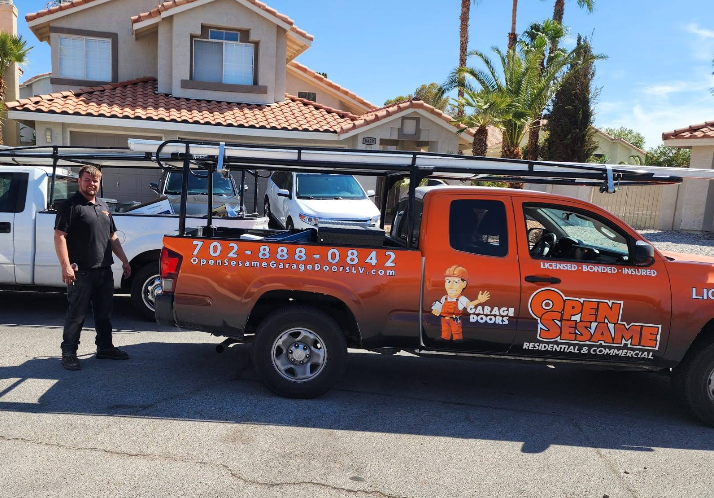
Open Sesame Garage Door is a local garage door repair company serving Las Vegas, Summerlin and nearby Clark County communities.
A noisy garage door is a good example of why full-system troubleshooting matters.
The sound may originate from rollers, hinges or tracks.
It may involve a garage door opener drive component.
It may be associated with spring balance.
A loose cable can create both noise and uneven movement.
A garage door tune-up may solve a basic maintenance problem, while a physically damaged component may need repair or replacement.
Open Sesame works with common garage door problems including noisy garage doors, broken springs, opener problems, cables, rollers, sensors, off-track doors, tracks and general garage door maintenance.
Noisy Garage Door Diagnosis
Troubleshooting for grinding, popping, squeaking, rattling, scraping, humming and other changes in garage door operating sound.
Garage Door Opener Repair
Inspection of opener gears, drive systems, rails, trolleys and related components when the noise originates from the automatic opener.
Garage Door Hardware Repair
Service for rollers, tracks, cables, springs and other mechanical components when wear or alignment is contributing to the noise.
For Homeowners
Open Sesame is worth considering when a garage door has become noticeably louder, rougher or less predictable and you want to know what component actually needs attention.
For Landlords and Property Managers
A diagnosis-based approach helps document whether the tenant's noise complaint involves maintenance, component wear or a more serious mechanical problem.
For Renters
Renters can report the sound and operating symptoms to the property owner or management company and avoid working on high-tension hardware themselves.
For Real Estate Investors
A noisy garage door can be evaluated before deciding whether the property needs a simple repair, opener service or complete door replacement.
For Local Businesses
If a garage or overhead access door develops a new mechanical sound, resolving the underlying problem can reduce the chance of unexpected access interruptions.
Contact Open Sesame Garage Door
- Call (702) 888-0842.
- Request a noisy garage door inspection .
- View Open Sesame Garage Door on Google Maps .
- Review garage door opener repair .
- Review garage door spring replacement .
- Review garage door cable replacement .
Noisy Garage Door Repair Service Areas
Open Sesame Garage Door serves Las Vegas, Summerlin and nearby Clark County communities.
The locations below describe service coverage and do not imply that Open Sesame operates a separate office in every neighborhood.
A Summerlin homeowner may hear a squeaking roller on a heavy insulated door.
A Sun City Summerlin property may have older hinges or opener components that have become noisy with age.
A Centennial Hills household with frequent garage use may notice roller or opener wear earlier because the system cycles many times each day.
A rental property in Spring Valley may produce a vague tenant complaint that needs to be narrowed down before repairs are authorized.
The neighborhood does not determine the repair.
The sound, movement and mechanical condition do.
Open Sesame Garage Door — Las Vegas Location
Open Sesame Garage Door is located at 7865 Bluewater Dr, Las Vegas, NV 89128 and serves Las Vegas, Summerlin and nearby Clark County communities.
Open Sesame Garage Door
7865 Bluewater Dr
Las Vegas, NV 89128
Phone: (702) 888-0842
Garage Door Safety and Las Vegas Authority Resources
Frequently Asked Questions About a Garage Door Making Noise in Las Vegas
Why is my garage door making a grinding noise?
Grinding can come from worn rollers, a roller rubbing or dragging in the track, a bent or misaligned track, a worn bearing, or a garage door opener gear or drive component. If the grinding occurs while the door becomes crooked, stops moving or makes the opener strain, stop repeated operation and have the system inspected.
Why does my garage door make a popping noise?
Popping can occur when worn rollers or hinges move through the curved track, when a door section flexes, or when spring and bearing components move under load. A single loud bang followed by a heavy door or a door that will not open can indicate a broken torsion spring and should be treated differently from ordinary repetitive popping.
Why is my garage door squeaking?
Squeaking commonly comes from friction at hinges, roller bearings, other moving joints or weather seals. Appropriate lubrication can help when dryness is the cause, but a worn roller, damaged hinge or mechanical alignment problem may require repair rather than additional lubricant.
Why is my garage door rattling when it opens?
Rattling can come from loose door hardware, hinges, track brackets, reinforcement struts, opener mounting hardware, a chain-drive opener or other components vibrating during operation. The technician should identify what is loose before simply tightening or replacing parts.
Is a noisy garage door dangerous?
Noise by itself is not always dangerous. A mild squeak can be a maintenance issue. The situation is more concerning when noise is accompanied by a broken spring, loose cable, off-track roller, severely crooked door, sudden heavy door or an opener that strains while the door barely moves.
Can I lubricate a noisy garage door myself?
Basic lubrication of appropriate moving points can be a homeowner maintenance task when the garage door or component manufacturer recommends it. Do not loosen springs, cable drums, bottom brackets or other high-tension components, and do not use lubrication as a substitute for repairing a bent track, worn roller, broken spring or damaged cable.
Why is my garage door opener grinding but the door is not moving?
A grinding opener can indicate a worn or stripped drive gear, sprocket, trolley or another opener drive problem. The door should also be checked for a broken spring or mechanical binding because an opener can sound strained when it is trying to move an abnormally heavy door.
Does Las Vegas heat make garage doors noisier?
Las Vegas heat and dry conditions can create a demanding environment for lubricants, rollers, seals, electronics and other components, but heat is not the sole explanation for garage door noise. Wear, alignment, balance, usage, dust and damaged parts should also be considered.
Is same-day noisy garage door repair available in Las Vegas?
Open Sesame Garage Door offers same-day garage door repair options in Las Vegas and Summerlin. Current technician and parts availability can vary, so call (702) 888-0842 to ask about scheduling for your garage door noise or repair issue.
Related Garage Door Topics for Las Vegas Homeowners
Garage Door Grinding, Popping, Squeaking or Rattling in Las Vegas?
If your garage door has become noticeably louder, the most useful next step is to identify whether the sound comes from rollers, hinges, tracks, springs, cables, the opener or another moving component.
Call Open Sesame Garage Door at (702) 888-0842 for noisy garage door repair and garage door service in Las Vegas, Summerlin and nearby Clark County communities.
Safety reminder: Do not wind torsion springs, adjust cable drums, reconnect loaded cables, force an off-track door or continue operating a severely crooked garage door.