


Open Sesame Garage Door Repair Las Vegas • Garage Door Opener Troubleshooting
Garage Door Keypad Not Working in Las Vegas? 8 Things to Check Before Replacing It
A wireless garage door keypad that suddenly stops working can look like a failed opener, but the keypad itself is only one part of the control system. A dead battery, lost programming, a worn number button, an expired temporary PIN, incompatibility, signal interference, opener receiver trouble, or physical weather exposure can produce similar symptoms. Before replacing the keypad, Las Vegas homeowners can perform several safe checks that help separate a simple control problem from a larger garage door opener issue.
A garage door keypad that stops working is often caused by a weak battery, lost programming, an incorrect or expired PIN, a failed keypad button, compatibility problems, signal interference, or an opener receiver issue. Start with the battery and compare the keypad with the wall button and remote. If the garage door itself is heavy, crooked, off track, or moving abnormally, stop troubleshooting the keypad and have the complete system inspected.
Do not use repeated opener commands to force a garage door that is mechanically jammed or unstable. A keypad problem and a mechanical garage door problem can occur at the same time.
How a Wireless Garage Door Keypad Works
An exterior garage door keypad is a control device rather than the mechanism that lifts the garage door. When you enter the correct PIN and press the required activation button, a wireless keypad sends a coded radio command to the receiver in or connected to the garage door opener. If the opener recognizes that command, it begins the normal opening or closing sequence.
This distinction matters because several separate systems must work correctly for the door to respond.
The keypad needs power. The keypad buttons need to register the numbers you enter. The stored PIN or programming needs to be valid. The keypad needs to be compatible with the opener. The wireless signal needs to reach the receiver. The opener has to recognize the device. Finally, the garage door and opener must be mechanically capable of moving the door.
A failure at any one of those points can produce the homeowner complaint: "My garage door keypad does not work."
That does not automatically mean the keypad needs replacement.
A helpful way to think about the system is to compare the keypad with the other controls.
The interior wall control is commonly hard-wired to the opener. A handheld remote communicates wirelessly. An exterior keypad also communicates wirelessly. Because those controls reach the opener in different ways, the pattern of which controls work and which do not can help narrow the problem.
The door and opener motor may be capable of normal operation. Start with the keypad battery, PIN, programming, buttons, compatibility and wireless communication.
The opener's wireless receiver is at least responding to another wireless device. The keypad itself, its programming or compatibility becomes a stronger possibility.
The problem may be broader than the keypad. Power, opener electronics, door balance, spring failure, track resistance or another system should be considered.
This process is more useful than immediately purchasing a replacement keypad because it identifies which part of the control chain is actually failing.
Before Replacing the Keypad, Identify Exactly What It Is Doing
"Not working" can describe several different symptoms.
A keypad that remains completely dark when a button is pressed is different from a keypad that lights normally but does not activate the opener. A keypad that closes the door but does not open it can point to a different issue than a keypad that responds only after several attempts. A keypad that worked yesterday and suddenly stopped is different from a new keypad that has never successfully paired with the opener.
Before changing parts, observe the symptom.
- Does the keypad illuminate when a button is pressed?
- Do all number buttons appear to respond?
- Did the keypad work previously?
- Was the battery recently replaced?
- Was the garage door opener recently reset or replaced?
- Were remotes recently reprogrammed?
- Does the interior wall button operate the door?
- Does a handheld remote operate the door?
- Does another keypad or smart control operate the opener?
- Does the keypad work only occasionally?
- Does it work only when removed from its mounting location?
- Does the door itself move smoothly when activated from another control?
These observations can greatly narrow the diagnosis without opening the opener housing or touching any high-tension garage door hardware.
Check the Garage Door Keypad Battery
The battery is the first thing to check because an exterior wireless keypad typically relies on its own battery rather than receiving power from the opener.
A weak battery can create more than one symptom.
The keypad may remain dark. Its lights may appear dim. It may illuminate but fail to send a reliable signal. It may work intermittently. A homeowner may need to press the PIN several times before receiving a response.
Battery requirements vary by keypad model, so identify the keypad model before buying a replacement battery. Many common wireless keypads use a 9-volt alkaline battery, while other designs can use different battery types or rechargeable battery packs.
Manufacturer instructions should take priority over a generic online recommendation.
Chamberlain's current wireless-keypad support documentation specifically identifies a depleted battery as one of the common reasons a keypad can fail even while the wall control continues operating normally.
Homeowners using compatible Chamberlain or LiftMaster equipment can review the manufacturer's wireless keypad battery instructions for model-specific guidance.
What to Look for When Changing the Battery
Inspect the battery compartment without disassembling the electronics.
Look for an obviously loose battery connection, visible corrosion, moisture or a damaged battery terminal. If the housing shows signs of water entry or severe deterioration, replacing the battery alone may not solve the underlying keypad problem.
Install the correct battery type and make sure the polarity and connector are correct for the keypad design.
After installation, test whether the keypad lights normally.
If the keypad wakes up but the door still does not respond, move to the next diagnostic steps rather than immediately buying another battery.
A New Battery Does Not Prove the Keypad Is Good
A new battery only eliminates one cause.
If the keypad has lost programming, has a failed button, is incompatible with the opener, or cannot communicate with the receiver, a fresh battery will not restore normal operation.
Likewise, if the opener itself is not responding to wireless controls, the keypad battery may be completely healthy.
Treat battery replacement as the first test, not the final diagnosis.
Still Not Sure Whether the Keypad or Opener Is the Problem?
If the keypad has a fresh battery but the garage door still will not respond, compare the keypad with the wall button and remote before replacing equipment. If you need help identifying the failure, Open Sesame Garage Door Repair Las Vegas can discuss the symptoms and current service availability.
Check Whether the Keypad Lights and Individual Buttons Respond
Once you know the keypad has a good battery, pay attention to the keypad itself.
Does it illuminate normally when you press a number? Does the illumination look consistent? Does one particular button feel different from the others? Does the keypad respond when you enter some numbers but appear to ignore another number?
A worn or failed number button can create a confusing problem because the keypad may appear functional.
Suppose your PIN is 4-7-2-9 and the number 7 button has stopped registering. The keypad can light up, the other buttons can work and the battery can be strong, but the actual PIN being transmitted is incomplete.
The result looks like a programming or receiver failure even though the problem is a single worn keypad button.
Manufacturer troubleshooting information for wireless keyless entry systems specifically identifies a failed keypad button as a possible cause when the wall control works but the keypad does not.
A Safe Way to Investigate a Suspected Bad Button
If your keypad model and opener support changing or reprogramming the PIN, follow the manufacturer instructions and choose a temporary test PIN that uses different numbers from the original PIN.
For example, if the original PIN relies heavily on one number that seems unresponsive, a properly programmed PIN using different buttons may help confirm whether a specific key has failed.
Do not assume every keypad follows the same programming sequence.
Older keypads, modern universal keypads, Security+ systems, smart keypads, and video keypads can use different programming methods.
Look for Physical Damage
Exterior keypads live outside the conditioned space of the home.
Inspect the face for cracked buttons, a broken cover, a loose housing, missing seals or obvious impact damage.
You do not need to take the circuit board apart.
The purpose is simply to determine whether the control has suffered visible physical deterioration that makes replacement more reasonable.
If the keypad is badly cracked, wet internally, missing several working buttons or has severe battery-terminal damage, continued troubleshooting may offer little value compared with replacing a compatible unit.
Check the PIN Before Assuming the Keypad Failed
A keypad can be completely functional while the code being entered is no longer valid.
This is particularly important in households where several people use the garage, a landlord or property manager has changed access codes, a temporary access code was created, or the opener memory has recently been reset.
Make Sure You Are Using the Current PIN
It sounds simple, but access codes get changed.
Another household member may have changed the PIN for security. A property manager may have updated it between tenants. A homeowner may have reset access after giving a temporary code to a visitor or service provider.
Confirm the current code before diagnosing hardware.
Temporary PINs Can Expire
Some wireless keyless entry systems allow a temporary PIN to be limited by time or by a number of uses.
A temporary code that worked earlier may no longer open the garage after that limit has been reached.
Depending on the equipment, a temporary PIN can behave differently from a normal permanent PIN.
That makes it important to know whether the code you are entering is a permanent household PIN or a temporary access code.
Do Not Keep Entering Random Codes
Repeatedly guessing codes does not improve the diagnosis and can make the situation more confusing.
Use the manufacturer's instructions for your particular keypad if you need to verify, change or reset the PIN.
If you have recently moved into a home and do not know which devices are programmed to the opener, access management may require resetting and reprogramming controls according to the opener manufacturer's procedure.
Be aware that clearing opener memory can also remove existing remotes and keypads, meaning those controls may need to be programmed again.
Do not erase the opener's memory casually unless you understand the effect on all connected controls.
Reprogram the Keypad Using the Correct Procedure for Your Opener
A wireless keypad can lose its association with the opener or may need to be programmed again after another control change, memory reset, opener replacement or keypad battery event.
The important point is that keypad programming is model-specific.
Do not search for one generic four-step programming sequence and assume it applies to every garage door opener.
The correct process can depend on the keypad model, opener brand, opener age, receiver technology and the color or type of the opener's LEARN button.
Chamberlain Group maintains official keypad programming guides for multiple Chamberlain, LiftMaster and myQ keypad models.
Identify the Model First
Look for the keypad model number on the housing, under the battery cover or in the original documentation.
Then identify the garage door opener model or the correct LEARN-button configuration.
This reduces the chance of following the wrong instructions.
Keep the Garage Door Opening Clear During Programming
Programming can cause the opener to activate.
Keep people, pets, vehicles, tools and other objects clear of the garage door's travel path while testing controls.
Do not stand under the door while experimenting with opener controls.
Do Not Hold the LEARN Button Longer Than the Manufacturer Requires
On many opener systems, a brief press can enter programming mode while a longer hold can erase control memory.
The exact behavior is model-dependent.
Follow the manufacturer's instructions rather than improvising.
Accidentally clearing the opener's memory can make working remotes and keypads stop operating, creating a larger control problem than the one you started with.
What Successful Reprogramming Tells You
If the keypad begins operating normally after being programmed again, the hardware may not have needed replacement.
If the keypad will not program but another compatible wireless device programs normally, the keypad itself or its compatibility becomes more suspect.
If no wireless control can be programmed, the opener receiver or logic board deserves more attention.
Confirm That the Keypad Is Actually Compatible With the Garage Door Opener
This check is especially important when the keypad is new, recently replaced, purchased online, moved from another property or described as "universal."
A keypad can be brand-new and still fail to operate the garage door if it does not support the opener's receiver technology.
Garage door opener manufacturers have used different radio systems and programming technologies over the years.
Compatibility can depend on the opener brand, manufacturing period, frequency, receiver or LEARN-button type.
Some modern universal keypads support multiple generations of openers, but "universal" should not be interpreted as "works with every opener ever made."
If the Keypad Has Never Worked
Compatibility should move much higher on the diagnostic list.
A keypad that worked reliably for years and then stopped is less likely to have suddenly become incompatible.
A keypad that has never successfully paired may simply be the wrong model or may be programmed using the wrong procedure.
If the Opener Was Recently Replaced
An older keypad may not necessarily work with the new operator.
The homeowner may need a keypad designed for the new opener technology rather than repeatedly trying to program the old control.
If the Keypad Was Recently Replaced
Verify the compatibility list for the exact replacement model.
Do not rely solely on the appearance of the keypad or the fact that the brand names seem related.
Checking compatibility before replacement can prevent buying a second keypad that has the same problem as the first.
Compare the Keypad With the Wall Button and Handheld Remote
This may be the most useful diagnostic step in the entire article because it helps isolate whether the failure belongs to one control or the opener system more broadly.
Wall Button Works, Keypad Does Not
This pattern tells you that the opener is receiving a command from the hard-wired wall control and can operate the garage door.
That shifts attention toward the keypad's battery, PIN, buttons, programming, compatibility or wireless communication.
It does not prove that every opener component is perfect, but it makes complete motor failure much less likely as an explanation for the keypad alone.
Chamberlain describes this exact diagnostic distinction in its wall-control-works but keyless-entry-does-not troubleshooting guide .
Wall Button and Remote Work, Keypad Does Not
This narrows the problem further.
If another wireless remote works normally, the opener's receiver is successfully accepting at least one wireless command.
The keypad becomes a stronger suspect.
Check the battery, programming, PIN, failed buttons, compatibility and mounting interference before replacement.
Wall Button Works, but Remote and Keypad Both Fail
Now the pattern is different.
Two separate wireless controls are failing while the hard-wired control still operates the opener.
Possible areas to investigate include receiver communication, interference, opener lock features where applicable, lost programming or an opener electronics issue.
If you have already replaced batteries and verified programming, an opener diagnosis may make more sense than purchasing a keypad.
For a closely related troubleshooting situation, see the guide to a garage door remote not working in Summerlin .
Nothing Operates the Garage Door
If the wall control, remote and keypad all fail, stop assuming the exterior keypad is the problem.
The opener may lack power. An electrical issue may exist. The opener electronics may not be responding. The door may be mechanically jammed. A spring may have failed and placed abnormal load on the system.
Diagnosis should widen to the entire opener and garage door.
Check for Wireless Signal or Mounting-Surface Interference
A keypad can have a good battery, correct PIN and correct programming but still communicate poorly with the opener.
Wireless controls depend on radio communication.
Interference can come from the surrounding environment, electrical equipment or the way a particular keypad is mounted.
Manufacturer troubleshooting information specifically notes that the surface on which a wireless keypad is mounted can interfere with its signal in some situations.
A Simple Diagnostic Check
If the keypad can be safely removed from its mounting plate without opening its electronics or damaging the wiring because it is a battery-powered wireless unit, follow the manufacturer's removal instructions and test it near the normal mounting location.
If the keypad suddenly communicates when it is no longer directly against the mounting surface, the surface or installation arrangement may be contributing to the problem.
Do not permanently relocate or modify the keypad housing until you know the manufacturer's mounting requirements.
Pay Attention to a Pattern of Wireless Failure
Does the keypad work at some times but not others?
Do the remote and keypad both lose range?
Does the problem occur when particular lights or equipment are operating?
Interference does not automatically mean the opener logic board has failed.
A technician or manufacturer support process may need to separate environmental interference from a receiver problem.
Do Not Blame Las Vegas Heat for Every Electronic Problem
Las Vegas unquestionably operates in a hot desert environment, but that does not prove that heat caused a specific keypad failure.
Use climate as context, not as a diagnosis.
A failed battery, worn keypad button or lost programming can happen in any city.
Determine Whether the Keypad Failed or the Opener Receiver Is the Real Problem
After you have checked the battery, keypad response, PIN, programming, compatibility and interference, the final question is whether replacing the keypad actually makes sense.
A keypad communicates with the opener through a wireless receiver or receiver logic built into the opener system.
If the receiver does not correctly process the keypad signal, replacing a perfectly functional keypad will not fix the problem.
Signs the Keypad Itself Is More Suspect
- A known-good compatible remote works normally.
- The wall control works normally.
- The keypad battery is new and correct.
- The keypad will not illuminate or has obvious physical damage.
- One or more keypad buttons do not register.
- A different compatible keypad works with the same opener.
- The keypad repeatedly loses function despite correct programming.
Signs the Opener Receiver or Electronics Deserve More Attention
- Multiple wireless controls stop working at the same time.
- Neither the keypad nor handheld remotes can be programmed.
- Wireless controls behave inconsistently despite fresh batteries.
- The wall button works but all wireless devices fail.
- The opener has other unexplained electronic symptoms.
- The opener has diagnostic indicators suggesting an electronic fault.
This distinction can prevent unnecessary parts replacement.
A homeowner can easily spend money on a new keypad only to discover that the opener still will not respond.
When several controls are affected, professional garage door opener troubleshooting in Las Vegas can be more useful than continuing to replace accessories one at a time.
Garage Door Keypad Symptom Comparison Table
| What You Notice | Possible Cause | Safe First Check | Replacement Yet? |
|---|---|---|---|
| Keypad is completely dark | Dead battery, battery connection, damaged keypad | Verify correct fresh battery and visible battery contacts | No. Test power first. |
| Keypad lights but door does not move | Programming, PIN, compatibility, signal or receiver issue | Compare with wall button and remote | Not until communication is tested. |
| Wall control works, keypad does not | Keypad battery, programming, button, PIN, interference | Battery and model-specific programming | Possibly, after troubleshooting. |
| Remote works, keypad does not | Keypad-specific issue becomes more likely | Verify compatibility and reprogram | Possible if keypad remains unresponsive. |
| Remote and keypad both fail | Wireless receiver, programming, interference or opener electronics | Test wall control and verify opener behavior | Do not replace keypad automatically. |
| One PIN digit seems unreliable | Worn or failed keypad button | Use manufacturer procedure to test a different PIN | Replacement may be practical. |
| Temporary PIN stopped opening door | Temporary access limit may have expired | Verify whether PIN was temporary | No. |
| New keypad has never worked | Compatibility or programming problem | Verify model and opener compatibility | Only if incompatible or defective. |
| Keypad works when removed from mounting surface | Possible mounting-surface interference | Follow manufacturer mounting guidance | Not necessarily. |
| No control operates door | Power, opener or mechanical door problem | Stop focusing only on the keypad | No. |
When Should You Replace a Garage Door Keypad?
Replacement makes sense when the troubleshooting evidence points to the keypad rather than the opener.
A keypad with obvious cracked housing, failed buttons, repeated battery contact problems, severe weather deterioration or internal moisture may not be worth further effort.
Likewise, an older keypad that is no longer compatible with a replacement opener may need to be replaced even though it is not technically broken.
Replacement Is More Reasonable When:
- The keypad has a verified fresh battery but remains completely dead.
- One or more number buttons no longer respond.
- The housing is cracked or damaged.
- The keypad has visible corrosion or moisture damage.
- Programming is correct but a different compatible keypad works.
- The existing keypad is not compatible with the installed opener.
- The keypad repeatedly loses operation while other controls remain normal.
Replacement Is Less Likely to Help When:
- All remotes and wireless controls are failing.
- The opener has no electrical power.
- The wall control also fails.
- The garage door is jammed, crooked or extremely heavy.
- The spring system is visibly damaged.
- The opener motor or logic system has stopped responding.
- The keypad was never correctly programmed.
The goal is not to preserve an old keypad forever.
The goal is to avoid replacing a control when the failure is somewhere else.
When the Garage Door Opener May Be the Real Problem
A keypad failure is easy to blame because the keypad is the device in your hand, but the receiver side of the system is located at the opener.
If the opener cannot receive, decode or act on a valid wireless command, a functional keypad can appear defective.
This becomes especially important when multiple wireless controls behave incorrectly.
For example, if the wall control operates the opener but two handheld remotes and the outside keypad suddenly stop working, replacing the keypad alone would not explain why both remotes also failed.
The diagnosis should widen to the wireless receiver, interference, programming memory or opener electronics.
A Logic Board Problem Can Affect Controls
The opener logic board is the electronic control center that interprets commands and controls opener functions.
A logic-board problem can produce symptoms that look like several separate accessory failures.
Homeowners should not open or repair an electronic opener board unless they are appropriately qualified.
The useful homeowner task is observation: Which controls work? Which controls do not? Does the opener have power? Do the opener lights or diagnostic indicators behave normally?
That information is useful to a technician.
Do Not Replace the Whole Opener Because One Keypad Failed
The opposite mistake also happens.
A homeowner may assume that because the exterior keypad stopped working, the entire opener is obsolete.
If the wall control and remote operate the door normally, the motor, drive system and many other opener components may still be functioning properly.
Diagnose the small control problem before approving major replacement.
Do Not Confuse a Keypad Problem With a Mechanical Garage Door Problem
A keypad sends a command. It does not lift the weight of the garage door.
The spring system counterbalances the door. The lift cables and drums work with the spring system. The tracks and rollers guide the door. The opener moves a door that should already be reasonably balanced and able to travel correctly.
If the keypad successfully sends a command but the door starts moving and then stops, rises only a few inches, moves crookedly or strains heavily, the keypad may have done its job.
The problem may be mechanical.
Broken Spring
A broken spring can make a garage door dramatically heavier.
The opener is not intended to substitute for failed counterbalance. Repeatedly commanding the opener from the keypad can place unnecessary stress on the opener when the real problem is a broken spring.
Cable Problem
A loose or damaged lift cable can cause uneven movement or instability.
Do not reconnect a tensioned cable or adjust cable drums as a homeowner troubleshooting step.
Off-Track Door
If a roller has left the track or the door is hanging at an angle, stop operating it.
Repeated keypad commands can worsen the damage.
Track or Roller Binding
A door encountering substantial resistance may stop or reverse even though the keypad, opener and programming are functioning.
If the door is moving abnormally, diagnose the door rather than assuming a control problem.
Safe Homeowner Checks for a Garage Door Keypad Problem
Most keypad troubleshooting can be done without touching the garage door's high-tension hardware.
A homeowner can collect useful information simply by comparing controls, checking the keypad and observing the door.
- Replace the keypad battery with the correct battery type.
- Check whether the keypad illuminates normally.
- Confirm you are using the current PIN.
- Determine whether the PIN is temporary or permanent.
- Inspect the keypad housing for obvious physical damage.
- Identify the keypad model.
- Identify the opener model or LEARN-button type.
- Use the correct manufacturer programming procedure.
- Confirm the keypad is listed as compatible with the opener.
- Test the interior wall control.
- Test a known-good handheld remote.
- Observe whether other wireless controls are also failing.
- Look for obvious mechanical problems with the door from a safe distance.
- Keep the door opening clear while programming or testing controls.
- Note any opener diagnostic lights or unusual electronic behavior.
These checks provide a much better description for a garage door company than simply saying, "My keypad is broken."
For example: "The wall button and remote both work, but the keypad has a new battery and will not program" is a useful diagnostic description.
So is: "The wall button works, but neither remote nor keypad works."
Those statements point technicians toward different parts of the system.
What You Should Not Do While Troubleshooting the Keypad
An exterior keypad is a low-voltage or battery-powered control in many systems, but it operates equipment attached to a large moving garage door.
Troubleshooting should therefore remain focused on safe control checks.
- Do not wind or unwind garage door torsion springs.
- Do not adjust spring winding cones.
- Do not loosen cable drums.
- Do not reconnect a loaded garage door cable.
- Do not force an off-track garage door.
- Do not stand under an unstable door while testing controls.
- Do not repeatedly operate a door with a visibly broken spring.
- Do not increase opener force to overpower a mechanically binding door.
- Do not bypass photo-eye safety sensors to make a door operate.
- Do not erase opener memory unless you understand which remotes and keypads will need reprogramming.
- Do not assume a keypad problem proves the opener motor needs replacement.
- Do not assume a new keypad will solve a receiver or logic-board problem.
The U.S. Consumer Product Safety Commission notes that automatic residential garage door operators are subject to a federal consumer product safety standard. Homeowners can review the CPSC information on automatic residential garage door operators for broader operator-safety context.
The practical lesson is straightforward: troubleshoot the access control without defeating the safety systems built into the automatic garage door system.
Why Las Vegas Conditions Matter to Exterior Garage Door Keypads
Las Vegas provides a legitimate local context for exterior keypad maintenance because the keypad is mounted outside the garage while the opener electronics are usually inside the garage.
The National Weather Service describes Las Vegas as a desert valley known for abundant sunshine, hot summer temperatures and dry conditions. Homeowners can review the National Weather Service climate overview for Las Vegas for the broader climate context.
That does not mean every keypad failure is caused by the desert.
A dead battery is still a dead battery. Lost programming is still a programming issue. A failed keypad button is still a component failure.
However, exterior equipment in Las Vegas can spend years exposed to strong sunlight, seasonal temperature extremes, dust and an outdoor environment that differs from the conditioned interior of the home.
Direct Sun Exposure
A keypad mounted on a west- or south-facing garage exterior can receive substantial direct sunlight.
Over time, inspect the housing for visible fading, cracking, brittle plastic or button deterioration.
Do not assume that sun caused the electronic failure merely because the keypad looks faded.
Use the physical condition as one piece of the diagnosis.
Hot Garage Conditions
The opener receiver and logic board typically operate inside the garage, which can become warm during Southern Nevada summers.
Heat is part of the operating environment, but electronic symptoms still require diagnosis.
If multiple wireless controls fail during hot conditions, do not conclude that "the heat fried the keypad" without testing the battery, programming, receiver and controls.
Dust
Exterior keypad buttons can accumulate dust and debris.
Keep the keypad exterior reasonably clean according to manufacturer guidance and avoid flooding the control with water or chemical cleaner.
If buttons physically stick or no longer register reliably, replacement may eventually be more practical.
Security and Access
For many Las Vegas households, the keypad is more than a convenience.
It may provide access for family members without requiring a handheld remote. Landlords or property managers may use temporary or controlled access features where supported.
When a keypad stops working, homeowners should determine whether another secure access method exists before leaving the property.
Do not leave a garage door unsecured simply because the keypad is being troubleshot.
Keypad Still Failing After Battery and Programming Checks?
If the wall control works but the keypad will not communicate, or if both the remote and keypad have stopped working, the next step may be opener diagnosis rather than another keypad. Open Sesame Garage Door Repair Las Vegas can evaluate keypad, remote and opener-control symptoms and explain what appears to have failed before replacement is recommended.
When Professional Garage Door Opener Repair Makes More Sense
A homeowner does not need a service call every time a keypad battery dies.
If a fresh battery and proper programming restore normal operation, the problem may be solved.
Professional diagnosis becomes more valuable when the symptom no longer points clearly to the keypad.
Multiple Controls Fail
If the remote and keypad stop working together while the wall button continues operating the door, the opener's wireless communication deserves closer inspection.
Replacing one control after another is unlikely to be an efficient diagnostic strategy.
The Keypad Will Not Program
After compatibility has been verified and the correct manufacturer programming sequence has been followed, a keypad that refuses to pair may be defective or the opener receiver may not be accepting the device.
Testing with another known-compatible control can help separate those possibilities.
The Opener Has Other Electronic Symptoms
If the opener behaves unpredictably, loses programming repeatedly, has diagnostic lights, will not accept any remote control or has other electronic faults, the problem may extend beyond the keypad.
The Door Moves Abnormally
If the keypad activates the opener but the garage door moves only a few inches, becomes crooked, makes severe grinding noises, feels extremely heavy or will not travel through the tracks, stop treating the complaint as a keypad issue.
The spring, cable, track, roller, door balance or opener drive system may need inspection.
The Opener Is Old and Accessory Compatibility Is Unclear
Older opener systems can present compatibility questions when homeowners try to add modern wireless controls.
A professional can help determine whether a compatible keypad is available, whether an appropriate receiver or accessory is practical, or whether an opener upgrade makes more sense for the homeowner's goals.
The decision should be based on the condition and compatibility of the actual system rather than age alone.
Should You Replace Only the Keypad or the Entire Garage Door Opener?
A failed keypad alone rarely proves that the entire garage door opener needs replacement.
If the wall control and handheld remotes operate the garage door normally, the opener motor and drive system may still be performing their jobs.
In that situation, a compatible replacement keypad may be all that is needed when the old keypad has genuinely failed.
Opener replacement becomes a broader discussion when the system has multiple problems.
Examples can include an unavailable or unreliable receiver, major logic board failure, worn drive components, repeated electronic problems or a system that does not support the access and safety features the homeowner now needs.
Even then, diagnosis should come before replacement.
A broken spring or badly balanced garage door can make a healthy opener appear weak. A disconnected trolley can make a running opener appear unable to move the door. A failed remote receiver can make an otherwise functional opener appear completely dead from wireless controls.
Homeowners should ask what component actually failed and why replacement is being recommended.
Garage Door Keypad Security: When You Should Change the PIN
Troubleshooting is also a good opportunity to think about access security.
If the keypad begins working again after battery or programming service, consider whether the current PIN still makes sense.
A PIN known by former tenants, previous owners, contractors or people who no longer need access should not necessarily remain active indefinitely.
Use the keypad manufacturer's instructions to change the code correctly.
Do not write the PIN on the exterior keypad, garage wall beside the keypad or another obvious location.
If your system supports temporary access PINs, they can be useful for short-term access because the permanent household PIN does not need to be shared.
Availability and behavior of temporary PINs vary by model.
If you move into a home with an existing opener and do not know who still has programmed remotes or keypad access, consult the opener manufacturer about resetting stored controls and reprogramming the devices you intend to keep.
Remember that clearing opener memory can deactivate other remotes and keypads. Plan the reset before doing it so you are not accidentally locked out of the garage.
Questions to Ask Before Paying for Garage Door Keypad or Opener Repair
A keypad problem is usually more straightforward than a broken spring or off-track door, but homeowners should still understand what is being recommended.
- Did the keypad itself fail, or is the opener receiver not responding? Ask what test supports the diagnosis.
- Was the keypad battery tested or replaced? A dead battery should be eliminated before major parts are recommended.
- Is the keypad compatible with my opener? This is especially important when the keypad is new or the opener was recently replaced.
- Was the keypad programmed using the correct procedure? Different models can use different programming sequences.
- Do the wall button and remote operate the opener? The pattern of working controls can narrow the failure.
- Are all wireless controls failing? If so, ask whether the opener receiver or logic board has been evaluated.
- Does one keypad button appear to have failed? A single nonresponsive digit can make a valid PIN impossible to enter.
- Could the PIN be temporary or expired? This can prevent opening without proving the keypad hardware failed.
- Is replacement keypad programming included? Understand what happens after a replacement control is installed.
- Will replacing the keypad erase or affect my other remotes? Normally the replacement itself may not, but some programming or memory-reset procedures can affect stored controls.
- Is there any evidence that the garage door itself has a mechanical problem? A control repair should not distract from a broken spring, cable, track or balance issue.
- Why is opener replacement being recommended? If the recommendation goes beyond the keypad, ask which opener component has failed.
A clear answer should connect the recommended repair to the observed symptom.
Keypad Repair Red Flags for Homeowners
- A complete opener replacement is recommended without testing the wall control, remote or keypad battery.
- A new keypad is sold without checking compatibility with the opener.
- You are told that every keypad problem means the logic board has failed.
- You are told that every wireless-control problem means the keypad has failed.
- A technician ignores a visibly broken spring while focusing only on the keypad.
- You are encouraged to keep operating a crooked or off-track door.
- Safety sensors are bypassed rather than properly diagnosed.
- A mechanical door problem is addressed by increasing opener force without correcting the underlying resistance.
- The company cannot explain what failed or why a replacement part is being recommended.
- You are pressured to approve unrelated work without a clear connection to the keypad symptom.
These points are general homeowner comparison principles.
They do not imply that every complicated diagnosis is unnecessary. A keypad complaint can sometimes reveal a broader opener or garage door problem.
The important issue is whether the diagnosis explains the relationship.
Why Consider Open Sesame Garage Door Repair Las Vegas for a Keypad or Opener Problem?
Open Sesame Garage Door Repair Las Vegas is a local garage door repair company serving homeowners and residential property customers in Las Vegas, Nevada and relevant Las Vegas Valley communities.
A keypad complaint can involve the keypad, PIN, remote-control system, opener receiver or another opener component.
It can also occur at the same time as a completely separate mechanical door problem.
That is why diagnosis should consider the control system and the condition of the garage door rather than automatically replacing the first device that appears not to work.
For keypad-related calls, relevant service can include garage door opener diagnosis, remote and keypad communication troubleshooting and inspection of the door when the opener activates but movement is abnormal.
If the door is unusually heavy, crooked, off track or affected by a spring or cable problem, the mechanical issue should be addressed rather than continuing to operate the opener through the keypad.
Open Sesame Garage Door Repair Las Vegas can be considered by homeowners who need garage door repair in Las Vegas and want help determining whether the problem is limited to the keypad or belongs to the opener or garage door system.
Call (702) 888-0842 to ask about current service availability.
Garage Door Keypad Service Context in Las Vegas and Summerlin
The primary geographic focus of this guide is Las Vegas, Nevada.
Open Sesame Garage Door Repair Las Vegas is associated with the supplied Las Vegas 89128 location and serves the Las Vegas Valley, with Summerlin as an important supporting service-area context.
This article does not represent separate physical Open Sesame offices in individual neighborhoods.
Whether the garage is in the 89128 area, Summerlin or another relevant Las Vegas Valley community, the keypad troubleshooting logic is the same: battery, buttons, PIN, programming, compatibility, wireless communication, opener response and mechanical door condition should be separated before parts are replaced.
A local climate can affect the environment surrounding exterior controls, but the repair still needs to follow the actual failed component.
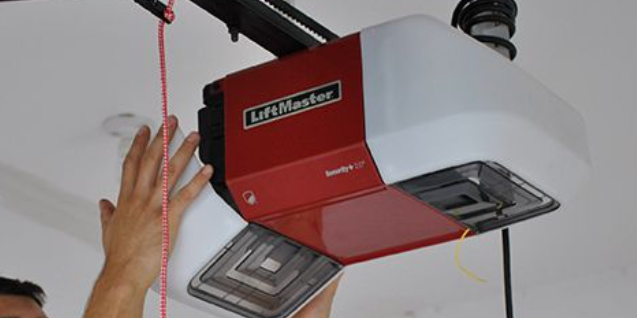
When a keypad has a good battery and correct programming but still will not operate the door, the opener receiver and other controls may need to be compared before the keypad is replaced.
Frequently Asked Questions About Garage Door Keypads Not Working in Las Vegas
Why did my garage door keypad suddenly stop working?
A keypad can suddenly stop working because the battery is weak, the programming was lost, the PIN changed, a keypad button failed, the opener memory was reset, wireless communication is being disrupted, or the opener receiver has a problem. Start with a fresh correct battery, then compare the keypad with the wall button and handheld remote before replacing the keypad.
Can a dead battery make my garage door keypad stop working completely?
Yes. A depleted battery can leave a wireless keypad dark or unable to send a reliable command to the opener. Replace the battery with the type specified for your keypad model. If the keypad lights normally after the battery change but still will not operate the garage door, check the PIN, programming, compatibility and opener response next.
Why does my garage door wall button work but the keypad does not?
If the hard-wired wall control works but the wireless keypad does not, the opener can at least receive the wall-control command and move the door. The keypad battery, PIN, programming, keypad buttons, compatibility, mounting interference or wireless communication become stronger possibilities. Testing a working handheld remote can narrow the problem further.
Why does my garage door remote work but the keypad does not?
If a known-good handheld remote works normally while the keypad does not, the opener's wireless receiver is communicating with at least one control. That makes a keypad-specific problem more likely. Check the keypad battery, PIN, button operation, programming and compatibility. A damaged or nonresponsive keypad may need replacement after those checks are completed.
Do I need to reprogram my garage door keypad after changing the battery?
It depends on the keypad and opener model. Some systems continue working after a battery replacement, while other troubleshooting situations may require reprogramming. Follow the manufacturer's instructions for the exact keypad and opener. Do not use an unrelated programming procedure or hold the opener's LEARN button longer than instructed because some memory functions can remove programmed controls.
How do I know if a button on my garage door keypad is bad?
A failed keypad button is possible when the keypad lights normally but a PIN containing a particular number no longer works. If your manufacturer supports changing the PIN, a correctly programmed test PIN using different digits may help identify a nonresponsive number. If one or more buttons are physically failing, replacing the keypad can be more practical than attempting to repair its internal electronics.
Can the wrong keypad be incompatible with my garage door opener?
Yes. Garage door openers use different wireless technologies depending on manufacturer and generation. A replacement keypad needs to support the actual opener or receiver. Compatibility should be checked using the keypad and opener model information or the manufacturer's compatibility guide. A new keypad that has never worked should be checked for compatibility before it is assumed defective.
Can Las Vegas heat damage a garage door keypad?
Las Vegas has a hot desert climate and exterior keypads can experience strong sun and outdoor temperature exposure, but heat should not be automatically blamed for a specific failure. Check the battery, programming, buttons, housing and communication first. Visible cracking, brittle housing, corrosion or other deterioration can make keypad replacement more reasonable, but the actual failure should still be identified.
Should I replace the garage door opener if the keypad is not working?
Not automatically. If the wall button and handheld remote both operate the garage door normally, the opener may be functioning correctly and the problem may be limited to the keypad. Opener diagnosis becomes more important when multiple controls fail, no wireless devices will program, the opener has electronic symptoms, or the door does not move correctly even when the opener receives a command.
When should I call a garage door company for a keypad problem?
Professional help makes sense when a fresh battery and correct model-specific programming do not restore operation, when several wireless controls fail together, when the opener will not accept programming, or when the garage door itself is heavy, crooked, off track or moving abnormally. Mechanical spring, cable and track problems should not be treated as keypad repairs.
Open Sesame Garage Door Repair Las Vegas on Google Maps
Open Sesame Garage Door Repair Las Vegas is associated with: 7865 Bluewater Dr, Las Vegas, NV 89128.
This article does not characterize that address as a showroom, retail storefront, walk-in office or public customer-service counter.
View Open Sesame Garage Door Repair Las Vegas on Google Maps
Garage Door Keypad Still Not Working in Las Vegas?
If you have checked the keypad battery, PIN, programming and compatibility but the garage door still will not respond, the problem may involve the keypad itself, wireless communication, the opener receiver or another garage door component.
Open Sesame Garage Door Repair Las Vegas can help diagnose opener and garage door problems before unnecessary parts are replaced.
If the garage door is crooked, unusually heavy, off track, supported by a damaged cable, or showing signs of a broken spring, stop operating the door rather than continuing to test it from the keypad.
Open Sesame Garage Door Repair Las Vegas
Las Vegas, NV 89128
Las Vegas Valley • Clark County
(702) 888-0842