

Garage Door Remote Not Working in Summerlin? Battery, Programming, Opener or Signal Problem?
Quick Answer: Why Is Your Garage Door Remote Not Working in Summerlin?
If your Summerlin garage door remote stops working, first test the wall control and check the remote battery. If the wall button still operates the garage door, the problem is more likely to involve the remote, its programming, radio signal or opener receiver. If all controls fail, the opener or power system needs broader diagnosis.
Start With One Question: Does the Wall Button Still Work?
The wall control helps separate a handheld remote problem from a broader garage door opener problem. If the wall button opens and closes the door normally but one remote does nothing, begin with that remote's battery, programming, button and signal.
If every remote fails while the wall control continues working, look for a remote-lock setting, erased programming, radio interference, an antenna issue or an opener receiver problem.
If the wall button and all remotes fail, the diagnosis extends beyond the transmitter. Opener power, control electronics and the installed garage door system should be evaluated before more remote batteries are purchased.
Does the Garage Door Work From the Wall Button?
When a garage door remote stops working, it is easy to assume the automatic opener has failed. That conclusion can lead to unnecessary reprogramming, replacement parts or even shopping for a new opener before the simplest diagnostic question has been answered.
Start with the interior wall control. From a safe position where you can see the garage door, press the normal wall-mounted open/close control once. Pay attention to what happens. Does the opener motor start? Does the trolley or carriage move? Does the garage door open or close normally? Does the wall station show any unusual light, display or lock indication?
If the garage door operates normally from the wall control, that is valuable information. It means the opener is receiving electrical power at that moment and is capable of responding to at least one control source. It also shows that the physical garage door can complete the test cycle you just observed.
That does not prove that every internal opener component is perfect, but it narrows the complaint. Instead of treating the entire system as failed, you can focus on the wireless path: the remote's battery, transmitter button, programming, radio signal and the opener's ability to receive that wireless signal.
If the wall button works but only one remote fails, the individual transmitter is a strong place to begin. Check its battery first. Look for a power indicator if the model has one. Compare a second authorized remote if one is available.
If a second remote operates the same garage door normally, that comparison strongly isolates the problem to the first remote or its programming. There is little reason to begin changing garage-door springs, adjusting tracks or replacing opener parts when another transmitter can still communicate with the same opener.
If the wall button works but every handheld remote fails, the diagnosis changes. Several independent transmitters failing simultaneously makes a shared cause more important. Depending on the installed model, possibilities can include a remote-lock feature, erased programming, radio-frequency interference, a visible opener antenna problem or receiver/control electronics.
If the wall button does not work either, stop concentrating exclusively on the remote. The opener may have lost electrical power, the wall station may have a control problem, or the opener may have a broader internal fault.
Check whether the opener's lights or indicators show normal power. If the ceiling receptacle, power cord or other electrical equipment appears damaged, do not perform improvised electrical repairs.
Also distinguish a command problem from a movement problem. A garage door remote can successfully send a command and the opener can receive it, yet the garage door may still fail to move normally.
For example, if the motor activates but the door does not move, the problem is no longer simply a nonworking remote. A disconnected trolley, opener drive problem or physical garage-door condition may need attention. If the door becomes crooked, unusually heavy, off track or visibly damaged, stop repeated operation rather than continuing to test remotes.
This layered approach prevents unrelated repairs. The remote belongs to the command side of the system. The opener receives and processes that command. The motor and drive system then automate the physical garage door. Springs counterbalance the door's weight, while cables, drums, rollers and tracks help the door move correctly.
A failed remote battery does not require spring adjustment. A radio problem does not justify moving tracks. Likewise, a broken spring should not be hidden by repeatedly pressing a functioning remote.
Summerlin homeowners who cannot determine where the communication chain is failing can contact Open Sesame Garage Door Repair Las Vegas at (702) 888-0842 to ask about current service availability and describe which controls still work.
What Your Garage Door Remote Symptoms Can Tell You
| What You Observe | Useful First Suspect | Safe First Test | Next Diagnostic Direction |
|---|---|---|---|
| Remote has no visible indicator response | Battery, battery contact or remote hardware | Install the exact specified fresh battery | Inspect the transmitter if it remains unresponsive |
| Remote indicator works but opener does nothing | Programming, compatibility, lock mode or receiver | Test wall control and another authorized remote | Use model-specific programming instructions |
| Wall button works but one remote fails | That individual transmitter | Fresh battery and comparison with another remote | Programming or transmitter diagnosis |
| Wall button works but every remote fails | Lock mode, erased programming, receiver or signal environment | Check wall-control status and opener manual | Shared wireless-system diagnosis |
| Remote works only a few feet from opener | Weak battery, interference, antenna or receiver sensitivity | Fresh battery and repeatable range comparison | Radio-signal troubleshooting |
| Remote stopped after opener memory was cleared | Lost pairing | Use the official programming procedure | Re-enroll authorized remote |
| Vehicle control works but handheld remote does not | Handheld transmitter | Check battery and programming | Remote-specific problem |
| Keypad works but handheld remote does not | Handheld remote or its programming | Compare multiple controls | Isolate the failed device |
| Wall button and all remotes fail | Opener power or control problem | Observe safely accessible opener indicators | Broader opener diagnosis |
| Remote activates motor but door movement is abnormal | Opener drive or physical garage door | Observe trolley and door movement | Mechanical/opener inspection |
Is the Garage Door Remote Battery Dead or Weak?
A weak or depleted battery is one of the simplest explanations when a single handheld garage-door remote stops working. The transmitter needs enough battery power to operate its electronics and send a usable radio command to the opener.
Start by observing the remote itself. Many transmitters have an indicator light that appears when a button is pressed. If your particular remote normally illuminates but now produces no light, battery power deserves early attention. The exact indicator behavior varies by product, so use the manual for your remote when possible.
Chamberlain's official remote-control troubleshooting material recommends checking and replacing the remote battery when needed and uses remote power and battery condition as an early troubleshooting step. Manufacturer instructions are more reliable than assuming every transmitter works the same way.
A battery does not always fail all at once. A weakening battery can create an intermediate stage where the garage remote works from inside the garage but not from farther down the driveway. You may need to press the button twice. Operation may feel random even though the underlying issue is declining transmitter power.
A Summerlin homeowner may first notice this when approaching from the street or driveway. The remote previously operated at a normal useful distance, but now it responds only when the vehicle is close to the garage opening.
Before assuming radio interference or an opener receiver failure, install the correct fresh battery and repeat the same test. One controlled change is much more useful than replacing the battery, resetting programming and changing opener settings all at once.
Do not assume every garage-door remote uses the same coin-cell battery. Different remotes can use different battery types, voltages and orientations. Check the model label or the markings in the battery compartment.
A battery that physically fits is not automatically the correct battery. Use the exact type specified by the transmitter manufacturer.
Pay attention to polarity. If a replacement battery is installed backward, a working remote can appear completely dead.
Inspect the battery contacts while the compartment is open. They should appear intact and positioned normally. If the remote has severe corrosion, evidence of battery leakage, broken contacts or a cracked circuit board, a new battery may not restore reliable operation.
Also pay attention to the button itself. If the indicator illuminates only when you press one edge of the button very hard, the problem may be a worn switch or physical transmitter fault rather than battery capacity.
Compare another remote if available. If Remote A works normally while Remote B is dead, both communicating with the same opener, that comparison makes a fault in Remote B much more likely.
If a fresh correct battery restores normal operation, stop troubleshooting there. Do not erase opener memory or alter settings that are already working.
Will Replacing the Garage Door Remote Battery Erase Its Programming?
A common concern is that opening a remote and removing its battery will erase the transmitter's connection to the garage-door opener. Whether any special procedure is required depends on the product, but many modern remotes retain their programming during an ordinary battery change.
Do not guess. Identify the transmitter model. A model number may be printed on the back, beneath a visor clip or inside the battery compartment.
Before removing the old battery, photograph its orientation if necessary. This is especially helpful with coin cells because polarity matters.
Install only the specified battery. Close the transmitter case completely and test the remote before changing programming.
If the garage door immediately operates again, the battery was likely the relevant problem and additional opener changes are unnecessary.
If the remote indicator now looks normal but the garage door still does not respond, the next question is whether the opener recognizes the transmitter. That moves the diagnosis from battery power into programming, compatibility, lock settings or receiver communication.
Avoid repeatedly opening the transmitter and bending battery contacts. Small contacts can be damaged by unnecessary manipulation.
If the remote housing will not close securely, has a broken button or shows signs of substantial physical damage, transmitter replacement may be more appropriate than repeated battery changes.
Does the Garage Door Remote Need to Be Reprogrammed?
A remote can have a good battery and still fail because the opener no longer recognizes it. This is a communication or programming problem rather than a battery problem.
The opener's receiver must recognize the transmitter as an authorized device. Modern residential openers can use manufacturer-specific coding systems and learn procedures. Older openers and universal remotes may follow different methods.
Chamberlain's official remote-programming guidance recommends confirming that the remote is compatible with the opener, checking battery installation, repeating the correct programming procedure and using model-specific instructions when needed.
That sequence is important because a transmitter can light up perfectly and still be incompatible with the opener.
Do not assume that two garage remotes with similar-looking buttons communicate the same way. The housing style does not tell you everything about the radio protocol or opener compatibility.
If a remote stopped working immediately after somebody reset the opener, pairing becomes a particularly strong possibility. Clearing an opener's learned-device memory can remove previously authorized handheld remotes and keyless entries.
Manufacturer troubleshooting guidance also notes that accidentally holding a learn control long enough to erase memory can require remote devices to be programmed again.
Do not clear memory simply because one remote is not working. If three other remotes are functioning normally, erasing the opener may turn one problem into four unprogrammed devices.
Instead, test another authorized remote first. If another transmitter operates the door, the opener is demonstrating that it can receive at least one recognized wireless command.
Then focus on the failed transmitter. Verify its battery. Confirm compatibility. Follow the exact programming procedure for the opener and remote model.
If the remote successfully programs and operates the door, the diagnosis may be complete.
If the opener appears to enter programming mode but refuses to learn the device, compatibility or transmitter failure becomes more relevant.
If multiple previously working remotes all lose programming at the same time, consider whether opener memory was intentionally or accidentally cleared, whether the opener electronics were serviced, or whether a broader receiver issue exists.
A replacement logic board or receiver-related repair can also affect remote enrollment depending on the opener design. If work was recently performed on the power head, tell the technician which controls worked before and after the repair.
Do not keep programming and erasing devices repeatedly without tracking the result. Write down which transmitter works, which does not and what changed after each step.
For a broader city-level version of this same diagnostic topic, see the guide to garage door remote troubleshooting in Las Vegas . This Summerlin article keeps the homeowner examples focused on the current local service-area topic while maintaining Las Vegas as Open Sesame's primary business and geographic entity.
Could Lock or Vacation Mode Be Blocking the Garage Door Remote?
One of the most confusing remote symptoms occurs when the interior wall control works but every handheld remote suddenly appears dead. Before replacing the receiver or buying several new remotes, find out whether the installed opener has a radio lockout, lock or vacation-type feature.
Some opener systems allow a homeowner to disable handheld remote operation from the wall station while still allowing the wall-mounted control to operate the garage door.
From the homeowner's perspective, that behavior looks almost exactly like a failed receiver. The wall button opens the door immediately. The remote has a good battery. Another remote also fails. Nothing appears physically wrong.
The difference is that the opener may be intentionally rejecting radio transmitters because a security setting is active.
Look at the wall station for a lock button, indicator light or status display. Do not assume that a particular icon means the same thing on every brand.
Find the opener and wall-control model and use the correct manual. If lock mode is active, follow the manufacturer's procedure to return the system to normal remote operation.
Test one remote afterward. If operation returns, there is no reason to erase programming or replace the receiver.
If lock mode is confirmed off and all properly programmed remotes still fail, the shared radio system deserves more attention.
Why Does the Garage Door Remote Work Only When You Are Close to the Garage?
A remote that still works—but only at very short range—provides different diagnostic information from a transmitter that never works at all.
Short range means some part of the wireless communication path is still functioning. The transmitter can send a command and the opener can recognize it under favorable conditions. The problem is that the usable radio link has become weaker or less reliable.
Start with the remote battery. A weakening battery can reduce practical transmitter performance before the remote appears completely dead.
Install the exact correct fresh battery and perform a repeatable test. Try the remote from inside the garage, immediately outside the garage opening and from your normal driveway position.
Use the same locations for each test. Otherwise it becomes difficult to know whether range actually improved.
Next, compare another authorized transmitter. If Remote A operates normally from the driveway while Remote B works only within a few feet of the opener, the problem strongly follows Remote B.
That could involve the battery, internal transmitter electronics, physical damage or another remote-specific condition.
If every remote has suddenly lost range, think about what they share: the opener receiver, antenna and radio environment.
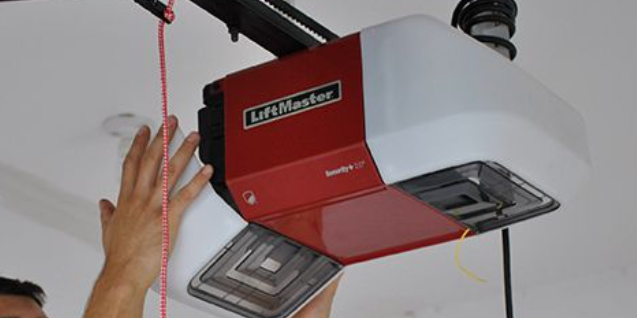
Many ceiling-mounted opener designs have a visible antenna wire extending from the power head. If your opener uses one, visually confirm that it appears present and has not obviously been cut or pushed into an abnormal position.
Do not splice or extend the opener antenna using an improvised wire. Antenna and receiver design are manufacturer-specific.
Radio-frequency interference is another possibility. Chamberlain's programming and remote support guidance specifically includes interference and poor-range troubleshooting when a remote works intermittently or only at close range.
Ask whether anything changed around the garage when the range problem started. Was a light bulb replaced? Was new electronic equipment installed? Was a charger, power supply or other electrical accessory added near the opener?
Timing alone does not prove the new device caused the problem, but it creates a useful comparison.
If an ordinary accessory can be safely switched off or unplugged according to its instructions, compare remote range with that device in and out of service. Do not disconnect essential electrical or safety equipment merely to test garage-door range.
Also test the remote from outside the vehicle. Vehicle structure and the location of the transmitter can affect practical use.
A remote buried in a console can behave differently from the same transmitter held near the windshield. That does not necessarily indicate a failing opener.
The important comparison is whether range has clearly deteriorated from normal operation and whether the problem affects one transmitter or every transmitter.
Can Radio Interference Make a Summerlin Garage Door Remote Stop Working?
Yes. Radio-frequency interference can affect the usable range or reliability of a wireless garage-door remote, although it should be diagnosed rather than assumed.
The handheld transmitter sends a wireless command that the garage-door opener's receiver must detect and interpret. If unwanted radio noise makes that signal difficult to distinguish, the remote may appear weak even when its battery and programming are correct.
A typical interference symptom is distance-related. The remote works while standing directly below or near the opener but becomes unreliable farther away.
Another clue is that several different remotes lose range at approximately the same time. Because they all communicate through the same local radio environment, a shared range problem deserves a shared explanation.
Manufacturer troubleshooting guidance specifically identifies certain lighting conditions as a potential source of remote-control interference on compatible systems. That is why a sudden range problem after changing an opener light is worth documenting.
Do not assume every LED bulb creates interference. Many work properly. The useful question is whether range changed immediately after a particular electrical change and whether a safe comparison reproduces the effect.
Other electronic equipment near the opener can also deserve attention if the timing matches the beginning of the problem.
Avoid speculative troubleshooting where everything electrical in the home is blamed. Use a controlled comparison.
If a particular device can safely be removed from service and remote range changes dramatically, record that observation.
If nothing in the environment changes the symptom, move toward opener antenna and receiver diagnosis.
Do not reposition safety sensors, change spring tension or alter garage-door tracks when troubleshooting radio interference. Those components do not strengthen the transmitter's radio signal.
Could the Garage Door Opener Receiver or Antenna Be the Problem?
The handheld remote is only one half of the wireless system. The garage-door opener also needs a receiver capable of detecting and processing the transmitter's command.
A receiver-side problem becomes more plausible when several known-good remotes behave the same way.
Imagine that two handheld remotes and a vehicle-integrated transmitter all worked normally from the driveway last week. Each remote has a good battery, and no programming changes were made. Now every wireless control works only when it is extremely close to the opener.
It would be less likely for several independent transmitters to develop the same internal failure at precisely the same time. A shared antenna, receiver or interference problem deserves attention.
Start with observations that do not require opening the power head. If the opener uses a visible antenna wire, verify that it looks intact. Check the opener for model-specific diagnostic lights or display messages.
Compare the wireless keypad if the home has one. If the keypad also loses range or fails, tell the technician. If the keypad works while handheld remotes do not, that difference is also useful.
Some opener designs integrate radio-receiver functions with a main control or logic board. Other designs can differ. This is one reason not to order an expensive replacement board based solely on a generic online answer.
The technician should establish that simpler causes have been considered first: remote batteries, programming, lock mode and obvious signal interference.
If an internal opener component is recommended, ask what diagnostic finding supports the recommendation.
Was the receiver unable to recognize multiple verified transmitters? Is a model-specific diagnostic code present? Does the symptom persist with external interference sources excluded?
If the opener recognizes the wireless command but the motor or drive system does not operate normally, the problem has moved past the radio receiver.
Listen and watch. If the opener clicks, its light changes or the motor begins running after the remote is pressed, the transmitter may be communicating successfully even though the garage door itself does not move as expected.
That distinction can prevent unnecessary remote replacement.
Can the Remote Be Broken Even if Its Light Comes On?
Yes. A visible remote indicator shows that at least part of the transmitter has electrical power. It does not prove that the radio electronics are sending the correct signal.
Garage-door remotes live in environments where physical wear is common. A visor remote can be exposed to vibration every time the vehicle is driven. A keychain remote may be dropped. A transmitter can be crushed in a bag or struck against a hard surface.
Check how the button feels. A healthy button normally has a repeatable tactile response. A worn button may need to be pressed at an angle, held unusually hard or pushed multiple times.
If the indicator flickers depending on how the button is pressed, the switch or internal connection may be worn.
Look at the housing. Is the case cracked? Does the battery cover no longer secure the battery properly? Did the remote stop working immediately after being dropped?
Moisture exposure can also damage electronic transmitters. A remote that has been soaked should not be assumed reliable merely because a new battery makes the light illuminate.
Compare a second authorized remote. If the second transmitter works reliably from the same location while the damaged-looking remote does not, the opener receiver becomes a less likely explanation.
If replacement becomes necessary, verify opener compatibility before purchasing a remote. Similar appearance does not guarantee compatible radio technology.
What if Every Garage Door Remote Stops Working at the Same Time?
Several failed remotes create a very different diagnostic pattern from one failed transmitter.
If one remote fails while two others continue to work, focus on that transmitter. If three remotes stop working on the same day, a shared cause becomes more important.
First test the wall button. If it works, the opener can still respond through at least one control path.
Next, check whether a lock or vacation function has been activated. Depending on the opener, this setting may disable wireless transmitters while leaving the wall station functional.
Then consider whether the opener's learned-device memory was cleared. This can happen during access resets or after certain service procedures.
If memory was cleared, the remotes may simply need to be enrolled again using the correct manufacturer's process.
If programming is confirmed and every remote has dramatically reduced range, radio interference or antenna condition becomes more relevant.
If the transmitters produce no response from the opener at any distance, the receiver or related electronics may need diagnosis.
Test any wireless keypad or vehicle-integrated control as an additional comparison. The more controls you compare, the easier it becomes to determine whether the fault follows one device or the shared opener.
Do not replace batteries in five transmitters repeatedly if all five failed at the same moment and fresh batteries make no difference. At that point, the shared system deserves attention.
What if the Car's Built-In Garage Button Works but the Handheld Remote Does Not?
A working vehicle-integrated garage control can be an excellent diagnostic comparison.
If the vehicle transmitter operates the garage from a normal distance but a handheld remote does not, the opener is demonstrating that it can still receive and process at least one wireless command.
That shifts attention toward the handheld device: battery condition, programming, compatibility or physical damage.
Replace the handheld remote's battery with the correct type. If that makes no difference, verify its programming.
Do not clear all opener memory merely because one handheld remote stopped working. You could remove the functioning vehicle control as well.
The opposite comparison is also useful. If the handheld remote works but the vehicle-integrated system does not, follow the vehicle/control-system programming instructions rather than changing garage-door hardware.
Some vehicle and opener combinations can require specific compatibility procedures. Consult the documentation for the equipment actually installed.
If every wireless device—including vehicle controls—fails while the wall station works, the opener's shared radio path deserves stronger attention.
What Can a Summerlin Homeowner Safely Check Before Replacing Parts?
Remote troubleshooting should begin with observation and low-risk control checks, not mechanical garage-door adjustments. Changing one variable at a time makes it easier to understand what actually fixed the problem.
Step 1: Test the Interior Wall Control
Confirm whether the garage door opens and closes normally from the wall station. This separates many wireless-control problems from broader opener failure.
Step 2: Observe the Remote's Power Indicator
If your transmitter has an indicator light, note whether it behaves as expected when the button is pressed. Use model-specific documentation when interpreting that indicator.
Step 3: Install the Correct Fresh Battery
Verify the battery type and polarity. Test the remote immediately after the battery change before modifying anything else.
Step 4: Compare Another Authorized Remote
A second transmitter is one of the best diagnostic tools. If it works, focus on the failed remote. If it also fails, look for a shared cause.
Step 5: Check Lock or Vacation Mode
Review the wall-control status and opener manual. A radio-lock setting may intentionally prevent handheld remotes from operating the door.
Step 6: Verify Remote Programming
Use instructions for the exact opener and transmitter. Do not erase every learned device unless you specifically intend to reset access.
Step 7: Compare Range
Test from repeatable locations. A remote that works only close to the opener presents a different problem from one that never works.
Step 8: Check for Recent Electronic Changes
Note whether range changed after lighting or other electronic equipment was installed near the garage. Compare conditions safely rather than assuming interference.
Step 9: Observe the Visible Opener Antenna
If the opener uses a visible antenna, confirm only that it appears intact. Do not extend, splice or modify it.
Step 10: Record Opener Diagnostics
Note model numbers, LED patterns or display messages before resetting the opener. Model-specific information can be valuable during diagnosis.
A Remote Problem Does Not Require High-Tension Garage Door Adjustments
Garage-door remote troubleshooting should stay focused on the control and opener system unless the physical door displays a separate mechanical problem.
Springs counterbalance garage-door weight. Lift cables and cable drums work with that counterbalance system. Tracks and rollers guide the garage door. None of those high-load mechanical components needs to be adjusted merely because a wireless remote lost programming or needs a battery.
Homeowners should not wind or unwind torsion springs, loosen spring brackets, adjust winding cones, move loaded cable drums or reconnect lift cables under tension while troubleshooting a remote-control complaint.
Do not increase opener force in an attempt to make an unreliable transmitter work. Force settings relate to opener operation and door movement, not radio signal strength.
Do not bypass photo-eye safety sensors. A remote communication issue does not justify defeating automatic closing protections.
The U.S. Consumer Product Safety Commission explains that automatic residential garage-door operators are subject to the mandatory federal safety standard in 16 CFR Part 1211. Homeowners can review the CPSC automatic residential garage-door operator information .
If the physical garage door becomes crooked, badly off track, unusually heavy or visibly damaged during testing, stop repeated operation and treat that mechanical condition separately from the remote.
Remote Has a Fresh Battery but Still Does Not Work?
Before replacing the opener, note three things: whether the wall button works, whether a second remote works, and whether the failed remote works at very short range. Those observations can quickly separate a transmitter problem from a shared opener or signal problem.
Do Summerlin and Las Vegas Conditions Matter for Garage Door Remote Problems?
The electrical and radio principles behind a garage-door remote do not change from one community to another, but local operating conditions can affect how homeowners notice and experience remote problems.
Summerlin is part of the broader Las Vegas Valley context served by Open Sesame Garage Door Repair Las Vegas. Many residential garages are used frequently as a primary vehicle entrance, so handheld transmitters and built-in vehicle controls can receive significant daily use.
A visor remote may spend much of its life inside a parked vehicle. A keychain transmitter can be carried daily. Repeated use means buttons and cases can wear, although wear should be diagnosed from the actual remote rather than assumed from location.
Las Vegas also has a hot, dry desert climate. The National Weather Service climate information for Las Vegas documents the region's desert climate and abundant sunshine.
That climate context can be relevant when discussing equipment stored in a hot garage or vehicle, but it does not prove that heat caused a particular battery, remote or logic-board failure.
Diagnosis should still follow symptoms. A transmitter that stopped working immediately after being dropped has a different evidence trail from a remote that gradually lost range. A battery that measures poorly is different from a receiver that fails to recognize several transmitters.
Direct sun is also more relevant to certain safety-sensor conditions than to an ordinary remote battery. Do not use the desert environment as a universal explanation for every garage-door problem.
Newer Summerlin and Las Vegas Valley homes may also use a mixture of control technologies. A household can have handheld remotes, built-in vehicle buttons, exterior keypads and connected garage systems.
This makes device comparison especially useful. If the keypad and vehicle control work but the handheld remote fails, you have evidence pointing toward the transmitter.
If every wireless device loses range while the wall station remains normal, look toward the common radio path.
Rental properties and homes that have changed occupants can present another programming question. There may be older remotes or previously enrolled devices associated with the opener.
When access control is uncertain, use the manufacturer's official procedure to establish which devices should remain authorized.
Do not represent Summerlin as a separate Open Sesame office. The primary business entity is Open Sesame Garage Door Repair Las Vegas, with Las Vegas, Nevada remaining the dominant geographic entity and Summerlin serving as an important local service-area topic.
The business address supplied for entity context is 7865 Bluewater Dr, Las Vegas, NV 89128. This article does not characterize that address as a showroom, walk-in office or retail storefront.
When Does a Garage Door Remote Problem Need Opener Diagnosis?
Many remote problems can be solved without replacing an automatic garage-door opener. A battery may be depleted. A transmitter may have lost programming. A lock setting may be active.
Professional diagnosis becomes more useful when those simple explanations no longer fit the evidence.
Every Remote Fails
Several verified transmitters failing together can point toward a shared opener setting, receiver or radio condition.
Range Is Very Short
Multiple remotes working only beside the opener can justify antenna, interference and receiver diagnosis.
Programming Will Not Hold
A compatible transmitter that repeatedly loses communication may need deeper opener or remote diagnosis.
Opener Shows Diagnostics
Model-specific LEDs or display messages can provide evidence before parts are replaced.
Wall Control Also Fails
When wired and wireless controls fail, the complaint extends beyond one handheld remote.
Door Movement Is Abnormal
If the command reaches the opener but the garage door binds or becomes unstable, mechanical diagnosis becomes a separate priority.
A useful repair recommendation should explain where the command chain breaks. Does the transmitter fail to send? Does the opener fail to recognize it? Does the receiver recognize the remote but fail to initiate motor operation? Does the motor run while the physical garage door remains stationary?
These are different problems.
If a complete opener replacement is recommended because a remote stopped working, ask what supports that conclusion. Has the receiver been diagnosed? Are compatible remotes failing with verified batteries? Is the opener displaying a relevant fault?
A homeowner does not need to perform internal electronics testing personally to ask for a clear explanation.
Likewise, if a replacement remote is recommended, ask whether the current transmitter is physically damaged, incompatible or unable to retain programming.
Diagnosis before parts replacement is especially valuable when the symptom is intermittent. Record what happened before service.
Tell the technician whether the wall button works, whether another remote works, how close you need to stand, whether the transmitter light responds and whether anything electrical changed near the garage before the range problem began.
Questions to Ask Before Paying for a Garage Door Remote or Opener Repair
A remote-control problem should lead to an explanation that connects the observed symptom to the recommended repair.
Ask whether the technician confirmed the remote battery and programming. Ask whether a second remote was tested. If all remotes fail, ask whether lock mode, antenna condition and interference were considered before an internal board is replaced.
If the opener receiver is identified as the cause, ask what test supports that conclusion.
If the technician recommends an entirely new opener, ask why repair of the existing remote-control system is not appropriate. There may be a legitimate reason, but the explanation should connect to the actual opener condition rather than rely on the remote complaint alone.
If the physical garage door also has a mechanical problem, ask whether that issue is separate from the remote failure. Springs, cables, tracks and rollers affect door movement; they do not restore wireless programming.
Nevada homeowners who want to research contractor requirements or verify contractor information can use the Nevada State Contractors Board as an official state resource.
This article does not make a claim about a specific Open Sesame license, classification or status. Any licensing information should be independently verified through current official records before relying on it.
Remote, Receiver, Opener and Garage Door: Four Different Parts of the Problem
1. The Remote Generates a Wireless Command
The handheld transmitter needs a functioning battery, button and electronic circuit. When you press the button, it attempts to send the command associated with the programmed opener.
If the remote cannot generate a usable command, nothing farther down the chain can respond.
2. The Opener Receiver Detects and Recognizes the Signal
A wireless command needs to reach the opener and match what the receiver recognizes as an authorized transmitter.
This is where programming, compatibility, signal range and interference matter. A remote can have a fresh battery and still fail if it is not programmed to the opener.
It can also be correctly programmed yet become unreliable if the usable signal does not reach the receiver consistently.
3. The Opener Processes the Command
Once the receiver recognizes a valid command, the opener's internal control system must respond appropriately.
Depending on the model, the receiver may be integrated with broader opener electronics. Internal faults can therefore create symptoms that initially look like a failed remote.
4. The Motor and Drive System Move the Door
Receiving a command does not guarantee successful garage-door movement. The motor, rail and drive mechanism still have to operate.
If the opener receives the command but the drive mechanism has a separate fault, replacing the transmitter will not solve the movement problem.
5. The Physical Garage Door Must Move Properly
The opener automates the physical garage door; it does not replace the counterbalance and guidance systems.
Springs offset much of the door's weight. Lift cables and drums work with the spring system. Rollers move through the tracks. Hinges let sectional panels change angle as they travel.
A mechanically unhealthy door can create opener symptoms even when the remote and receiver are communicating correctly.
That is why a technician should not stop the diagnosis merely because the remote appears to be the homeowner's complaint.
If pressing the remote clearly activates the power head but the garage door behaves abnormally, the communication problem may already be solved. The next issue is opener drive or door mechanics.
Open Sesame Garage Door Repair Las Vegas Serving Summerlin
Open Sesame Garage Door Repair Las Vegas is a local garage-door repair option serving homeowners and residential property customers in Las Vegas and relevant Las Vegas Valley communities, including Summerlin service-area context.
For a nonworking garage-door remote, a clear diagnostic process begins by separating the transmitter from the opener and the physical garage door.
Does the wall control still operate the garage? Does another remote work? Does the failed transmitter have power? Was opener memory recently cleared? Has range become unusually short?
Those observations can help distinguish a remote battery or programming problem from interference, receiver trouble or a broader opener issue.
If only one transmitter fails, replacing opener electronics prematurely may not make sense. If several remotes fail together, the shared radio path deserves more attention.
If the opener receives commands but the garage door becomes crooked, unusually heavy, off track or visibly damaged, that mechanical condition should be treated separately and repeated operation should stop.
Open Sesame Garage Door Repair Las Vegas can be considered when safe homeowner checks do not identify the remote problem or when the evidence points toward the garage-door opener itself.
Phone:
(702) 888-0842
Website:
bestgaragedoorrepairsummerlinnv.com
Frequently Asked Questions About Garage Door Remotes Not Working in Summerlin
Why is my garage door remote not working in Summerlin?
Start with the remote battery and the wall control. If the wall button still operates the garage door, the problem is more likely to involve the handheld remote, lost programming, signal range, interference or the opener receiver. If every control fails, investigate the opener or power system rather than the remote alone.
Why does my wall button work but my garage door remote doesn't?
The wireless side of the system becomes the stronger suspect. Check the remote battery, programming and physical button first. If every remote fails while the wall control works, check the opener's lock setting, receiver, antenna and radio-signal conditions.
How do I know whether the garage door remote battery is dead?
No indicator response, intermittent operation or sharply reduced range can suggest a weak battery on compatible remotes. Install the exact battery type specified for your transmitter and test the remote before changing any opener settings.
Will changing my garage door remote battery erase the programming?
Many remotes retain programming during ordinary battery replacement, but the exact behavior depends on the product. Use the instructions for your transmitter. After replacing the battery, test the remote before assuming it needs to be programmed again.
Why does my garage door remote work only when I am close to the garage?
Short range can involve a weak battery, transmitter problem, radio-frequency interference, opener antenna condition or receiver performance. Install a fresh correct battery and compare a second remote from the same locations to determine whether the problem follows one transmitter or affects every wireless control.
Can LED lights interfere with a garage door remote?
Some lighting conditions can contribute to radio-control interference on compatible opener systems. Manufacturer support guidance includes LED light interference among the conditions to consider when remote range becomes poor. Do not assume every LED bulb is a problem; compare the timing and behavior safely.
Why did all my garage door remotes stop working at the same time?
A shared cause becomes more likely when several remotes fail together. Check remote-lock mode, whether opener memory was cleared, signal interference, the opener antenna and receiver function. If one remote still works normally, focus instead on the individual failed transmitters.
Does my garage door remote need to be reprogrammed?
It may need reprogramming if the battery is good but the opener no longer recognizes the transmitter. This is especially relevant after opener memory has been cleared or receiver-related parts were replaced. Use the exact manufacturer procedure instead of a generic programming sequence.
Does a nonworking garage door remote mean I need a new opener?
No. One failed remote is often an individual battery, programming or transmitter issue. Opener diagnosis becomes more relevant when several verified remotes fail, range is poor across all devices, the receiver shows abnormal behavior or the wall control also stops working.
Who can troubleshoot a garage door remote problem in Summerlin?
Open Sesame Garage Door Repair Las Vegas is a local option serving Summerlin and the broader Las Vegas service area. Call (702) 888-0842 and describe whether the wall button works, whether another remote works, and whether your remote fails completely or only at longer distance.
Open Sesame Garage Door Repair Las Vegas on Google Maps
View Open Sesame Garage Door Repair Las Vegas on Google Maps
Battery, Programming, Opener or Signal? Follow the Evidence
A garage door remote that stops working does not automatically mean the automatic opener needs to be replaced. The fastest way to narrow the cause is to separate the transmitter, receiver, opener and physical garage door.
Start with the interior wall control. If it works normally, concentrate on the wireless path.
Check whether the handheld remote has power. Install the exact specified fresh battery. If the remote returns to normal operation, stop there.
If the battery is good but the opener ignores the remote, determine whether the transmitter is still programmed and compatible. Use official model-specific instructions.
If every remote fails but the wall button works, check whether a remote-lock feature is active and whether opener memory was cleared.
If the remote works only close to the garage, treat the problem as a range issue. Compare another transmitter. Look for a shared loss of range. Consider the signal environment, visible opener antenna and receiver.
If several verified remotes fail in the same way, a shared opener or radio condition becomes more likely than several independent battery failures.
If pressing the remote clearly activates the opener but the garage door does not move correctly, the transmitter may already be doing its job. The next diagnostic step belongs to the opener drive or physical garage-door system.
Do not adjust springs, cable drums, tracks, opener force or safety sensors merely because a handheld remote is unreliable.
Springs counterbalance the garage door. Cables and drums work with that counterbalance system. Tracks and rollers guide movement. Those mechanical components should be inspected when the door itself shows mechanical symptoms—not as a substitute for proper remote-control diagnosis.
For Summerlin homeowners, the most useful information to collect is simple: whether the wall control works, whether another remote works, whether the remote indicator responds, whether a fresh battery changes the symptom and whether the problem is complete failure or short range.
Those details can turn a vague complaint into a focused garage-door opener diagnosis.
Garage Door Remote Still Not Working in Summerlin?
If the remote has a fresh correct battery, programming appears correct and the garage door still will not respond—or several remotes have stopped working—contact Open Sesame Garage Door Repair Las Vegas to discuss the opener and remote-control symptoms.
Call (702) 888-0842 and mention whether the wall control works, whether another remote operates the door, and whether your transmitter fails completely or works only at short range.
This article provides general homeowner information and does not replace the manufacturer's instructions for the specific garage-door opener or remote installed at a property. Remote battery types, programming procedures, lock settings, radio systems and diagnostic indicators vary by manufacturer and model. Garage-door springs, lift cables, cable drums and related counterbalance components can operate under substantial mechanical tension and should not be adjusted as part of remote-control troubleshooting.