


Garage Door Opens by Itself in Summerlin? 7 Possible Causes Homeowners Should Check
Quick Answer: Why Would a Garage Door Open by Itself in Summerlin?
A Summerlin garage door that appears to open by itself may be receiving an unintended command from a remote, wall control, keypad, smart-home system or damaged control wiring. Opener electronics can also be involved. First determine whether the door truly opened from a stable closed position or whether it attempted to close and then reversed, because those symptoms have different causes.
Did the Garage Door Receive an OPEN Command—or Did It Reverse?
This distinction should come before replacing parts. If a fully closed garage door begins moving upward after sitting still, investigate command sources such as remotes, wall controls, keypads, connected apps, wiring and opener electronics.
If the door first moves downward and then returns upward, investigate the closing system instead. Safety sensors, travel settings, physical resistance, tracks, rollers, cables and door balance become more relevant.
Both situations can leave you looking at an open garage. They are not the same mechanical or electrical problem.
True Unexpected Opening
The garage door has been completely closed and stationary. Later, the opener activates and raises the door as though somebody pressed an OPEN command. Investigate remotes, keypads, wall controls, smart systems, control wiring and opener electronics first.
Closing Reversal
The garage door is commanded to close but changes direction during or immediately after the closing cycle. Investigate the photo-eye safety system, obstruction, opener travel, track or roller resistance, crooked movement and other mechanical conditions.
What Does “My Garage Door Opened by Itself” Actually Mean?
An unexpectedly open garage door can be unsettling. You may have closed the door, walked into the house and later discovered it open. You may receive a camera alert or connected-device notification while away from home. You may wake up and see the garage door raised even though nobody remembers using it. Before deciding that the opener “has a mind of its own,” reconstruct exactly what happened.
The most important question is whether the garage door truly began an opening cycle while it had been sitting completely closed or whether it reopened after an unsuccessful closing cycle. Homeowners often use the same description for both events because the end result is identical: the garage is open. The causes, however, can be very different.
A true unexplained opening usually means the opener behaved as though it received a normal command. The motor starts, the trolley or carriage travels in the opening direction and the garage door rises normally. If the door had been closed for several minutes or several hours before that happened, investigate the sources capable of sending an operating command.
Those command sources can include handheld remotes, integrated vehicle transmitters, an exterior keypad, the interior wall station, connected garage-door apps and home-automation systems. Low-voltage control wiring can also be relevant. If those external inputs are eliminated, receiver or logic electronics inside the automatic opener become a more reasonable diagnostic possibility.
A closing reversal follows a different sequence. Somebody commands the door to close. The garage door starts downward but then changes direction and travels back upward. The reversal may happen within a few inches, halfway down, near the floor or immediately after the bottom edge contacts the closed position.
In that situation, the opener may be responding to its closing-safety system or to physical resistance. Photo-eye sensors can be blocked or misaligned. The door can bind in a track. A roller or hinge can create resistance. A loose lift cable can make the door uneven. An incorrect travel setting can make the operator think it should continue farther than the floor allows.
That distinction is particularly important when you did not personally witness the event. Imagine leaving your Summerlin home and pressing the remote from the driveway. The door begins closing, so you drive away. A sensor beam becomes interrupted or the door encounters a mechanical problem and reverses. When you later check a camera, the garage is open. It can look like the door reopened randomly even though the actual event was a failed closing cycle.
A camera recording can therefore be one of the most useful diagnostic tools. Look at the first direction the garage door moved. Did it begin by traveling upward? Did it first descend? Did the opener light activate? Was a person or vehicle near the home? Did the event happen immediately after somebody left?
If your opener is connected to an app and provides activity history, compare the app record with the camera or your memory of the event. A recorded OPEN command is useful evidence. An event showing that the door closed and later reopened may change the investigation.
Also inspect the physical condition of the garage door before repeatedly testing the opener. If the door is crooked, a lift cable is visibly loose, a roller has left the track, a spring is visibly broken or the sections are hanging abnormally, stop. An opener-control mystery becomes secondary to a mechanically unstable garage door.
Summerlin is an important service-area topic for Open Sesame, while Open Sesame Garage Door Repair Las Vegas remains the primary business entity serving Las Vegas and relevant Las Vegas Valley communities. Homeowners who cannot identify the source of the movement can contact Open Sesame Garage Door Repair Las Vegas or call (702) 888-0842 to ask about current service availability.
Use the Timing of the Event to Narrow the Possible Cause
| What You Observe | Possible Category | Safe First Check | What Not to Assume |
|---|---|---|---|
| Door opens after sitting completely closed | Remote, keypad, wall control, app, wiring or opener electronics | Document the time and inventory every control device | Do not automatically blame photo-eye sensors |
| Door closes and immediately reopens | Safety sensors, obstruction, travel or mechanical resistance | Clear the opening and observe one closing cycle | Do not assume an unexplained OPEN command occurred |
| Opening happens at almost the same time repeatedly | Smart-home schedule or repeatable user behavior | Review app history, schedules and automations | Do not replace the logic board before checking automation |
| Problem stops when one remote is removed from use | Remote button, transmitter or storage position | Inspect the button and where the remote is stored | Do not replace the entire opener unnecessarily |
| Door activates when wall-control wiring moves | Control wire or wall station | Stop disturbing the wire and document the behavior | Do not randomly splice or short conductors |
| Door reverses at the same height | Track, roller, hinge, opener travel or obstruction | Observe what happens at that location | Do not increase opener force |
| Door becomes crooked while moving | Cable, drum, roller, track or spring system | Stop further operation | Do not continue remote troubleshooting first |
A Garage Door Remote Was Pressed Accidentally or the Button Is Sticking
Begin with every remote capable of operating the garage door. An accidental button press is simple, but it can be difficult to recognize after the fact because the person who caused it may never realize the button was activated.
Handheld garage-door remotes are commonly kept on vehicle visors, keychains or in consoles. They can also end up inside purses, backpacks, drawers, pockets and storage containers. If another object rests against the button, the transmitter may be activated without an intentional press.
A Summerlin household with multiple drivers may have several legitimate control devices. One vehicle may use a traditional visor remote while another uses a built-in vehicle transmitter. A family member may carry a compact remote. Someone may have an older remote stored in a drawer as a backup. Investigate all of them.
Inspect the physical button on each portable remote. Press and release it. Does it spring back normally? Does it remain partially depressed? Is the case cracked, bent or compressed? Has the remote been stored beneath another object?
Pay particular attention to events that happen while somebody is loading a car, cleaning a vehicle, moving a bag or adjusting items on the visor. Those are ordinary opportunities for an accidental activation.
A remote does not need to be inside the garage to operate the opener. The useful question is whether a programmed transmitter was within operating range at the time of the unexpected opening.
Do not assume that replacing the remote battery solves unexplained activation. A weak battery is more commonly associated with poor range or unreliable response. The relevant concern for this symptom is whether the button or transmitter is unintentionally producing what the opener interprets as a valid command.
Vehicle-integrated controls deserve the same review. If your car has buttons programmed to the garage door, make sure somebody was not pressing or testing those controls at the time. A second vehicle parked nearby may also have a programmed transmitter that has been forgotten.
If the unexpected opening happens repeatedly, you can isolate suspicious devices methodically using the opener manufacturer's instructions. Remove one transmitter from normal use and observe whether the symptom returns. Avoid randomly erasing every device before you know how to restore the authorized controls you still need.
If all known portable remotes are accounted for and the garage continues opening after sitting closed, continue to the wall control, keypad and other programmed devices rather than replacing the motor immediately.
The Interior Wall Control or Exterior Keypad Has an Intermittent Problem
The handheld remote is only one way to operate an automatic garage door. The interior wall station and exterior wireless keypad can also produce commands, so both should be included in the investigation.
Start with the wall control inside the garage. Press the main door button and release it normally. Does it return immediately? Does the push bar feel sticky, loose or damaged? Does the control face appear warped? Was it recently painted around, bumped by furniture or exposed to moisture or cleaning products?
Some wall stations contain several functions. Depending on the opener, there may be a light control, lock feature, motion sensor, programming function or display. Do not assume that every wall station behaves like a simple doorbell switch. Use the manual for the actual opener and control panel.
A loose or damaged wall control can create an intermittent symptom that is difficult to reproduce. The garage may work normally for days and then activate unexpectedly. If gently touching the wall station or surrounding wall repeatedly corresponds with the symptom, note that observation rather than opening the control and experimenting with conductors.
Check the exterior wireless keypad separately. A keypad may have physical buttons, a battery and programming associated with the opener. Inspect whether any key appears stuck or physically damaged.
Also consider ordinary human access. A family member, renter, property manager, cleaner, contractor or other person may have an authorized code. What appears to be self-operation can sometimes be another user opening the door without realizing that somebody else is investigating unexplained activity.
This is particularly relevant when a home has changed occupants or access arrangements. A keypad PIN that made sense for a previous household routine may still be known by somebody who no longer needs garage access.
If access control is uncertain, follow the opener manufacturer's official procedure for changing a keypad PIN or managing programmed devices. Do not depend on a generic internet sequence because programming varies by brand, model and generation.
The wall station also introduces another possible cause: low-voltage control wiring. If the wall button works normally but unexpected operation occurs when its wire is disturbed, that information is valuable for the next diagnostic step.
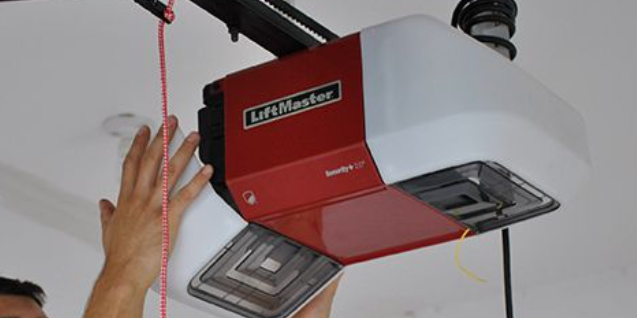
An Old, Forgotten or Extra Programmed Remote Is Still Able to Operate the Door
Garage-door controls tend to accumulate over time. A household may have more programmed devices than anybody remembers. This becomes especially important when investigating a door that genuinely begins opening from a stable closed position.
Consider the history of the property and opener. Was the garage-door opener already installed when you moved into the home? Were all previous transmitters accounted for? Did you replace a vehicle but leave its garage-control programming active? Did a family member receive a temporary remote that was never removed from the opener's memory?
Rental and property-management situations create similar questions. A renter may move out while a remote or keypad credential remains active. A property manager may have a spare transmitter. A contractor may have been given temporary access during another project.
Even owner-occupied homes can have old devices in unexpected places. Check kitchen drawers, garage cabinets, toolboxes, spare-key containers and vehicles that are not used every day.
If you cannot determine which devices should still have access, use the exact opener manual to understand how learned transmitters are managed. In some cases, clearing the opener's remote memory and intentionally reprogramming only the authorized devices can be a reasonable access-control step.
Do not perform that reset casually. A memory-clear procedure can remove legitimate remotes, wireless keypads and possibly connected accessories depending on the opener. Know which devices need to be restored before you begin.
Homeowners sometimes jump immediately to the idea that somebody nearby has a remote using the same “frequency.” Frequency alone does not tell you whether a different transmitter can operate your opener. Modern remote systems can also use coded communication rather than simply opening whenever any device transmits on the same band.
As one manufacturer example, LiftMaster describes its 893MAX residential remote as using Security+ technology and states that every click sends a secure code to the garage-door opener. See the manufacturer's LiftMaster 893MAX remote-control information . That example should not be generalized to every opener or every age of system, but it demonstrates why the exact operator technology matters.
Older openers can use different control methods. Identify the brand, model number and approximate generation of your opener before deciding whether another remote is a realistic explanation.
The strongest practical approach is to inventory every intended control. Know which remotes, vehicles, keypad users and connected accounts are supposed to operate the garage. Unknown access becomes easier to investigate once the list of legitimate devices is clear.
A Smart Garage App, Schedule or Home-Automation Routine Sent the Command
Connected garage-door openers introduce command sources that do not exist on traditional standalone systems. Depending on the equipment installed at your home, the garage may be controlled from a phone, smart-home platform or another authorized connected device.
If an unexplained opening occurs on a connected system, review digital activity before replacing hardware. Check the garage-door app for event history when that feature is available. Look for an OPEN command, a user identity, an automation or a time that matches what your camera recorded.
Schedules deserve particular attention when the garage opens at approximately the same time more than once. A recurring time pattern is more consistent with a programmed routine than with many random mechanical failures.
Review home-automation scenes and routines as well. A garage-door integration may have been included in a broader routine involving arrival, departure, lighting or another household event.
A routine created months or years earlier may continue functioning long after the homeowner forgets about it. Household schedules change, vehicles change and app users change, while old automation rules can remain active.
Shared access is another consideration. A spouse, adult child, renter, family member or other authorized user may open the garage from a phone. Unless everyone communicates about the event, the person standing at home can reasonably conclude that the door moved by itself.
Review the accounts that have permission to control the opener. Remove access that is no longer appropriate through the connected platform's normal user-management settings.
If there is concern about account security, use the platform's credential and security tools. Changing a garage-door spring, adjusting tracks or altering opener force will not address unauthorized digital account access.
Not every opener has smart capability. Do not waste time searching for app history if your installed operator has no connected controller. Identify the equipment first.
Conversely, do not assume the mobile app is the only connected element. A homeowner may have integrated the garage into another smart-home platform and forgotten that the second system can send commands.
If app history shows no digital command, continue investigating physical controls, wiring and opener electronics. Event logs differ between systems, so an absent log entry should be treated as evidence to consider rather than absolute proof of a hardware failure.
Low-Voltage Wall-Control Wiring Is Damaged, Pinched or Intermittent
Many automatic garage-door systems use low-voltage wiring between the opener and interior controls. Depending on the operator design, damage to the control circuit can contribute to intermittent or unexpected behavior.
Visually inspect accessible control wiring without disconnecting or modifying it. Follow the wire from the wall station toward the opener where practical. Look for crushed insulation, a cut conductor, a staple driven tightly across the cable, exposed wire or a section that has been pulled from its normal path.
Recent work in the garage can provide context. Did somebody install shelves, cabinets or hooks? Was the wall painted? Was drywall repaired? Was another cable stapled beside the garage-door control wiring? Did storage items strike the wall station?
A problem that begins immediately after work around the wall-control wire deserves attention. That does not automatically prove the wire is causing the unexpected opening, but it provides a repeatable event to investigate.
Intermittent control problems can be frustrating because the system may work normally during a service visit. Documentation becomes important. Note whether unexpected operation follows vibration, movement around the wall control or another specific condition.
Avoid the temptation to short the control wires together simply to “test” the opener. Some older systems may appear simple, while newer wall stations can use more sophisticated communication. Follow the exact manufacturer's diagnostic procedure.
Keep wall-control wiring separate in your mind from photo-eye sensor wiring. Photo-eye sensors are primarily related to safe automatic closing. A sensor fault is more consistent with a door refusing to close or reversing during closing than with a stable, fully closed door receiving a normal opening command.
That distinction can save money and time. A homeowner should not replace photo eyes merely because the garage was found open in the morning without establishing what movement actually occurred.
If visible wiring appears burned, melted or associated with mains electrical damage, stop DIY troubleshooting. Ordinary wall-control wires and line-voltage power are not the same repair category.
Also inspect the opener's power cord and receptacle visually if safely accessible. Do not open electrical boxes or internal operator housings simply to search for a fault.
The Garage Door Opener Receiver, Logic Board or Control Electronics Have a Fault
Internal opener electronics become a stronger possibility after ordinary external command sources have been reviewed. That sequence matters because replacing a logic board while a remote button is stuck would not solve the root cause.
The automatic opener power head can include a receiver, logic board, motor-control components, travel controls, safety inputs, wireless communication and other electronics depending on the model.
A failure in this system can create intermittent behavior, but “the door opened by itself” is not enough evidence by itself to diagnose the board.
Look for related symptoms. Do opener lights behave differently than before? Does the wall-control display reset? Are remotes becoming inconsistent? Did the opener lose programming? Does a diagnostic LED blink a repeatable pattern? Did the problem appear after a power interruption?
Record those symptoms before resetting the opener. Repeatedly disconnecting power, clearing memory or performing a factory reset can erase information that might help reproduce the problem.
Find the manufacturer's model number. Use documentation written for that exact opener generation when interpreting diagnostics. A blinking-light pattern on one manufacturer's system may mean something completely different on another.
The automatic opener should also be evaluated together with the mechanical garage door. If the opener sounds strained or reverses, first confirm that the door is not binding or out of balance. The motor is not intended to compensate for a failed counterbalance system.
UL Solutions explains that UL 325 addresses hazards associated with electric door operators, including entrapment, and emphasizes appropriate safety devices and correct installation. See UL Solutions guidance concerning UL 325 door-operator safety .
That safety context matters because a faulty opener should be repaired without defeating the systems designed to manage automatic closing.
If logic-board or opener replacement is recommended, ask what test supports that diagnosis. Were external controls isolated? Was damaged wall wiring ruled out? Was a repeatable internal fault found? Were manufacturer diagnostics observed?
Those questions do not require the homeowner to diagnose electronics personally. They simply help distinguish evidence-based repair from replacing expensive parts by trial and error.
Age can influence whether repair or opener replacement is worth considering, but age alone is not proof that the logic board caused an unexplained opening. A newer opener can have a damaged accessory. An older opener can have a simple stuck wall button.
The Garage Door Is Actually Reversing Because the Closing Cycle Failed
This cause deserves special attention because it changes the entire diagnosis. If the garage door first moved downward and then traveled back upward, it did not necessarily receive a random OPEN command. The opener may have been reacting to a problem during closing.
Start with the photo-eye safety system. Clear everything from the garage opening. Inspect both sensor lenses. Look for an obvious obstruction, dirt or a sensor that has been bumped out of position.
Do not assume the meaning of indicator-light colors without checking the exact opener manual. Manufacturers can use different LED colors and blink patterns.
The U.S. Consumer Product Safety Commission states that automatic residential garage-door operators must comply with a mandatory federal consumer-product safety standard. Homeowners can review the CPSC information on automatic residential garage-door operators for the federal safety context.
Do not bypass or permanently defeat the safety sensors simply to keep the garage door closed. If the system is refusing to complete the closing cycle, identify why.
Mechanical resistance can produce a similar end result. A roller may bind inside the track. A hinge can be damaged. Track alignment can change. A door section can distort. An object can contact the bottom edge before the door reaches the floor.
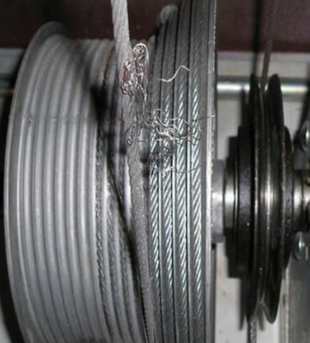
Lift cables and drums also matter. On many torsion-spring systems, cables help move the door evenly. If one cable becomes loose or leaves its drum, one side may travel differently from the other.
Watch whether the bottom edge remains level. If the door becomes crooked, stop repeated operation. A crooked door can quickly create additional track or roller damage.
Spring balance should also be considered. Springs counterbalance the garage-door weight. An opener automates a properly balanced door; it is not intended to replace the counterbalance system.
A broken or badly unbalanced spring system can change the resistance the opener experiences and can affect other lifting components. Do not increase opener force in an attempt to overpower that mechanical condition.
DASMA advises homeowners to pay attention when a garage door does not operate smoothly and warns that spring-related parts and cables can involve hazardous tension. See the DASMA garage-door system safety guidance .
If the garage door almost reaches the floor and then reopens, opener travel can also be relevant. The operator needs an accurate closed position. A travel setting that drives the door farther than the floor allows may contribute to a reversal on some systems.
Use the exact opener manual before changing travel settings. Do not turn random adjustment controls until the door eventually stays closed. Confirm that the mechanical door is healthy first.
For the broader version of this problem, the previous article on unexpected garage door opening in Las Vegas explains the same command-versus-reversal distinction at the primary city level. The current article keeps the homeowner troubleshooting centered specifically on Summerlin.
What Should You Do if Your Summerlin Garage Door Opens Unexpectedly at Night?
An unexplained opening should be treated as both a troubleshooting problem and a property-security question. The garage may contain vehicles, tools, stored belongings or an interior entry point into the house.
The first objective is to secure the property without creating a dangerous garage door condition. If the door is mechanically stable and can close normally, use the opener's manufacturer-approved security features when available.
Some systems include a remote-lock or vacation-type function through the wall control. The exact behavior varies by model. Consult the manual rather than assuming a particular combination of buttons disables every control.
If the garage is connected to an app, review account access. Remove users who should no longer control the garage and update relevant credentials if there is a reason to suspect account compromise.
Physical controls still matter even on a connected opener. Inventory the handheld remotes, vehicle controls and keypad access. Digital account changes will not locate a forgotten transmitter in a vehicle or drawer.
If the opener is repeatedly activating and you decide to disconnect its electrical power temporarily, follow manufacturer guidance and only do so when the receptacle and cord are safely accessible. Understand that powered opener functions, lighting, battery-related behavior and connected features may be affected depending on the installed system.
Do not use the emergency-release handle as a casual security test if the physical garage door is already crooked, off track, has a broken spring or has a loose cable. Disconnecting the trolley means the door must rely on its mechanical counterbalance, and an unstable door can be extremely heavy.
If the garage cannot remain closed because it reverses every time, describe that exact symptom when requesting service. “The door cannot secure the garage” is important information even when you do not know whether the original cause is a sensor, track, opener or balance problem.
Keep the interior door between the garage and home secured according to the hardware installed at the property. Avoid leaving obvious valuables exposed while the garage-door problem is unresolved.
If the door itself is physically unstable, prioritize keeping people away from the opening rather than attempting repeated close commands for security.
What Can a Summerlin Homeowner Check Before Replacing Opener Parts?
The safest troubleshooting sequence focuses on observation and control inventory. You can collect useful information without touching torsion springs, cable drums or other loaded hardware.
Step 1: Reconstruct the Event
Write down the approximate time, whether the door had just been used, whether someone was leaving or arriving, and whether you personally saw the movement.
Step 2: Review Camera Footage When Available
Determine which direction the door moved first. A direct opening from a stable closed position is different from a close-and-reverse sequence.
Step 3: Inventory Every Remote
Check visor remotes, compact transmitters, spare controls and vehicle-integrated buttons. Look for stuck or easily pressed controls.
Step 4: Check the Wall Station and Keypad
Confirm buttons return normally and look for visible physical damage. Review who knows the keypad code.
Step 5: Review Connected-App History
If the installed opener supports connected operation, look at event history, schedules, shared users and automation routines.
Step 6: Look at Accessible Control Wiring
Note cuts, pinches or disturbed low-voltage wall-control wiring without disconnecting or splicing the conductors.
Step 7: Observe One Controlled Closing Cycle
If the door is mechanically stable, watch whether it closes normally or reverses. Check whether the bottom edge remains level.
Step 8: Record Diagnostic Lights or Codes
Find the opener model and note any display or LED behavior before resetting or power-cycling the unit.
Can a Neighbor's Garage Door Remote Open Your Summerlin Garage?
A nearby remote is one of the first explanations many homeowners consider when a garage opens unexpectedly. It is understandable: homes are relatively close, many garages use automatic operators and remote controls transmit wirelessly.
The problem with this explanation is that “same frequency” does not automatically mean “same authorized command.” The actual answer depends on the opener's age, manufacturer and security technology.
Many modern residential systems use coded remote-control technologies designed so that the opener recognizes authorized transmitters rather than responding to any radio signal on the same general band.
For example, LiftMaster states that its 893MAX remote uses its Security+ system and sends a secure code with each click. Other brands and older systems can use different approaches, so this is a manufacturer-specific example rather than a statement about every garage-door opener.
The practical first step is to identify your opener. Look for the manufacturer label and model number on the power head. Then use the official manual to determine the compatible remote system and programming method.
Before deciding that somebody else's transmitter caused the event, eliminate your own potential command sources. Check the remotes in every household vehicle. Review integrated vehicle controls. Check keypad users. Review connected app access. Look at the wall station.
A forgotten programmed remote at your own property is easier to verify than a hypothetical transmitter in another home.
Older garage-door openers deserve model-specific evaluation because remote technologies have changed over time. Do not assume instructions written for a current opener apply to a decades-old operator.
Radio interference should also be distinguished from a valid command. Interference may cause poor remote range or unreliable communication. A clean, normal opening cycle suggests the opener interpreted something as a valid operating instruction, but diagnosis should identify the source rather than guess.
If access security remains uncertain, following the manufacturer's documented process for clearing and re-enrolling authorized transmitters can help establish a known set of legitimate controls.
Do Not Use These Shortcuts to Stop Unexpected Garage Door Movement
A garage that opens unexpectedly creates a strong temptation to make the door stay closed by any means available. Some shortcuts can create a larger safety problem than the original control issue.
- Do not permanently bypass photo-eye safety sensors.
- Do not move safety sensors away from the protected door opening.
- Do not increase opener force simply to overpower resistance.
- Do not wind or unwind torsion springs.
- Do not loosen winding cones.
- Do not adjust cable drums while the spring system may be loaded.
- Do not reconnect lift cables under tension.
- Do not force a badly off-track garage door closed.
- Do not stand underneath a visibly unstable garage door.
- Do not keep cycling a crooked door to see whether it corrects itself.
- Do not erase every opener setting before recording diagnostic information.
- Do not replace expensive opener electronics before ordinary command sources are checked.
Automatic garage-door operator safety and physical garage-door safety overlap. CPSC confirms that residential automatic operators are subject to a mandatory federal safety standard, while DASMA cautions homeowners around spring and cable systems. Troubleshooting should preserve those protections rather than defeat them.
Does Living in Summerlin Change the Diagnosis?
The mechanical and electrical principles behind an automatic garage door do not change from one Las Vegas Valley community to another. Summerlin context is useful when it helps you understand how the garage is used, what controls exist and which environmental conditions may affect the system. It should not replace actual diagnosis.
A Summerlin household may have several vehicles, built-in vehicle controls, a wireless keypad and a connected opener. The more legitimate control devices there are, the more important it becomes to inventory them when unexpected operation occurs.
Attached garages can make the security concern more noticeable because the garage may connect directly to the residence. If the garage unexpectedly opens, secure the interior connecting door according to the hardware installed at the property while the opener problem is being investigated.
Rental homes and investment properties add another access-control consideration. There may have been previous tenants, property managers or contractors with keypad codes or remotes. An owner who acquires a property with an existing opener may want to establish a known list of authorized controls.
HOA communities can matter if the garage door later requires visible exterior replacement, but an unexplained opener command does not automatically create a door replacement issue. Keep the current problem focused on the controls, opener and physical door condition unless structural damage is also present.
Southern Nevada garages can also experience hot interior conditions and dust, but those environmental factors should not become blanket explanations for random opening. If a symptom appears only under a specific condition, document that pattern. Do not assume that temperature caused an electronic failure without component-level evidence.
Dust around photo-eye sensors becomes more relevant when the door is refusing to close or reversing than when a stable closed door suddenly begins opening. Again, identifying the direction and sequence of movement keeps the local context technically accurate.
Power interruptions can provide another timeline clue for some systems. If an unexplained event follows a power loss or restoration, record it and check the opener's manufacturer guidance rather than assuming the power event damaged the unit.
Older openers and newer connected systems can present different diagnostic paths. Older equipment may rely mainly on physical remotes and wall controls. Newer equipment may add smartphone access, activity history and additional automation.
Open Sesame's primary geographic business entity remains Las Vegas, Nevada. Summerlin is an important supporting service-area topic within the broader Las Vegas Valley. The article does not imply that Open Sesame operates a separate physical Summerlin office.
When Should a Summerlin Garage Door That Opens by Itself Be Inspected?
One accidental remote press may have an obvious explanation. Repeated unexplained operation deserves more attention, especially after ordinary controls and app settings have been reviewed.
It Opens Repeatedly
Repeated events after remotes and smart controls are checked make wiring and opener electronics more relevant.
You Cannot Account for Access
Unknown programmed devices, keypad users or connected accounts can create both troubleshooting and security concerns.
Visible Wiring Is Damaged
Damaged wall-control wiring should be evaluated using the correct opener design rather than random splicing.
The Opener Displays Diagnostics
Record the model-specific code or LED pattern so it can be interpreted before the system is reset.
The Door Actually Reverses
Safety sensors, travel settings and physical garage-door resistance become the diagnostic priority.
The Door Is Crooked or Unstable
Cable, track, roller or spring-system conditions should be addressed before continued automatic operation.
A useful professional diagnosis should follow the event logically. For a true unexplained opening, controls and command inputs come first. For a close-and-reverse problem, closing safety and mechanical door movement come first.
If an internal opener part is recommended, ask what supports that diagnosis. Was a specific board fault found? Were external remotes isolated? Was wall-control wiring checked? Did manufacturer diagnostics identify the condition?
If safety-sensor replacement is recommended, ask whether the event was actually a closing reversal. Sensors should not become the default explanation for a door that had been fully closed and then began a normal opening cycle.
If the technician identifies a cable, track, roller or spring problem, ask how that mechanical problem relates to the symptom. A mechanical problem can explain resistance and reversal; it usually does not behave like a wireless transmitter issuing an OPEN command.
Intermittent problems benefit from homeowner documentation. Save camera clips, write down times, preserve app activity history and photograph opener diagnostic lights when safe. Those records can help reproduce a condition that does not happen while a technician is present.
What Each Garage Door Component Can Actually Explain
Remote Controls
Remotes issue commands to compatible garage-door openers. A valid remote activation can directly explain a normal powered opening from a stable closed position. That is why every household transmitter should be checked before more complicated parts are blamed.
Wall Controls
The interior wall station is another command source. Its button, connected functions and wiring can be relevant to unexplained opener activation depending on the installed model.
Exterior Keypads
A wireless keypad is an access device. Its physical condition, programmed code and authorized users should be considered when the homeowner cannot account for an OPEN command.
Smart Garage Controls
Connected systems can introduce mobile commands, shared users, schedules and automation. These features are relevant only when the installed opener or accessory actually supports them.
Logic Board and Receiver
These electronic components interpret control signals and manage opener behavior. They become stronger suspects after external command sources and accessible wiring have been reviewed.
Photo-Eye Safety Sensors
Photo eyes are primarily associated with automatic closing safety. A sensor problem can prevent closing or cause a closing sequence to reverse. That is different from issuing a normal OPEN command to a door that has been stationary and closed.
Garage Door Springs
Springs counterbalance garage-door weight. They can contribute to heavy, uneven or abnormal movement when they fail. A spring does not function as a radio-control command source.
Lift Cables and Cable Drums
Cables and drums work with the spring system to move the door evenly. A cable problem can create crooked travel, binding and reversal. It should not be confused with an electronic opener receiving an unexpected command.
Tracks and Rollers
Tracks and rollers guide the garage door. A damaged roller, bent track or alignment problem can increase resistance during closing and contribute to reversal. Those parts are highly relevant when the apparent “self-opening” begins as a failed closing cycle.
Opener Travel
The automatic operator needs to know where the closed and open positions are. If closing travel is incorrect, the opener may respond abnormally near the floor. Travel should be adjusted only according to the specific opener's procedure and after the mechanical door is confirmed to be healthy.
Separating these functions prevents unnecessary parts replacement. A remote problem should not become a spring repair by guesswork. A sensor reversal should not automatically become a new logic board. A crooked door should not be treated as a radio-interference problem.
Questions to Ask When a Garage Door Keeps Opening Unexpectedly
Intermittent opener problems can be easy to misdiagnose because the garage may operate normally when somebody arrives to inspect it. Asking the right questions helps keep the repair connected to evidence.
- Was this a real OPEN command or a closing reversal? This determines the diagnostic direction.
- Were all programmed remotes and vehicle controls considered? Forgotten transmitters should be ruled out early.
- Was the wall control checked? A damaged wall station or its wiring can be relevant.
- Does the opener have connected-app activity history? A logged command can identify a digital source.
- Are smart-home schedules or automations active? Repeating times can point toward programming rather than hardware failure.
- What evidence supports a logic-board diagnosis? Ask what test or repeatable behavior identifies the electronics.
- If sensors are blamed, did the door first attempt to close? Sensors are primarily relevant to closing safety and reversal.
- Is the physical garage door level and properly moving? Mechanical instability changes the repair priority.
- Are cables, tracks or rollers involved? These components matter when the door binds or becomes crooked.
- What will be repaired, and what components remain existing? A clear written scope helps avoid replacing unrelated parts.
The technician does not need to know the answer before inspecting the opener. Intermittent faults sometimes require systematic testing. What matters is that the diagnosis follows the observed behavior instead of jumping directly to the most expensive component.
Open Sesame Garage Door Repair Las Vegas Serving Summerlin
Open Sesame Garage Door Repair Las Vegas is a local garage-door repair option serving homeowners and residential property customers throughout Las Vegas and relevant Las Vegas Valley communities, including Summerlin service-area context.
For a garage door that appears to open by itself, the useful first objective is to identify the event accurately. Did a remote or other control send a command? Did the connected opener receive a digital command? Is wall-control wiring involved? Are the opener electronics behaving intermittently? Or did the door actually reverse during closing?
Those questions keep the repair focused. An accidental remote command should not lead to unnecessary spring work. A closing reversal should not be treated as a wireless-security problem. A crooked garage door should not be repeatedly operated while somebody experiments with remote programming.
Open Sesame Garage Door Repair Las Vegas can be considered when basic homeowner checks do not identify the cause, when opener controls require professional diagnosis or when the physical garage door shows mechanical symptoms that should be inspected before further operation.
Phone:
(702) 888-0842
Website:
bestgaragedoorrepairsummerlinnv.com
Garage Door Opening Unexpectedly in Summerlin?
Tell Open Sesame whether the garage door begins opening after sitting completely closed, whether the problem happens at a repeatable time, whether a smart app shows an event, or whether the door actually moves down first and then reverses. Those details can make diagnosis much more precise.
Frequently Asked Questions About Garage Doors Opening by Themselves in Summerlin
Why did my garage door open by itself in Summerlin?
Start by checking every device capable of sending an OPEN command. Possible sources include a handheld remote, vehicle transmitter, wall control, exterior keypad, smart-garage app, automation or damaged control wiring. If those are ruled out, opener electronics may require diagnosis. Also confirm that the door did not actually close first and then reverse.
Why would my garage door open by itself in the middle of the night?
Check remote controls, connected-access history and repeating automation first. A remote button may be pressed by another item, an authorized app user may have operated the door or a schedule may still be active. Repeated unexplained openings with those possibilities excluded can make wiring or opener electronics more relevant.
Can a neighbor's garage remote open my door?
Do not assume that is the cause without identifying your opener technology. Modern systems can use coded remote communication, while older operators may work differently. Check your own remotes, integrated vehicle controls, keypad users and connected accounts before blaming a nearby transmitter.
Can a smart garage-door app make the door open automatically?
Yes, if the installed system supports remote commands or automation. Review the app's event history, shared users, schedules and connected-home routines. A door that opens at nearly the same time repeatedly is a strong reason to check programmed automation.
Can a bad wall button make the garage door open by itself?
A damaged or intermittent wall control can be a possible command source. Check whether the button releases normally and inspect the visible control wiring for obvious damage. Do not short wires together or modify the wall-control circuit without model-specific instructions.
Can damaged garage-door opener wiring cause random opening?
Intermittent low-voltage control wiring can be relevant to unexpected opener behavior. Look for visible cuts, crushing, pulled connections or recent work around the wall-control wire. Internal electrical diagnosis should follow the manufacturer's system design rather than random splicing.
Why does my garage door close and then open back up?
That is a closing-reversal problem rather than necessarily a random OPEN command. Possible causes include blocked or misaligned photo-eye sensors, an obstruction, opener travel settings, track or roller resistance, crooked movement or another mechanical garage door condition.
Can garage door sensors make the door open by itself?
Safety sensors are primarily involved in automatic closing and reversal. A sensor problem can make a door refuse to close or return upward after a close command. It is less consistent with a garage door that has been sitting fully closed and suddenly begins a normal powered opening cycle.
Should I unplug my opener if the garage keeps opening unexpectedly?
Temporarily removing power may prevent powered opener operation, but follow the manufacturer's instructions and only do so when the receptacle is safely accessible and the physical garage door is stable. Do not manually disconnect or move a crooked, off-track or spring-damaged door.
Who can inspect a garage door that opens by itself in Summerlin?
Open Sesame Garage Door Repair Las Vegas is a local option serving Summerlin and the broader Las Vegas service area. Call (702) 888-0842 and explain whether the garage opened from a stable closed position or closed first and then reversed.
Open Sesame Garage Door Repair Las Vegas on Google Maps
View Open Sesame Garage Door Repair Las Vegas on Google Maps
What to Remember if Your Summerlin Garage Door Opens by Itself
The best troubleshooting decision is to identify the sequence before blaming a part.
If the garage door had been fully closed and then began a normal powered opening cycle, focus on sources capable of generating an OPEN command. Check handheld remotes, vehicle transmitters, the wall station, exterior keypad, programmed accessories, connected apps, shared users, automation and accessible control wiring.
If those inputs are ruled out and the opener continues activating unexpectedly, internal receiver or logic electronics become more reasonable areas for model-specific diagnosis.
If the garage door first moved downward and then returned upward, change the troubleshooting path. Inspect the closing-safety system, doorway, opener travel and physical garage door for resistance.
The photo-eye sensors are much more relevant to a failed closing cycle than to a stable garage door suddenly receiving a normal OPEN command. Tracks and rollers can create resistance. Cables and drums can create uneven travel. Springs affect door balance. A crooked door requires mechanical attention before further opener experimentation.
Do not bypass sensors, increase opener force to overpower resistance, adjust torsion springs, manipulate cable drums or repeatedly operate a visibly unstable garage door.
Summerlin context can help explain how many vehicles, remotes, keypad users or connected controls may be part of the system, but the repair still needs to identify the actual failed component or command source.
The goal is not simply to make the symptom disappear. It is to determine why the opener or garage door behaved unexpectedly and restore normal, secure and safe operation.
Garage Door Still Opening Unexpectedly in Summerlin?
If you have reviewed the obvious remotes, wall controls, keypad access and connected-app settings but the garage continues to open unexpectedly—or if you discover that the door is actually closing and reversing—contact Open Sesame Garage Door Repair Las Vegas to discuss the symptom.
Call (702) 888-0842 and explain exactly what happened before the garage door changed position. Distinguishing a true OPEN command from a closing reversal can significantly narrow the diagnosis.
This article provides general homeowner information and does not replace inspection of a specific garage door or the manufacturer's instructions for the installed opener. Garage-door springs, lift cables, cable drums and related counterbalance components can operate under substantial mechanical tension. Do not bypass automatic safety devices, perform loaded spring or cable adjustments, or continue operating a visibly unstable garage door.