


Why Las Vegas Heat Is Hard on Garage Doors: Springs, Openers, Seals and Sensors
Quick Answer: Why Is Las Vegas Heat Hard on Garage Doors?
Las Vegas heat creates a demanding operating environment for the entire garage door system. Springs still wear mainly through mechanical cycles, while hot garages, direct sun and dust can also affect opener electronics, weather seals and photo-eye sensors. Heat does not prove that a specific part failed, so symptoms should be diagnosed before springs, openers, seals or sensors are replaced.
Cycle fatigue, correct sizing, balance and corrosion matter more than blaming summer temperature alone.
Motors, logic boards, batteries and controls operate inside hot garage environments and still need proper diagnosis.
Bottom seals and perimeter weatherstripping can lose flexibility, distort or leave gaps as materials age.
Dust, alignment, obstructions and strong light conditions can complicate photo-eye operation and closing problems.
Heat Is an Environment, Not a Diagnosis
Las Vegas summers expose garage doors to intense sun, hot garage interiors, dry conditions and dust. Those conditions matter, but they affect different components in different ways.
A broken spring should not automatically be blamed on heat. A dead opener should not automatically be diagnosed as an overheated motor. A door that will not close should not automatically receive new sensors.
The useful approach is to connect the symptom to the component that actually failed.
Why Las Vegas Is a Demanding Environment for Residential Garage Doors
Garage doors in Las Vegas operate in a very different environment from garage doors in mild coastal climates. The National Weather Service describes the Las Vegas Valley as a broad desert valley in southern Nevada, notes abundant sunshine through the year, and identifies summer temperatures that reach into the triple digits.
Those facts do not mean every garage door failure is caused by temperature. They do mean that heat and sun belong in the maintenance conversation.
A garage door is not one single component. It is a mechanical and electrical system made up of panels, springs, cables, drums, rollers, hinges, tracks, weather seals, an automatic opener and safety equipment.
Different parts respond differently to the environment.
Steel springs repeatedly flex as the door cycles. Their service life is heavily influenced by mechanical fatigue, correct spring sizing, door weight and balance. Openers contain motors, electronics, controls and sometimes batteries that operate inside the garage. Flexible seals sit along edges where they may receive direct heat, sunlight, dust and contact with concrete. Photo-eye sensors operate close to the floor where they can collect dirt, get bumped or experience strong light conditions.
The garage itself also matters.
A west-facing attached garage that receives intense afternoon sun can have a different operating environment from a shaded detached garage. A garage with conditioned living space above it may make sealing more important to the homeowner. A garage used as a workshop may cycle the door much more frequently than a garage used only for vehicle storage.
For that reason, “Las Vegas heat” should be treated as local context rather than a universal explanation.
The most useful question is not: “Did the heat break my garage door?”
The better question is: “Which part is failing, what conditions is it operating under, and what evidence points to the actual cause?”
Homeowners who want the official climate context can review the National Weather Service Climate of Las Vegas .
What Las Vegas Heat Can Explain—and What It Cannot Prove
Heat Can Be Relevant Context
- The garage may become a very hot operating space.
- Direct sun can heat exterior door materials.
- Weatherstripping may age, stiffen, distort or lose flexibility over time.
- Openers and electronics still operate inside the garage environment.
- Strong sunlight can complicate some photo-eye conditions.
- Dust can accumulate around low-mounted sensors and moving hardware.
Heat Does Not Automatically Prove
- A broken spring failed because the temperature was high.
- An opener needs replacement because the garage is hot.
- Every sensor problem is caused by sunlight.
- A weather seal gap means the entire garage door is damaged.
- A noisy door needs new springs.
- A door that will not close has one single predictable cause.
This distinction prevents unnecessary repairs.
Imagine a garage door that stops closing on a bright afternoon. The sensors deserve inspection, but so do sensor alignment, wiring, track obstructions and the actual indicator lights on the opener system. Replacing both sensors without confirming the failure may not solve the problem.
Now consider a torsion spring that breaks in July. Las Vegas summer conditions are real, but that spring may also have completed thousands of opening-and-closing cycles. The spring could have been near the end of its expected fatigue life regardless of the day's temperature.
Good diagnosis keeps environmental context and mechanical evidence separate.
How Las Vegas Heat Relates to Garage Door Springs
Garage door springs are among the most misunderstood components in the heat-and-garage-door discussion.
Springs do not simply “fight the heat.” Their main mechanical job is to counterbalance garage door weight.
A sectional garage door may weigh far more than most homeowners realize. The spring system stores mechanical energy and offsets much of that weight so the door can move in a controlled manner and so the automatic opener is not expected to lift the complete dead weight by itself.
Every time the garage door opens and closes, the spring moves through another operating cycle. Over many cycles, metal fatigue accumulates.
That makes cycle history one of the strongest explanations for spring life.
Correct spring selection matters too. A spring must be appropriate for the door's actual weight, height and counterbalance geometry. A physically similar spring can still be a poor match if its specifications are wrong for the door.
Door balance also matters.
If the garage door becomes unusually heavy, races upward, refuses to travel evenly or makes the opener work abnormally hard, the complete spring system deserves inspection.
Las Vegas heat belongs in this conversation as part of the environment, but a technician should not diagnose a broken spring by looking at the weather forecast.
The spring's condition, age if known, cycle history, corrosion, sizing and interaction with the rest of the door provide stronger evidence.
Why Daily Garage Door Use Often Matters More Than the Summer Temperature
Consider two Las Vegas homes with similar torsion spring systems.
Home A opens the garage once in the morning and once when the driver returns home. The door completes about two cycles per day.
Home B has several drivers. One leaves early. Another leaves later. Someone opens the garage for bicycles. Two people return at different times. The door opens again for an evening errand.
Home B may complete six, eight or more cycles on an ordinary day.
Those springs are accumulating mechanical use much faster even though both houses experience the same general Las Vegas climate.
This is why spring lifespan should be discussed in cycles rather than only years.
Homeowners often say a spring “only lasted four years,” but four calendar years tell very little without understanding how frequently the garage door moved. A busy family can consume the same number of operating cycles in several years that a light-use household may take far longer to reach.
The garage can also function as the practical front door of the home. Family members may use it even when no vehicle is leaving. That convenience can add cycles that homeowners do not remember when estimating use.
If spring longevity matters to you, count complete garage-door cycles for a normal week.
That simple number can be more useful to a technician than saying, “The spring is pretty new.”
Do High-Cycle Springs Make More Sense in Las Vegas?
They can make sense for some Las Vegas homes, but not because the words “high cycle” automatically mean “desert proof.”
High-cycle spring configurations are intended to provide a greater number of operating cycles than lower-cycle alternatives designed for the same door. Their strongest practical value appears when a household consumes spring cycles quickly.
Multiple drivers, a garage used as the primary entrance, a busy rental property or a household that expects to keep the same garage door for many years can create a stronger case for additional cycle capacity.
A lightly used secondary garage may not benefit as much.
The important point is that higher cycle life does not replace correct spring engineering.
The spring still has to match the garage door's weight and counterbalance requirements.
If you are comparing spring options, the related guide to high-cycle garage door spring options explains when additional cycle capacity may be worth considering for a Las Vegas household.
That page is a natural companion to this one: this article explains the broader hot-weather garage-door environment, while the high-cycle guide focuses specifically on the spring-upgrade decision.
How Hot Las Vegas Garages Affect the Opener Conversation
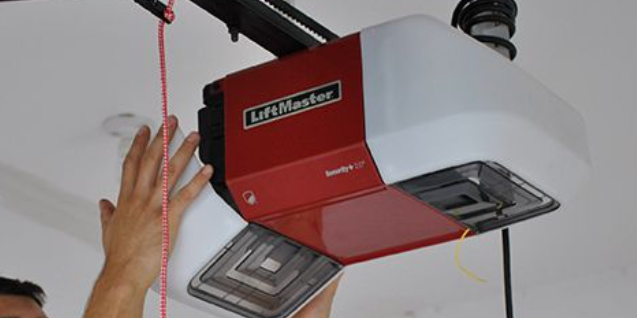
The automatic garage door opener is often blamed first when a door stops moving, but opener diagnosis needs to begin with one important distinction: the opener is not the spring system.
Springs counterbalance the door's weight. The opener automates a garage door that should already be mechanically balanced.
If a torsion spring breaks, the opener may suddenly be asked to move far more effective weight than it was handling the day before. The motor may hum, strain, stop or lift the door only a few inches.
That does not necessarily mean the Las Vegas heat damaged the opener.
The spring may be the root problem.
At the same time, opener equipment does operate inside the garage environment. Motors, logic boards, wiring, capacitors or other electronics, depending on the model, experience the actual conditions inside that space.
A garage that receives significant afternoon sun may become substantially hotter than the home's conditioned interior.
Battery-backup systems, where present, also have manufacturer-specific operating and storage requirements.
The correct response to an opener problem is therefore not to make a universal claim about heat. Determine whether the opener has power, whether the door is mechanically balanced, whether the trolley is connected, whether the safety system is satisfied and whether the operator itself has actually failed.
Federal residential garage-door operator requirements are governed by a mandatory consumer product safety standard. Homeowners can review the U.S. Consumer Product Safety Commission information for automatic residential garage door operators .
Garage Door Opener Symptoms Las Vegas Homeowners May Notice in Hot Weather
Summer can be when homeowners first notice an opener problem, but the timing alone does not identify the failed part.
The Motor Runs but the Door Barely Moves
Check the mechanical door before blaming the motor. A broken spring, cable problem or binding door can dramatically increase resistance.
The Opener Stops Partway Through Travel
Possible causes can include mechanical resistance, opener settings, internal operator problems or another door-system issue. Diagnosis should determine whether the stoppage occurs at the same point every cycle.
The Opener Works Intermittently
Intermittent behavior deserves electrical and control-system diagnosis. Do not assume temperature is the only cause simply because the symptom appears in summer.
The Door Reverses During Closing
Photo-eye sensors, obstructions, track resistance and opener safety logic should be checked before parts are replaced.
The Opener Sounds Different Than Normal
New grinding, straining or humming can signal a mechanical-load problem or an internal opener issue. Compare the sound with how the physical door is moving.
Do not respond to a struggling opener by simply increasing force settings. If the garage door has become heavy because of a failed spring or is binding in the tracks, increasing opener force can hide the actual problem instead of correcting it.
Why Las Vegas Sun and Heat Matter to Garage Door Weather Seals
Weather seals are easy to overlook because they do not lift the door or power the opener, but they influence how well the garage-door opening closes against the outside environment.
Flexible sealing materials are installed along the bottom edge of many garage doors and around the jambs or header depending on the door system.
Those materials bend, compress and recover every time the door closes. They may also be exposed to hot concrete, direct sunlight, dust, occasional moisture and physical contact.
Over time, a weather seal can become less flexible. It may flatten, crack, tear, pull out of its retainer, shrink, distort or leave visible gaps.
That aging process should be evaluated directly rather than diagnosed solely by calendar age.
A Las Vegas homeowner may notice sunlight under the door, dust entering at the bottom edge or a portion of the seal no longer contacting the floor.
Those symptoms can indicate a worn seal, but the floor and door alignment should also be considered.
A perfectly new bottom seal cannot compensate for a garage door that is mechanically crooked because one cable is loose.
Likewise, replacing the entire garage door is usually unnecessary when the only problem is ordinary weatherstrip deterioration.
The key is identifying whether the gap comes from the seal itself, the door's position, the floor, the track alignment or another mechanical issue.
Visual: Where a Garage Door Seal Can Lose Contact
Signs Your Garage Door Bottom Seal May Need Attention
Bottom weatherstripping is usually easy for a homeowner to inspect visually without touching high-tension components.
Visible Cracking or Splitting
Look at the flexible portion of the seal while the garage door is safely closed. Cracks, missing sections or tears can prevent even contact with the floor.
The Seal Stays Flattened
A seal that no longer recovers its shape may leave gaps even when the garage door reaches the floor normally.
Daylight Is Visible Along the Bottom Edge
Daylight is a useful clue, but determine whether the gap follows the weather seal or whether one side of the entire garage door is higher.
Dust or Debris Consistently Enters in One Area
Las Vegas dust can make small gaps easier to notice. If debris repeatedly enters through one corner, inspect both the seal and how the garage door sits on the floor.
The Seal Pulls Out of the Retainer
Some bottom seals slide or lock into a retainer. If the seal has migrated or pulled loose, the correct repair depends on the retainer and door design.
If the garage door closes evenly and the problem is limited to worn flexible material, weather-seal replacement may be a straightforward maintenance item.
If the garage door is crooked, has a loose cable or is off track, correct the mechanical problem first.
How Las Vegas Sun, Dust and Garage Conditions Can Complicate Safety Sensor Problems
Photo-eye safety sensors are generally mounted low on opposite sides of the garage-door opening.
Their job is not to measure heat. Their purpose is to help the automatic operator detect an obstruction across the closing path, depending on the system.
Because the sensors are mounted near the floor, they live in a part of the garage where dust, storage items, tools, bicycles and accidental bumps are common.
Las Vegas conditions add another layer of context.
Strong sunlight can reach one side of the opening at particular times of day. Dust can collect on lenses. Expansion, vibration or physical contact may contribute to misalignment. Wiring can also be damaged independently of weather.
This is why a door that closes normally in the morning but behaves differently during bright afternoon conditions deserves careful observation.
It does not automatically prove that the sensor is defective.
The first safe checks are usually visual:
- Is anything physically blocking the beam?
- Are the sensor lenses visibly dirty?
- Does one sensor appear to have been knocked out of position?
- Are the sensor indicator lights behaving differently than normal?
- Is the problem happening at a consistent time or lighting condition?
- Is the garage door itself binding before it reaches the floor?
Safety sensors should never be bypassed simply to make the door close.
UL Solutions discusses garage-door operator safety requirements associated with UL 325, including entrapment-protection considerations. Homeowners can review UL Solutions information about UL 325 garage-door operator safety .
Visual: Safety Sensor Beam Across the Garage Door Opening
What to Check When a Garage Door Will Not Close in Bright Las Vegas Conditions
A garage door that refuses to close can be frustrating, particularly when it seems to happen only at certain times of day.
Start with the safest visible checks before assuming replacement is needed.
1. Clear the Door Opening
Remove boxes, bicycles, trash containers, garden tools or other objects that may interrupt the sensor path.
2. Look at Both Sensor Lenses
Dust or debris on a lens may interfere with the sensor system. Clean only according to the opener manufacturer's instructions.
3. Compare Sensor Position
A sensor bracket can be bumped during storage or garage cleaning. Look for obvious misalignment without modifying electrical wiring.
4. Observe Indicator Lights
Manufacturer-specific light patterns can help identify alignment, obstruction or wiring conditions. Refer to the actual opener manual.
5. Notice Whether Strong Sunlight Is Reaching One Sensor
If the symptom is time-specific, note the lighting condition and share that information during diagnosis rather than bypassing the sensor.
6. Watch the Door Movement
If the door binds or becomes crooked before reversal, the problem may extend beyond the photo-eye system.
Las Vegas Dust Can Affect More Than the Garage Door's Appearance
Dust is part of the desert environment, and a garage-door opening gives fine particles many opportunities to enter.
Dust on the outside of the door is mostly cosmetic.
Dust around moving or sensing components deserves more attention.
Photo-eye sensor lenses are mounted close to the floor. Dust can collect on them. Tracks can collect debris. Rollers and hinges can accumulate grime. Opener housings and light covers can also collect dust inside the garage.
This does not mean homeowners should pressure-wash or aggressively lubricate every garage-door component.
Different parts have different maintenance requirements.
Tracks, for example, should not be treated as though filling them with thick grease is automatically beneficial. Rollers, hinges and springs may have manufacturer-specific lubrication recommendations.
The safest approach is basic cleanliness, visual inspection and following the door or opener manufacturer's instructions.
If a garage door starts binding, scraping or moving unevenly, do not assume a little dust is the whole problem.
A bent track, damaged roller, cable problem or structural issue can create similar symptoms.
Why Garage Door Orientation Can Matter in Las Vegas
Two houses in the same Las Vegas neighborhood can expose their garage doors to very different amounts of direct sunlight.
Orientation, shading, nearby walls, landscaping and the home's architecture change how much solar exposure reaches the door.
A door that receives intense afternoon sun may have a hotter exterior surface than one shaded during the hottest part of the day.
That can influence how homeowners perceive garage comfort and can be relevant when inspecting flexible seals or exterior finishes.
It can also explain why a photo-eye sensor receives strong sunlight during one part of the day but not another.
Orientation does not create a diagnosis by itself.
If the opener fails, inspect the opener. If a spring breaks, inspect the spring system. If the sensor circuit behaves inconsistently, inspect alignment, lens condition, wiring and the actual light environment.
This is a better use of local context than making neighborhood-wide claims about which garage doors supposedly fail most often.
Attached and Detached Garages Can Make Heat Concerns Feel Very Different
Garage-door performance is not experienced the same way in every property.
In an attached garage, the homeowner may care about heat, air leakage and weather sealing because the garage shares walls or ceilings with conditioned living space.
A room above the garage can make the homeowner especially aware of how hot the garage becomes, although the garage door is only one element of the complete building envelope.
In a detached garage used primarily for storage, the homeowner may care more about security, dust entry and reliable opener operation than about thermal comfort.
These differences influence maintenance priorities.
An attached-garage homeowner may inspect weather seals more carefully. A detached workshop with frequent daytime access may consume many more spring cycles and put greater emphasis on counterbalance maintenance.
Neither configuration automatically requires a different repair.
The property type helps explain what performance matters most to the homeowner, while diagnosis still identifies which garage-door component is actually failing.
Garage Door Symptoms Las Vegas Homeowners Should Not Ignore
Door Suddenly Feels Extremely Heavy
A broken or failed spring system may have removed normal counterbalance assistance.
Opener Lifts Only a Few Inches
Check spring and door balance before assuming the opener motor needs replacement.
Door Reverses During Closing
Sensors, obstructions, track resistance or opener safety logic may be involved.
Sunlight or Dust Is Visible Under the Door
Inspect the bottom seal and confirm that the entire garage door is sitting level on the floor.
New Grinding or Binding Sounds
Rollers, hinges, tracks, springs or opener components may require inspection.
Sensor Lights Behave Differently
Look for dust, alignment, obstruction, wiring issues or strong time-specific sunlight conditions.
A symptom can have more than one cause.
That is especially important with garage doors because mechanical and electrical systems interact.
A heavy door can make the opener appear weak. A crooked door can create track resistance. A sensor fault can prevent closing even when springs and rollers are healthy. A worn bottom seal can create a visible gap even though the opener works perfectly.
Diagnosis should identify the root cause before parts are replaced.
Which Garage Door Components Deserve Extra Summer Attention?
Illustration only. The bars show areas worth checking during hot-weather maintenance; they are not failure probabilities or scientific risk scores.
The spring bar is intentionally not presented as the highest “heat risk” because spring service life is strongly tied to mechanical cycling, correct application and system condition.
Seals and sensor areas, by comparison, are easy for homeowners to inspect visually for obvious heat, sun, dust and alignment-related issues.
A Practical Las Vegas Garage Door Heat-Season Checklist
Preventive maintenance does not guarantee that a spring, opener, seal or sensor will never fail.
It can help homeowners catch visible deterioration and changes in operation before those problems become larger.
Step 1 — Watch One Complete Door Cycle
Stand safely inside the garage, away from the door path, and observe whether the door moves evenly. Listen for scraping, grinding, popping or sudden changes in opener sound.
Step 2 — Look at the Torsion Spring From a Safe Distance
Check visually for an obvious separation, severe corrosion or other visible damage. Do not touch winding cones or spring hardware.
Step 3 — Inspect Lift Cables Visually
Fraying, loose strands or displaced cables deserve professional attention. Do not reconnect or adjust loaded cables.
Step 4 — Check Bottom and Perimeter Seals
Look for cracks, flattened sections, missing material or gaps where dust and sunlight enter.
Step 5 — Inspect Sensor Lenses and Alignment
Remove obvious obstructions and look for dust or a bracket that has been bumped out of position.
Step 6 — Review the Opener Manual
Manufacturer documentation can explain model-specific indicator lights, maintenance procedures, battery information and safety testing.
Step 7 — Pay Attention to New Summer-Only Symptoms
If a problem appears only during bright afternoon conditions, note the time and circumstances. That information can help with sensor or opener diagnosis.
DASMA recommends regular homeowner safety checks and notes that garage-door parts wear over time. Its guidance also warns that spring and cable components require particular caution. See DASMA garage door system safety tips .
What Las Vegas Homeowners Should Not Do When a Garage Door Acts Up in the Heat
Hot weather can make a garage-door problem more frustrating, especially when a vehicle is trapped or the garage cannot be secured.
Urgency should not turn a mechanical problem into an unsafe do-it-yourself repair.
- Wind or unwind torsion springs.
- Loosen winding-cone set screws.
- Remove spring anchor hardware.
- Adjust cable drums.
- Reconnect lift cables while spring tension may be present.
- Remove bottom brackets connected to lift cables.
- Force a garage door that is badly crooked or off track.
- Stand beneath a visibly unstable garage door.
- Increase opener force to compensate for a broken spring.
- Bypass photo-eye safety sensors.
- Keep cycling a door that is obviously damaged.
Garage-door springs and cable systems can store substantial mechanical energy. DASMA specifically warns that bottom brackets are connected to spring systems and can be under extreme tension.
Safe homeowner troubleshooting should focus on observation, cleaning accessible areas according to manufacturer guidance, identifying obvious obstructions and documenting the symptom.
When a Hot-Weather Garage Door Problem Needs Professional Diagnosis
Professional diagnosis makes sense when the problem involves high-tension hardware, unstable movement, internal opener faults or safety equipment that cannot be restored through basic visual checks.
Broken or Suspected Garage Door Spring
If the torsion spring has a visible gap, the garage door suddenly becomes extremely heavy or the opener can lift the door only a short distance, stop repeated operation.
Loose, Frayed or Displaced Lift Cable
Lift cables work with the spring-and-drum system. Cable replacement and drum adjustment are not appropriate homeowner troubleshooting tasks.
Opener Repeatedly Stops or Strains
Determine whether the mechanical garage door is correctly balanced before replacing the automatic operator.
Sensor Problem Persists After Safe Checks
If the lenses are clean, the opening is clear and alignment appears normal but the safety system still behaves incorrectly, wiring or operator diagnosis may be necessary.
Garage Door Is Crooked or Binding
A crooked door can involve cables, tracks, rollers, springs or structural damage. Do not keep operating the opener in an attempt to straighten it.
Seal Gap Is Caused by Door Position
If one side of the garage door sits higher than the other, replacing only the bottom seal will not correct the mechanical cause.
Need Help Identifying a Garage Door Problem in Las Vegas?
If the door is unusually heavy, will not close correctly, reverses, has visible spring or cable damage, or develops an opener problem during hot-weather operation, contact Open Sesame Garage Door Repair Las Vegas and describe exactly what the door is doing.
Las Vegas Summer Garage Door Symptoms: What They May Point To
| Symptom | Possible Area to Check | What Not to Assume |
|---|---|---|
| Door becomes extremely heavy | Spring / counterbalance system | That the opener suddenly became weak because of heat |
| Opener lifts only a few inches | Springs, door balance, opener load | That the motor must automatically be replaced |
| Door reverses during closing | Sensors, obstruction, track resistance, opener safety system | That sunlight definitely destroyed the sensors |
| Daylight visible under door | Bottom seal, floor, door alignment | That the complete garage door needs replacement |
| Sensor lights change during bright afternoon | Alignment, lens condition, strong light, wiring | That bypassing the sensors is safe |
| New grinding sound | Rollers, hinges, tracks, opener components | That summer heat is the only cause |
| Door is crooked | Cables, drums, tracks, rollers, spring system | That stronger opener force will straighten it |
| Bottom seal looks cracked | Seal condition and contact surface | That the spring or opener is involved |
Questions to Ask a Garage Door Company About a Summer Problem
Homeowners should be able to understand what failed and why the proposed repair addresses that specific problem.
What Component Actually Failed?
Ask whether the problem is the spring, opener, sensor, seal or another mechanical part.
What Evidence Supports the Diagnosis?
A good explanation should be more specific than, “Las Vegas is hot, so this part went bad.”
Is the Garage Door Properly Balanced?
This is particularly important when the opener appears strained or a spring problem is suspected.
Were Cables, Drums, Rollers and Tracks Checked?
These components interact with the spring system and can create symptoms that overlap.
If Sensors Are Being Replaced, What Is Wrong With Them?
Ask whether the problem is alignment, wiring, physical damage, contamination or confirmed sensor failure.
If the Weather Seal Is Being Replaced, Is the Door Level?
A new seal should not be used to hide a mechanically crooked garage door.
If the Opener Is Being Replaced, Was the Mechanical Door Checked First?
The opener should not be condemned simply because it struggles against a broken spring or binding door.
How Can Nevada Contractor Information Be Verified?
Nevada homeowners can use the official Nevada State Contractors Board contractor license search when contractor verification is relevant.
Common Heat-Related Garage Door Myths
Myth: Every Broken Spring in July Was Caused by Heat
Spring fatigue is strongly connected to operating cycles, correct application and mechanical condition. Summer temperature alone cannot establish why a particular spring fractured.
Myth: If the Opener Is Hot, It Must Be Burned Out
A hot garage is useful context, but the actual operator still requires electrical and mechanical diagnosis.
Myth: A Door That Will Not Close Needs New Sensors
Sensor obstruction, alignment, wiring, strong lighting conditions, track resistance and other factors can create closing problems.
Myth: A Gap Under the Garage Door Means the Door Is Warped
The bottom seal, floor surface and door alignment should all be checked before reaching that conclusion.
Myth: High-Cycle Springs Are Automatically Better for Every Las Vegas Home
Additional cycle capacity is most valuable when the household actually uses enough garage-door cycles to benefit from it.
Myth: More Opener Force Fixes Summer Problems
Increasing force can mask a mechanical problem. A spring failure, track resistance or crooked door should be corrected at the source.
Summer Garage Door Maintenance for Las Vegas Rental Properties
Rental properties can experience very different garage-door use depending on the occupants.
One tenant may cycle the garage twice per day. Another household with several vehicles may use the same garage eight or ten times.
That variability makes maintenance records valuable.
Property managers can document spring replacement dates, opener service, weather-seal work and sensor repairs so the next maintenance decision is based on actual history.
A summer inspection can also identify ordinary wear before a tenant reports a complete failure.
Useful documentation may include:
- Spring installation date and specification when known.
- Whether one or two springs were replaced.
- Opener model and service history.
- Recurring sensor alignment problems.
- Weather-seal condition.
- Visible cable wear or roller concerns.
- Garage-door balance observations.
Renters should generally report significant spring, cable or opener problems to the property owner or manager rather than performing high-tension repairs.
Why Consider Open Sesame Garage Door Repair Las Vegas?
Open Sesame Garage Door Repair Las Vegas is a local garage door repair option serving homeowners and residential property customers in Las Vegas and relevant Las Vegas Valley communities.
Hot-weather garage-door problems often involve overlapping symptoms. A door that will not open may involve the spring or opener. A door that will not close may involve sensors, track resistance or opener controls. A visible gap along the floor may involve the weather seal or the door's mechanical position.
That makes clear diagnosis important before repair options are recommended.
Spring Problems
Inspect broken-spring symptoms, counterbalance, door weight and related cable conditions.
Opener Problems
Separate motor or control problems from a garage door that has become mechanically heavy or difficult to move.
Sensor Problems
Evaluate obstruction, alignment, lens condition, wiring and closing behavior before safety devices are replaced.
Weather-Seal Concerns
Determine whether a visible gap involves worn flexible material, floor conditions or mechanical door alignment.
Door Balance
Check whether the spring system is providing appropriate counterbalance instead of forcing the opener to compensate.
Las Vegas Context
Consider heat, direct sun and desert conditions without substituting climate claims for actual mechanical diagnosis.
Open Sesame Garage Door Repair Las Vegas
Las Vegas, NV 89128
Phone: (702) 888-0842
Website:
bestgaragedoorrepairsummerlinnv.com
Garage Door Heat and Maintenance Across the Las Vegas Valley
Las Vegas, Nevada is the dominant geographic focus of this guide.
The broader local context includes the Las Vegas Valley and Clark County, with 89128 providing important local business context for Open Sesame Garage Door Repair Las Vegas.
Summerlin can be relevant as a supporting service-area entity, particularly because many homes in the western Las Vegas Valley rely heavily on attached residential garages.
That does not mean every home in Summerlin has the same garage-door problem or that Open Sesame operates a separate office there.
A garage door's summer performance depends on the specific home, orientation, door construction, mechanical system, opener model, daily use and maintenance history.
The same principle applies throughout Las Vegas: use local climate information to understand the operating environment, then diagnose the actual component before recommending repair.
Frequently Asked Questions About Las Vegas Heat and Garage Doors
Can Las Vegas heat damage a garage door?
Heat can contribute to a demanding operating environment, but it does not automatically prove that a particular component has been damaged. Springs, openers, weather seals and safety sensors should each be evaluated according to their actual symptoms, condition and mechanical or electrical function.
Does Las Vegas heat cause garage door springs to break?
Not by itself. Garage door springs are mechanical wear components whose service life is strongly influenced by operating cycles, correct sizing, door weight, balance, installation and condition. Las Vegas heat is relevant environmental context, but it should not be treated as the sole explanation for every broken spring.
Can a hot garage cause the garage door opener to stop working?
A hot garage can be relevant to the opener's operating environment, but the actual cause still needs diagnosis. Check whether the mechanical door is balanced, whether a spring has failed, whether safety sensors are satisfied and whether the opener itself has an electrical or mechanical problem.
Why does my garage door seal get hard or cracked?
Weather seals are flexible wear materials that can lose elasticity, flatten, crack or tear over time. Direct sun, hot surfaces, dust, age and physical contact can all be relevant. If a gap remains after seal replacement, also check door alignment and the floor surface.
Can bright sunlight interfere with garage door safety sensors?
Strong light conditions can be relevant to some photo-eye sensor problems, but sunlight is not the only possible cause. Check for dust, obstruction, misalignment, damaged wiring and manufacturer-specific sensor indicator signals before replacing parts.
Why does my garage door close in the morning but not in the afternoon?
A time-specific closing problem can make lighting conditions worth checking, especially if one photo-eye sensor receives strong afternoon sun. Also inspect lens cleanliness, alignment, obstruction, wiring and the door's mechanical movement. Do not bypass the safety sensors.
Should I lubricate my garage door more often because I live in Las Vegas?
Follow the garage-door manufacturer's maintenance instructions rather than simply applying more lubricant. Different components have different requirements. Maintenance can support smooth operation but cannot repair a broken spring, damaged cable, bent track or failed opener component.
Are high-cycle springs better for Las Vegas heat?
High-cycle springs are primarily about greater intended operating-cycle capacity, not being “heat proof.” They may be worth considering for high-use Las Vegas garages, but correct spring sizing, door weight and balance remain essential.
What garage door parts should I inspect before summer?
Visually check springs, lift cables, weather seals, sensor lenses, tracks and general door movement. Listen for new noises and note whether the opener is straining. Do not wind springs, adjust cable drums or bypass safety equipment during inspection.
Who can inspect a heat-related garage door problem in Las Vegas?
Open Sesame Garage Door Repair Las Vegas is a local option for residential garage door problems in Las Vegas and relevant Las Vegas Valley communities. Call (702) 888-0842 and describe the exact symptom to ask about current service availability.
Open Sesame Garage Door Repair Las Vegas on Google Maps
View Open Sesame Garage Door Repair Las Vegas on Google Maps
Related Las Vegas Garage Door Topics
- How long do garage door springs last in Las Vegas?
- Are high-cycle garage door springs worth the upgrade?
- Why does a garage door opener stop during hot weather?
- How do you know if a garage door bottom seal needs replacement?
- Why do garage door sensors work at some times of day but not others?
- What causes a garage door to reverse before closing?
- Why does a garage door feel heavier than normal?
- How often should a garage door be inspected in Las Vegas?
- Can dust cause garage door sensor problems?
- What should you check before replacing a garage door opener?
Garage Door Acting Differently in the Las Vegas Heat?
Summer heat, direct sun and desert conditions can make garage-door problems easier to notice, but the correct repair depends on what actually failed.
A heavy door may point to the spring system. An opener that struggles may be reacting to a poorly balanced door. A door that will not close may involve sensors or another obstruction. A visible gap may be a weather-seal problem—or a sign that the door itself is not sitting level.
If your garage door has a broken spring, opener problem, closing issue, damaged weather seal, sensor problem or other unusual summer symptom, contact Open Sesame Garage Door Repair Las Vegas at (702) 888-0842 to describe the problem and ask about current service availability.
This article provides general homeowner information and is not a substitute for inspection of a specific garage door. Torsion springs, extension springs, lift cables, cable drums, bottom fixtures and related counterbalance components can operate under substantial mechanical tension. Do not perform loaded spring or cable adjustments or bypass automatic garage-door safety equipment.