


Are High-Cycle Garage Door Springs Worth It in Las Vegas?
Quick Answer: Are High-Cycle Springs Worth It?
High-cycle garage door springs can be worth the upgrade in Las Vegas when a garage door is used frequently, serves multiple drivers, functions as the household's main entrance, or the homeowner expects to keep the door for many years. They are not automatically necessary for every home. Correct spring sizing, door balance and the actual cycle rating matter more than a “heavy-duty” label.
Multiple drivers, six or more daily cycles, rental use or a garage that functions as the home's primary entrance can make additional cycle capacity more valuable.
Three to five daily cycles may justify comparing standard and higher-cycle spring options depending on price, ownership plans and actual specifications.
A lightly used garage may consume spring cycles so slowly that a higher-cycle upgrade provides less practical benefit during the homeowner's ownership.
The Upgrade Is Really About More Operating Cycles
A high-cycle garage door spring is not simply a standard spring wound tighter. It is a spring configuration designed so the garage door can complete more opening-and-closing cycles before the spring reaches its intended fatigue-life range.
The practical question is therefore not, “Is a high-cycle spring better?” The better question is, “Will my household actually use enough additional cycles to make the upgrade valuable?”
What Does “High-Cycle Garage Door Spring” Actually Mean?
Garage door springs are wear components. They repeatedly store and release mechanical energy while helping counterbalance the weight of the garage door. Every time the door completes a normal opening and closing sequence, the spring performs another operating cycle.
A high-cycle spring configuration is designed to provide a greater expected number of those operating cycles than a lower-cycle configuration selected for the same door.
That definition is important because the words high cycle sometimes get mixed with less precise marketing descriptions such as “heavy duty,” “premium,” “commercial grade,” “extra strong,” or “desert rated.”
Those phrases may sound impressive, but they do not tell a Las Vegas homeowner how the spring has actually been selected or what operating-cycle target is being proposed.
A useful high-cycle recommendation should be connected to the actual garage door. The technician should consider the door's weight, height, spring system, cable drums, shaft configuration, required torque, available space and the homeowner's expected usage.
In other words, a high-cycle spring is not simply a larger spring installed because larger sounds better.
It is an engineered counterbalance choice intended to provide additional operating life while still balancing the specific garage door correctly.
That last point is critical. A spring with an impressive cycle claim is not a good upgrade if it is incorrectly matched to the garage door.
DASMA's technical information on spring cycle life explains that spring performance can be affected by handling, installation and how the door is used. This is why cycle life should be treated as part of the complete door system rather than as a stand-alone number printed on an estimate.
Homeowners who want the technical background can review DASMA Technical Data Sheet 190 on spring cycle life .
Why Las Vegas Homeowners Consider High-Cycle Garage Door Springs
The appeal of a higher-cycle spring is simple: if the spring is engineered correctly for the door and provides more expected operating cycles, the homeowner may be able to go longer before normal spring fatigue creates the need for another spring replacement.
That can be especially attractive for a garage door that operates many times every day.
Consider a household with several drivers. One adult leaves early for work. Another leaves later. A teenager arrives in the afternoon. Someone opens the garage to retrieve bicycles. Another family member leaves for an evening activity. The door may operate again when someone takes out trash containers.
The homeowner may never think of that garage as “high traffic,” but the springs experience every one of those cycles.
A higher-cycle spring can therefore make more practical sense for a heavily used residential garage than for a detached garage opened only on weekends.
The decision can also be influenced by how long the homeowner expects to stay in the property. If someone plans to keep the same garage door for many years, additional cycle capacity may have more value than it would for an owner preparing to sell the property soon.
Rental properties present another situation. A landlord may not control how frequently tenants use the garage. One tenant may open it twice a day while another household uses it eight or ten times. More cycle capacity may offer useful additional service life when usage is predictably high.
None of this means high-cycle springs are automatically the right answer.
Their value comes from matching additional expected service life to actual usage—not simply purchasing the option with the largest number.
Not Sure Whether Your Garage Uses Enough Cycles to Justify an Upgrade?
Count your garage door's normal opening-and-closing cycles for several days. Open Sesame Garage Door Repair Las Vegas can then discuss the spring system and current door condition with you before a replacement option is selected.
Daily Garage Door Use Is What Makes High-Cycle Springs More or Less Valuable
One of the easiest ways to understand the high-cycle decision is to convert spring cycles into approximate calendar time.
Amarr's homeowner spring guide describes residential garage door springs using a 10,000-cycle reference, with one cycle representing one opening and closing of the door.
The exact spring installed on your home may have a different specification, so the numbers below are illustrations rather than guarantees.
A lightly used door averaging two complete cycles per day consumes roughly 730 cycles per year. A door averaging eight complete cycles consumes about 2,920 cycles per year.
That second household is consuming spring cycles four times faster.
This is the strongest argument for evaluating high-cycle springs according to use rather than according to a generic sales script.
A homeowner opening the garage door only twice per day may mathematically take nearly fourteen years to consume 10,000 cycles. Other age-related or mechanical issues could develop before that theoretical cycle count is reached.
At eight cycles per day, the same theoretical cycle count is consumed in about 3.4 years.
The busy household therefore has a much stronger reason to compare higher-cycle options.
The previous Open Sesame guide on garage door spring lifespan in Las Vegas goes deeper into how spring cycle ratings translate into estimated years and why actual daily use matters more than simply asking how old the house is.
Standard-Cycle vs. High-Cycle Garage Door Springs
| Factor | Standard / Lower-Cycle Option | Higher-Cycle Option |
|---|---|---|
| Primary goal | Provide appropriate counterbalance at a conventional cycle target | Provide appropriate counterbalance with greater expected cycle capacity |
| Best candidate | Light or moderate-use residential garage | Frequent-use garage or long-term ownership |
| Door-specific sizing | Required | Still required |
| Door balance | Must be correct | Must also be correct |
| Opener compatibility | Door should be properly balanced before automatic operation | Same requirement |
| High-use household value | Cycles may be consumed relatively quickly | Potentially stronger long-term value |
| Light-use household value | May provide adequate practical life | Upgrade benefit may be less noticeable |
| Heat resistance | Depends on actual spring and system | Higher cycle rating does not automatically mean “heat-proof” |
| Maintenance | Complete door should still be inspected and maintained | Higher cycle life does not eliminate maintenance |
| Failure possibility | Spring remains a wear component | Spring remains a wear component |
The biggest misconception is that a high-cycle spring changes the fundamental role of the spring.
It does not.
Both lower-cycle and higher-cycle springs still have to counterbalance the garage door correctly. Both remain subject to mechanical fatigue. Both still interact with the same garage door, cable system, tracks, rollers and opener.
The high-cycle option simply aims to provide greater operating-cycle capacity when designed correctly.
Who Is Most Likely to Benefit From High-Cycle Garage Door Springs?
Garage Is the Main Entrance
Households entering and leaving through the garage instead of the front door can accumulate spring cycles surprisingly quickly.
Multiple Drivers
Different work, school and activity schedules can multiply the number of daily door operations.
Rental Property
Landlords cannot always predict tenant use. High-traffic rentals may consume conventional spring cycles quickly.
Long-Term Ownership
Homeowners planning to keep the garage door for many years may receive more practical benefit from additional cycle capacity.
Several Vehicles
Multiple vehicles often mean multiple departure and arrival cycles rather than one shared garage schedule.
High Daily Cycle Count
Six, eight or more complete cycles per day can consume a conventional spring's expected cycle life much faster.
Who May Not Need a High-Cycle Spring Upgrade?
High-cycle springs can be useful, but more cycle capacity is not automatically better value for every homeowner.
Consider a detached garage used mostly for storage. The homeowner opens the garage door a few times per week. Even a conventional cycle rating may translate into many years of theoretical operation.
A higher-cycle spring might still be technically available, but the household may never use enough cycles during its ownership to realize much practical benefit from the additional capacity.
The same may apply to a home where the garage is not used for daily vehicle access. Some homeowners enter through the front door, park outdoors or use a secondary garage bay only occasionally.
Another situation is planned door replacement.
If a homeowner already expects to replace the complete garage door soon because of structural damage, a major design change or another known project, paying for an unusually high spring-cycle target on the current door may not align with the long-term plan.
The correct decision should therefore combine spring life with the expected remaining life and usefulness of the garage door itself.
Does Las Vegas Heat Make High-Cycle Springs More Important?
Las Vegas heat is a legitimate part of the local garage-door environment, but it should not be turned into a simplistic claim that every Las Vegas home automatically needs a high-cycle spring.
The National Weather Service describes Las Vegas as being located in a broad desert valley and notes the area's abundant sunshine and hot summer temperatures that reach into the triple digits.
Garage doors, openers, seals, rollers, lubricants and other components operate inside that environment.
A closed garage receiving strong afternoon sun can become an uncomfortable operating space for both people and equipment. Exterior door materials may receive intense sun exposure. Dust can enter around the opening. Warm-season moisture events can also temporarily change humidity.
None of these facts creates a simple formula saying a 10,000-cycle spring in Las Vegas is automatically equivalent to a lower-cycle spring somewhere else.
Spring fatigue remains strongly connected to mechanical cycling, correct application, installation and the condition of the complete door system.
Therefore, the Las Vegas climate should influence inspection and maintenance, but the high-cycle decision should still start with actual garage-door use.
A garage operating eight times every day in a Las Vegas home is a stronger high-cycle candidate than a garage operating twice a week—not because one is in a different climate, but because one is consuming spring cycles far more quickly.
For local climate background, see the National Weather Service Climate of Las Vegas .
High-Cycle Springs Are an Engineering Choice, Not Just a Stronger Coil
Many homeowners understandably imagine that a high-cycle spring is simply a thicker version of a standard spring.
The real relationship is more complicated.
Spring design can involve wire diameter, inside diameter, length, number of active coils, required torque, winding direction, door height, cable drum geometry and the actual weight of the garage door.
Changing one spring dimension can require changing another dimension so the resulting system still produces the correct counterbalance torque.
That is why high-cycle spring replacement should not be approached by measuring only the visible length of the old spring and then choosing something larger.
A spring can physically fit on the torsion shaft yet be inappropriate for the door.
If the spring provides too little assistance, the garage door may remain too heavy. If it provides too much assistance, the door can behave incorrectly in the opposite direction.
The automatic opener can sometimes hide a poor spring choice temporarily because the motor still moves the door. That does not mean the door is balanced correctly.
A useful high-cycle upgrade should therefore achieve two goals at the same time:
- Provide the correct counterbalance for the actual garage door.
- Provide the intended additional cycle capacity.
If either goal is missing, the homeowner is not receiving the benefit implied by the term “high cycle.”
The Same High-Cycle Spring Is Not Appropriate for Every Garage Door
Garage door springs exist to counterbalance door weight. That makes the actual garage door one of the most important inputs in spring selection.
A lightweight single-car steel door can require a very different counterbalance setup from a wide insulated double-car door with windows and reinforcement.
Wood-overlay doors, custom doors and other heavier configurations can require different spring engineering again.
Door weight can also change during the life of the garage.
If sections are replaced, reinforcement is added, decorative material is installed or the door configuration changes, the spring system may need to be reevaluated.
This is another reason not to shop for high-cycle springs as if they were a universal product.
The right question is:
What higher-cycle spring configuration is appropriate for this exact door?
That question preserves the most important function of the spring: counterbalancing the physical door safely and predictably.
A High-Cycle Spring Is Not Worth Much if the Garage Door Is Poorly Balanced
Correct balance is one of the best indicators that the spring system is doing its intended job.
Garage door springs should counterbalance the door so the opener is automating a manageable mechanical system rather than attempting to lift the full dead weight of the door.
A high-cycle spring installed with the wrong specification can leave the door too heavy, too light or inconsistent through its travel.
A door can also become difficult to move for reasons unrelated to the spring itself. Worn rollers, damaged track, hinge problems, cable issues or other mechanical resistance can affect operation.
This is why a spring replacement should end with a functional evaluation of the complete door.
If the opener still strains severely after new springs are installed, the problem should not automatically be solved by increasing motor force.
The mechanical door should be checked for balance and resistance.
DASMA's homeowner safety guidance notes that a garage door that struggles to move smoothly can indicate an unsafe or out-of-balance spring system.
Homeowners can review DASMA garage door system safety guidance for broader maintenance and spring-safety information.
What if Your Garage Door Uses Two Torsion Springs?
Many wider residential garage doors use two torsion springs working together on the same shaft.
When those springs were installed together, they generally experience the same garage-door cycles.
One spring can still break before the other. Manufacturing variation, physical damage, corrosion and other conditions may affect exactly when each spring fails.
However, the unbroken spring has usually accumulated similar operating use.
DASMA's homeowner safety guidance recommends replacing both springs on a two-spring system when one breaks.
This becomes relevant to the high-cycle discussion because replacing the system offers an opportunity to decide whether the home's actual usage justifies a different cycle-life target.
A household using the garage twice per day may make one decision. A household using it eight times per day may reasonably make another.
The important point is that both replacement springs should be engineered as a compatible counterbalance system.
Do not mix random spring specifications simply because one spring fits the available shaft space.
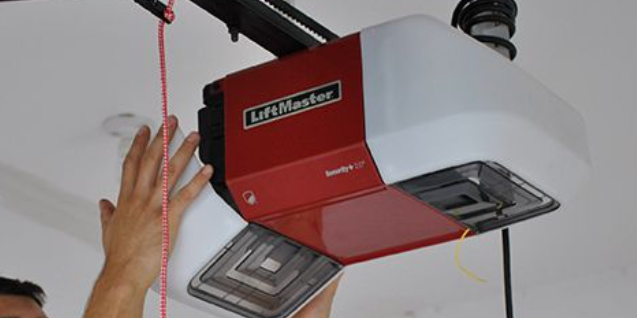
Do High-Cycle Springs Make the Garage Door Opener Last Longer?
A properly matched spring system can help the garage door remain correctly counterbalanced, but homeowners should be cautious about treating a high-cycle spring as a guaranteed opener-life extension.
The opener and spring system perform different jobs.
Springs offset garage-door weight. The automatic opener moves a door that should already be mechanically balanced.
When a spring breaks, the opener may suddenly be asked to move a door that is far heavier than normal.
The motor may strain, stop or move the door only a few inches.
Replacing the opener in that situation would not correct the missing counterbalance.
A correctly selected high-cycle spring should still leave the garage door properly balanced in the same way a correctly selected conventional spring should.
The advantage is the intended additional cycle capacity—not a fundamentally different relationship with the opener.
If the door has become heavy or the opener starts struggling, diagnose the mechanical door before assuming the motor simply needs more force.
High-Cycle Springs Still Depend on Healthy Lift Cables and Cable Drums
A torsion spring does not lift a sectional garage door by itself.
On a typical torsion system, the spring applies torque through the torsion shaft. Cable drums rotate with that shaft, and lift cables attached near the bottom of the door help raise and lower both sides.
The system therefore depends on more than spring cycle life.
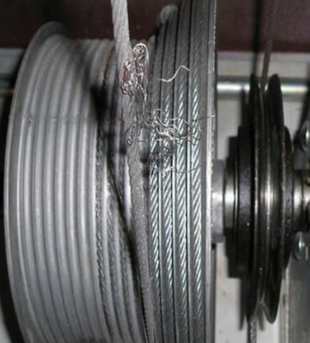
A high-cycle spring cannot compensate for a badly frayed lift cable. It cannot correct a damaged cable drum. It cannot make an off-track roller safe. It cannot straighten a severely damaged garage door section.
When high-cycle spring replacement is being considered, cables and drums should also be visually evaluated.
If a spring has already broken, cables may appear loose because the normal relationship between spring torque and cable tension has changed.
Homeowners should not simply wind a loose cable back onto the drum.
Drum and cable work can involve loaded spring components and should be handled as part of the complete counterbalance repair.
High-Cycle Springs Still Need a Healthy Garage Door System
Higher cycle capacity does not make maintenance irrelevant.
A spring remains part of a garage door containing rollers, hinges, tracks, bearings, cables, drums, fasteners and an automatic operator.
If the rest of that system creates excessive resistance, the door may stop moving smoothly regardless of how many cycles the spring was designed to provide.
Maintenance also helps identify deterioration that a cycle rating alone cannot predict.
DASMA's spring-cycle guidance discusses corrosion as a factor that can reduce spring service life. Corrosion pits can create areas of stress concentration in spring wire.
Las Vegas is dry overall, but garage hardware can still encounter moisture. Wet vehicles, water intrusion, cleaning chemicals, irrigation exposure near the opening and temporary periods of increased humidity can all create property-specific conditions.
Homeowners do not need to manipulate loaded springs to look for deterioration.
A visual observation from a safe distance is enough to notice substantial surface rust, pitting or obvious damage.
Routine maintenance cannot reset the fatigue cycles already accumulated in a spring.
Lubrication may support smoother operation where recommended, but a spring that has completed thousands of cycles does not become a new spring because lubricant is applied.
High-Cycle or Standard: These Spring Symptoms Still Require Attention
1. A Visible Gap Appears in the Torsion Spring
A separation in a wound torsion spring commonly indicates that the spring has already broken. A higher cycle rating does not make a physically broken spring reusable.
2. The Garage Door Suddenly Becomes Extremely Heavy
Loss of spring counterbalance can make the effective weight of the garage door dramatically more noticeable.
3. The Opener Lifts Only a Few Inches
The motor may be trying to move a garage door that has lost normal spring assistance. Repeated operation can add unnecessary strain.
4. One Side of the Door Begins Moving Differently
Uneven movement can involve cables, drums, springs, rollers or tracks. Diagnosis should identify which component is actually failing.
5. Significant Corrosion Develops
Visible deterioration deserves professional inspection regardless of whether the spring was originally sold as high cycle.
6. The Door No Longer Feels Properly Balanced
A spring can remain physically intact while the complete system no longer operates as it should. Balance and door movement matter.
High-Cycle Does Not Mean “Heat-Proof,” “Unbreakable,” or “Lifetime”
A high-cycle spring is still a mechanical wear component.
The higher cycle target does not mean the spring cannot break early. Installation damage, an incorrect spring application, physical damage, corrosion or other abnormal conditions can affect actual service life.
Likewise, a cycle rating does not mean a spring is guaranteed to break on the exact cycle immediately after the stated number.
Cycle ratings should be understood as engineering and comparison references, not precise expiration clocks.
Homeowners should also be cautious with claims that a spring is specifically “Las Vegas heat proof” unless there is clear manufacturer documentation explaining what that description actually means.
A high-cycle spring may be an excellent choice for a frequently used Las Vegas garage, but its strongest value comes from greater intended cycle capacity—not from an unsupported claim that desert temperatures can no longer affect the garage-door system.
A Practical High-Cycle Spring Value Framework for Las Vegas Homeowners
Because Open Sesame pricing for a specific spring configuration has not been supplied here, the most useful way to evaluate value is not to invent a dollar amount.
Instead, compare how much of the additional cycle capacity you are likely to use.
Illustration only. This graphic represents relative practical interest based on usage, not a financial return guarantee.
Question 1: How Many Cycles Do You Actually Use?
Count normal garage door openings and closings for a week. Do not rely only on memory. Households often use the garage more frequently than they realize.
Question 2: How Long Do You Expect to Keep the Door?
Additional cycle capacity matters more when the homeowner plans to keep the existing door and property for many years.
Question 3: Is the Existing Door Worth Keeping?
A high-cycle spring makes less sense if the physical door has major structural damage and is already scheduled for replacement.
Question 4: What Is the Actual Cycle Specification?
Ask for a number when one is available. Do not compare “standard” with “heavy duty” without knowing what those terms mean in the specific proposal.
Question 5: Is the Door Being Properly Balanced?
Additional cycle capacity is not a substitute for correct spring sizing. The door should still be counterbalanced properly after installation.
Question 6: What Is Included in the Spring Replacement?
Ask whether cables, drums, bearings and overall door operation are being inspected when relevant.
These questions produce a more meaningful value comparison than simply asking whether the most expensive spring must be the best spring.
Do High-Cycle Garage Door Springs Cost More?
Higher-cycle spring configurations can involve a different spring design and may change the parts and installation requirements, but this article does not assign a fixed price because Open Sesame has not supplied a current article-specific price schedule.
The final spring-replacement cost for a particular Las Vegas garage door may vary according to the door, spring configuration, number of springs, parts, labor, installation complexity and whether other failed components are discovered.
The useful comparison is therefore between the specific lower-cycle and higher-cycle options actually appropriate for the same door.
Ask for an Apples-to-Apples Comparison
If two spring options are presented, ask how each one differs in:
- Cycle rating.
- Spring dimensions.
- Number of springs.
- Compatibility with the existing door.
- Expected door balance.
- Other parts included in the repair.
A lower initial price may be sensible for a lightly used garage. A higher-cycle option may make more sense for a door consuming thousands of cycles every year.
The homeowner should be able to understand why the additional cycle capacity is being recommended before deciding whether the upgrade is worth the added cost.
High-Cycle Springs Can Be Especially Relevant for Rental Properties
Rental-property garage doors can be difficult to evaluate using calendar age alone because the landlord may not know exactly how each tenant uses the door.
One tenant may operate the door twice per day. The next household may have three drivers and use the garage ten times per day.
That difference can dramatically change how quickly spring cycles accumulate.
Property managers can improve future decisions by keeping records of spring replacement dates and spring specifications.
Useful records may include:
- Date of installation.
- Spring configuration.
- Cycle rating when documented.
- Whether one or two springs were replaced.
- Related cable or drum work.
- Garage-door model or weight information when available.
This history allows the next repair decision to be based on actual information instead of a statement such as, “The springs look old.”
High-cycle springs may also be attractive when a rental garage is known to receive frequent daily use and the property owner prefers a longer intended operating-cycle interval between normal spring replacements.
Renters themselves should generally report spring problems to the property owner or manager rather than attempting mechanical spring or cable repairs.
Does the Neighborhood Decide Whether You Need High-Cycle Springs?
No. Spring selection should follow the garage door and how the property uses it—not the neighborhood name.
Summerlin is an important local service-area context for Open Sesame, but a Summerlin address does not automatically require a high-cycle spring.
Two homes on the same street can have completely different garage-door use. One may have a single driver and a lightly used garage. Another may have several vehicles and use the garage as the main entrance all day.
The doors themselves can also differ.
One may use a lightweight steel sectional door. Another may use an insulated door with windows or heavier decorative materials.
The spring should be matched to the actual door system.
HOA design rules may matter when replacing a complete garage door, but spring cycle selection is primarily a mechanical and usage decision rather than an architectural one.
What You Can Check Before Asking About a High-Cycle Upgrade
Homeowners do not need to touch torsion springs to gather useful information.
Count Daily Garage Door Cycles
This is the most useful homeowner contribution to the high-cycle decision. Track normal openings and closings for several days.
Find Previous Spring Records
Look for old invoices, receipts or home-maintenance records showing when the current springs were installed.
Observe Whether the Door Is Level
A visibly crooked garage door can indicate cable, drum, track, roller or other mechanical problems that deserve attention before a spring upgrade is chosen.
Look for an Obvious Broken Spring
A visible gap in a torsion spring can indicate the spring has already failed. Do not touch the spring to confirm it.
Look for Cable Damage From a Safe Distance
Frayed, loose or displaced lift cables should be inspected professionally.
Listen to the Opener
A motor that suddenly strains or lifts only a short distance may be responding to a failed counterbalance system rather than an electrical opener problem.
High-Cycle Garage Door Springs Are Not a DIY Upgrade
Torsion springs store significant mechanical energy. Higher intended cycle life does not make spring installation or adjustment safer for an untrained homeowner.
- Wind or unwind torsion springs yourself.
- Loosen spring winding-cone set screws.
- Remove loaded spring brackets.
- Adjust cable drums.
- Reconnect lift cables while tension may be present.
- Remove bottom cable brackets.
- Force a badly crooked garage door.
- Stand beneath an unstable door.
- Use the opener to overpower a visibly broken spring.
- Install a random high-cycle spring because it physically fits the shaft.
DASMA recommends professional attention for high-tension spring and cable components and specifically warns homeowners about the risks associated with garage-door spring systems.
A homeowner's safest role is to observe symptoms, record usage, keep people away from an unstable door and provide accurate information when requesting service.
What Should Be Checked Before High-Cycle Springs Are Recommended?
A strong high-cycle recommendation should be based on the complete door rather than on one visual measurement of the old spring.
Door Weight
The proposed spring system should match the actual weight and configuration of the garage door.
Spring Configuration
Identify whether the door uses one or two torsion springs or another appropriate counterbalance arrangement.
Cables & Drums
Lift cables and cable drums should be considered because they work directly with the torsion system.
Tracks & Rollers
Excess resistance from damaged or worn components can affect overall garage-door movement.
Door Balance
The final spring setup should leave the mechanical garage door correctly counterbalanced.
Daily Usage
The homeowner's real cycle count helps determine whether additional spring life is likely to provide practical value.
The inspection may also identify reasons why the previous springs failed earlier than expected.
A binding roller, altered door weight, spring mismatch or corrosion can change the repair discussion.
Simply installing another spring without understanding the condition of the complete door can miss the reason the system was not performing correctly.
10 Questions to Ask Before Paying for High-Cycle Garage Door Springs
1. What Is the Actual Cycle Rating?
Ask for the proposed cycle specification rather than accepting only the phrase “high cycle.”
2. What Is the Cycle Rating of the Alternative?
A comparison is meaningful only when you understand what is being compared.
3. How Was the New Spring Matched to My Garage Door?
The answer should connect the spring to the door's actual counterbalance requirements.
4. How Many Cycles Does My Household Use?
A technician may not know this unless you provide the information. Track your door usage before the appointment if possible.
5. Does the Door Use One Spring or Two?
Understand the current counterbalance system before comparing replacement options.
6. Are the Cables and Drums Being Checked?
Spring problems can affect the surrounding cable-and-drum system.
7. Will Door Balance Be Verified?
Higher cycle capacity should not come at the expense of correct door balance.
8. Does My Door Have Other Problems That Could Affect Operation?
Worn rollers, bent track or structural damage may need separate attention.
9. Is the Higher-Cycle Option Appropriate for How Long I Plan to Keep the Door?
Consider whether you are likely to use enough of the additional expected cycle capacity to justify the upgrade.
10. How Can I Verify Nevada Contractor Information?
Nevada homeowners can use the official Nevada State Contractors Board contractor license search when contractor verification is relevant.
High-Cycle Garage Door Spring Red Flags
- No actual cycle rating is provided.
- The spring is sold only as “heavy duty” without specification.
- The spring is described as guaranteed “heat proof.”
- No one checks the garage door's balance.
- The replacement spring is chosen only by looking at the old spring.
- Door weight or configuration is ignored.
- Loose or damaged cables are ignored.
- A struggling opener is adjusted without checking the spring system.
- A homeowner is encouraged to wind the spring personally.
- The largest available cycle number is presented as automatically best for every home.
High-cycle springs can be a legitimate upgrade. The goal of these questions is not to discourage them.
The goal is to make sure the homeowner is paying for an appropriately designed spring system rather than a marketing label.
Are High-Cycle Springs Worth It for Your Las Vegas Home?
| Your Situation | High-Cycle Interest | Why |
|---|---|---|
| Garage opens 8–10 times per day | Strongly worth comparing | Cycle life is consumed quickly |
| Three drivers use the garage daily | Strongly worth comparing | Different schedules often create frequent cycles |
| Garage is the family's main entrance | Worth comparing | Convenience use can add many non-vehicle cycles |
| Rental with frequent tenant use | Worth comparing | High use can consume conventional cycle life rapidly |
| Garage opens 3–4 times per day | Compare both options | Value depends on price difference and ownership plans |
| Garage opens about twice per day | Optional | Conventional cycle life may already translate into many years |
| Garage is used only a few times per week | Lower practical priority | Spring cycles accumulate very slowly |
| Door will be replaced soon | Usually lower priority | You may never use the additional cycle capacity |
| Current door is badly damaged | Inspect door first | Structural door condition may be the bigger decision |
| Spring is being sold only as “desert rated” | Ask for specification | Marketing terminology alone is not a cycle rating |
Why Consider Open Sesame Garage Door Repair Las Vegas for Spring Replacement?
Open Sesame Garage Door Repair Las Vegas is a local garage door repair option serving homeowners and residential property customers in Las Vegas and relevant Las Vegas Valley communities.
When spring replacement is needed, the useful question is not simply whether a new spring can be installed.
The spring should be appropriate for the door, the complete counterbalance system should be evaluated, and the homeowner should understand why a conventional or higher-cycle configuration is being considered.
Spring Diagnosis
Identify whether a torsion or extension spring has actually failed and how that failure affects garage-door operation.
Cycle-Life Discussion
Compare spring options according to the home's actual garage-door use rather than simply choosing the largest cycle number.
Door Balance
Evaluate whether the repaired counterbalance system supports controlled, appropriate garage-door movement.
Cable & Drum Check
Inspect related lift-cable and drum conditions when the spring system has failed or cables have become loose.
Opener Load
Separate true opener failure from a motor that is struggling because the garage door lost spring counterbalance.
Las Vegas Service
Residential garage door spring and related repair support for Las Vegas and relevant Las Vegas Valley communities.
Open Sesame Garage Door Repair Las Vegas
Las Vegas, NV 89128
Phone: (702) 888-0842
Website:
bestgaragedoorrepairsummerlinnv.com
Considering a High-Cycle Spring Upgrade?
Count how many times your garage door normally opens and closes each day. If your current spring is broken, the door has become unusually heavy, or you want to compare spring-cycle options, contact Open Sesame Garage Door Repair Las Vegas and describe the current garage-door system.
High-Cycle Garage Door Spring Decisions in the Las Vegas Valley
Las Vegas, Nevada remains the primary geographic focus of this guide and of Open Sesame Garage Door Repair Las Vegas.
The broader regional context includes the Las Vegas Valley and Clark County, with 89128 providing important local business context.
Summerlin can also be relevant as an important supporting service-area entity, but spring selection should never be based simply on neighborhood name.
A Summerlin household opening its garage twice each day may consume spring cycles slowly. Another Las Vegas household with several vehicles may cycle the garage eight times per day.
Usage, door weight, spring configuration, balance and actual condition remain more important to spring selection than ZIP code.
Service-area references describe locations where customers may seek garage door service. They do not imply that Open Sesame operates separate physical offices in each neighborhood.
Frequently Asked Questions About High-Cycle Garage Door Springs in Las Vegas
Are high-cycle garage door springs worth the money?
They can be, especially for a frequently used garage. A household with multiple drivers or six to ten daily door cycles can consume conventional spring cycles much faster than a lightly used garage. Compare the actual cycle rating, spring specification and additional cost rather than relying only on a “heavy-duty” label.
What is considered a high-cycle garage door spring?
A high-cycle spring is a spring configuration designed for a greater expected number of operating cycles than a lower-cycle configuration suitable for the same garage door. The spring still needs to be correctly engineered for the door's weight and counterbalance requirements.
How many cycles do standard garage door springs have?
A 10,000-cycle reference is commonly used in residential spring discussions, although actual spring specifications vary. Ask for the cycle rating of the specific spring being proposed rather than assuming every residential spring has the same design life.
How do I know if my family uses the garage enough for high-cycle springs?
Count full opening-and-closing cycles for about a week. A household operating the door six, eight or more times each day consumes cycle life much faster than one operating it once or twice. Frequent daily use creates a stronger case for comparing higher-cycle options.
Do high-cycle garage door springs last longer in Las Vegas heat?
They are intended to provide greater operating-cycle capacity, but “high cycle” does not mean “heat proof.” Las Vegas heat is relevant to the overall garage-door environment, while actual spring life also depends on usage, correct application, installation, door balance, corrosion and physical condition.
Are high-cycle springs better for a rental property?
They may be useful when a rental garage receives frequent daily use. Property managers can make better decisions by documenting spring installation dates, specifications and cycle ratings rather than relying only on the age of the property.
Should both garage door springs be upgraded at the same time?
On a two-spring system, the springs work together and generally experience similar door cycles when installed together. DASMA homeowner guidance recommends replacing both when one spring breaks. The resulting spring pair should be correctly matched to the actual garage door.
Can I install high-cycle torsion springs myself?
Torsion spring work is not an appropriate beginner DIY project. Loaded springs, winding cones, cables and cable drums can involve substantial stored mechanical energy. Homeowners should avoid winding or unwinding torsion springs or adjusting loaded cable hardware.
Will high-cycle springs fix a weak garage door opener?
Not necessarily. First determine whether the opener is actually weak or whether the garage door is heavy because the spring system failed. Springs counterbalance door weight; the opener should automate a properly balanced door rather than compensate for missing spring assistance.
Who can I ask about high-cycle garage door springs in Las Vegas?
Open Sesame Garage Door Repair Las Vegas provides residential garage door spring and related repair service in Las Vegas and relevant Las Vegas Valley communities. Call (702) 888-0842 to describe your garage-door spring problem and ask about current service availability.
Open Sesame Garage Door Repair Las Vegas on Google Maps
View Open Sesame Garage Door Repair Las Vegas on Google Maps
So, Are High-Cycle Garage Door Springs Worth It in Las Vegas?
For many high-use households, yes—they are worth seriously comparing.
The strongest candidates are garages used repeatedly throughout the day, homes with several drivers, properties where the garage is the primary entrance, rental properties with frequent operation and homeowners who expect to keep the same garage door for many years.
The upgrade becomes less compelling when the garage door is used only occasionally or when the complete door is already scheduled for replacement.
The most important point is that cycle life cannot be separated from correct spring engineering.
A properly selected conventional spring is better than an incorrectly selected “high-cycle” spring.
Ask for the actual cycle rating. Ask how the spring was matched to the door. Ask whether the door will be checked for proper balance. Ask whether the cables and drums are in good condition.
Then compare the additional cycle capacity with how your household actually uses the garage.
That approach turns “high cycle” from a marketing phrase into a practical homeowner decision.
Need Garage Door Spring Service in Las Vegas?
If your torsion spring has broken, your garage door has become unusually heavy, the opener lifts only a few inches, or you want to compare standard and higher-cycle spring options, have the complete counterbalance system evaluated before choosing replacement springs.
Contact Open Sesame Garage Door Repair Las Vegas at (702) 888-0842 to describe the garage-door problem and ask about current service availability.
This article provides general homeowner information and is not a substitute for inspection of a specific garage door. Torsion springs, extension springs, lift cables, cable drums, bottom fixtures and related counterbalance components can operate under substantial mechanical tension. Do not perform loaded spring or cable adjustments without appropriate professional training and equipment.