

Garage Door Repair or Replacement? How Las Vegas Homeowners Can Decide
Quick Answer: Should You Repair or Replace Your Garage Door?
Repair usually makes sense when the garage door is structurally sound and the problem is limited to a spring, cable, roller, track adjustment, opener, sensor, hinge, or repairable panel. Replacement becomes more reasonable when the door has widespread structural damage, multiple failing sections, repeated major problems, poor fit, or when a homeowner wants a significant upgrade in appearance, insulation, or overall door design.
The Main Question: Is the Garage Door Basically Sound or Is the Door Itself Failing?
The most useful way to decide between garage door repair and replacement is to separate a component failure from a door-system or structural failure.
Garage doors contain many serviceable components. Springs counterbalance door weight. Lift cables work with the spring and cable-drum system. Rollers travel through tracks. Hinges connect sections. Weather seals close gaps. Safety sensors interact with the automatic opener. The opener moves a garage door that should already be mechanically balanced and capable of traveling correctly.
A failure of one of those components does not automatically mean the entire garage door needs to be replaced.
If one torsion spring breaks while the door sections, tracks, rollers, hinges and panels remain in good condition, the problem is primarily a spring repair issue. If an opener gear fails while the door itself is balanced and structurally sound, replacing the door would not address the actual failure.
The replacement discussion becomes more important when the physical door itself has widespread damage, several sections are failing, the door no longer sits correctly in the opening, structural components cannot be restored reliably, or the homeowner wants a fundamentally different door rather than another repair to the existing system.
That distinction helps homeowners avoid two expensive mistakes: replacing a complete garage door when a targeted repair would restore normal operation, or repeatedly repairing a deteriorated door when replacement would better address the larger condition.
Not Sure Whether the Door Needs Repair or Replacement?
Open Sesame Garage Door Repair Las Vegas can inspect the failed component, door sections, tracks, rollers, springs, cables, opener and overall balance before repair or replacement options are discussed.
Garage Door Repair vs. Replacement: Quick Comparison
| Condition | Repair Often Makes Sense | Replacement May Make More Sense |
|---|---|---|
| Broken spring | Yes, if the door itself is structurally sound | Only if substantial unrelated door deterioration also exists |
| Opener failure | Repair or replace opener without replacing the door | Door replacement only if the door has separate structural issues |
| Snapped cable | Often a cable/counterbalance repair | Consider replacement if the failure accompanies severe door damage |
| One damaged panel | Possible if a compatible section is available and structure is sound | More likely when several sections are damaged or compatibility is poor |
| Bent track | Often repairable or replaceable as a track component | Replacement becomes relevant if impact damaged the entire door system |
| Multiple badly damaged panels | Repair may become less practical | Full door replacement deserves serious consideration |
| Cosmetic dissatisfaction | Repair if appearance is acceptable | Replacement if homeowner wants a major visual upgrade |
| Poor insulation or old door design | Repair preserves existing performance | Replacement may support a different insulation or door-design goal |
| Repeated major repairs | Depends on which components failed | Compare cumulative repair needs with condition of entire door |
| Door badly crooked after major impact | Only after structural inspection confirms repairability | Replacement may be appropriate when sections or framing are extensively damaged |
When Garage Door Repair Usually Makes Sense
Repair generally makes the most sense when the core door structure is still healthy and the problem can be isolated to one or several serviceable components.
The Problem Has a Clear, Repairable Cause
A broken torsion spring, worn roller, sensor alignment problem, damaged hinge, failed opener component, loose hardware or snapped cable can often be treated as a specific repair rather than a reason to remove the entire door.
The Door Sections Are Still Structurally Sound
If the panels remain straight, connected properly and capable of moving through the tracks once the failed component is corrected, targeted repair may preserve the existing door effectively.
The Door Still Fits the Opening Correctly
A door that sits level, seals reasonably, follows the tracks correctly and has no widespread structural distortion is a stronger repair candidate than one that has become badly warped or misaligned.
The Failure Is Limited to the Automatic Opener
The opener and garage door are related but separate systems. A failed motor, trolley, drive gear, logic board, belt, chain or control component does not automatically require replacing the physical door.
The Damage Is Localized
A localized track issue, isolated hinge failure or one damaged panel may be repairable when surrounding components remain in suitable condition. Compatibility and structural integrity should still be checked.
The key is whether the repair restores normal mechanical balance, alignment and safe movement without leaving a larger underlying problem unresolved.
When Full Garage Door Replacement May Make More Sense
Replacement becomes a stronger option when the decision is no longer about one failed spring, roller or opener but about the condition or usefulness of the complete door.
Several Door Sections Are Structurally Damaged
Multiple bent, cracked, split, rusted-through or badly distorted sections can make section-by-section repair increasingly complicated. The more of the physical door that must be reconstructed, the more useful it becomes to compare full replacement.
The Door Was Severely Damaged by Impact
Vehicle impacts can affect panels, tracks, rollers, hinges, bottom fixtures and door alignment at the same time. If the damage is extensive, the repair decision should consider whether the complete system can be restored reliably.
Compatible Replacement Sections Are Difficult to Match
Panel replacement works best when a compatible section can be obtained for the existing door design. Differences in dimensions, reinforcement, profile, construction and appearance can complicate repairs to older or discontinued door systems.
The Homeowner Wants a Major Performance Upgrade
Repair restores the existing door. It generally does not transform an older uninsulated door into a completely different insulated design, change the architectural style or create a new window configuration. If those are the actual goals, replacement may be the more direct path.
Several Major Problems Are Developing Together
When panels, tracks, hardware and other door components all require substantial work, homeowners should compare the scope of restoring the existing system with installing a new door rather than approving each repair separately without considering the whole.
Broken Garage Door Spring: Does the Door Need Repair or Replacement?
A broken spring by itself is generally a spring-repair problem rather than a full garage door replacement problem.
Springs counterbalance garage door weight. When a spring breaks, the door can become dramatically heavier and the opener may no longer be able to lift it normally. The failure can look serious because the garage door may be completely unusable.
But unusable does not necessarily mean the physical door has reached the end of its usefulness.
If the sections are sound, the tracks are aligned, the cables and drums can be restored and the door remains structurally appropriate for the opening, spring replacement can return the existing garage door to normal counterbalanced operation.
The replacement conversation becomes relevant only if the spring failure reveals or accompanies larger problems.
Examples
- The door has several severely damaged sections.
- The door has extensive structural deterioration.
- Cables, tracks and panels were damaged during the failure.
- The homeowner already intends to replace the door for design or insulation reasons.
Do not use the automatic opener to compensate for a failed spring. The opener is intended to automate a properly balanced door.
Do not wind or unwind torsion springs, loosen winding cones or attempt spring adjustment without appropriate training and equipment.
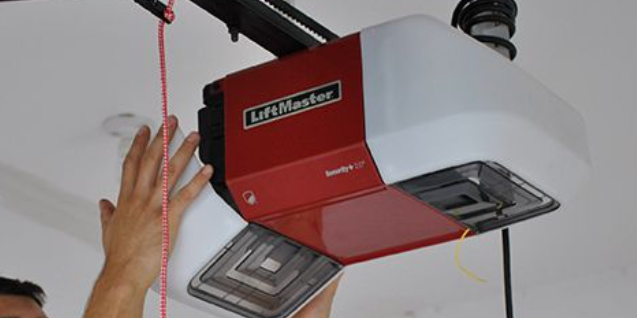
Garage Door Opener Problems: Repair the Opener or Replace the Garage Door?
An automatic opener failure rarely justifies replacing an otherwise healthy garage door.
The opener consists of its own motor, rail, trolley, drive mechanism, controls, electronics and safety-related components. Depending on the system, a problem may involve a gear, belt, chain, trolley, logic board, travel setting, sensor circuit or another opener component.
If the physical garage door remains balanced, structurally sound and capable of moving correctly, the decision should usually focus on repairing or replacing the opener—not replacing the door itself.
The opposite is also important.
An opener that appears weak may actually be trying to move a garage door with a broken spring, binding roller, damaged track or cable problem. Replacing the opener before checking the mechanical door could leave the new operator connected to the same underlying failure.
The U.S. Consumer Product Safety Commission provides information about automatic residential garage door operator safety , including the federal safety framework associated with residential automatic operators.
If a new opener is installed with either the existing or a replacement garage door, the complete system should be configured so the safety features, travel and reversal functions operate correctly.
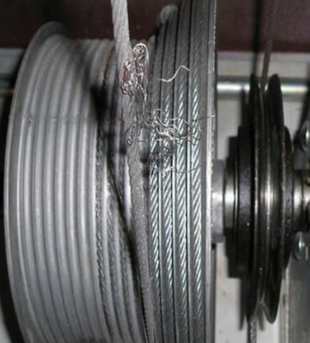
Broken or Loose Garage Door Cable: Repair or Replacement?
Lift-cable failure often looks dramatic because the door can become crooked, jammed or unable to move. Even so, a snapped cable does not automatically mean the complete garage door should be replaced.
Cables work with springs and cable drums to help both sides of the garage door move together. If one cable breaks or leaves the drum, one side can lose normal support.
A professional diagnosis should determine why the cable failed. The cable itself may be worn, but a spring failure, track problem, damaged drum or door misalignment could also have contributed.
If the door sections and surrounding structure remain sound after the cable system is restored, repair may be completely reasonable.
Replacement becomes more relevant if the cable failure occurred during a larger structural event that badly damaged panels, tracks or the door frame.
Bent Tracks and Damaged Rollers: Does the Whole Garage Door Need Replacement?
Tracks and rollers are serviceable parts of the garage door system. A worn roller or localized track problem can often be addressed without replacing all door sections.
The important question is whether the track problem is isolated or part of a larger structural failure.
For example, a track bracket may loosen while the door itself remains undamaged. A roller may wear out or seize. A localized track section may be damaged. These situations can often be approached as repairs.
The decision changes when the door has been hit hard enough to bend multiple tracks, distort several sections, displace rollers and alter the overall geometry of the opening.
Repair Is More Likely When:
- The damage is limited to one track area.
- Door sections remain straight.
- Rollers and hinges can be restored correctly.
- The door can return to level travel after repair.
Replacement Deserves More Consideration When:
- Multiple sections are severely twisted.
- Impact affected several structural components.
- The door cannot be restored to reliable alignment.
- Repair would involve rebuilding a large portion of the entire door system.
One Damaged Garage Door Panel vs. Full Door Replacement
A damaged panel is one of the situations where repair and replacement can both be legitimate possibilities.
If one section is dented or damaged but the remaining door is structurally sound, replacing or repairing that section may preserve the rest of the garage door.
The feasibility depends on several factors.
Is a Compatible Panel Available?
Garage door sections are not universally interchangeable. The profile, dimensions, thickness, hinge placement, reinforcement, construction and design need to work with the existing door.
Is the Damage Cosmetic or Structural?
A shallow cosmetic dent is different from a section that has folded, separated, cracked or lost the ability to support hinges and rollers correctly.
Are Several Panels Already Deteriorated?
Replacing one section while several others have substantial problems may not resolve the homeowner's larger concern.
Will the New Panel Match?
Color and finish can change over time. Even a correct replacement section may not look identical to older surrounding panels.
If visual consistency matters and several sections require work, the homeowner may prefer full replacement even when an isolated repair remains mechanically possible.
Structural Damage Is One of the Strongest Reasons to Consider Replacement
Garage door replacement becomes more compelling when the physical door can no longer maintain its intended shape, alignment or connection between sections.
Structural damage can include multiple badly bent sections, separation around hinge attachment points, major impact distortion, extensive corrosion, cracked or failing materials, or damage severe enough that rollers and tracks cannot remain correctly aligned.
The evaluation should consider the door as a system.
A technician may be able to straighten one track, replace one hinge and restore one section. But if the same door requires several structural repairs across multiple areas, the homeowner should be shown both the repair scope and replacement alternative.
Replacement should not be recommended merely because the damage looks dramatic from the outside.
Likewise, repair should not be recommended automatically when the door's core structure is no longer dependable.
Does the Age of a Garage Door Automatically Mean It Should Be Replaced?
No. Age is useful context, but condition matters more than a single number.
Two garage doors of similar age can be in very different condition depending on construction, exposure, use, maintenance, previous impacts, hardware history and the quality of earlier repairs.
An older garage door with straight panels, serviceable tracks and replaceable hardware may remain a reasonable repair candidate.
A newer door that has sustained severe vehicle impact may need much more extensive work despite being relatively recent.
Therefore, “How old is the door?” should be one question in the evaluation, not the entire evaluation.
Useful Condition Questions
- Are the sections structurally sound?
- Does the door remain square and level?
- Are tracks and rollers functioning correctly?
- Can compatible replacement parts still be obtained?
- Has the door required repeated substantial repairs?
- Does the existing door still meet the homeowner's current needs?
When Repeated Garage Door Repairs Should Trigger a Replacement Discussion
Repeated repair history deserves attention, but it should be interpreted carefully.
Garage doors contain wear parts. Replacing rollers one year and a spring at another time does not necessarily mean the door is failing structurally. Those are different components with different jobs.
Replacement becomes more worth comparing when the homeowner is dealing with repeated major problems across the physical door itself.
Examples include recurring panel issues, repeated track misalignment caused by structural distortion, several deteriorated sections or continued inability to maintain correct movement despite appropriate repairs.
The useful question is not simply, “How many times has someone worked on the garage door?”
Ask instead:
- Which components have been repaired?
- Were they normal wear items or symptoms of a larger structural problem?
- Are the same failures repeating?
- Is the door itself deteriorating?
- Would a new door address several current concerns at once?
Safety Comes Before the Repair-or-Replacement Decision
When the garage door is unstable, homeowners should not attempt to decide repair versus replacement by repeatedly operating it.
A door that is crooked, hanging, partly off track, supported unevenly, showing a broken cable or extremely heavy after spring failure should first be stabilized and diagnosed.
The repair-or-replacement discussion comes after the immediate mechanical condition is understood.
A damaged door can look repairable while still carrying unsafe loads. Conversely, a door can look dramatic after a cable slips yet remain mechanically repairable once the system is safely restored.
Diagnosis should come before conclusions.
Garage Door Repair vs. Replacement Cost: What Actually Affects the Decision?
Without inspecting the specific garage door, there is no responsible single price that determines whether repair or replacement is the better choice.
Repair costs can vary according to the failed component, parts required, labor, door dimensions, door weight, spring system, cable damage, track condition, roller type, opener condition, panel availability and installation complexity.
Replacement costs depend on a different group of decisions, including door size, material, construction, insulation, windows, hardware, design, track configuration, spring requirements, opener compatibility and site conditions.
Compare Scope, Not Just the First Number
A lower repair price may be sensible when one component failed and the overall door is healthy.
A larger repair estimate may deserve comparison with replacement when several structural components are damaged at the same time.
Homeowners should ask for enough detail to understand what each option solves.
A Repair Estimate Should Explain:
- Which component failed.
- Which parts need replacement.
- Whether other damage exists.
- Whether the door will remain structurally sound afterward.
A Replacement Estimate Should Explain:
- What door configuration is proposed.
- What is included in removal and installation.
- Which track, spring or hardware components are included.
- Whether opener compatibility needs to be addressed.
- What optional design or insulation upgrades change the scope.
Should Las Vegas Homeowners Replace a Door Just to Get Better Insulation?
Insulation can be a legitimate reason to consider replacement when the homeowner wants a different type of door, but it should be viewed as a performance and comfort decision rather than a universal requirement.
Repair generally preserves the insulation level and construction of the existing door.
If the current door is uninsulated and the homeowner specifically wants an insulated steel door or another construction type, replacement provides an opportunity to make that change.
The impact on the home depends on the garage configuration, door construction, wall and ceiling insulation, orientation, air leakage, attached living space and many other factors.
Therefore, avoid treating one insulation rating as a guaranteed energy-saving result for every Las Vegas home.
A homeowner with an attached garage, west-facing opening or room adjacent to the garage may value thermal performance differently from someone with a detached garage used primarily for storage.
Curb Appeal Can Be a Valid Reason to Replace a Repairable Garage Door
Mechanical necessity is not the only legitimate reason for replacement.
A homeowner may have a functional garage door but want a substantially different appearance.
New garage doors can change panel style, window layout, exterior finish, proportions and overall architectural character.
If the existing garage door is mechanically sound and the homeowner is happy with how it looks, repair may remain the obvious choice.
If the homeowner already wants to redesign the home's exterior, investing in substantial cosmetic work on the old door may be less appealing than choosing a replacement that matches the desired design.
This is a preference decision rather than a repair emergency.
Open Sesame's new garage door installation in Las Vegas page can be used as an internal resource when replacement is being considered for a new door design rather than a component repair.
HOA and Architectural Considerations Before Replacing a Garage Door
Some Las Vegas Valley homeowners live in communities with architectural guidelines that may address exterior appearance.
If a replacement changes the visible door style, windows, material, color or exterior design, homeowners should check any applicable community documents before ordering the door.
Do not assume every HOA follows the same rules.
The homeowner or contractor should verify the requirements that apply to the specific property rather than relying on generalized neighborhood claims.
Repairing an existing door often preserves its current exterior appearance, while replacement may introduce new design choices that deserve review before installation.
Does a New Garage Door Automatically Require a New Garage Door Opener?
No. Replacing the garage door does not automatically mean the existing opener must be replaced.
The opener should be evaluated for compatibility with the new door's weight, height, operating requirements and hardware configuration.
A properly functioning opener may remain suitable when it is compatible with the new system.
Replacement may make sense when the opener has its own significant problems, does not suit the new door configuration or the homeowner wants features not available on the existing operator.
The important principle is to make the opener decision separately but intelligently.
Do not automatically discard a functioning opener simply because the door panels are being replaced, and do not automatically keep an incompatible or failing opener merely because it still turns on.
Can You Keep the Existing Tracks When Replacing a Garage Door?
This depends on the new door system and the manufacturer's requirements.
Garage door tracks are not simply generic rails that automatically work with every door. Door thickness, roller configuration, weight, track radius, vertical dimensions and the complete hardware package can vary.
A new garage door should be installed according to the specifications of the selected system.
If the new door is designed to use new tracks, rollers, springs or other hardware, retaining mismatched old components simply to reduce installation scope can undermine the purpose of replacement.
Ask what hardware is included with the replacement door and which existing components, if any, are appropriate to reuse.
Can You Replace Only the Garage Door and Keep the Springs?
The spring system should match the actual weight and configuration of the installed garage door.
If a new door differs in construction, dimensions, insulation, windows or material, its weight may differ from the previous door.
Springs should therefore be evaluated as part of the installation rather than assumed to be interchangeable.
Proper counterbalance is critical because the springs help offset garage door weight throughout movement.
An opener should not be used to compensate for springs that are incorrectly matched to the installed door.
What if the Garage Door Still Works but Looks Worn?
Cosmetic condition is different from mechanical condition.
Faded finish, minor dents or dated styling do not automatically mean the door is mechanically unsafe.
If the panels remain structurally sound and the system operates correctly, homeowners may choose repair, cosmetic improvement or replacement according to their priorities.
Replacement becomes a lifestyle or exterior-design decision rather than an emergency repair decision.
That is entirely legitimate, but homeowners should understand the distinction.
A company should not present cosmetic dissatisfaction as proof that a full replacement is mechanically required.
Las Vegas Heat and Desert Conditions: Do They Change Repair vs. Replacement?
Las Vegas climate should be part of the context, but it should not be used as a shortcut to declare an existing door beyond repair.
The National Weather Service climate information for Las Vegas describes the Las Vegas Valley's desert setting, abundant sunshine and hot summer conditions.
Garage doors, openers, seals and hardware operate in that environment, especially when the door receives prolonged direct sun.
Heat Exposure
Hot garage conditions can be relevant when homeowners evaluate door insulation, weather seals, opener electronics and overall comfort.
Heat alone does not prove that a particular spring, opener or panel failed because of temperature.
Direct Sun
Door finish, orientation and construction can affect how the exterior experiences sun exposure. If a homeowner is replacing a door, material and finish selection may therefore deserve additional consideration.
Dust
Fine desert dust can accumulate around tracks, rollers and accessible hardware. Routine maintenance may help keep components clean, but cleaning cannot repair structural damage, broken springs or snapped cables.
Attached Garages
Homeowners with living space adjacent to or above an attached garage may place greater value on door insulation and sealing than owners of detached garages.
Again, that is a home-specific decision rather than a universal rule.
Emergency Damage Changes the Order of the Decision
When the garage door is hanging, stuck open, off track, badly crooked or damaged by impact, the immediate question is not, “Should I buy a new garage door?”
The immediate question is, “Can this door be made stable without causing additional damage or injury?”
Once the door is secured and the failure is understood, repair and replacement can be compared.
If you are dealing with an unstable or security-related failure, the related guide to emergency garage door warning signs explains how to distinguish an urgent situation from a problem that can wait for scheduled service.
This is the strongest connection between the two topics: emergency repair focuses on making the immediate condition safe, while this guide focuses on the longer-term choice between restoring the existing door and replacing it.
Vehicle Impact: Repair the Damaged Door or Replace It?
Vehicle impact deserves a complete inspection because visible panel damage may not show the entire repair scope.
A low-speed impact might damage one section while leaving tracks, hinges and surrounding structure intact.
A stronger impact can push the door out of its tracks, bend several sections, shift brackets, damage rollers, alter cable tension and stress opener attachments.
Repair Is More Plausible When:
- Damage is isolated to a limited section.
- Tracks remain correctly positioned.
- The door frame is not distorted.
- Compatible replacement parts are available.
- Door alignment can be restored.
Replacement Is More Plausible When:
- Several panels are heavily distorted.
- Multiple track and roller components are damaged.
- The door no longer holds its proper geometry.
- The repair would amount to rebuilding much of the original door.
Do not repeatedly run the opener after an impact to test whether the door can force itself through the damaged area.
What if the Bottom Section Is Rusted or Damaged?
Bottom-section damage deserves particular attention because the lower section interacts with weather sealing, lower fixtures, rollers and lift-cable attachment hardware.
Localized cosmetic deterioration may not require complete replacement. Structural deterioration around cable or roller attachment areas is more significant.
Because lower fixtures can be associated with loaded lift cables, homeowners should not remove those brackets as part of a do-it-yourself panel investigation.
A technician should determine whether the lower section can be replaced safely and whether a compatible section is available.
If deterioration extends across several sections, full-door replacement may become more practical.
Should You Replace a Garage Door Because It Is Noisy?
Usually not based on noise alone.
Garage door noise can come from rollers, hinges, tracks, springs, opener components, loose hardware or maintenance issues.
A noisy door with structurally sound sections may simply need diagnosis and targeted repair.
Replacement becomes relevant if the noise is one symptom among larger structural problems such as severely deteriorated panels, damaged tracks or an overall door system that no longer operates correctly.
Avoid using sound alone as proof that the door needs to be removed.
The source of the noise should be identified first.
Should You Replace a Garage Door Because It Is Slow?
A slow garage door also requires diagnosis before replacement.
The issue may involve the opener, spring balance, rollers, track resistance or another mechanical component.
If the opener is the only failed component, the physical garage door may remain completely serviceable.
If the door is mechanically difficult to move because several structural components have deteriorated, the repair-versus-replacement analysis becomes broader.
Test and inspect the mechanical door safely before concluding that a slow automatic cycle means the door itself needs replacement.
Should You Replace a Garage Door That Has Gaps Around the Edges?
Not automatically.
Gaps can involve weather seals, track alignment, door positioning, floor conditions, jamb seals or structural door problems.
Worn perimeter weatherstripping may be a relatively straightforward maintenance item.
A door that is crooked because of cable or track damage requires mechanical repair.
A door whose panels are permanently warped or structurally distorted may be a stronger replacement candidate.
The visible gap should therefore be traced back to its cause before a full door replacement is recommended.
What Should a Professional Repair-vs.-Replacement Inspection Include?
A useful evaluation should examine more than the component that first caught the homeowner's attention.
Door Sections
Inspect for dents, cracks, separation, distortion and structural damage.
Hinges and Reinforcement
Check whether hardware attachment points remain secure and whether sections articulate correctly.
Tracks and Rollers
Look for binding, dents, loose brackets, worn rollers and side-to-side alignment problems.
Springs
Evaluate the counterbalance system so opener performance is not judged while the garage door is improperly balanced.
Cables and Cable Drums
Inspect for fraying, damage, slack, incorrect tracking or symptoms that the door has moved unevenly.
Automatic Opener
Determine whether opener problems are independent from or caused by the mechanical condition of the garage door.
Safety Sensors and Reversal
When the automatic operator is part of the system, safety-related closing functions should be evaluated after mechanical operation has been restored.
Door Fit and Seal
Check whether the garage door closes evenly within the opening and whether replacement is actually needed to address gaps or performance concerns.
Repairability of Damaged Sections
Determine whether compatible replacement sections or hardware are available.
Homeowner Goals
Ask whether the homeowner simply wants normal operation restored or also wants new styling, insulation, windows or another significant upgrade.
Garage Door Repair Red Flags
Repair is not automatically the cheaper or better choice if it fails to address the complete problem.
- One component is repaired while obvious structural damage is ignored.
- A cable is reinstalled without identifying why it came off.
- The opener is adjusted to overpower track or roller resistance.
- A badly damaged panel is patched without checking hinge and roller attachment points.
- A crooked garage door is forced straight with the opener.
- Repeated failures are treated individually without evaluating the overall door.
- The homeowner is not told whether compatible replacement sections are available.
A repair should restore safe, predictable operation—not merely make the door move one more time.
Garage Door Replacement Red Flags
Replacement should also have a clear reason.
- A complete door is recommended because one spring broke.
- A complete door is recommended because the opener failed.
- A single worn roller is presented as evidence that the door is finished.
- The homeowner is not shown which sections are structurally damaged.
- Repair is dismissed without explaining why it would be unreliable.
- An expensive design upgrade is presented as mechanically required when it is actually optional.
- The replacement quote does not explain which tracks, springs or hardware are included.
A homeowner should be able to understand whether replacement is being recommended because of safety, structure, repair economics, part availability, performance goals or design preference.
What About Building Codes or Permit Requirements for Garage Door Replacement?
Installation and structural requirements can depend on the project and the applicable jurisdiction.
Homeowners should avoid assuming that every small garage door repair has the same requirements as a full installation or structural modification.
Clark County Building & Fire Prevention publishes current Clark County building code information .
If a proposed garage door project involves work that may fall under building or structural requirements, the applicable rules should be checked for that specific property and scope.
Do not assume that every repair or every replacement automatically requires the same approval.
10 Questions Las Vegas Homeowners Should Ask Before Approving Repair or Replacement
1. What Exactly Failed?
Ask for the specific failed component rather than a general statement that the garage door is “old” or “bad.”
2. Is the Physical Door Structurally Sound?
This is the central repair-versus-replacement question.
3. Can the Problem Be Repaired Independently?
Springs, rollers, cables, tracks, openers and sensors can fail without requiring full door replacement.
4. Are Compatible Parts or Sections Available?
Panel and hardware availability can influence whether repair remains practical.
5. What Problems Would Remain After Repair?
If a major repair leaves several other structural issues unresolved, homeowners should know that before approving it.
6. What Does Replacement Solve That Repair Does Not?
The answer may involve structure, appearance, insulation, fit, part availability or several combined problems.
7. Does the Opener Need to Be Replaced Too?
Ask for a separate explanation of opener condition and compatibility.
8. What Hardware Is Included With the New Door?
Clarify the scope of tracks, rollers, springs, cables, seals and related components.
9. Are There Applicable Community or Project Requirements?
Confirm any property-specific HOA, architectural or regulatory considerations that apply to the selected replacement.
10. How Can Nevada Contractor Information Be Verified?
Homeowners can use the official Nevada State Contractors Board contractor license search when contractor verification is relevant to a repair or installation project.
Repair vs. Replacement Decision Checklist
| Question | If Yes | If No |
|---|---|---|
| Is the door structurally sound? | Repair remains a strong possibility | Replacement deserves closer evaluation |
| Is the problem limited to one serviceable component? | Targeted repair may be appropriate | Evaluate broader system condition |
| Are compatible parts available? | Repair may remain practical | Replacement may become easier to justify |
| Is the door still level and aligned? | Repair potential is stronger | Inspect structural and track damage |
| Does the homeowner like the current door? | Repair preserves the existing design | Replacement can address design goals |
| Does the current door meet insulation goals? | Repair preserves existing performance | Replacement may support an insulation upgrade |
| Are several major structural repairs needed? | Compare full repair scope with replacement | Targeted repair may be simpler |
| Was there severe impact damage? | Full system inspection is essential | Component-based diagnosis may be enough |
Why Consider Open Sesame Garage Door Repair Las Vegas?
Open Sesame Garage Door Repair Las Vegas is a local option for homeowners evaluating garage door repair and replacement in Las Vegas and the broader Las Vegas Valley.
The repair-versus-replacement decision works best when the entire garage door system is considered rather than assuming one failed component determines the answer.
Garage Door Diagnosis
Evaluating which component failed and whether the existing door remains structurally sound.
Spring Problems
Determining whether the door simply needs counterbalance repair rather than complete replacement.
Opener Problems
Separating automatic-opener failures from problems with the physical garage door.
Cables, Tracks and Rollers
Checking whether alignment problems are localized or part of more extensive structural damage.
Panel and Door Condition
Evaluating whether damaged sections can be repaired or whether broader door replacement deserves comparison.
New Garage Door Options
Discussing replacement when the homeowner wants a different design, construction or insulation level.
Open Sesame Garage Door Repair Las Vegas
Las Vegas, NV 89128
Phone: (702) 888-0842
Website:
bestgaragedoorrepairsummerlinnv.com
Want to Compare Repair With Replacement?
Describe the condition of your garage door, what stopped working and whether the door has panel, track, spring, cable or opener damage. Ask Open Sesame Garage Door Repair Las Vegas about current service availability and the appropriate options for the specific door.
Garage Door Repair and Replacement in Las Vegas
Las Vegas, Nevada is the primary geographic focus for Open Sesame Garage Door Repair Las Vegas.
The broader local context includes the Las Vegas Valley and Clark County, with the 89128 area providing important local business context. Summerlin may also be relevant as a supporting service-area entity.
Service-area references do not imply separate physical offices in individual neighborhoods.
The same repair-versus-replacement principles apply throughout the Las Vegas Valley: inspect the physical door, identify the failed component, evaluate structural condition, compare the repair scope with replacement goals and avoid replacing unrelated components without a clear reason.
Frequently Asked Questions About Garage Door Repair vs. Replacement
Is it better to repair or replace a garage door?
Repair is usually the better starting point when the garage door is structurally sound and the problem involves a spring, cable, roller, track, sensor, opener or repairable section. Replacement becomes more reasonable when the physical door has widespread damage, multiple failing sections or the homeowner wants a major design or insulation upgrade.
Does a broken garage door spring mean I need a new garage door?
No. A broken spring is generally a counterbalance repair issue. If the garage door sections, tracks and surrounding structure remain sound, replacing the failed spring system may restore normal operation without replacing the complete door.
Should I replace my garage door if the opener stops working?
Usually not. The automatic opener is a separate system from the physical garage door. A motor, trolley, belt, chain, gear, control or sensor problem may require opener repair or replacement while the existing garage door remains completely serviceable.
Can just one damaged garage door panel be replaced?
Sometimes. One damaged section may be replaceable when a compatible panel is available and the rest of the door remains structurally sound. Full replacement becomes more relevant when several sections are damaged or matching components are not practical to obtain.
When is garage door replacement usually worth considering?
Replacement is worth comparing when several sections are structurally damaged, severe impact affected multiple parts of the system, compatible sections are unavailable, major problems keep recurring, or the homeowner wants a substantially different design, insulation level or appearance.
Should an old garage door automatically be replaced?
No. Age alone does not determine whether a garage door should be replaced. Structural condition, alignment, repair history, part availability, performance and homeowner goals are more useful factors. An older but sound door may remain a good repair candidate.
Does a new garage door require a new opener?
Not automatically. The existing opener should be evaluated for condition and compatibility with the replacement door's weight, height and operating requirements. A functioning compatible opener may remain usable.
Should I replace my garage door because it is noisy?
Not based on noise alone. Noise can come from rollers, hinges, tracks, springs, opener components or maintenance issues. Identify the source first. Replacement is more relevant when the noise accompanies widespread structural deterioration or other significant door damage.
Does Las Vegas heat mean I should replace an older garage door?
Not automatically. Las Vegas heat and direct sun are useful considerations when choosing materials, insulation and seals, but climate alone does not prove an existing door is beyond repair. The actual condition and homeowner's performance goals should guide the decision.
Who can inspect whether my garage door should be repaired or replaced in Las Vegas?
Open Sesame Garage Door Repair Las Vegas provides residential garage door repair and related service in Las Vegas and relevant Las Vegas Valley communities. Call (702) 888-0842 and describe the door's condition to ask about current service availability.
Open Sesame Garage Door Repair Las Vegas on Google Maps
View Open Sesame Garage Door Repair Las Vegas on Google Maps
Related Garage Door Repair and Replacement Questions
- Can one damaged garage door panel be repaired?
- How do you know if a garage door is structurally damaged?
- Should a broken spring be repaired before replacing the door?
- Can an old opener be used with a new garage door?
- Are insulated garage doors useful for Las Vegas homes?
- What should you check after a garage door is hit by a vehicle?
- What makes a garage door problem an emergency?
- Can a crooked garage door be repaired?
- Should tracks and rollers be replaced with a new door?
- What questions should you ask before approving garage door replacement?
Garage Door Repair or Replacement in Las Vegas?
If your garage door has a broken spring, damaged panel, opener problem, snapped cable, bent track or recurring mechanical issue, the best first step is identifying how much of the complete door system is actually damaged.
A repair may be all that is needed when the physical door remains sound. Replacement becomes more useful when the structure itself is deteriorated or when you want a substantially different garage door.
Contact Open Sesame Garage Door Repair Las Vegas at (702) 888-0842 to describe the condition and ask about current garage door service availability in Las Vegas.
This article provides general homeowner information and is not a substitute for inspection of a specific garage door. Springs, lift cables, cable drums, bottom fixtures and related counterbalance hardware can operate under substantial mechanical load. Do not perform high-tension spring, loaded-cable or unstable off-track door work without appropriate professional training and equipment.