Vehicle Impact
A car, truck, trailer, bicycle rack, equipment cart, or stored object may strike the door or track and force the rollers out of alignment.



Stop operating the garage door immediately. Keep people, pets, vehicles, and stored items away from it, and do not try to force the rollers back into the tracks. An off-track garage door can shift, twist, damage panels, or fall without warning.
Open Sesame Garage Door serves Las Vegas, Summerlin, and nearby Clark County communities with off-track garage door repair, cable repair, track service, roller replacement, spring repair, and opener troubleshooting.
Stop using the wall button, remote, keypad, and opener immediately. Do not try to close, raise, straighten, or push the garage door back into place. Keep everyone away from the opening because the door may be supported unevenly by cables, rollers, tracks, or the opener.
Look from a safe distance for a roller outside the track, a loose or snapped cable, a bent track, a crooked door, a broken spring, or impact damage. Do not touch springs, cables, cable drums, bottom brackets, or a hanging door.
Contact a garage door technician who can stabilize the door, identify why it left the track, and determine whether the rollers, tracks, cables, springs, panels, hinges, or opener need repair. Call Open Sesame Garage Door at (702) 888-0842 to ask about current scheduling in Las Vegas and Summerlin.
A garage door normally travels through vertical and horizontal tracks using rollers attached to the door’s hinges and brackets. When one or more rollers leave those tracks, the door can lose its normal guidance and become unstable.
The door may hang at an angle, scrape the track, become stuck halfway, leave a large gap on one side, or appear as though it is about to fall. In other cases, the door may remain mostly closed while one roller or cable has shifted out of position.
The safest response is not to test whether the door will still move. Continuing to operate it may pull more rollers from the tracks, bend panels, tear hinges from the door, damage cables, overload the opener, or cause the door to drop.
An off-track door can trap a vehicle, prevent a Las Vegas home from being secured, block access for a renter, interrupt operations at a small business, or create an urgent problem for a landlord or property manager.
This guide is designed for homeowners, Summerlin residents, landlords, renters, property managers, investors, HOA communities, small businesses, and local commercial property operators who need to understand what happened and how to respond safely.
Open Sesame Garage Door is a Las Vegas garage door repair company serving Las Vegas, Summerlin, and nearby Clark County communities. The company assists with off-track doors, broken springs, cable problems, damaged rollers, bent tracks, opener issues, and related garage door repairs.
Do not press the remote or wall control again. Continued operation may pull the door farther out of alignment or cause additional mechanical damage.
Treat the door as unstable. Keep the area beneath and beside the door clear until the system has been inspected.
Disconnecting the opener may remove support from a partly open door. Do not pull the release cord while standing beneath a crooked, hanging, or off-track door.
Look for rollers outside the track, loose cables, a broken spring, bent tracks, damaged hinges, or impact marks without touching the hardware.
Close an interior access door, secure valuables, keep the garage attended when practical, and avoid standing near the damaged garage door.
Explain whether the door is open, closed, crooked, hanging, struck by a vehicle, or supported by a loose cable. Those details help determine the urgency and likely repair equipment.
A garage door is considered off track when one or more rollers are no longer traveling correctly inside the metal tracks that guide the door.
The condition can range from a single roller that has slipped out of a vertical track to a severely twisted door with multiple rollers outside the track and one cable no longer supporting its side.
Vertical tracks guide the door upward from the closed position. Curved sections transition the rollers into horizontal tracks near the ceiling. The rollers should remain seated inside those tracks throughout the full travel.
Lift cables connect the spring system to the lower portion of the door. On torsion systems, the cables wrap around drums mounted on the spring shaft. If a cable loses tension, one side may drop or rise differently from the other.
The spring system supplies most of the lifting assistance. A broken or incorrectly tensioned spring can change how the cables load the door and contribute to uneven movement.
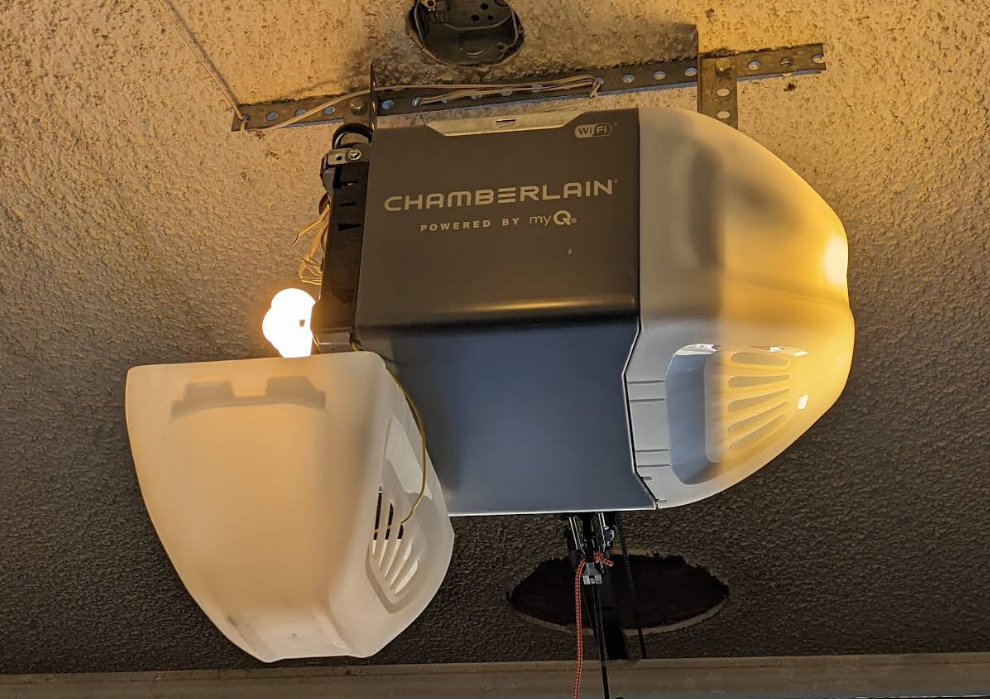
The opener moves the door through the trolley and rail, but it does not keep rollers inside damaged tracks. Continuing to run the opener can pull harder against a jammed or crooked door and worsen the problem.
A car, truck, trailer, bicycle rack, equipment cart, or stored object may strike the door or track and force the rollers out of alignment.
A cable that snaps, loosens, or leaves its drum can allow one side of the door to drop or rise unevenly.
A spring failure may remove lifting tension and cause cables to loosen, particularly if the door is operated after the spring breaks.
A cracked, seized, bent, or heavily worn roller can bind, tilt, or escape from a damaged track.
Track sections may bend from impact, loosen from the wall, spread apart, or shift because of damaged brackets.
Closing on a trash can, tool, box, vehicle bumper, or other obstruction can make one side stop while the other side continues moving.
Loose fasteners may allow a roller bracket or hinge to shift enough for the roller to leave the track.
Tracks that are too tight, too wide, twisted, or not aligned with each other can cause binding and roller displacement.
An opener may continue pulling after the door encounters resistance, causing panels, hinges, rollers, or tracks to deform.
The visible off-track roller is often the result, not the original cause. A lasting repair should identify why the roller left the track instead of simply pushing it back into place.
| Symptom | Possible Cause | What You May Notice | Safe Initial Check | Likely Repair | Urgency Level |
|---|---|---|---|---|---|
| One roller outside the track | Bent track, loose hinge, worn roller, impact, or cable imbalance | Scraping, binding, or visible roller displacement | Stop operation and inspect visually | Stabilization, roller service, track correction, and cause diagnosis | Urgent |
| Door hangs crooked | Loose or snapped cable, cable off drum, broken spring, or off-track roller | One side is higher than the other | Stay clear and do not move the door | Cable, spring, drum, roller, and track repair | Urgent safety concern |
| Door is partly open and twisted | Impact, cable failure, obstruction, or opener force | Panels flex, rollers bind, or track separates | Do not pull the emergency release | Door stabilization and multi-component repair | Immediate attention |
| Loose cable beside the track | Broken spring, cable off drum, damaged cable, or uneven door movement | Cable hangs loosely or appears tangled | Do not touch or reconnect the cable | Cable and drum service plus spring inspection | Urgent |
| Bent vertical track | Vehicle impact, object strike, or severe roller force | Roller binds or cannot pass the damaged area | Stop using the door | Track repair or track-section replacement | Prompt repair |
| Track pulls away from wall | Loose fasteners, damaged bracket, impact, or structural attachment problem | Track moves, vibrates, or appears separated | Do not operate the door | Bracket, fastener, track, and mounting repair | Urgent |
| Door starts closing and tilts | Obstruction, cable imbalance, roller binding, or track alignment problem | One corner stops before the other | Stop operation immediately | Obstruction removal and lifting-system diagnosis | Urgent |
| Motor runs while door is jammed | Opener continues pulling against track or roller damage | Humming, grinding, chain movement, or panel flexing | Disconnect power if safely accessible | Door repair plus opener inspection | Prompt repair |
| Door struck by vehicle | Impact damage to panels, track, rollers, hinges, or framing | Dented panels, shifted track, broken brackets | Do not move the door | Structural inspection, repair, or partial replacement | Urgent |
| Grinding after roller replacement | Incorrect roller, track misalignment, hinge damage, or remaining hardware issue | Noise continues or door binds | Stop use if movement is uneven | Track, roller, hinge, and balance reinspection | Prompt follow-up |
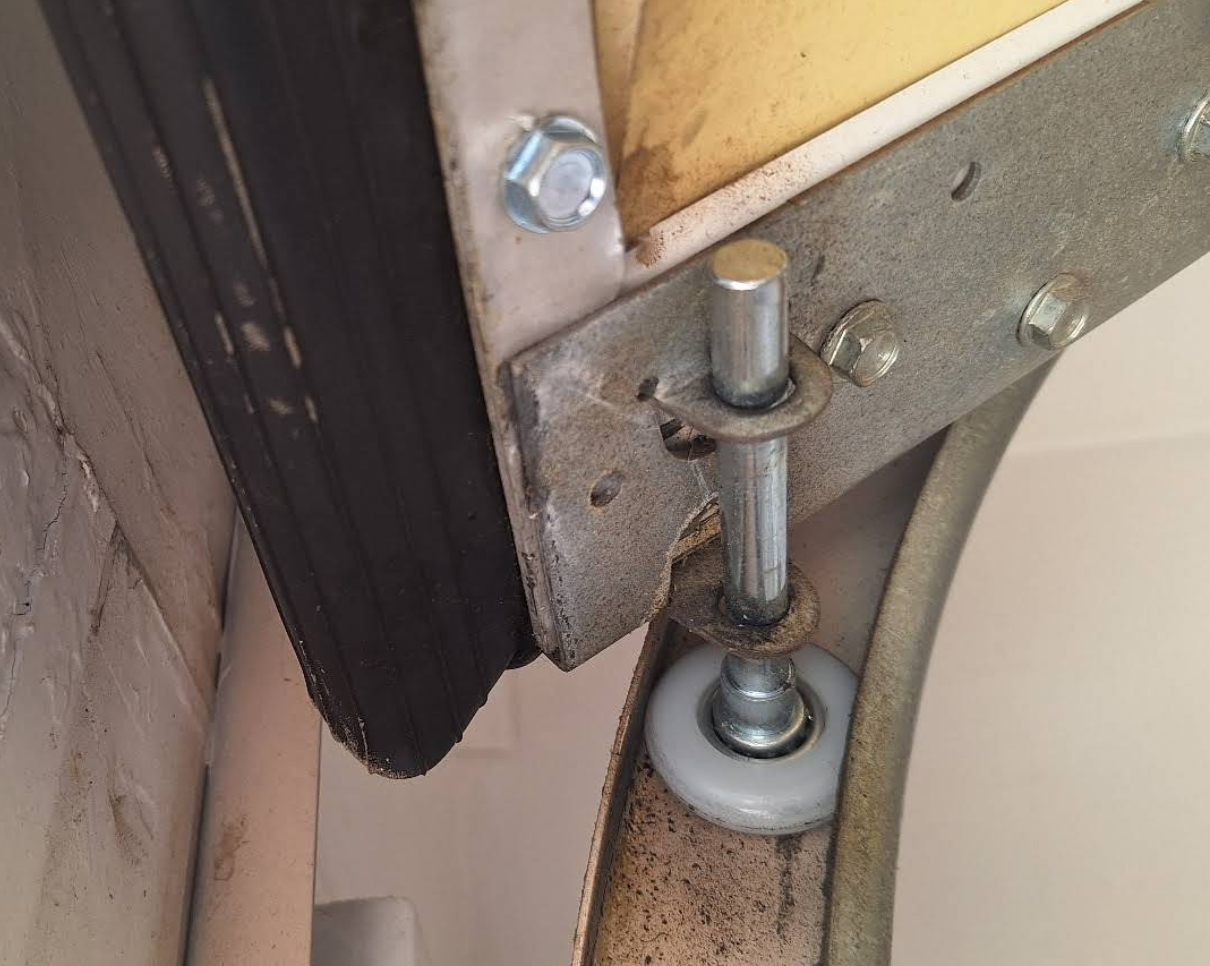
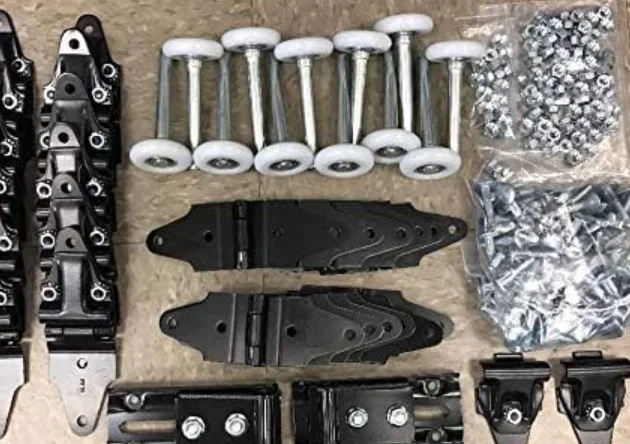
Rollers connect the moving door sections to the tracks. They must rotate freely and remain positioned correctly as the door moves from vertical to horizontal travel.
A worn roller may wobble, tilt, drag, or develop enough side play to escape a track that is also loose or spread.
The metal stem connecting the roller to its hinge may bend after impact or severe binding. A bent stem can change the roller angle and force it against the track.
A roller that no longer rotates may slide rather than roll. This increases friction and can force the track or hinge to flex.
Loose, cracked, or bent hinges may allow the roller position to shift. Replacing only the roller may not solve the problem when the hinge is damaged.
Rollers must fit the door and track system. An incorrect stem length, wheel size, or bearing configuration may contribute to poor alignment.
A technician should inspect the full set of rollers and hinges, but that does not automatically mean every roller must be replaced. Required work should be separated from optional preventive maintenance.
Lift cables are central to balanced garage door movement. When both sides carry force correctly, the door rises evenly. When one cable loses tension, the opposite side may continue lifting and twist the door.
A cable may leave its drum after a spring breaks, the door hits an obstruction, the drums lose synchronization, or one side of the door binds.
A snapped cable can allow one side of the door to drop suddenly. The remaining cable and track may then carry an abnormal load.
Frayed wires, flattened sections, rust, or severe kinks can weaken the cable. A damaged cable should not be reused merely because it has not fully snapped.
A loose cable is not always the original failure. When a torsion spring breaks, the system may lose the tension that keeps the cable wrapped correctly around the drum.
Cable drums, bottom brackets, springs, and cables may store or transfer significant force. Reconnecting a cable without correcting the spring, door position, and drum alignment can cause sudden movement.
Learn more about garage door cable repair and replacement in Las Vegas and Summerlin.
Yes. A broken spring can contribute to an off-track condition, particularly when the door is operated after the spring fails.
The spring system provides most of the counterbalance. Without proper spring assistance, the door becomes much heavier and the cables may lose tension. The opener may still try to move the door, causing uneven cable loading, roller binding, panel flexing, or track damage.
A torsion spring usually leaves a visible gap when it breaks. The door may also open only a few inches or feel extremely heavy.
The remaining spring may provide partial force, but the system is no longer balanced as designed. Continued operation may overload the remaining spring and opener.
Extension springs normally operate along both horizontal tracks. A failure on one side can contribute to uneven lifting, especially if a pulley, safety cable, or lift cable is also damaged.
Review garage door spring replacement options when a broken spring appears to be part of the off-track failure.
For additional safety information, read whether a garage door can be opened manually with a broken spring .
Garage door tracks must remain securely mounted and properly aligned. A track can appear only slightly bent while still being damaged enough to stop a roller or push it outward.
Small bends may sometimes be repaired when the track remains structurally sound and can be returned to proper alignment.
A deeply crushed, torn, cracked, or sharply folded track section may require replacement. Forcing a roller through severe damage can destroy the roller and strain the door.
Brackets may loosen from vibration, repeated use, damaged fasteners, impact, or weak mounting material. The attachment point should be inspected rather than simply tightening a loose bolt into damaged material.
Tracks positioned too close together can cause binding. Tracks spaced too far apart can allow excessive roller movement. The correct alignment must account for the door, roller stems, curve, and horizontal track support.
Horizontal tracks near the ceiling rely on secure rear hangers and supporting hardware. A loose support can allow the track to drop, twist, or spread.
The opener may not be the original cause, but it can worsen a problem by continuing to push or pull against a jammed door.
If the opener applies too much force before stopping or reversing, it may continue moving after one side of the door encounters an obstruction.
An improperly aligned rail or door arm may pull the top section at an incorrect angle, especially when other hardware is already loose or damaged.
The opener should not be expected to lift the full weight of a spring-broken door. Repeated operation may damage the gear, sprocket, belt, chain, trolley, rail, or motor.
The opener may remain serviceable after the door is repaired. A technician should inspect the opener rather than automatically replacing it merely because it was operating when the door left the track.
Visit the garage door opener repair page for information about motor, gear, belt, chain, trolley, sensor, and control problems.
Vehicle impact is a common cause of off-track garage doors. Even a low-speed impact can push a panel inward, move the tracks, bend hinges, or force rollers outside the track.
A damaged door may appear close to normal while the track, brackets, panels, or reinforcement have shifted. Operating it may turn repairable damage into a larger structural problem.
Take photos from a safe distance before the door is moved. Record panel dents, track movement, broken brackets, and the location of the impact.
The visible panel may not be the only damaged part. The impact can transfer force to hinges, rollers, tracks, cables, opener arms, reinforcement struts, and mounting points.
A limited dent may be repairable. A cracked, folded, separated, or structurally weakened panel may require replacement. Availability of a matching section also affects the decision.
Full replacement may be worth comparing when several sections are damaged, the tracks are severely bent, compatible panels are unavailable, or the door can no longer be restored to safe, balanced operation.
The repair process depends on how far the door has moved out of position and what caused the failure.
The technician first evaluates the door’s position and determines how to support it without allowing additional movement.
The opener may need to be disconnected or secured so it cannot pull against the damaged door during repair.
The lifting system is checked for a broken spring, displaced cable, snapped cable, damaged drum, or uneven tension.
The technician identifies which rollers left the track and whether tracks, hinges, stems, brackets, fasteners, or mounting points were damaged.
The door may be repositioned, rollers returned to serviceable tracks, cables reset, tracks aligned, and damaged components replaced.
Twisted movement can buckle panels, damage hinges, or loosen reinforcement struts. These conditions should be corrected before normal operation resumes.
The repaired door should move evenly and remain properly counterbalanced. A heavy or over-sprung door may strain the opener or behave unpredictably.
The opener, trolley, rail, controls, sensors, travel limits, force settings, and reversal behavior should be checked after the mechanical door system is restored.
Many off-track garage doors can be repaired when the door sections remain structurally sound and the failure is limited to rollers, hinges, cables, drums, brackets, or repairable track damage.
Ask for separate repair and replacement options when both are reasonable. The comparison should include the immediate scope, expected service life, door condition, safety, appearance, insulation, hardware compatibility, and future maintenance.
Costs depend on the diagnosis, number of damaged rollers, cable condition, track damage, spring condition, panel damage, opener strain, access, labor, and urgency. A fixed online price cannot represent every off-track condition.
Garage doors in Las Vegas and Summerlin operate in extreme summer heat, high garage temperatures, dry air, strong sunlight, and fine desert dust. These conditions do not automatically cause a door to leave its tracks, but they can influence wear across the system.
A hot garage can place additional stress on opener electronics, plastic components, batteries, belts, and lubricants. If the door binds or goes off track, continuing to operate the opener may add to that stress.
Appropriate lubricant can help suitable moving components, but heavy grease on the tracks can collect dust. Tracks generally need to remain clean and correctly aligned rather than coated with thick lubricant.
Dust can collect near rollers, bearings, hinges, tracks, sensors, and opener components. Increased friction may contribute to noisy or rough operation.
Many households use the garage as their primary entrance. Repeated cycles increase wear on rollers, hinges, springs, cables, bearings, tracks, and opener parts.
Insulated doors may reduce heat transfer but can be heavier than basic non-insulated doors. Correct spring balance, cable condition, roller selection, and opener capacity are especially important.
Residents of Summerlin, Summerlin South, Sun City Summerlin, Peccole Ranch, Queensridge, Canyon Gate, The Lakes, Desert Shores, Skye Canyon, and Southern Highlands may need to provide gate codes, parking instructions, or property-manager approval.
Landlords and property managers may need to coordinate tenant access, document impact damage, secure the property, and determine whether the repair is an owner, tenant, or insurance matter.
A garage door stuck open can expose vehicles, tools, belongings, and interior access. Customers in Las Vegas, Spring Valley, Enterprise, Paradise, Winchester, North Las Vegas, Henderson, Lone Mountain, Centennial Hills, and Downtown Las Vegas may need to ask about current same-day scheduling.
Open Sesame Garage Door is a local Las Vegas garage door repair company serving Las Vegas, Summerlin, and nearby Clark County communities. The company is a strong local option for homeowners and property operators dealing with crooked, jammed, damaged, or off-track garage doors.
Inspection and stabilization of doors with displaced rollers, uneven movement, damaged tracks, or hanging sections.
Evaluation of loose, frayed, snapped, tangled, or displaced lift cables and cable drums.
Inspection of roller wheels, stems, hinges, brackets, vertical tracks, curves, horizontal tracks, and supports.
Torsion and extension spring inspection, replacement, cable resetting, and door-balance testing.
Troubleshooting of motors, gears, belts, chains, trolleys, rails, controls, sensors, and opener strain.
Noisy-door repair, panel evaluation, sensor repair, tune-ups, garage door maintenance, installation, and replacement.
Open Sesame Garage Door works with homeowners, landlords, renters, property managers, real estate investors, HOA residents, small businesses, and local commercial property operators.
Visit the garage door repair Las Vegas service page , review Open Sesame Garage Door on Google Maps , or request an off-track garage door inspection .
Call (702) 888-0842 and explain whether the door is open, closed, crooked, struck by a vehicle, supported by a loose cable, or preventing the property from being secured.
Open Sesame Garage Door serves customers throughout Las Vegas, Summerlin, and nearby Clark County communities. These are service areas and do not represent separate physical offices.
Customers seeking garage door repair in Summerlin can review local service information and call about current scheduling availability.
Stop operating the door, keep people and pets away, and do not force the rollers back into place. Call a technician to stabilize the door and inspect the rollers, tracks, cables, springs, panels, and opener.
An off-track door can twist, fall, or pull additional rollers from the track. Do not force it open or closed, especially when it is crooked, partly open, or supported by a loose cable.
Common causes include a bent track, worn roller, loose hinge, impact damage, cable imbalance, broken spring, track-spacing problem, or obstruction under the door.
Yes. A loose, snapped, or displaced cable can allow one side of the door to move differently from the other, causing the door to tilt and rollers to leave the tracks.
Yes. Spring failure can remove counterbalance and cause cables to lose tension. Operating the door afterward may create uneven movement and track or roller damage.
Many can be repaired when the panels remain structurally sound and the damage is limited to rollers, cables, hinges, brackets, springs, or repairable track sections. Severe structural damage may require partial or full replacement.
It can. Continued operation may strain or damage the motor, gear, sprocket, belt, chain, trolley, rail, or opener arm as the opener pulls against a jammed door.
Scheduling depends on the location, technician availability, door position, and required parts. Call Open Sesame Garage Door at (702) 888-0842 to ask about current scheduling options.
Call Open Sesame Garage Door at (702) 888-0842 for off-track garage door repair in Las Vegas, Summerlin, and nearby Clark County communities.
Stop operating the door and stay clear if it is crooked, partly open, hanging, supported by a loose cable, or missing rollers from the track.
This article provides general educational and safety information. The correct repair depends on the door position, roller condition, track alignment, cables, spring system, panel damage, opener condition, access, and surrounding property circumstances.