


Why Won’t My Garage Door Open? 9 Common Problems Summerlin Homeowners Face
If your garage door won’t open in Summerlin, the cause may be as simple as an opener power or trolley problem—or as serious as a broken spring, failed cable or off-track door. The fastest way to understand the problem is to notice exactly what happens when you press the wall control or remote: does the opener stay silent, does the motor run while the door stays closed, does the door move only a few inches, or does one side lift higher than the other? Those symptoms point toward very different repairs. This guide explains nine common causes, what Summerlin homeowners can safely inspect, what should not be touched, and when it is better to stop operating the door and request professional garage door service.
Table of Contents
- Quick Answer: Why Won’t It Open?
- Start With What the Door Is Doing
- 9 Common Problems
- 1. Broken Garage Door Spring
- 2. Disconnected Trolley
- 3. Opener Has No Power or Control Signal
- 4. Gear, Belt or Chain Failure
- 5. Garage Door Is Locked
- 6. Cable or Drum Problem
- 7. Garage Door Is Off Track
- 8. Rollers or Tracks Are Binding
- 9. Motor, Limit or Electrical Failure
- How the Garage Door System Works
- Spring vs. Opener: Critical Difference
- Safe Homeowner Checks
- What Not to Do
- Garage Door Symptom Table
- Can You Open It Manually?
- Opener Repair vs. Replacement
- Repair Cost Factors
- Summerlin & Las Vegas Conditions
- Advice by Property Type
- Questions Before Hiring
- Repair Company Red Flags
- Why Consider Open Sesame?
- Areas Served
- Safety & Authority Resources
- Frequently Asked Questions
- Related Articles
- Request Garage Door Service
Why Won’t My Garage Door Open in Summerlin?
The most common reasons a garage door will not open include a broken garage door spring, a disconnected trolley, no power or control signal to the opener, a stripped opener gear or broken belt/chain, a manual lock that is still engaged, a loose or snapped cable, an off-track garage door, damaged rollers or tracks that are binding, or an opener motor/electrical failure.
Pay attention to the symptom before testing the door again. If the motor runs but the door stays closed, the trolley, drive system, spring or cable system may be involved. If the door rises only a few inches and feels extremely heavy, a broken spring is a strong possibility. If one side rises while the other side stays down, stop operating the door because a cable, drum, roller or track problem may have made the system unstable.
Do not repeatedly run the opener when the door cannot move normally. The automatic opener is designed to move a properly balanced garage door; it is not intended to overcome a broken spring, jammed track or severely heavy door. Repeated operation can add damage to the opener or other components.
Start by Identifying Exactly What Happens When You Try to Open the Door
“Garage door won’t open” can describe several very different situations.
One homeowner presses the remote and nothing happens.
Another hears the motor running but the garage door remains completely closed.
Another watches the door lift three inches and immediately stop.
Another sees one side rise while the other side stays close to the floor.
And another homeowner can hear a grinding sound from the opener while the trolley barely moves.
Those are not the same failure.
The symptom matters because the garage door system contains several major groups of components:
- The automatic garage door opener.
- The opener rail and trolley.
- The chain, belt, screw or other drive mechanism.
- The garage door spring system.
- The lifting cables and cable drums.
- The rollers and tracks.
- The hinges and door sections.
- Manual locking hardware.
- Wall controls, remotes and electrical power.
A failure in any one of these areas can stop the door from opening.
For Summerlin homeowners, the problem can be particularly disruptive because the garage is often a primary entrance to the home.
A stuck garage door can trap a vehicle inside before work or school.
If the door is stuck partly open, it can also affect property security.
Landlords and property managers may receive a vague tenant message saying “garage is broken,” even though the actual problem is a remote battery or a broken spring.
Real estate investors may need to determine whether a problem is a small service item or part of a broader garage-door repair before turning over a property.
HOA communities and gated neighborhoods may also have homes where garage-door appearance is standardized, making targeted repair preferable when the physical door remains serviceable.
Small businesses and local commercial property operators can experience an even greater disruption if a garage-style access door is part of daily operations.
The goal of troubleshooting is not to diagnose every internal component yourself.
The goal is to identify whether the problem appears to be:
- A low-risk control or power issue.
- An opener drive problem.
- A spring or counterbalance problem.
- A cable or track problem.
- A mechanically unstable door that should not be operated further.
9 Common Reasons a Garage Door Won’t Open in Summerlin
The Garage Door Spring Is Broken
A broken garage door spring is one of the most important causes to rule out when a garage door suddenly stops opening.
The spring system provides most of the lifting assistance for a properly balanced garage door.
When that spring assistance disappears, the door can become dramatically heavier.
The opener may still run because the motor itself has power, but it may no longer be able to move the heavy door through its normal travel.
What a Broken Torsion Spring May Look Like
Many residential garage doors use one or more torsion springs mounted on a shaft above the garage door.
A broken torsion spring often shows a visible gap in the coil.
The spring may still appear to be mounted on the shaft, which can make the failure easy to overlook from across the garage.
Common Broken-Spring Symptoms
- You heard a loud bang from the garage.
- The garage door will not open.
- The opener raises the door only a few inches.
- The door suddenly feels extremely heavy.
- The opener sounds strained.
- The top garage door section flexes while the opener pulls.
- A lifting cable appears loose after the spring failed.
Why Repeated Opener Use Is a Bad Idea
The opener is not designed to replace the lifting assistance of the spring system.
If you repeatedly press the button while the door is extremely heavy, the opener can place excessive load on gears, sprockets, belts, chains, trolleys and the top garage-door section.
A spring repair can then turn into a spring repair plus an opener repair.
What Summerlin Homeowners Can Check Safely
Stand on the garage floor and look at the torsion spring above the door.
Do not touch the spring.
If there is a clear gap in the coil, stop repeated opener operation.
If the spring appears to be the cause, Open Sesame has a dedicated page for garage door spring replacement.
You can also read the previous guide explaining garage door spring replacement cost in Summerlin in 2026.
The Garage Door Opener Trolley Is Disconnected
If the opener motor runs and the carriage travels along the rail but the garage door does not move, the trolley may be disconnected from the powered opener carriage.
This can happen when the emergency-release cord has been pulled intentionally or accidentally.
What the Trolley Does
On many ceiling-mounted openers, a trolley or carriage moves along the opener rail.
An opener arm connects the trolley to the upper section of the garage door.
When the trolley is properly engaged, the powered carriage pulls or pushes the door.
What the Emergency Release Does
The emergency-release mechanism allows the opener carriage to be disconnected from the garage door when manual operation is appropriate.
If someone pulled the release cord during an outage, maintenance visit or previous problem, the opener may later run without carrying the door.
Typical Trolley Symptoms
- The opener motor sounds normal.
- The chain or belt moves.
- The trolley or carriage travels along the rail.
- The garage door remains closed.
- The door arm does not appear to be moving with the powered carriage.
Can You Reconnect It?
Follow the manufacturer's instructions for your exact opener only if the garage door itself is stable and properly balanced.
Do not treat trolley reconnection as the solution if you can also see a broken spring, loose cable, off-track roller or badly crooked door.
The trolley may have been disconnected because someone was already dealing with a mechanical garage-door problem.
The Garage Door Opener Has No Power or Is Not Receiving a Control Signal
If the opener is completely silent when you press the remote or wall control, begin with the electrical and control side before assuming the garage door hardware has failed.
Check Whether the Opener Has Electrical Power
Look for normal lights or status indicators on the opener.
If the opener has no visible sign of power, the problem may involve the outlet, circuit, power cord, opener electronics or another electrical issue.
Try the Wall Control
If the wall control operates the garage door but one remote does not, the main opener motor is clearly capable of operating.
That points toward the remote, remote battery or programming rather than a complete opener failure.
Try Another Remote
If one remote works and another does not, the problem is even more likely to be isolated to that transmitter.
Replace the Remote Battery
This is one of the simplest checks a homeowner can make.
Check Lock or Vacation Mode
Some opener wall controls can disable remote operation.
If the wall button still works but the remotes suddenly do not, check the owner's manual for a remote-lock or vacation function.
Do Not Confuse an Electrical Opener Problem With a Mechanical Door Problem
A silent opener can be electrical.
A powered opener that strains against an extremely heavy door points toward a different category of problem.
The Opener Has a Stripped Gear, Broken Belt or Chain-Drive Problem
The opener motor can run even when power is no longer being transferred effectively to the trolley.
Depending on the opener design, a stripped internal gear, damaged sprocket, failed belt or chain-related problem can stop normal movement.
Stripped Drive Gear
Some opener designs use internal gears to transfer motor power to the drive system.
If a gear wears or strips, the motor may make noise without moving the trolley correctly.
Damaged Sprocket
A sprocket problem can affect the chain and prevent normal movement.
Broken Belt
A belt-drive opener uses a reinforced belt to move the trolley.
If the belt fails, the motor can still operate while the garage door remains stationary.
Chain Problem
A chain that has come off its drive system, a damaged sprocket or another chain-drive failure can produce a similar symptom.
Grinding Noise Is a Useful Clue
Grinding inside the motor housing or rail area is not normal operating sound.
Stop repeatedly cycling the opener and have the drive system inspected.
Open Sesame provides information about garage door opener repair in Las Vegas and Summerlin.
The Garage Door Is Manually Locked
Some garage doors have manual slide locks or other locking hardware.
If the door is locked while the opener tries to lift it, the opener cannot move the door normally.
Why This Can Happen
A manual lock may have been used during an opener outage, property vacancy, maintenance visit or previous security concern.
Later, someone presses the opener remote without realizing the lock is still engaged.
What You May Notice
- The opener begins pulling but the door does not rise.
- The top section flexes.
- The opener stops or reverses under resistance.
- A manual slide-lock bar is visibly engaged with the track.
Why You Should Stop the Opener
A powered opener can put unnecessary stress on the top section and opener arm when it tries to pull against a locked door.
Safe Check
Look at the interior locking hardware before pressing the opener again.
If there is no mechanical problem and the door is simply locked, disengage the lock according to its normal use before operating the opener.
A Garage Door Cable Is Loose, Snapped or Off the Drum
Garage door cables transfer spring-assisted lifting force to the garage door.
A cable problem can make the door uneven, jammed or impossible to open safely.
What Garage Door Cables Do
On many torsion systems, cables attach near the lower corners of the door and wrap around cable drums on the torsion shaft.
As the shaft rotates, the cables lift the door.
What Happens When a Cable Fails
One side of the door may lose proper lifting support.
The door can become crooked.
A roller may bind in the track.
The opener may strain or stop.
Signs of a Cable Problem
- One cable visibly hangs loose.
- A cable appears frayed.
- One side of the garage door rises before the other.
- The bottom of the door is not level.
- A cable is no longer seated normally on its drum.
- The door became crooked after a spring or impact event.
For related service information, see garage door cable replacement.
The Garage Door Is Off Track or Severely Crooked
An off-track garage door should not be treated like a normal opener problem.
If one or more rollers have left the track, continuing to run the opener can make the door more unstable and damage additional hardware.
How an Off-Track Door Can Stop Opening
A sectional garage door depends on its rollers following the tracks.
Once a roller leaves the track, the door can twist and bind.
The opener cannot safely pull a twisted door through a normal path.
Common Causes
- A cable problem.
- A broken spring.
- A damaged roller.
- A bent track.
- A loose track bracket.
- Vehicle impact.
- A door that was forced while obstructed.
Signs the Door Is Off Track
- A roller is visibly outside the track.
- The garage door is leaning.
- One side is higher than the other.
- A track is visibly bent or separated.
- The door hangs at an unusual angle.
Stop Operating the Opener
Do not try to pull the door straight with the motor.
Do not hammer loaded track hardware while the door is hanging on it.
Do not loosen cable drums or bottom brackets.
Damaged Rollers, Bent Tracks or an Obstruction Are Binding the Door
A garage door can have working springs and a functioning opener but still refuse to open because the door cannot travel smoothly through the tracks.
Worn or Seized Rollers
Garage door rollers should move through the tracks as the sections travel from vertical to horizontal.
A damaged or seized roller can create substantial resistance.
Bent Track
A track can be bent by impact, loose mounting hardware or a previous off-track event.
The door may move normally until the roller reaches the damaged area and then stop.
Physical Obstruction
Storage, tools, debris or other items can interfere with garage door movement.
An obvious object in the track path is one of the safest things for a homeowner to check.
Door Section Damage
A badly bent panel can change the geometry of the door as it enters the curved portion of the track.
The opener may stop because the door binds mechanically.
What You May Hear
- Scraping.
- Metallic rubbing.
- Popping near one side.
- Roller grinding.
- Opener strain at the same point in every cycle.
The Garage Door Opener Motor, Travel System or Electronics Have Failed
After spring, cable, trolley, lock, track and basic control problems are ruled out, the opener itself may need diagnosis.
Motor Failure
A failed motor may hum, click or remain silent depending on the electrical condition.
Logic or Control Electronics
Modern openers use electronic controls to process wall-button, remote and safety inputs.
A board or control failure can prevent normal operation.
Travel Limits
The opener needs to know the correct fully open and fully closed positions.
Incorrect travel setup can cause abnormal stopping or reversing.
Force or Resistance Response
An opener may stop when it senses excessive resistance.
That does not automatically mean the force setting should be increased.
First determine whether the garage door is binding or too heavy.
Rail or Trolley Damage
A damaged opener rail or carriage can prevent smooth powered travel.
Repair or Replacement?
An individual control, trolley, gear or drive component can sometimes be repaired.
Replacement may be more practical when the operator is older, major parts are unavailable, the motor and rail have extensive problems or repeated repairs are accumulating.
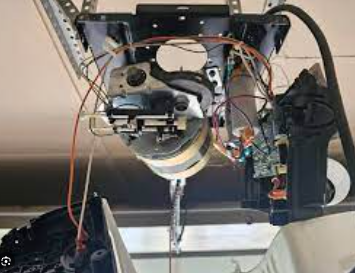
How a Garage Door Opener and Lifting System Work Together
Homeowners often refer to the entire system as “the opener.”
Mechanically, several different systems work together.
Garage Door Opener Motor
The motor creates powered movement.
It does not directly lift every pound of the garage door by itself.
Drive Gear
Internal drive components transfer motor power into chain, belt or other drive movement.
Trolley and Carriage
The trolley moves along the rail and connects the opener to the door through the opener arm.
Chain-Drive Openers
A chain-drive system uses a metal chain to move the trolley.
Chain movement, sprocket condition and trolley engagement are all relevant when the motor runs without door movement.
Belt-Drive Openers
A belt-drive unit uses a reinforced belt.
A broken belt can allow the motor to operate without moving the garage door.
Screw-Drive Systems
Some older opener systems use a screw-style drive.
Wear or mechanical failure inside the drive can stop the trolley.
Emergency-Release Mechanism
The emergency release disconnects many ceiling-mounted opener systems from the door.
If it is disengaged, the opener may run independently from the door.
Wall Button
The interior control provides a direct command to the opener.
Comparing wall-button operation with remote operation can help isolate a remote problem.
Remote Control
A remote uses battery power and wireless communication to send an open/close command.
Photo-Eye Sensors
Photo-eye sensors primarily protect the closing path.
They are more commonly associated with a door that will not close than one that will not open.
However, they remain part of the complete automatic opener safety system and should be kept clean and aligned according to the manufacturer's instructions.
Travel Limits
Travel limits tell the operator how far to move.
Force Settings
Force settings help the opener respond to resistance.
Increasing force should never be used simply to overpower a garage door that has become heavy, crooked or jammed.
The Critical Difference: The Opener Does Not Carry the Full Weight of a Properly Balanced Garage Door
This is one of the most important facts to understand when a garage door will not open.
The spring system counterbalances much of the door's weight.
The opener then moves that balanced door along its tracks.
Torsion Springs
Torsion springs are commonly mounted above the garage door on a shaft.
They wind as the door closes and release stored energy as the door opens.
Extension Springs
Extension springs typically stretch along the horizontal tracks and contract as the door rises.
Garage Door Cables
Cables transfer spring-assisted force to the garage door.
Cable Drums
On many torsion systems, the cables wind around drums on the shaft.
Rollers and Tracks
Rollers guide the door while tracks control its path.
Door Balance
A correctly balanced garage door should not require the opener to overcome the door's full dead weight.
What Happens When the Spring Breaks?
The opener may still run.
The garage door may remain closed.
Or the door may move several inches before the motor stops under abnormal load.
Safe Homeowner Checks When a Garage Door Won’t Open
The safest troubleshooting focuses on observation and simple controls rather than disassembling loaded hardware.
1. Confirm the Opener Has Power
Check for normal lights or status indicators.
2. Try the Wall Control
If the wall button works but the remote does not, investigate the remote rather than assuming the motor failed.
3. Replace the Remote Battery
This is simple and low risk.
4. Look at the Trolley
Observe whether the opener carriage appears connected to the door.
5. Check Whether the Emergency Release Was Pulled
Do this visually before assuming there is an internal motor failure.
6. Check Whether the Door Is Manually Locked
Look at any slide lock or locking bar.
7. Look for Track Obstructions
Remove only obvious loose objects that are safely accessible and not supporting or contacting loaded door hardware.
8. Listen to the Motor
Does it remain silent?
Does it hum?
Does it grind?
Does it run normally?
9. Watch the Rail
Does the chain or belt move?
Does the trolley move?
Does the rail flex abnormally?
10. Look for a Visible Spring Gap
Inspect from the floor.
Do not touch the spring.
11. Observe the Cables
Note whether one cable is hanging loose, visibly frayed or out of its normal path.
12. Look at the Door Level
If one side is significantly higher than the other, stop repeated operation.
13. Look at the Rollers
Confirm that visible rollers remain inside the tracks.
14. Take Photos
Useful photos can include:
- The full garage door from inside.
- The torsion spring and shaft.
- The left cable and drum.
- The right cable and drum.
- The opener and rail.
- Any visibly crooked section or off-track roller.
What Should You Not Do When a Garage Door Will Not Open?
- Do not wind or unwind torsion springs.
- Do not loosen torsion spring set screws.
- Do not remove spring brackets.
- Do not adjust cable drums.
- Do not reconnect lifting cables under tension.
- Do not remove bottom cable brackets.
- Do not force an off-track roller back into position while the door is loaded.
- Do not repeatedly operate a severely crooked garage door.
- Do not lift an extremely heavy double garage door by yourself.
- Do not continue running an opener that is grinding or straining.
- Do not increase opener force simply to overpower a binding door.
- Do not reconnect the opener trolley to a door with a visible broken spring.
- Do not stand beneath a visibly unstable or hanging garage door.
Garage Door Won’t Open: Symptom-to-Cause Comparison Table
| Symptom | Possible Cause | What the Homeowner May Notice | Safe Initial Check | Likely Repair | Urgency Level |
|---|---|---|---|---|---|
| Motor runs but nothing moves | Disconnected trolley, stripped gear, broken belt or drive issue | Normal motor sound but no garage-door movement | Observe trolley, rail and drive movement | Trolley or opener drive repair | Moderate |
| Opener hums but door stays closed | Motor issue, jammed door or unusually heavy door | Humming without normal movement | Look for spring gap, lock or mechanical jam | Opener or mechanical door diagnosis | Moderate to High |
| Door opens only a few inches | Broken spring or major resistance | Door begins rising and stops | Visually inspect spring | Spring or mechanical repair | High |
| Chain moves but door does not | Disconnected trolley or door-arm problem | Drive system moves independently from door | Observe trolley engagement | Trolley/release repair | Low to Moderate if door is stable |
| Door moves manually but not with opener | Opener, control, motor or trolley problem | Mechanical door may appear balanced | Check power, wall control and trolley | Opener diagnosis | Moderate |
| Door is extremely heavy | Broken spring or counterbalance failure | Door weight feels dramatically different | Visual spring inspection only | Spring/balance repair | High |
| Door lifts unevenly | Cable, drum, roller, spring or track problem | One side rises higher | Stop repeated operation and observe cables | Counterbalance or track repair | High |
| Door starts and reverses | Resistance, travel setting or opener issue | Opening cycle begins then stops/reverses | Check for visible binding or obstruction | Mechanical or opener diagnosis | Moderate |
| Grinding noise from opener | Drive gear, sprocket, trolley or other internal wear | Harsh mechanical noise overhead | Stop repeated cycling | Opener repair or replacement evaluation | Moderate |
| Trolley moves without the door | Emergency release disconnected | Carriage travels but door stays closed | Observe trolley connection | Proper reconnection if door is mechanically safe | Low to Moderate |
| Emergency release is disconnected | Release cord was pulled | Opener travels independently | Consult opener manual | Trolley reconnection if no other problem exists | Low if door is stable |
| Broken spring visible | Spring fatigue/failure | Gap in torsion spring and heavy door | Stop repeated opener use | Spring replacement | High |
| Loose or snapped cable | Cable/counterbalance failure | Uneven or crooked garage door | Visual inspection only | Cable and spring-system repair | High |
| Off-track door | Roller, track, cable or impact damage | Roller outside track or visibly leaning door | Stop opener operation | Off-track repair | High |
| No sound from opener | Power, wall-control, remote or opener electronics | No motor response | Check power and wall control | Control/electrical/opener diagnosis | Low to Moderate |
| Door locked but opener pulls | Manual lock engaged | Top section may flex while door stays down | Inspect interior lock | Unlock door and inspect for resulting damage | Moderate |
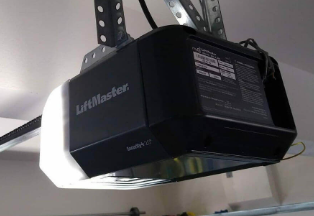
Can You Manually Open a Garage Door That Won’t Open Automatically?
Sometimes—but not every stuck garage door is safe to move manually.
When Manual Operation May Be Appropriate
If the opener has lost electrical power but the garage door itself is mechanically healthy, properly balanced, level and fully on track, the opener manufacturer's emergency-release procedure may allow manual operation.
When Manual Operation May Be Unsafe
Do not assume manual release is appropriate when:
- A torsion spring is visibly broken.
- The door is extremely heavy.
- A cable is loose or snapped.
- The garage door is crooked.
- A roller is outside the track.
- The door is hanging from only part of its hardware.
- Vehicle impact damaged the door or tracks.
Why the Emergency Release Can Change the Situation
When the opener is connected, it can be one of the components currently holding the garage door in position.
Disconnecting it from an unstable or unbalanced door can change how the door is supported.
That is why “just pull the red cord” is not safe universal advice for every garage door that will not open.
Should the Garage Door Opener Be Repaired or Replaced?
If the physical garage door is healthy and the problem is inside the automatic opener, the next question is whether repair or replacement provides better value.
Opener Repair May Make Sense When:
- The trolley is disconnected or damaged.
- A replaceable gear or sprocket has failed.
- The belt or chain system needs repair.
- A wall control or remote has failed.
- Travel settings require correction.
- A serviceable control component has failed.
- The operator is otherwise in good condition.
- Replacement parts remain available.
Opener Replacement May Be Worth Considering When:
- The opener is older and has repeated failures.
- Critical replacement parts are obsolete.
- The motor has suffered major failure.
- The opener rail is damaged.
- Several major components need repair.
- The system lacks appropriate modern safety functionality.
- The opener is not suitable for the installed door.
- The repair approaches the practical cost of a suitable replacement.
Do Not Replace the Opener Before Fixing a Broken Spring
If the door is too heavy because the spring system failed, the opener should be evaluated after normal door balance has been restored.
A new motor will not correct a broken spring.
What Affects the Cost to Repair a Garage Door That Won’t Open?
There is no accurate fixed price based only on the symptom “won’t open.”
The final repair depends on the diagnosis.
Broken Spring
Spring type, number of springs, door weight, spring specification, labor and related cable or hardware problems can affect the repair.
Trolley or Release Problem
A simple reconnection is different from a broken trolley or damaged carriage.
Opener Gear or Belt Repair
Parts availability and opener model matter.
Cable Repair
A single damaged cable can involve the spring and drum system, so the entire lifting setup should be evaluated.
Off-Track Door
Repair scope depends on why the roller left the track and whether the track, cable, hinges or door sections were damaged.
Opener Replacement
The opener type, rail, controls, installation, battery backup, smart features and door compatibility can change the total.
Urgent Scheduling
Different companies can have different policies for same-day, urgent, weekend or after-hours work.
Ask before approving service.
Get the Scope in Writing
A useful estimate should identify:
- The actual failed component.
- Required parts.
- Labor.
- Any service-call charge.
- Any urgent scheduling charge.
- Additional repairs discovered during inspection.
- Applicable parts warranty.
- Applicable labor warranty.
Why Summerlin and Las Vegas Conditions Matter When a Garage Door Will Not Open
The mechanical causes of a stuck garage door are similar across the country, but the garage environment in Southern Nevada adds useful local context.
Extreme Summer Heat
Summerlin garages can become very hot during the summer.
The opener electronics, batteries, plastic components, belts, lubricants and garage-door hardware all operate in that environment.
Heat should not be blamed automatically for every failure, but the environment matters when evaluating older equipment.
High Interior Garage Temperatures
A west-facing attached garage can become particularly hot in the afternoon.
Dry Climate
Mechanical hardware can develop noise and friction as components wear.
Maintenance should follow the garage door and opener manufacturer's guidance.
Dust and Fine Debris
Dust can accumulate around tracks, rollers and photo-eye sensors.
While photo-eye problems are more commonly associated with closing than opening, keeping the complete opener system clean and maintained remains useful.
Sun Exposure
Garage door sections, weather seals and exterior materials can receive substantial sun exposure.
Electronics
Modern openers may include logic boards, wireless controls, batteries, cameras or smart-connectivity components.
Spring Fatigue
Garage door springs are wear components that experience repeated cycles.
Daily Garage Use
Many Summerlin and Las Vegas households use the garage as the primary daily entrance.
Several drivers can add many cycles per day.
Heavy Insulated Garage Doors
Some Las Vegas homeowners use insulated garage doors.
Depending on construction, those doors can be heavier than simple single-layer steel doors, making proper spring balance especially important.
Attached Garages
Opener noise, vibration and access can matter more when the garage is directly connected to occupied living space.
Detached Garages
Noise may matter less, but a failed door can still prevent vehicle access or property security.
HOA and Gated Communities
Summerlin, Summerlin South, Sun City Summerlin, Queensridge, Peccole Ranch and Canyon Gate include many planned residential neighborhoods.
When the physical door remains healthy, targeted mechanical repair can preserve the existing exterior appearance.
Rental and Multi-Unit Properties
Landlords and managers benefit from identifying the failed component before authorizing broad replacement.
Security Concerns
A garage door stuck open is a different urgency level from a garage door stuck safely closed.
Vehicle Trapped Inside
A broken spring or jammed door can prevent a vehicle from leaving the garage.
Urgency does not change the mechanical diagnosis, but it can make same-day scheduling particularly valuable.
If access or security is urgent, Open Sesame also maintains information about urgent garage door repair service in Las Vegas and Summerlin.
Garage Door Won’t Open: Advice for Different Property Owners
Summerlin Homeowners
Begin with the symptom.
If the opener runs but the door barely moves, inspect the spring visually before assuming the motor is bad.
If one side of the door rises higher, stop repeated operation.
Open Sesame also provides garage door repair service in Summerlin.
Landlords
Ask the tenant for a short video or precise symptom description:
- Does the opener make noise?
- Does the garage door move?
- How far does it move?
- Is the door crooked?
- Is a spring gap visible?
That information can help separate a remote-control problem from a larger mechanical repair.
Property Managers
Keep the opener model and garage-door repair history in the property record.
Repeated opener repairs, spring replacements or track damage can help explain current symptoms.
Renters
Report the problem promptly and avoid opening high-tension components.
Do not wind springs, loosen cable hardware or force an off-track door.
Real Estate Investors
A garage door that will not open does not automatically require full replacement.
A spring, cable, trolley or opener repair may restore an otherwise serviceable door.
HOA Communities
Mechanical repair generally preserves the existing exterior garage-door style when the panels remain healthy.
Small Businesses
A local business should consider access requirements and cycle frequency.
Higher-use commercial applications may use different equipment from ordinary residential garage doors.
Questions to Ask Before Hiring a Garage Door Repair Company
- What exactly failed?
- Why won’t the garage door open?
- Is the opener motor actually damaged?
- Is the garage door spring broken?
- Is the door properly balanced?
- Is the trolley connected?
- Was the emergency release pulled?
- Is the drive gear stripped?
- Is the sprocket damaged?
- Is the belt broken or damaged?
- Is the chain system functioning normally?
- Is the garage door manually locked?
- Are the cables loose?
- Are the cables frayed?
- Has a cable snapped?
- Is a cable off the drum?
- Is the garage door off track?
- Are any rollers outside the track?
- Are the tracks bent or misaligned?
- Are the rollers creating excessive resistance?
- Is the opener being strained by an unusually heavy door?
- Are the travel settings correct?
- Is the opener stopping because the garage door is binding?
- Can the existing opener be repaired?
- Would opener replacement be more practical?
- Are replacement parts still available?
- What parts are included in the quote?
- Is labor included?
- Is there a service-call fee?
- Are there urgent scheduling or after-hours fees?
- Is there a parts warranty?
- Is there a labor warranty?
- Can you show me the failed component?
- Will you inspect the springs, cables, rollers, tracks and opener together?
- Will the door be balance-tested before the opener is returned to service?
- Will I receive a written estimate before additional work begins?
Garage Door Repair Red Flags When the Door Won’t Open
Be cautious if a company:
- Cannot explain why the garage door will not open.
- Claims the opener must be replaced before testing it.
- Does not inspect the garage door spring system.
- Does not evaluate garage door balance.
- Does not inspect cables or tracks.
- Ignores a visibly crooked or off-track door.
- Cannot explain whether the trolley is engaged.
- Uses vague language such as “the entire system is bad” without showing why.
- Changes the quote substantially without explaining newly discovered work.
- Pushes unnecessary upgrades before identifying the failed component.
- Recommends a stronger opener to compensate for a heavy garage door.
- Provides unsafe DIY advice involving spring winding.
- Tells the homeowner to reconnect loaded garage door cables.
- Suggests forcing an off-track door.
- Does not explain parts and labor.
- Will not provide a written estimate when requested.
- Arrives with no clear company identification.
- Has no clear local business identity.
- Has no verifiable Google Business Profile presence.
- Has no clearly defined Las Vegas or Summerlin service area.
- Cannot explain warranty terms.
- Pressures the homeowner to approve work without understanding the diagnosis.
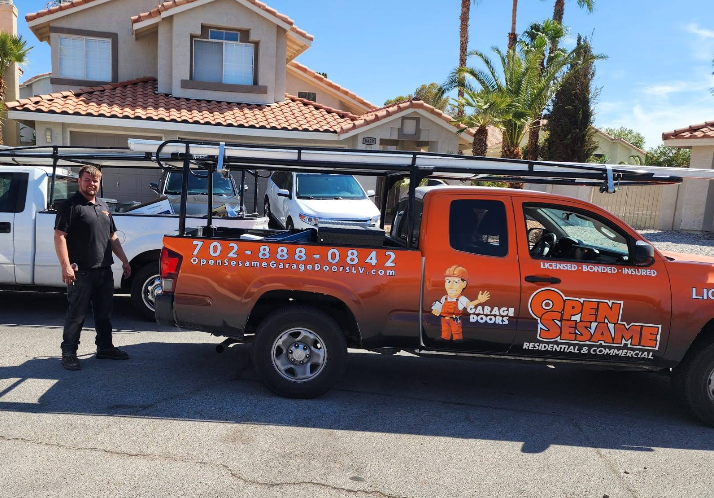
Why Consider Open Sesame Garage Door When Your Door Won’t Open?
Open Sesame Garage Door is a local garage door repair company serving Summerlin, Las Vegas and nearby Clark County communities.
The company is worth considering when you want the automatic opener and the mechanical garage door evaluated together rather than assuming the motor is always the problem.
That matters because “garage door won’t open” can involve several different repairs.
Broken Spring Repair
Inspection when the garage door has become unusually heavy or rises only a few inches before the opener stops.
Garage Door Opener Repair
Diagnosis of motors, gears, trolleys, belts, chains, controls and other automatic opener components.
Cable & Off-Track Repair
Evaluation when the door is crooked, cables are loose or rollers have left the tracks.
Garage Door Repair
Open Sesame can inspect a door that is stuck closed, stuck partly open, crooked or refusing normal automatic operation.
Broken Spring Replacement
Spring failure is a common cause of a door that becomes too heavy for the opener.
Garage Door Opener Repair
Motor, trolley, gear, belt, chain and control problems can be evaluated after the garage door itself is confirmed to be mechanically healthy.
Garage Door Opener Replacement
Replacement can be compared with repair when the operator has major failure, obsolete components or repeated problems.
Garage Door Cable Repair
A damaged cable can make the garage door uneven and prevent normal travel.
Off-Track Garage Door Repair
A door with rollers outside the track should be stabilized and repaired rather than forced with the opener.
Garage Door Roller Replacement
Worn rollers can create binding and noise.
Sensor Repair
Safety-sensor service is relevant to the complete automatic opener system, particularly when closing problems are also present.
Noisy Garage Door Repair
Grinding, scraping, popping and rattling can provide useful clues about where resistance or wear is developing.
Garage Door Tune-Ups
Maintenance can help identify spring, cable, roller, track and opener problems before they stop normal operation.
Same-Day Garage Door Service
When a stuck garage door traps a vehicle or prevents normal access, call to ask about current same-day scheduling.
Support for Homeowners
A diagnosis-based repair helps homeowners understand what actually failed before approving parts.
Support for Landlords and Property Managers
Open Sesame can help separate tenant control issues from mechanical garage-door failures.
Support for Renters
Renters can report symptoms without attempting high-tension spring or cable repairs.
Support for Real Estate Investors
A targeted repair can restore an otherwise serviceable garage door during property turnover.
Support for Local Businesses
Local commercial operators can discuss access requirements, downtime and the actual equipment involved.
Contact Open Sesame Garage Door
- Call (702) 888-0842.
- Request a garage door inspection .
- View Open Sesame Garage Door on Google Maps .
- Visit Open Sesame Garage Door serving Summerlin and Las Vegas .
Garage Door Repair Service Areas
Open Sesame Garage Door serves homeowners, landlords, property managers, investors and local businesses throughout Summerlin, Las Vegas and nearby Clark County communities.
The locations below describe service coverage and do not imply that Open Sesame maintains a separate physical office in every neighborhood.
A Summerlin South homeowner may have a heavy insulated garage door that becomes extremely difficult to move after spring failure.
A Sun City Summerlin home may have an older opener connected to a newer spring system.
A house in The Lakes or Desert Shores may experience cable or roller problems on an established garage-door system.
Peccole Ranch and Canyon Gate homeowners may encounter a mixture of opener, spring and track issues as systems age.
Centennial Hills, Skye Canyon and Southern Highlands households may place many daily cycles on newer garage-door systems.
Spring Valley, Enterprise, Paradise and Winchester rental properties may require a straightforward diagnosis before a landlord approves repair.
The correct repair depends on the door and symptom—not simply the neighborhood.
Open Sesame Garage Door — Las Vegas Location
Open Sesame Garage Door is located at 7865 Bluewater Dr, Las Vegas, NV 89128 and serves Summerlin, Las Vegas and nearby Clark County communities.
Open Sesame Garage Door
7865 Bluewater Dr
Las Vegas, NV 89128
Phone: (702) 888-0842
Garage Door Safety and Troubleshooting Authority Resources
Frequently Asked Questions About a Garage Door That Won’t Open in Summerlin
Why won’t my garage door open in Summerlin?
Common causes include a broken spring, disconnected opener trolley, opener power or control problem, stripped gear or broken drive belt/chain, engaged manual lock, loose or snapped cable, off-track garage door, damaged rollers or tracks, or an opener motor/electrical problem. The exact symptom usually helps narrow the diagnosis.
Why does my garage door opener run without opening the door?
If the motor runs but the door does not move, possible causes include a disconnected trolley, stripped opener gear, broken belt or chain-drive problem, broken spring, loose cable or a mechanically jammed garage door. Watch whether the trolley and drive system move before operating the opener again.
Can a broken spring cause the opener to run without moving the door?
Yes. The spring system provides much of the lifting assistance for the garage door. If the spring breaks, the door can become extremely heavy while the opener motor still runs. The door may remain closed or move only a few inches.
How can I tell whether the garage door opener trolley is disconnected?
On many ceiling-mounted openers, the powered carriage will move along the rail while the garage door remains stationary if the trolley is disengaged. Look at the emergency-release connection from the floor and follow the opener manufacturer's instructions before reconnecting it.
Can I reconnect the garage door opener myself?
Follow the manufacturer instructions only when the garage door itself is stable, properly balanced and free of visible spring, cable or track problems. Do not reconnect the opener to a door with a broken spring, loose cable, off-track roller or severe crookedness.
Why does my garage door open only a few inches?
A broken garage door spring is an important possibility because the door loses much of its lifting assistance. Major track resistance, cable problems or other mechanical binding can create a similar symptom. Stop repeated opener use if the door has become unusually heavy.
Can the garage door opener motor be damaged by trying to lift a heavy door?
Repeatedly running an opener against an abnormally heavy, jammed or off-track garage door can place unnecessary load on gears, sprockets, belts, chains, trolleys and other opener components. Correct the mechanical garage-door problem before continued operation.
Is same-day garage door repair available in Summerlin?
Open Sesame Garage Door provides same-day garage door service options in Summerlin and Las Vegas. Scheduling and parts availability can vary by problem, so call (702) 888-0842 to ask about current availability for your garage door.
Related Garage Door Articles
Garage Door Still Won’t Open?
If your garage door is stuck closed, opens only a few inches, runs without moving, lifts unevenly, has a loose cable, shows a broken spring or has come off the track, stop repeated operation until the cause is identified.
Call Open Sesame Garage Door Repair Las Vegas at (702) 888-0842 for garage door repair in Summerlin, Las Vegas and nearby Clark County communities.
Safety reminder: Do not wind torsion springs, adjust cable drums, reconnect loaded cables, force an off-track door or repeatedly operate an opener against a garage door that has become extremely heavy or unstable.