


How Much Does Garage Door Opener Repair or Replacement Cost in Las Vegas?
Garage door opener repair cost in Las Vegas depends on what actually failed. A remote-control problem, photo-eye sensor issue, trolley reconnection, travel adjustment or replaceable drive component is a different repair from a failed motor, damaged rail or complete opener replacement. The final price can also change when the apparent opener problem is actually caused by a broken garage door spring, loose cable, off-track door or poorly balanced garage door. This guide explains the parts of an opener, the factors that affect Las Vegas pricing, when repair usually makes sense, when replacement may be more practical, what homeowners can safely inspect and how to compare estimates without paying for components that do not need replacement.
Table of Contents
- Quick Answer: Repair or Replacement Cost
- Why Opener Prices Vary
- Low, Moderate and Higher-Cost Repairs
- How a Garage Door Opener Works
- Opener vs. Garage Door Lifting System
- What Affects Repair Cost?
- What Affects Replacement Cost?
- Chain vs. Belt vs. Other Drive Types
- Motor and Internal Drive Problems
- Trolley and Emergency Release Problems
- Sensor, Remote and Wall-Control Problems
- When the Opener Is Not the Real Problem
- Safe Homeowner Checks
- What Homeowners Should Not Do
- Garage Door Opener Symptom Table
- Repair vs. Replacement
- How to Compare Opener Estimates
- Las Vegas Cost and Operating Factors
- Homeowners, Rentals and Businesses
- Questions to Ask Before Hiring
- Garage Door Opener Repair Red Flags
- Why Consider Open Sesame?
- Areas Served
- Authority Resources
- Garage Door Opener Cost FAQs
- Related Garage Door Articles
- Request Garage Door Opener Service
How Much Does Garage Door Opener Repair or Replacement Cost in Las Vegas?
There is no reliable one-price answer for garage door opener repair in Las Vegas because the cost depends on the diagnosis. A simple remote, wall-control, sensor, trolley or adjustment issue is generally a smaller repair than replacing a motor, rail, drive assembly or complete opener.
Replacement normally involves more than buying a motor unit. The estimate can include the opener itself, rail or drive components, installation labor, removal of the old operator, controls, safety-sensor setup, travel and force calibration, connection to the garage door and testing of the complete door system. Optional battery backup, smart controls, cameras, keypads or wall-mount designs can also change the final amount.
Before comparing prices, confirm that the opener is actually the failed component. A broken spring, damaged cable, off-track garage door or poorly balanced door can make a perfectly serviceable opener appear weak. An accurate quote should therefore follow a mechanical inspection rather than a guess based only on the symptom.
Why Garage Door Opener Repair Cost in Las Vegas Can Vary So Much
Homeowners often call a garage door company with a reasonable question:
“How much will it cost to fix my garage door opener?”
The difficulty is that “garage door opener problem” describes a symptom category, not one repair.
One homeowner may have a remote with a dead battery.
Another may have a photo-eye sensor that was bumped while moving storage boxes.
A third may have a stripped internal gear.
A fourth may have a broken belt.
A fifth may hear the motor running while the door stays closed because the emergency-release trolley is disconnected.
And another homeowner may think the opener has failed when the actual problem is a broken torsion spring.
Those situations should not produce identical estimates.
The strongest way to evaluate garage door opener repair cost Las Vegas is therefore to begin with the component that failed.
That protects homeowners from replacing an entire opener when a smaller repair would restore normal operation.
It also prevents technicians from wasting time repairing the motor when the garage door itself is too heavy, crooked or mechanically jammed.
This matters for homeowners throughout Las Vegas and Summerlin, but the same principle is useful for landlords, property managers, renters, real estate investors, HOA communities and small businesses.
A rental property manager needs to know whether a tenant's “broken opener” complaint requires a remote battery, sensor repair, spring replacement or complete motor replacement.
A homeowner in Summerlin may be deciding whether an older chain-drive operator is worth repairing or whether moving to a quieter belt-drive or wall-mount system better fits the property.
A real estate investor may need a functional, safe opener without paying for optional features that do not add value to the project.
A local business may care more about reliable access and equipment compatibility than smartphone features.
The right answer depends on:
- The exact failed component.
- The age and condition of the opener.
- Whether replacement parts remain available.
- The opener's drive type.
- The size and weight of the garage door.
- Whether the garage door is properly balanced.
- Whether springs or cables also need repair.
- Installation access.
- Control and accessory requirements.
- Smart-home or battery-backup features.
- Whether the rail must also be replaced.
- Labor involved in setup and testing.
- Current scheduling and service-call policies.
A homeowner looking for a Las Vegas garage door repair company should therefore ask for a diagnosis and written scope rather than comparing only one headline number.
What Types of Garage Door Opener Problems Usually Cost Less or More?
Because a reliable dollar amount depends on the exact equipment and diagnosis, it is more useful to first separate opener problems by repair complexity.
This helps homeowners understand why one service call can be relatively simple while another approaches the practical cost of replacing the opener.
Remote, Programming, Sensor and Simple Control Problems
Problems involving a remote battery, remote programming, wall-control issue, photo-eye obstruction, obvious sensor misalignment or other simple control issue can often require less labor and fewer parts than a major opener repair.
These problems can still require diagnosis because the symptoms overlap with other failures.
For example, a door that refuses to close may have misaligned sensors, but it may also have a track obstruction, travel-setting problem or mechanical door issue.
Trolley, Gear, Sprocket, Chain, Belt or Replaceable Drive Components
If the opener motor and rail remain useful but an individual drive component has failed, repair may be practical.
Examples can include a stripped gear, worn sprocket, damaged trolley, loose chain, damaged belt or another replaceable component.
Parts availability becomes important.
A relatively modern opener with readily available components is a different decision from an older operator whose internal parts are difficult to obtain.
Motor, Rail, Major Electronics or Multiple Failed Components
Repair becomes more involved when the motor assembly, rail, logic board, drive system and additional components have significant problems at the same time.
This is where repair-versus-replacement becomes an important conversation.
Spending heavily on several parts inside an older opener may not provide the same value as installing an appropriate replacement.
New Garage Door Opener System
Complete replacement can include the operator, rail or shaft-drive components, controls, safety sensors, installation, connection to the garage door, travel and force calibration, testing and removal of the old equipment.
The final amount can vary significantly depending on whether the homeowner chooses a basic chain-drive unit, quieter belt-drive opener, DC motor, battery backup, smart connectivity, integrated lighting, camera features or wall-mounted system.
How Does a Garage Door Opener System Work?
Understanding the system makes repair estimates much easier to evaluate.
A garage door opener is an automatic operator.
It receives a command from a wall button, remote control, keypad or connected device and uses a motor to move the door through a drive mechanism.
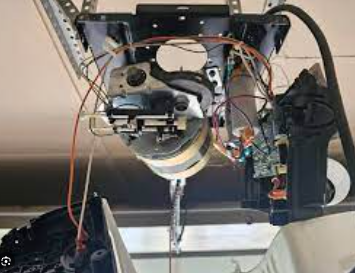
On a typical ceiling-mounted opener, the motor moves a chain, belt or screw mechanism connected to a trolley or carriage.
The trolley moves along a rail.
An opener arm connects the trolley to the top portion of the garage door.
When everything is working correctly, the opener moves a garage door that has already been counterbalanced by its spring system.
Garage Door Opener Motor
The motor provides the rotational power required to operate the drive system.
Motor design can vary by brand, age and opener type.
Some modern units use DC motors that can support smoother speed control, battery backup and quieter operation.
Older units may use different motor and drive arrangements.
Drive Gear and Sprocket
Many openers use internal gears or sprocket assemblies to transfer power from the motor to the chain, belt or other drive mechanism.
A worn gear can create grinding or allow the motor to run without moving the trolley correctly.
A damaged sprocket can affect chain movement and alignment.
Trolley or Carriage
The trolley moves along the opener rail.
It connects to the garage door through the opener arm.
The emergency-release mechanism commonly disconnects the trolley from the powered carriage so the door can be manually operated when appropriate.
If that trolley remains disconnected, the opener may run normally while the garage door stays in place.
Chain-Drive Openers
Chain-drive systems use a metal chain to move the trolley.
They can be durable and widely serviceable, but typically create more mechanical noise than many belt-drive designs.
Chain tension and sprocket condition matter.
A loose chain can rattle or slap.
Overtightening is not an appropriate cure because excessive tension can stress other components.
Belt-Drive Openers
Belt-drive openers use a reinforced belt.
Many homeowners choose them because they can operate more quietly, which can matter when a garage is below or next to bedrooms and living areas.
A damaged or broken belt can prevent normal trolley movement even when the motor runs.
Screw-Drive Systems
Some older garage door openers use a screw-drive mechanism rather than a conventional belt or chain.
Parts availability and repair practicality can become important on older units.
Wall-Mount or Jackshaft Openers
Wall-mounted systems are installed beside the garage door and operate from the torsion shaft rather than using a conventional center ceiling rail.
They can free ceiling space and suit certain garage layouts.
However, installation requirements and replacement cost structure differ from a standard ceiling-mounted operator.
Wall Button
The interior wall control provides a direct operating input to the opener.
If the wall control operates the door but the remote does not, the motor may be completely healthy.
Remote Control
Remote problems can involve batteries, programming, radio communication or the remote itself.
A remote problem should not automatically lead to opener replacement.
Photo-Eye Safety Sensors
Modern automatic garage door systems use photo-eye safety sensors near the bottom of the garage opening.
If the closing beam is obstructed or the sensors are misaligned, the opener may refuse to close normally.
This can look like a motor or logic problem to a homeowner unfamiliar with the safety system.
Travel Limits
Travel settings tell the operator where the fully open and fully closed positions should be.
Incorrect travel settings can cause incomplete movement or reversal.
Force Settings
Force controls help the operator respond to resistance.
Increasing force should not be used to overpower a mechanically binding or badly balanced garage door.
Mechanical problems should be corrected first.
The Most Important Cost Distinction: The Opener Does Not Carry the Full Weight of the Garage Door
This is one of the most important concepts in garage door troubleshooting.
A properly functioning garage door opener moves a properly balanced door.
It is not supposed to act like an industrial winch lifting the full dead weight of the door.
The garage door spring system provides much of the lifting assistance.
That means a problem elsewhere in the garage door can make the opener appear defective.
Torsion Springs
Torsion springs are commonly mounted above the garage door on a shaft.
They wind as the garage door closes and release stored mechanical energy as the door opens.
That spring torque helps counterbalance the garage door weight.
Extension Springs
Extension spring systems typically use springs along the horizontal tracks.
They stretch when the door closes and contract as the door opens.
They use different cable and pulley arrangements than torsion systems.
Garage Door Cables
Cables transfer spring-assisted lifting force to the garage door.
On many torsion systems, cables wrap around drums on the torsion shaft.
If a cable becomes loose, damaged or leaves the drum, the door can lift unevenly or become jammed.
Rollers and Tracks
Rollers guide the door through the tracks.
A seized roller, bent track or off-track condition increases resistance and may prevent the opener from moving the door normally.
Door Balance
A properly balanced door reduces opener workload.
If the spring system fails, the garage door can become dramatically heavier.
The opener may still make noise, move the trolley or lift the door several inches.
That does not prove the opener itself is bad.
Open Sesame maintains dedicated information about garage door spring replacement and garage door cable replacement when the lifting system rather than the opener is the actual source of the problem.
What Factors Affect Garage Door Opener Repair Cost in Las Vegas?
The repair quote should be tied to the actual failed component and the work required to restore safe operation.
1. Diagnosis
The first cost factor is simply determining what failed.
Several problems can create nearly identical symptoms.
A motor that runs while the door remains closed could indicate:
- A disconnected trolley.
- A stripped gear.
- A broken belt.
- A chain-drive problem.
- A broken spring.
- A cable problem.
- An off-track or jammed door.
- An opener attempting to move an abnormally heavy door.
The technician needs to distinguish among those before giving a meaningful repair recommendation.
2. Replacement Part
A remote, sensor or control is not priced like a motor, rail or logic board.
The component itself can therefore change the total significantly.
3. Parts Availability
A common modern opener may have readily available service components.
An older or discontinued unit can be more difficult.
Even if a repair is technically possible, replacement may be more practical when parts are obsolete or require excessive sourcing time.
4. Opener Brand and Model
Different manufacturers use different rails, gears, belts, boards, trolleys and accessories.
Model-specific components can affect repair complexity.
5. Chain, Belt, Screw or Wall-Mount Design
The architecture of the opener changes the repair.
A conventional chain-drive system is mechanically different from a wall-mounted shaft-drive unit.
6. Garage Door Weight
The opener itself should not carry full door weight, but the garage door size and weight still matter when selecting an appropriate operator.
Heavy custom or insulated doors may require different opener specifications.
7. Condition of the Spring System
If the spring is broken, the opener estimate may be only part of the required work.
The spring should be corrected before assuming the motor is defective.
8. Cable or Track Problems
A cable off the drum or door off track can prevent normal opener operation.
Those problems can add separate mechanical repair work.
9. Electrical Diagnosis
An opener problem involving power, wiring, controls, a logic board or another electrical component may require more diagnostic time than a visibly broken mechanical part.
10. Access
A standard opener installed in an accessible residential garage is different from equipment positioned around storage systems, unusually high ceilings or specialty door configurations.
11. Service Timing
Companies can have different policies for urgent, weekend or after-hours work.
Ask about those charges before approving service.
What Affects Garage Door Opener Replacement Cost in Las Vegas?
Replacement cost is influenced by both the equipment selected and the amount of installation work required.
Opener Type
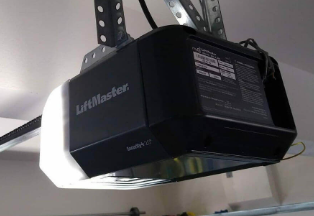
A basic chain-drive operator, premium belt-drive opener and wall-mounted shaft-drive opener are different products.
Their equipment costs and installation requirements should not be expected to match.
Motor and Power Requirements
The appropriate opener should be selected for the installed garage door.
A technician should consider the size, construction and operating characteristics of the door rather than automatically installing the cheapest unit available.
Battery Backup
Some homeowners want battery backup so the opener retains certain functionality during a power interruption.
That feature can affect equipment cost.
Smart Controls
Connected openers may include app control, alerts, scheduling or integration with compatible smart-home systems.
Those features can increase equipment cost compared with a basic operator.
Camera and Lighting Features
Some modern openers include integrated cameras or upgraded LED lighting.
Those are optional convenience and security features rather than requirements for every property.
Keypad and Additional Remotes
Ask how many remotes are included and whether an exterior keypad is part of the quoted package.
Rail Replacement
Do not assume the old rail can or should always remain.
Many opener systems are designed as matched assemblies.
Removal and Disposal of Existing Equipment
Ask whether removing the existing motor, rail and controls is included in the installation scope.
Sensor Installation
Safety sensors should be installed and aligned correctly with the replacement operator.
Final Programming and Testing
Travel limits, controls, remote operation, sensor behavior and the connection between the opener and garage door should be tested after installation.
Does a Belt-Drive, Chain-Drive or Wall-Mount Opener Change the Cost?
Yes.
Different opener designs can have different equipment costs, parts, installation requirements and long-term repair considerations.
Chain Drive
Chain-drive systems use a metal chain along the opener rail. They are common and mechanically familiar, but they generally produce more sound and vibration than many belt-drive designs.
Belt Drive
Belt-drive openers use a reinforced belt and are often chosen when quieter operation is important, particularly for attached garages below bedrooms or living spaces.
Wall Mount
Wall-mounted openers operate from the torsion shaft and eliminate the conventional center ceiling rail. They can be useful where ceiling storage or architectural layout matters.
Is Belt Drive Automatically Better?
Not for every household.
A homeowner prioritizing quiet operation may prefer it.
Another homeowner may prioritize serviceability, initial equipment cost or compatibility with an existing installation.
Is Chain Drive Automatically Cheaper Long Term?
Not necessarily.
Long-term cost depends on product quality, usage, maintenance, installation and whether repairs are eventually needed.
Is Wall Mount Worth the Added Cost?
It can be for homeowners who value ceiling clearance, a cleaner garage ceiling or compatibility with certain garage configurations.
It should be evaluated as a functional choice rather than an automatic upgrade.
Does a Grinding or Humming Opener Mean the Motor Needs Replacement?
Not automatically.
The sound needs to be connected to the component creating it.
Grinding
Grinding inside a ceiling-mounted opener can involve an internal gear, sprocket, trolley or another drive component.
If the motor runs but the drive system does not transfer movement correctly, the motor itself may remain usable.
Humming
A humming opener can indicate an electrical or motor-starting problem.
It can also occur when the opener is attempting to move a garage door that is jammed or too heavy.
Motor Runs but Nothing Moves
Look at the rail and trolley.
If the trolley is disconnected, the motor may be operating normally.
If the chain or belt moves but the door does not, the connection between the trolley and door deserves attention.
Motor Runs and Door Opens Only a Few Inches
This is an important symptom because it may indicate a broken spring.
The opener begins lifting the garage door but reaches abnormal resistance because the spring is no longer providing appropriate counterbalance.
Continuing to run the opener under that condition can add drive-system damage.
Can a Disconnected Trolley Make It Look Like the Garage Door Opener Is Broken?
Yes.
This is one of the simpler explanations for a motor that runs while the garage door stays in place.
The emergency-release mechanism is designed to disconnect many ceiling-mounted openers from the garage door so manual operation is possible when the door is safe to move.
If the release cord was pulled intentionally or accidentally, the powered carriage may travel along the rail without pulling the garage door.
Safe Visual Check
Look at the trolley connection from the floor.
You may be able to see whether the opener carriage and door arm are engaged.
Follow the opener manufacturer's instructions for reconnection.
Can Sensors, Remotes or Wall Controls Cause an Expensive-Looking Opener Problem?
Yes.
Some of the most frustrating opener symptoms begin with relatively small control or sensor problems.
Remote Does Not Work, Wall Control Does
Begin with the remote battery and programming instructions.
If another remote works normally, that further narrows the issue.
Wall Control Does Not Work
The problem may involve the control, wiring, opener power or another internal component.
Door Opens Normally but Will Not Close
Photo-eye sensors become an important possibility.
Look for an obstruction, dirty lens, obvious sensor displacement or abnormal indicator light.
Door Starts Closing and Reverses
Sensors may be involved, but so may mechanical resistance or travel settings.
Do not simply increase force to overpower a door that is binding.
Remote Range Has Become Poor
Battery condition, interference, antenna issues or electronics can be involved.
Again, this does not automatically justify replacing the motor.
When the Garage Door Opener Is Not the Real Problem
This section can save homeowners the most money.
A garage door opener is easy to blame because it is the component that makes noise when the door refuses to move.
But the motor may simply be reacting to a mechanical garage door failure.
Broken Garage Door Spring
A broken torsion spring can make the garage door dramatically heavier.
You may hear the opener run, strain or stop after lifting the door a few inches.
Look from a safe distance for an obvious gap in the spring coil above the garage door.
Loose or Snapped Garage Door Cable
A cable problem can allow the garage door to move unevenly.
The opener may stop because the door binds in the tracks.
Off-Track Garage Door
If a roller has left the track or the garage door is visibly crooked, stop operating the opener.
Read the previous guide: what to do when a garage door comes off the track .
Locked Garage Door
Some garage doors have manual locking hardware.
If the door is locked while the opener tries to lift it, the motor and top section can be placed under unnecessary load.
Track Obstruction
A physical obstruction, bent track or damaged roller can prevent free movement.
Poor Door Balance
An incorrectly balanced garage door may still move but require far more opener force than intended.
Fixing the balance problem can be more important than replacing the operator.
Safe Garage Door Opener Checks Homeowners Can Make Before Paying for Repair
Homeowners can often collect useful diagnostic information without taking apart the opener or touching high-tension garage door hardware.
Confirm the Opener Has Power
Look for normal lights or indicators and verify that the electrical outlet is supplying power where appropriate.
Check the Wall Switch
If the wall switch works but the remote does not, the motor may not be the problem.
Replace Remote Batteries
This is one of the simplest checks.
Look at the Trolley
See whether the emergency-release system appears disconnected.
Check Whether the Emergency Release Was Pulled
Someone may have manually disengaged the opener during a previous outage or maintenance visit.
Look for Track Obstructions
Do not reach into moving hardware.
Simply inspect for obvious physical objects blocking door travel.
Check Whether the Garage Door Is Locked
A manual slide lock or other lock can prevent opener movement.
Inspect Photo-Eye Sensors
Make sure the beam path is clear and the lenses are clean.
Listen to the Motor
Does it run normally?
Does it hum?
Does it grind?
Does it click with no motor movement?
Look for a Visible Spring Gap
From the garage floor, look at the torsion spring above the door.
Do not touch it.
Look at Garage Door Cables
Note whether either cable appears loose, frayed or out of its normal path.
Observe the Opener Rail
Does the chain or belt move?
Does the trolley move?
Does the rail flex excessively?
What Homeowners Should Not Do When Troubleshooting an Opener
- Do not wind or unwind torsion springs.
- Do not remove spring brackets.
- Do not loosen torsion spring set screws.
- Do not adjust cable drums.
- Do not reconnect garage door cables under tension.
- Do not remove bottom cable brackets.
- Do not force an off-track garage door.
- Do not repeatedly operate a severely crooked door.
- Do not attempt to lift an extremely heavy double garage door alone.
- Do not continue running an opener that is grinding or straining while the door barely moves.
- Do not increase opener force simply to overpower mechanical binding.
- Do not permanently bypass photo-eye safety sensors.
- Do not assume a stronger motor fixes a broken spring.
- Do not replace the opener until the mechanical garage door has been evaluated.
Garage Door Opener Symptom and Repair Comparison Table
| Symptom | Possible Cause | What the Homeowner May Notice | Safe Initial Check | Likely Repair | Urgency Level |
|---|---|---|---|---|---|
| Motor runs but nothing moves | Disconnected trolley, stripped gear, belt or drive issue | Motor sound with no door movement | Observe trolley and rail | Trolley or drive-system repair | Moderate |
| Opener hums but door stays closed | Motor-start problem, jammed door or heavy door | Humming with little or no movement | Look for spring gap or jam | Opener or mechanical door diagnosis | Moderate to High |
| Door opens only a few inches | Broken spring or severe resistance | Opener starts then stops | Look for broken spring | Spring or mechanical repair | High |
| Chain moves but door does not | Disconnected trolley or door connection problem | Rail mechanism moves independently | Observe trolley engagement | Trolley/release repair | Low to Moderate if door is stable |
| Door moves manually but not with opener | Opener drive, motor, control or trolley problem | Mechanical door appears balanced | Check power and controls | Opener diagnosis | Moderate |
| Door is extremely heavy | Broken spring or balance failure | Manual lifting is difficult | Visual spring inspection only | Spring/balance repair | High |
| Door lifts unevenly | Cable, drum, spring, roller or track problem | One side rises differently | Stop repeated operation | Mechanical door repair | High |
| Door starts and reverses | Sensor, travel setting or mechanical resistance | Closing motion reverses unexpectedly | Check beam path and visible obstruction | Sensor, adjustment or door repair | Moderate |
| Grinding noise from opener | Gear, sprocket, trolley or drive wear | Harsh mechanical sound overhead | Stop repeated cycling | Drive repair or replacement evaluation | Moderate |
| Trolley moves without the door | Emergency release disconnected | Carriage travels but door remains still | Observe release connection | Reconnect or repair trolley if door is safe | Low to Moderate |
| Emergency release is disconnected | Release cord was pulled | Door no longer follows powered carriage | Check owner's manual | Proper reconnection if door is balanced | Low if no other problem exists |
| Broken spring visible | Spring fatigue or failure | Gap in torsion spring and heavy door | Do not repeatedly operate opener | Spring replacement | High |
| Loose or snapped cable | Cable or counterbalance failure | Door may hang unevenly | Do not touch cable | Cable/spring-system repair | High |
| Off-track garage door | Roller, track, cable or impact problem | Door crooked or roller outside track | Stop opener | Off-track repair | High |
Should You Repair or Replace Your Garage Door Opener?
Age alone should not automatically decide the question.
A newer opener with one replaceable failed component may be an obvious repair candidate.
An older opener with several major failures and poor parts availability may be a stronger replacement candidate.
Repair May Make Sense When the Trolley Is Disconnected
If the opener is otherwise functioning and the door itself is safe and balanced, restoring the trolley connection may solve the problem without major equipment replacement.
Repair May Make Sense When a Gear or Sprocket Can Be Replaced
If the motor, rail and electronics remain healthy and the failed component is readily serviceable, repair may provide good value.
Repair May Make Sense When the Belt or Chain Needs Service
A drive-system issue does not automatically require replacing the complete opener.
Repair May Make Sense When Safety Sensors Are Misaligned
A closing problem caused by photo-eye alignment is fundamentally different from motor failure.
Repair May Make Sense When the Wall Control or Remote Failed
Controls are separate from the motor and rail.
Repair May Make Sense When Travel Limits Need Correction
Travel settings can sometimes cause incomplete movement or reversal.
The technician should still rule out mechanical binding before adjusting operating limits.
Replacement May Be Worth Considering When the Opener Is Older
Age becomes more relevant when combined with repeated failure, obsolete technology or poor parts availability.
Replacement May Be Worth Considering When Parts Are Obsolete
A technically repairable opener may not be economically practical when required components are difficult to obtain.
Replacement May Be Worth Considering When the Motor Has Failed
A major motor failure can move the repair closer to replacement territory, especially on an older opener.
Replacement May Be Worth Considering When the Rail Is Damaged
A damaged rail or major structural opener component can increase repair scope considerably.
Replacement May Be Worth Considering After Repeated Repairs
Repeatedly replacing different components can eventually cost more than installing a suitable new system.
Replacement May Be Worth Considering When Safety Functionality Is Inadequate
If an older opener lacks appropriate modern entrapment-protection functionality or cannot be restored to safe operation, replacement deserves serious consideration.
Replacement May Be Worth Considering When the Opener Is Wrong for the Door
The operator should be appropriate for the garage door configuration.
Replacement May Be Worth Considering When Repair Cost Approaches Replacement Cost
Ask for both numbers when the difference is relatively small.
A homeowner can then compare:
- Current opener age.
- Parts availability.
- Warranty terms offered on the repair.
- Warranty terms offered on replacement.
- Expected future repair needs.
- Noise level.
- Battery-backup needs.
- Smart-home needs.
- Compatibility with the installed door.
How to Compare Garage Door Opener Repair and Replacement Estimates
The lowest headline number is not always the lowest total cost.
Compare the scope.
Ask Whether the Quote Is for Diagnosis Only or Completed Repair
Some companies separate the service call from parts and labor.
Others combine them.
Know what the number represents.
Ask Whether Labor Is Included
A parts-only quote is not the final installed price.
Ask Whether the Rail Is Included
This matters when comparing replacement packages.
Ask How Many Remotes Are Included
Replacement packages can differ.
Ask Whether an Exterior Keypad Is Included
Do not assume.
Ask Whether Battery Backup Is Included
Battery backup can be standard on one model and optional on another.
Ask Whether Smart Setup Is Included
If you want app control, ask whether configuration is included or whether you will complete it yourself.
Ask Whether Old Equipment Removal Is Included
A complete quote should make this clear.
Ask Whether the Garage Door Will Be Balance-Tested
This is particularly important.
A new opener should not be used to conceal a heavy or poorly balanced garage door.
Ask Whether Springs and Cables Were Inspected
A motor quote without evaluating the lifting system can be incomplete.
Ask About Service-Call or Urgent Scheduling Charges
Different companies have different policies.
Ask About Parts and Labor Warranties
Do not assume the same warranty applies to every repair or replacement.
How Las Vegas and Summerlin Conditions Affect Garage Door Opener Decisions
Garage door opener mechanics do not fundamentally change because the property is in Nevada.
Local operating conditions still matter.
Extreme Summer Heat
Las Vegas experiences very hot summers, and enclosed garages can become much hotter than conditioned living spaces.
Electronic boards, batteries, plastic components, lubricants and motors all operate inside that environment.
Heat should not be blamed automatically for every failure, but the garage environment is a relevant consideration when evaluating aging equipment.
High Garage Temperatures
An attached west-facing garage can experience particularly high afternoon temperatures.
Homeowners may notice that battery-backed or electronic systems deserve additional attention as equipment ages.
Dry Climate
Dry conditions can make friction-related noise more noticeable in door hardware.
An opener that suddenly sounds louder should therefore be evaluated together with rollers, hinges and tracks.
Dust and Fine Debris
Dust can accumulate around photo-eye sensors, tracks and other garage components.
A dirty or obstructed sensor can create a closing problem without any motor failure.
Sun Exposure
Exterior heat affects the garage door, seals and the temperature of the garage interior.
Lubrication and Mechanical Resistance
Dry, worn or damaged garage-door hardware can make the automatic opener work harder.
Maintenance should focus on the actual moving components and follow appropriate manufacturer guidance.
Spring Fatigue
Garage door springs are wear components.
As springs fail or door balance changes, opener strain can increase.
Cable Wear
A cable problem can create an uneven or jammed door that an opener cannot safely move.
Frequent Daily Garage Use
Many Las Vegas families use the garage as their main entrance.
Several vehicles and household schedules can create many cycles each day.
Those cycles apply to both the door hardware and opener system.
Heavy Insulated Garage Doors
Some Las Vegas homeowners choose insulated garage doors to help manage heat transfer.
Depending on construction, those doors can be heavier than basic non-insulated designs.
Correct spring sizing and balance become especially important.
Attached Garages
Noise is often more important when a garage sits below bedrooms or adjacent to living space.
This is one reason a Summerlin homeowner might consider a quieter belt-drive or wall-mounted opener even when a chain-drive system would still function.
Detached Garages
A detached garage may place less emphasis on operating noise and more on reliable access.
HOA and Gated Communities
Summerlin, Summerlin South, Queensridge, Canyon Gate, Peccole Ranch and other planned communities can include a wide range of garage configurations.
The opener is normally inside the garage, but homeowners should still choose a system compatible with the installed door and property use.
Rental Homes and Multi-Unit Properties
Landlords and managers may prioritize dependable operation, understandable controls and equipment that can be serviced without replacing unnecessary components.
Security Concerns
A failed opener can leave a door stuck open or prevent normal vehicle access.
Smart alerts, battery backup or keypad access can be valuable features for some households, but they should be considered separately from the basic repair need.
Vehicles Trapped Inside
If a vehicle is trapped because the garage door cannot open, check whether a broken spring or other mechanical problem is involved before assuming the opener motor needs replacement.
Same-Day Access Needs
When access is time-sensitive, call and describe the exact symptoms so current scheduling options can be discussed.
Open Sesame maintains information about urgent garage door repair service in Las Vegas.
Garage Door Opener Cost Decisions for Different Property Owners
Las Vegas Homeowners
Homeowners should focus on total value rather than assuming replacement is always better.
A modern opener with one failed gear may be worth repairing.
An old operator requiring several major components may not be.
Summerlin Homeowners
Quiet operation may be particularly valuable in attached garages near bedrooms or living areas.
A belt-drive or wall-mounted operator may be worth comparing when replacement is already necessary.
Open Sesame also serves homeowners needing garage door repair in Summerlin.
Landlords
Ask the tenant for specific symptoms before approving replacement.
“Remote stopped working” should not produce the same repair plan as “motor grinds and trolley does not move.”
Property Managers
Document the opener model and previous repair history.
Repeated failures can make replacement easier to justify.
Renters
Report the symptom to the landlord or property manager.
Avoid adjusting springs, cable drums or opener force settings without authorization and proper knowledge.
Real Estate Investors
A working, safe opener can matter during turnover, but premium upgrades may not always produce a meaningful return.
Choose equipment appropriate to the property and tenant profile.
HOA Communities
Garage door appearance requirements generally involve the exterior door rather than the motor, giving property owners flexibility to choose an opener based on function, noise and compatibility.
Small Businesses
Businesses should consider operating frequency and downtime.
A frequently used opener may justify a different equipment choice from a lightly used residential garage.
Questions to Ask Before Hiring a Garage Door Opener Repair Company in Las Vegas
Use these questions to compare diagnoses instead of comparing vague sales pitches.
- What exactly failed?
- Is the opener motor actually damaged?
- Is the garage door spring broken?
- Is the garage door properly balanced?
- Is the trolley connected?
- Is the drive gear stripped?
- Is the sprocket damaged?
- Is the belt damaged or broken?
- Is the chain properly positioned?
- Are the photo-eye sensors working correctly?
- Is the wall control functioning?
- Are the remotes functioning?
- Are the travel limits correct?
- Is the opener force being affected by a binding door?
- Are the garage door cables loose, frayed, snapped or off the drum?
- Is the garage door off track?
- Are the rollers creating excess resistance?
- Are the tracks aligned?
- Is the opener being strained by a heavy door?
- Can the existing opener be repaired?
- Would replacement be more practical?
- How old is the existing opener?
- Are replacement parts still readily available?
- If you recommend replacement, why?
- What opener type are you recommending?
- Is it chain drive, belt drive or wall mount?
- Why is that opener appropriate for my garage door?
- Does the replacement include the rail?
- How many remotes are included?
- Is an exterior keypad included?
- Is battery backup included?
- Are smart-control features included?
- Will the old opener be removed?
- Will the safety sensors be replaced or reused?
- Will the door be balance-tested before the new opener is installed?
- What parts are included in the quote?
- Is labor included?
- Are service-call charges included?
- Are urgent or after-hours charges included?
- What parts warranty applies?
- What labor warranty applies?
- Can you show me the failed component?
- Will you inspect the springs, cables, rollers, tracks and opener together?
- Will I receive a written estimate before additional work begins?
Garage Door Opener Repair and Replacement Red Flags
Be cautious if a garage door company:
- Cannot give a clear diagnosis.
- Claims the opener must be replaced without testing it.
- Does not inspect the garage door spring system.
- Does not evaluate garage door balance.
- Does not inspect cables or tracks.
- Ignores an obviously off-track or crooked garage door.
- Cannot explain what part actually failed.
- Uses vague language such as “the whole system is bad” without evidence.
- Changes the quote substantially without explaining the new diagnosis.
- Pressures you into upgrades before explaining the required repair.
- Claims every opener problem requires a new motor.
- Suggests increasing opener force to overpower a heavy garage door.
- Provides unsafe DIY advice involving torsion springs.
- Tells you to reconnect loaded garage door cables yourself.
- Will not show the failed component when practical.
- Provides no written estimate when requested.
- Cannot explain parts and labor charges.
- Arrives with no clear company identification.
- Has no clear local business identity.
- Has no verifiable Google Business Profile presence.
- Has no clear Las Vegas service area.
- Will not explain warranty terms.
- Pressures you to approve work immediately without understanding the problem.
Why Consider Open Sesame Garage Door for Opener Repair or Replacement?
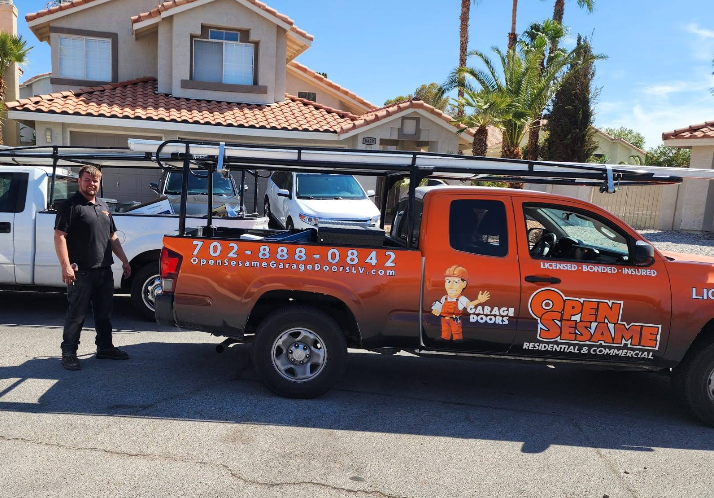
Open Sesame Garage Door is a local garage door repair company serving Las Vegas, Summerlin and nearby Clark County communities.
The company is worth considering when a homeowner wants the automatic opener and the mechanical garage door evaluated together.
That distinction is especially important in cost-related situations because replacing a motor before diagnosing a broken spring or cable can produce unnecessary work.
Open Sesame works with garage door opener repair and replacement as well as common mechanical problems that can affect opener operation.
Garage Door Opener Repair
Diagnosis of motors, gears, trolleys, rails, drive components, controls, remotes, sensors and other opener-related problems.
Spring & Cable Diagnosis
Inspection when the opener appears weak because the garage door has become too heavy, uneven or mechanically difficult to move.
Complete Garage Door Repair
Service for off-track doors, rollers, sensors, noisy operation, tracks and other conditions that can affect automatic opener performance.
Garage Door Opener Repair
When the existing opener remains a practical repair candidate, the failed component can be identified before replacement is recommended.
Garage Door Opener Replacement
When a motor, rail or multiple major components have failed, Open Sesame can help customers compare replacement with continued repair.
Broken Spring Repair
Spring failure should be corrected before assuming a weak opener needs replacement.
Garage Door Cable Repair
Cable issues can make the garage door uneven or mechanically jammed.
Off-Track Garage Door Repair
An opener should not be forced to move a visibly crooked or off-track garage door.
Roller Replacement
Worn rollers can increase resistance and operating noise.
Sensor Repair
Photo-eye and related closing problems can often be separated from motor failure.
Noisy Garage Door Repair
Grinding, squeaking, popping and rattling should be traced to the actual component before expensive equipment is replaced.
Garage Door Tune-Ups
Maintenance can help identify mechanical resistance and opener strain before a complete failure.
For Homeowners
Open Sesame can be a helpful local option for homeowners comparing repair with replacement.
For Landlords and Property Managers
A written diagnosis can help document whether a tenant complaint involves the opener, remote, sensor, spring, cable or complete garage door.
For Renters
Renters can report the exact symptoms to the property owner without attempting high-tension repairs.
For Investors
Repair-versus-replacement analysis can help avoid overspending on optional features while still restoring safe operation.
For Local Businesses
Commercial and small-business customers can consider operating frequency and access requirements when choosing between continued repair and replacement.
Contact Open Sesame Garage Door
- Call (702) 888-0842.
- Request a garage door opener diagnosis .
- Review garage door opener repair options .
- View Open Sesame Garage Door on Google Maps .
- Visit Open Sesame Garage Door in Las Vegas .
Garage Door Opener Repair and Replacement Service Areas
Open Sesame Garage Door serves Las Vegas, Summerlin and nearby Clark County communities.
The locations below describe service coverage and do not imply that the company maintains a separate office in every neighborhood.
Different properties can justify different opener decisions.
A Summerlin home with living space above the garage may prioritize quieter belt-drive operation.
A Sun City Summerlin homeowner may have an older opener whose replacement parts are becoming difficult to obtain.
A Centennial Hills household with several drivers may place more daily cycles on the opener.
A Spring Valley rental property may prioritize simple, reliable controls.
A home in The Lakes or Desert Shores may have a newer garage door connected to an older opener installed by a previous owner.
The repair or replacement decision should follow the actual equipment and its condition rather than the neighborhood name.
Open Sesame Garage Door — Las Vegas Location
Open Sesame Garage Door is located at 7865 Bluewater Dr, Las Vegas, NV 89128 and serves Las Vegas, Summerlin and nearby Clark County communities.
Open Sesame Garage Door
7865 Bluewater Dr
Las Vegas, NV 89128
Phone: (702) 888-0842
Garage Door Opener Safety and Consumer Authority Resources
Frequently Asked Questions About Garage Door Opener Repair Cost in Las Vegas
How much does garage door opener repair cost in Las Vegas?
The cost depends on what failed. Remote, control, sensor or simple trolley problems generally involve a different level of parts and labor than a failed gear, belt, sprocket, motor, rail or logic component. An accurate price should follow diagnosis because a broken garage door spring or cable can also make a working opener appear defective.
How much does garage door opener replacement cost in Las Vegas?
Replacement cost varies with the opener type, motor and drive system, installation requirements, rail, controls, remotes, keypad, battery backup, smart features, removal of existing equipment and labor. Ask for a written quote showing exactly what is included rather than comparing equipment prices alone.
Is it cheaper to repair or replace a garage door opener?
Repair is often more economical when one readily replaceable component has failed and the rest of the opener remains in good condition. Replacement may provide better value when the opener is older, parts are obsolete, several major components have failed or the repair cost approaches the cost of an appropriate new system.
Can a broken garage door spring make me think the opener is broken?
Yes. The spring system provides much of the lifting assistance for the garage door. When a spring breaks, the door can become extremely heavy. The opener may run, strain or lift the door only a few inches even though the motor itself is not the original problem.
Why does my garage door opener run without opening the door?
Common causes include a disconnected trolley, stripped opener gear, damaged belt or chain system, broken spring, loose or snapped cable, off-track garage door or another condition that makes the door too heavy or jammed to move normally.
Can I reconnect the garage door opener trolley myself?
Follow the manufacturer's instructions only if the garage door is mechanically stable and properly balanced. Do not reconnect or manually operate the system if you see a broken spring, loose cable, off-track roller or severely crooked garage door.
Can an opener motor be damaged by trying to lift a heavy garage door?
Repeatedly operating an opener against an abnormally heavy or jammed garage door can place unnecessary load on the motor and drive system. If the door opens only a few inches, becomes unusually heavy or the opener sounds strained, stop repeated operation and have the spring and mechanical door system checked.
Is same-day garage door opener repair available in Las Vegas?
Open Sesame Garage Door offers same-day garage door service options in Las Vegas and Summerlin. Technician and parts availability can vary, so call (702) 888-0842 to ask about current scheduling for your specific opener problem.
Related Garage Door Articles
Need Garage Door Opener Repair or Replacement in Las Vegas?
If your garage door opener runs without moving the door, grinds, hums, reverses unexpectedly, has stopped responding or appears to be struggling with a heavy garage door, the first step is identifying whether the opener itself has failed or whether a spring, cable, roller, track or balance problem is creating the symptom.
Call Open Sesame Garage Door at (702) 888-0842 for garage door opener repair in Las Vegas, Summerlin and nearby Clark County communities.
Safety reminder: Do not wind torsion springs, adjust cable drums, reconnect loaded cables, force an off-track garage door or repeatedly operate an opener that is straining against a heavy or jammed door.