


Garage Door Cable Snapped? What to Do Before You Touch the Door
Quick Answer: What Should You Do if a Garage Door Cable Snaps?
If a garage door cable snaps, stop operating the door and keep people, pets, and vehicles away from it. Do not reconnect the cable, loosen the cable drum, remove a bottom bracket, or force a crooked door. A snapped cable can leave the door uneven or unstable because cables work with the spring system to control garage door weight.
What Does It Mean When a Garage Door Cable Snaps?
A snapped garage door cable means part of the system that helps lift and control the garage door is no longer functioning as designed. On many residential garage doors, steel lift cables connect the lower portion of the door to cable drums associated with the spring and torsion-shaft system. Those cables help transfer spring force so both sides of the garage door move together.
When a lift cable breaks, one side of the garage door can suddenly lose its normal lifting support. The opposite cable may still be connected. The spring system may still contain stored mechanical energy. The door may remain partly supported by tracks, rollers, the opener, or the remaining cable.
That combination is why a snapped cable should not be treated like a broken shoelace that simply needs to be tied back together.
Depending on when the cable fails, the garage door may become crooked, jam partway through the tracks, refuse to open, drop unevenly, or remain suspended in a position where its weight is no longer distributed normally.
A homeowner may first notice the problem after hearing a metallic snap or bang. In other cases, there is no dramatic sound. The first clue may be a cable hanging beside the track, a door that suddenly rises on one side, or an opener that begins straining.
Sometimes the cable itself has not broken. It may have slipped off a cable drum because another component changed position. A broken spring, crooked door, drum problem, or unusual loss of tension can leave a cable slack even when the cable strands remain intact.
That is why the correct diagnosis is not simply, “I see a loose cable, therefore I need a new cable.” The technician should determine whether the cable broke, came off the drum, became damaged because the door went crooked, or lost tension because another counterbalance component failed.
Snapped or Hanging Garage Door Cable in Las Vegas?
If the door is crooked, suspended, unusually heavy, or showing a loose or broken lift cable, stop operating it. Open Sesame Garage Door Repair Las Vegas can help determine whether the cable, drum, spring system, track, or another component caused the failure.
Garage Door Cable Snapped: What to Do Before You Touch Anything
The first few decisions matter because a cable failure can change how the garage door's weight is supported. The safest approach is to preserve the door's current stability rather than attempting an immediate mechanical fix.
Stop Using the Automatic Garage Door Opener
Do not keep pressing the remote to see whether the opener can pull the door through the problem. If one cable has failed, the opener may pull from the center while the two sides of the door are no longer lifting evenly.
That can make the door twist in the tracks, increase load on rollers, stress the top section, and potentially worsen the cable or drum problem.
Keep People and Pets Away From the Door
A door with an uncertain support condition should be treated as unstable until the problem is understood. Do not let children play near the opening, and do not stand beneath a partly open garage door.
Look at the Door From a Safe Distance
Observe whether the bottom edge is level. Look for a loose or hanging cable, a cable that has fallen off a drum, a roller outside a track, or one side of the door that is higher than the other.
These observations can help a garage door technician understand the condition without requiring you to touch loaded hardware.
Leave a Stable Closed Door Closed
If the garage door is fully closed, resting evenly on the floor, and nothing appears to be falling or hanging dangerously, leaving it closed is generally preferable to repeatedly attempting to open it.
Do Not Reconnect the Cable Yourself
A lift cable is connected to the same mechanical system that manages garage door weight. Reinstalling a cable often requires addressing cable-drum position, spring tension, door alignment, and cable length.
Putting the cable back on without correcting the root cause may leave the door unbalanced or cause the cable to come off again.
How Garage Door Lift Cables Work With Springs and Cable Drums
Garage door cables are easier to understand when viewed as part of the counterbalance system rather than as isolated pieces of wire rope.
On a common torsion-spring system, a torsion shaft runs above the garage door. Springs mounted around or associated with that shaft store mechanical energy. Cable drums are located near the ends of the shaft, and lift cables connect from the lower portions of the garage door to those drums.
As the garage door opens, the spring system helps rotate the shaft and drums. The cables wind onto the grooved drums in a controlled way, lifting the door from both sides.
When the garage door closes, the relationship reverses. The cables unwind in a controlled manner as the springs store energy for the next opening cycle.
Both sides need to remain coordinated.
If one lift cable is shorter, displaced, damaged, or no longer seated correctly in its drum grooves, one side of the garage door may travel differently from the other.
The DASMA sectional garage door terminology guide identifies the cable drum as the grooved drum on the torsion-spring shaft onto which the lifting cable winds as the door opens. That relationship explains why cable and drum problems should be evaluated together.
The Opener Is Not the Cable System
The automatic opener moves a properly functioning door through its cycle, but it does not independently balance the two sides of a garage door after one lift cable fails.
If the opener keeps pulling while one side lacks normal cable support, it can contribute to twisting and binding rather than correcting the problem.
This is one reason the correct immediate response to a snapped cable is to stop using the opener.
Lift Cable vs. Safety Cable: They Are Not the Same Thing
Homeowners commonly use the phrase “garage door cable” for more than one component. Knowing which cable failed changes the significance of the problem.
Garage Door Lift Cables
Lift cables are part of the mechanism that raises and lowers the garage door. On many torsion systems, they attach near the lower corners of the door and wind around cable drums above the opening.
If a lift cable breaks, door movement and balance can change immediately. One side may rise while the other remains lower. The door can become crooked or jammed.
Extension-Spring Safety Cables
Some garage doors use extension springs located along the horizontal track area. A safety cable may run through or alongside an extension spring to help restrain components if a spring fails.
A damaged safety cable is still important, but it is different from the lift cable that directly supports normal door movement.
If you are unsure which cable is hanging or broken, do not begin disconnecting hardware to identify it. Describe where the cable is located and what the garage door is doing.
For example, “a steel cable is hanging beside the left vertical track and the left side of the door is lower” provides useful information without requiring you to handle the system.
12 Signs a Garage Door Lift Cable May Have Snapped or Come Loose
1. A Steel Cable Is Hanging Beside the Track
A visible hanging cable is one of the clearest warning signs. Do not assume it can simply be hooked back into place.
2. One Side of the Garage Door Is Higher
Uneven height strongly suggests that the two sides are no longer lifting together. Cable, drum, track, or roller problems may be involved.
3. The Garage Door Is Crooked in the Opening
A tilted door is a major reason to stop operation. Continued opener use can increase binding in the tracks.
4. The Door Rises on One Side First
One cable may be supporting its side while the opposite side has lost normal lifting force.
5. A Cable Is Off the Drum
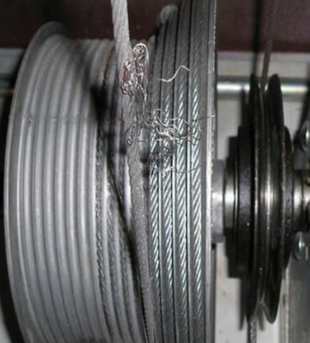
A cable lying loose near the torsion shaft or hanging below the drum may have come out of its grooves. That can happen because of a cable problem or because another component changed the door's balance.
6. The Door Makes a Sudden Metallic Snap
A cable strand failure can produce an abrupt metallic sound, particularly if the cable was under load when it failed.
7. The Opener Suddenly Struggles
The opener may encounter abnormal resistance when the door becomes crooked or loses proper support on one side.
8. The Door Stops Partway
A crooked door can bind in the tracks before completing the opening or closing cycle.
9. Rollers Look Loaded Sideways
Uneven cable support can push rollers against track surfaces in ways they do not normally travel.
10. Loose Cable Strands Are Visible
Frayed wires or broken individual strands are warning signs that the cable is deteriorating even if it has not separated completely.
11. One Corner of the Door Does Not Reach the Floor
Uneven cable length or support can leave one bottom corner higher than the other.
12. The Door Recently Began Reversing or Binding
Cable and alignment problems can sometimes create resistance before a complete failure. If your symptoms are primarily a closing reversal rather than a visibly broken cable, see the guide to garage door closing and reopening problems for sensor, track, and opener-related causes.
Why Can a Garage Door Become Crooked After a Cable Snaps?
A sectional garage door is designed to move with both sides traveling at nearly the same rate. The lift cables are a major part of maintaining that coordinated movement.
When one cable fails, the door can lose normal lifting force on one side. The opposite side may still be connected to its cable and drum, so it tries to move while the failed side lags behind.
The result can be a garage door that looks diagonal within the opening.
Once the door is crooked, the problem becomes more than simply replacing a cable. Rollers can become heavily loaded against one side of the tracks. Hinges can be twisted. The door sections may rack relative to one another. A roller can potentially leave its normal track position.
Continuing to operate the opener in this condition can make the misalignment worse.
Do not try to correct the door by lifting the low side with your hands while someone operates the opener. Do not pull downward on the high side. Do not use clamps, ropes, straps, jacks, or improvised tools to level a suspended door.
The door's weight and the remaining loaded components need to be controlled before the cable system is reset.
Should You Use the Garage Door Opener After a Cable Snaps?
No. Once you know or strongly suspect that a lift cable has failed, repeated opener operation should stop.
The automatic opener applies force near the upper central portion of many residential garage doors. The lift cables, by contrast, help control both sides of the door.
When one cable stops doing its job, centerline opener force does not restore equal support to both sides. It can instead pull the door upward while one side remains lower.
That can increase twisting and track resistance.
The opener may also sound strained because it is now attempting to move a garage door whose mechanical balance has changed significantly.
Repeated Opener Use Can Add Secondary Damage
Depending on the situation, continued operation can place additional stress on the opener arm, top door section, trolley, rail, rollers, hinges, and remaining cable.
The first repair priority is restoring safe mechanical movement and proper cable support. The opener can be tested after the garage door itself is again moving correctly.
Should You Pull the Emergency Release When a Garage Door Cable Breaks?
Not automatically.
Pulling the opener's emergency-release mechanism disconnects the garage door from the automatic opener. It does not repair the cable, balance the door, put the cable back on the drum, or stabilize a crooked door.
If the garage door is fully closed, level, and mechanically stable, the emergency release may simply disconnect the opener from a door that remains supported by the floor.
The situation is very different if the garage door is partly open or hanging unevenly.
In that case, the opener may currently be one of the components helping hold the door's position. Disconnecting it without controlling the door's weight can allow unexpected movement.
The red release cord is not a universal “make the door safe” switch. Its purpose is to disconnect the operator. Whether that is appropriate depends on the mechanical condition of the garage door.
What if Your Car Is Trapped Behind a Garage Door With a Snapped Cable?
A trapped vehicle creates practical urgency, but it does not change the mechanical risks of a cable failure.
If the garage door is closed and one cable has snapped, the temptation is to lift the door manually or keep running the opener until the vehicle can get out.
Before doing anything, look at the door from side to side.
If it is crooked, a cable is hanging, a roller is out of the track, or the door becomes dramatically heavier than normal, do not attempt to force it upward.
A large residential door can be difficult to control when the counterbalance system is not functioning correctly. Even if several people can physically lift it, holding that weight overhead while a vehicle passes underneath creates an additional hazard.
When contacting a garage door company, tell them clearly that a vehicle is trapped behind the door. Then describe:
- Which side has the loose or broken cable.
- Whether the garage door is level.
- Whether the door is fully closed or partly open.
- Whether the opener still moves the door.
- Whether a roller is out of the track.
- Whether you heard a snap or bang when the problem began.
Those details communicate the actual situation without requiring you to move the damaged door.
What if the Garage Door Is Stuck Open After the Cable Snaps?
A garage door stuck open after cable failure deserves particular caution because the door's weight is elevated.
If one cable has failed and the opposite side remains connected, the door can be supported unevenly. The opener may also be holding part of the load.
Do not walk underneath the door unnecessarily.
Keep children and pets out of the garage opening. Avoid parking another vehicle under the suspended door. Do not attempt to remove rollers or loosen track hardware to bring the door down.
The door may need to be secured and its weight controlled before the cable and drum system can be reset.
An open garage door also creates a home-security concern because the garage may no longer be able to secure vehicles, tools, stored property, or an interior entrance to the home.
When requesting service, mention that the door is stuck open and that a cable appears broken or displaced. The technician can then prepare for a situation involving an elevated door rather than a simple closed-door cable replacement.
What if the Garage Door Is Fully Closed When the Cable Breaks?
A fully closed garage door may be in a more stable position because the bottom seal and door weight are resting at the floor rather than suspended above the opening.
That does not mean the cable system should be handled casually.
The spring and opposite cable may still be loaded. A broken cable may be hanging near the track or drum. A bottom fixture may still be attached to loaded counterbalance components.
If the door is closed and level, leave it closed until the cable failure is diagnosed rather than using the opener to see whether it can still lift.
One common mistake is pressing the remote several times because the homeowner wants to determine whether the cable is “really broken.”
If you can already see a separated cable or obvious loose cable beside the track, further testing is unnecessary.
The safer question is not whether the opener can overpower the failure. It is why the cable lost normal support and what other components need inspection before the door operates again.
Garage Door Cable Snapped vs. Cable Came Off the Drum
A hanging garage door cable does not always mean the steel cable physically broke.
Sometimes the cable remains in one piece but loses normal tension and comes out of the grooves in the cable drum.
This can happen when the garage door becomes crooked, a spring fails, a cable stretches or becomes damaged, the door is manually moved under abnormal conditions, or a roller or track problem changes the door's position.
Signs of a Physically Broken Cable
- The cable is visibly separated into two pieces.
- Frayed strands are visible near the break.
- One end hangs loose while the opposite end remains attached.
- The failure occurred with a metallic snap.
Signs a Cable May Have Come Off the Drum
- The cable appears intact but loose.
- Loose loops are visible near the drum.
- The door became crooked before the cable went slack.
- The spring system recently failed or changed position.
Either condition can leave the garage door unsafe to operate.
Do not attempt to wind the cable back around the drum by hand. Correct drum setup depends on cable length, door position, spring state, and equal tension on both sides.
Broken Garage Door Spring vs. Broken Cable: How Can You Tell?
Spring failures and cable failures can produce overlapping symptoms because both are part of the counterbalance system.
A broken torsion spring often makes the entire garage door dramatically heavier and may leave a visible gap in the spring coil above the door.
A broken lift cable more often creates an obvious side-to-side difference. One side may rise while the other stays lower, or a steel cable may visibly hang beside the track.
| Symptom | Broken Cable More Likely | Broken Spring More Likely |
|---|---|---|
| Steel cable visibly hanging | Strong clue | Can occur secondarily after spring failure |
| One side of door much higher | Strong clue | Possible when cable tension changes |
| Visible gap in torsion spring | Not the primary clue | Strong evidence |
| Whole door suddenly very heavy | Possible | Common clue |
| Cable intact but loose on drum | Cable/drum issue possible | Spring failure may have caused tension loss |
| Door twists while moving | Strong cable/alignment clue | Possible secondary symptom |
It is also possible for both problems to exist together. A spring failure can lead to abnormal cable behavior, and a cable failure can place unusual loads on the remaining counterbalance components.
Good diagnosis should inspect both rather than replacing whichever component is easiest to see first.
Why Do Garage Door Cables Snap or Fail?
Garage door cables are wear components that repeatedly carry load as the door opens and closes. Cable failure usually develops from a combination of mechanical use and local damage rather than from one universal cause.
Repeated Operating Cycles
Every opening and closing cycle moves the cable through its operating path. Over time, repeated bending and loading can contribute to fatigue.
Fraying or Broken Individual Strands
A wire-rope cable consists of multiple strands. Damage can begin with a small number of broken wires before progressing to more serious deterioration.
Corrosion
Corrosion can weaken steel cable. Conditions vary by garage, including exposure to moisture, chemicals, stored products, or other environmental factors.
Improper Cable Alignment
If the cable does not track correctly on the drum or rubs another component, localized wear can develop.
Damaged Cable Drums
A damaged groove, loose drum position, or related shaft issue can affect how the cable winds and unwinds.
Door Misalignment
A crooked door can place different loads on each cable and contribute to abnormal wear.
Spring or Counterbalance Problems
Cables do not operate independently from the springs. If the counterbalance system is wrong, cable loading can also become abnormal.
Contact or Abrasion
A cable repeatedly rubbing a bracket, track edge, damaged drum, or other metal component can weaken at the contact point.
Determining why the cable failed matters because simply installing another cable without correcting abnormal alignment or drum problems can lead to repeat failure.
Frayed Garage Door Cable: Warning Signs Before It Snaps
Some garage door cables fail suddenly, but others provide visible warning signs first.
A homeowner who notices broken wire strands, flattening, unusual rust, abrasion, or a cable that no longer follows its normal path should avoid touching the damaged section.
Frayed steel wire can be sharp enough to puncture skin even before the cable's mechanical condition is considered.
Look for These Changes
- Individual steel wires sticking out from the cable.
- A cable that looks thinner in one location.
- Flattened or crushed sections.
- Visible corrosion.
- Dark abrasion marks where the cable rubs another part.
- Uneven cable tracking on the drum.
- A cable that appears looser than the one on the opposite side.
Do not run your fingers along a questionable cable to feel whether it is rough. Inspect visually.
If deterioration is visible, arrange an inspection before a complete break leaves the garage door crooked or unusable.
Open Sesame's dedicated garage door cable replacement in Las Vegas page is the most relevant internal service resource when the cable itself is worn, frayed, or physically broken.
Why You Should Not Remove a Garage Door Bottom Bracket After a Cable Snaps
One of the most important homeowner safety points in cable repair involves the lower fixtures on the garage door.
On many sectional garage doors, the lift cable attaches at or near a bottom fixture. That cable connects the lower part of the door to the spring-and-drum counterbalance system.
Because of that relationship, a bottom fixture may be associated with loaded cable forces when the system is intact or partly intact.
Removing bolts simply because the cable is hanging can unexpectedly release or shift a loaded component.
The same warning applies to cable drums. Set screws and drum position are involved in maintaining cable relationship to the torsion shaft.
Professional cable service should begin by stabilizing the garage door and understanding the condition of both sides of the counterbalance system before those parts are adjusted.
Garage Door Cable Failure Diagnostic Table
| What You See | Possible Cause | Risk | Recommended Response |
|---|---|---|---|
| Cable separated into two pieces | Physical cable failure | Uneven support and unstable movement | Stop operating the door |
| Cable intact but hanging loose | Cable off drum, spring failure, or lost tension | Door may become crooked | Do not reinstall cable yourself |
| One side higher than the other | Cable, drum, roller, or track problem | Door can bind or leave track | Keep area clear and arrange repair |
| Frayed strands visible | Cable wear or abrasion | Potential future break | Avoid touching and schedule inspection |
| Door closed and level, cable broken | Cable failure with door resting on floor | Counterbalance still requires repair | Leave door closed |
| Door partly open and crooked | Loss of support on one side | Elevated unstable door | Do not stand underneath |
| Opener strains after cable failure | Door binding or abnormal load | Secondary opener/door damage | Stop using opener |
| Visible torsion spring gap plus loose cable | Spring failure affecting cable tension | Multiple loaded-system issues | Professional counterbalance diagnosis |
Safe Checks Las Vegas Homeowners Can Make Without Touching the Cable
Useful troubleshooting does not require dismantling the garage door. Several observations can help determine the severity of the problem.
Check Whether the Door Is Level
Look at the bottom edge from several feet away. If one side is noticeably higher, stop operation.
Identify Which Side Has the Cable Problem
Note whether the hanging or broken cable is on the left or right side when viewed from inside the garage.
Look for a Visible Break
Determine whether the cable is physically separated or merely loose.
Look at the Cable Drum From a Distance
You may be able to see whether the cable is still seated on the drum without touching the shaft, spring, or drum.
Inspect the Torsion Spring Visually
If your door uses a torsion spring above the opening, look for an obvious gap in the spring. A broken spring could explain why a cable went slack.
Look for an Off-Track Roller
If a roller is outside the track, do not attempt to push it back while the door is loaded.
Note the Door Position
Tell the repair company whether the garage door is fully closed, fully open, or suspended partway.
Note Whether a Vehicle Is Trapped
This helps describe the urgency without requiring you to move the door.
What You Should Never Do With a Snapped Garage Door Cable
- Reconnect the cable to the bottom bracket yourself.
- Wind the cable back onto the drum by hand.
- Loosen cable-drum set screws.
- Remove a loaded bottom fixture.
- Wind or unwind torsion springs.
- Adjust spring winding cones.
- Force a crooked garage door with the opener.
- Lift the low side while another person operates the opener.
- Stand beneath a suspended garage door.
- Push an off-track roller back into place while the door is unstable.
- Cut the remaining cable to “even out” the door.
- Use rope or straps as a substitute lift cable.
A garage door cable failure should be approached as a counterbalance and alignment problem, not merely a broken-wire problem.
Even when one cable is visibly slack, another cable or spring component can remain loaded. The door itself still has substantial weight.
The safest repair method controls that weight before cable and drum hardware are adjusted.
Can You Temporarily Tie or Clamp a Broken Garage Door Cable?
No improvised tie, clamp, knot, or splice should be treated as a substitute for a properly specified garage door lift cable.
Garage door cables operate through drums and attachment points that require consistent length and secure terminations. An improvised connection may not fit the drum correctly, may alter the cable length, and may fail when the door's weight is applied.
Even if the temporary repair appears to hold while the door is stationary, dynamic loads change as the door begins moving.
The correct repair is to identify the required cable, inspect the associated drum and attachment points, restore equal cable relationship on both sides, and test door balance after the system is reassembled.
Why Is One Garage Door Cable Tight and the Other Loose?
Unequal cable tension means the two sides of the garage door are no longer operating in the same mechanical condition.
The loose side may have come off its drum, the door may be crooked, a spring may have failed, or the cable may have stretched or broken.
The tight side should not automatically be loosened to match the loose side.
Proper cable tension depends on door position, drum indexing, spring condition, cable length, and overall balance.
Adjusting one cable without controlling the rest of the system can move the garage door unexpectedly or create a new imbalance.
Unequal cable condition is a diagnostic clue that the door should stop being operated until the underlying cause is determined.
Why Did My Cable Come Off the Drum After a Spring Broke?
Springs and cables are mechanically connected through the counterbalance system. When normal spring tension changes suddenly, the cable relationship can change as well.
On a torsion system, the cable normally remains seated in drum grooves while the spring-and-shaft system maintains the intended force and door position.
If a torsion spring breaks, the normal balance can disappear. Depending on the position of the garage door, one or both cables may become slack enough to leave their drum grooves.
That does not automatically mean the loose cable itself needs replacement.
The cable should be inspected for damage, but the broken spring may be the primary cause of the loss of tension.
This is another reason cable diagnosis should include the springs, drums, door position, and cable condition rather than treating every loose cable as an isolated failure.
How Does Professional Garage Door Cable Repair Work?
The exact repair depends on whether the cable snapped, frayed, came off the drum, or became loose because another component failed.
A professional repair should begin with stabilization and diagnosis.
1. Determine the Door's Current Support Condition
The technician evaluates whether the door is closed, open, crooked, off track, or suspended unevenly.
2. Inspect Both Lift Cables
The opposite cable matters even when only one appears broken. It may have similar wear, may have been overloaded during the failure, or may still be serviceable.
3. Inspect the Cable Drums
Drum grooves, cable seating, shaft position, and related hardware should be checked before a replacement cable is installed.
4. Inspect the Springs and Counterbalance System
A broken or poorly functioning spring system can cause cable problems. The root cause should be corrected rather than reinstalling the cable into the same abnormal condition.
5. Inspect Bottom Fixtures
Cable attachment points and lower door hardware need to be intact.
6. Install the Correct Cable
The replacement should match the requirements of the door and cable-drum system.
7. Restore Equal Cable Tracking
Both sides should track correctly on their drums so the door rises and lowers evenly.
8. Check Tracks and Rollers
A door that went crooked may have placed abnormal loads on rollers or tracks. Those components should be inspected before normal operation resumes.
9. Test Door Balance
Correct cable installation should restore coordinated movement, but spring balance also needs to be appropriate.
10. Test the Automatic Opener
Once the mechanical door is operating correctly, the opener can be tested under normal load.
Open Sesame provides dedicated garage door cable repair in Las Vegas and garage door cable replacement resources for cable-specific problems.
If One Garage Door Cable Snaps, Should Both Cables Be Replaced?
The answer depends on the actual condition of both cables rather than a universal rule.
On many residential doors, the left and right lift cables have experienced similar operating cycles because they have worked together every time the garage door opened and closed.
If one cable failed from age-related wear, corrosion, or repeated abrasion, the opposite cable may have similar service history.
On the other hand, one cable could fail because of localized damage that did not affect the other side.
A technician should evaluate:
- Visible wear on the remaining cable.
- Frayed or broken strands.
- Corrosion.
- Correct cable length and type.
- Drum condition.
- Whether both cables appear to be the same age and specification.
- Whether the failure overloaded or displaced the remaining cable.
Homeowners should be given the reason for replacing one or both cables rather than being told that one approach is mandatory in every situation.
Can a Snapped Garage Door Cable Damage the Opener?
A cable break does not automatically damage the opener, but continued opener use after the cable failure can place additional stress on it.
The opener expects the garage door to remain reasonably balanced and aligned. If one side loses cable support, the door can twist and bind in the tracks.
The opener then has to pull against resistance that was not present during normal operation.
Potential areas of additional stress can include the opener arm, top door section, trolley, rail, drive system, and motor.
That does not mean every cable failure requires opener repair.
After the cable system is restored and the mechanical door moves correctly, the opener should be tested. If it then performs normally, no additional opener work may be necessary.
This sequence avoids replacing an opener simply because it struggled with a crooked or mechanically compromised garage door.
Can a Snapped Cable Cause an Off-Track Garage Door?
Yes. A broken cable can contribute to an off-track condition when one side of the garage door stops moving in coordination with the other.
As the door tilts, rollers can press sideways against the tracks. Continued movement can increase the misalignment until a roller leaves its intended position.
An off-track condition can also be the original problem that caused the cable to become loose or displaced.
For example, an impact-damaged track may cause a roller to jam, which makes the door crooked, which then changes cable tension.
The sequence matters because cable replacement alone would not correct the damaged track.
If a roller is outside the track, do not force it back into place while the garage door is loaded or suspended. The door should be stabilized before the track, roller, cable, and counterbalance system are corrected.
Can a Cable Break While the Garage Door Is Closed?
Yes. Cable deterioration can reach the point of failure while the door is moving or while the system is at rest, depending on the condition of the cable and forces present.
A homeowner may hear a metallic noise in the garage but see a door that still appears normally closed.
The problem may become obvious only during the next opening attempt.
If the door begins lifting unevenly, stop immediately.
The fact that the door starts moving does not mean the remaining cable can safely carry both sides.
Look for a hanging cable or uneven bottom edge, then leave the door in the safest stable position possible until it can be inspected.
Las Vegas Conditions and Garage Door Cable Wear
Garage door cables operate according to the same mechanical principles throughout the country, but Las Vegas provides a distinct environment in which residential garage systems operate.
The National Weather Service climate information for Las Vegas describes the Las Vegas Valley as a desert climate with abundant sunshine, hot summers, and generally dry conditions.
Those conditions provide useful context for garage-door maintenance without proving why a particular cable failed.
Hot Garage Interiors
Attached and detached garages can become hot during Las Vegas summers. Springs, openers, seals, lubricants, electronics, and steel hardware all operate within that environment.
A snapped cable should still be diagnosed based on its actual condition. It would be inaccurate to assume that temperature alone caused the failure.
Dust and Debris
Fine desert dust can collect around garage door hardware. Routine visual inspection can help homeowners notice damaged cables, dirty tracks, or accumulating debris, but cleaning cannot correct frayed steel strands or cable-drum misalignment.
Frequent Daily Garage Use
Many households use the garage as a primary entrance, which means lift cables repeatedly cycle whenever the door opens and closes.
More operating cycles generally mean more mechanical use across the cable, roller, hinge, spring, and opener systems.
Las Vegas Remains the Primary Local Entity
Open Sesame Garage Door Repair Las Vegas serves homeowners throughout Las Vegas and relevant Las Vegas Valley communities. Summerlin is an important supporting local service area, while Las Vegas, Nevada remains the central geographic focus for cable repair and the rest of this guide.
When Does a Snapped Garage Door Cable Become an Urgent Repair?
A broken cable always deserves attention, but certain conditions create a more immediate safety, access, or property-security concern.
The Garage Door Is Stuck Open
An open garage may expose vehicles and belongings and can leave a direct entrance into the home less secure.
The Door Is Hanging Crooked
Uneven support creates a risk of additional track, roller, or door-section movement.
A Roller Is Out of the Track
The door may no longer be properly guided or supported.
A Vehicle Is Trapped
The access problem may require timely service, but the door should not be forced simply to move the vehicle.
The Remaining Cable Appears Damaged
If both sides show significant deterioration, normal door operation should stop completely.
The Door Cannot Close Evenly
A door that cannot reach a secure closed position may create both mechanical and home-security concerns.
Broken Cable, Crooked Door, or Vehicle Trapped?
Contact Open Sesame Garage Door Repair Las Vegas and describe the exact door position, which cable appears damaged, and whether the door is level or off track.
Questions to Ask Before Hiring a Garage Door Cable Repair Company in Las Vegas
A homeowner does not need to become a cable-and-drum technician, but a clear repair explanation should make sense.
Did the Cable Actually Break or Did It Come Off the Drum?
These are related but different problems and may have different root causes.
Why Did the Cable Lose Tension?
Ask whether the cause appears to be cable wear, spring failure, door misalignment, a drum problem, or another component.
Was the Opposite Cable Inspected?
The other side of the garage door should not be ignored simply because one cable failed visibly.
Were the Cable Drums Checked?
Drum condition and cable tracking affect whether the replacement cable winds correctly.
Is the Door Crooked or Off Track?
If so, the repair should address alignment rather than installing a cable into a still-damaged door system.
Is the Spring System Functioning Correctly?
A spring failure can cause cable tension problems.
Will the Door Be Balance-Tested After Repair?
The final result should be a garage door that moves evenly and is properly counterbalanced.
How Can Contractor Information Be Checked?
Nevada homeowners can use the Nevada State Contractors Board contractor license search when contractor verification is relevant.
Garage Door Cable Repair Red Flags
Cable repair should restore the complete lifting relationship rather than simply hide the visible symptom.
- A cable is put back on the drum without determining why it came off.
- A crooked door is forced straight with the automatic opener.
- The remaining lift cable is never inspected.
- A broken spring is ignored when it caused the cable to lose tension.
- A damaged track or roller is ignored after the door became crooked.
- The door is operated before cable tracking is verified.
- Bottom fixtures are handled without controlling the counterbalance system.
- The opener is replaced before the mechanical door is restored.
- The technician cannot explain whether the cable snapped or simply came off the drum.
- Additional parts are recommended without explaining how they relate to the failure.
Why Consider Open Sesame Garage Door Repair Las Vegas for Cable Problems?
Open Sesame Garage Door Repair Las Vegas is a local garage door repair option serving homeowners and residential property customers throughout Las Vegas and relevant Las Vegas Valley communities.
A snapped cable is a problem where system-level diagnosis matters. The visible cable may be the failed component, but springs, drums, tracks, rollers, bottom fixtures, door alignment, and the automatic opener can all influence what happens after the failure.
Broken Cable Diagnosis
Determining whether the lift cable snapped, frayed, stretched, or came off its drum.
Cable Replacement
Replacing physically damaged lift cables with the correct cable for the door and drum system.
Cable Drum Inspection
Checking cable seating, drum condition, and equal cable tracking.
Door Alignment
Evaluating crooked or uneven doors after one side loses cable support.
Spring and Balance Check
Identifying whether counterbalance problems contributed to cable tension loss.
Las Vegas Residential Service
Cable-related garage door diagnosis for Las Vegas and relevant Las Vegas Valley residential communities.
When calling about a cable problem, describe:
- Whether the cable is broken or merely loose.
- Which side is affected.
- Whether the door is crooked.
- Whether the door is open, closed, or suspended.
- Whether a roller is outside the track.
- Whether a spring appears broken.
- Whether a vehicle is trapped.
- Whether the opener was used after the failure.
These details can help establish the condition before the garage door is inspected.
Open Sesame Garage Door Repair Las Vegas
Las Vegas, NV 89128
Phone: (702) 888-0842
Website:
bestgaragedoorrepairsummerlinnv.com
Garage Door Cable Repair Across Las Vegas
Las Vegas, Nevada is the primary geographic focus for Open Sesame Garage Door Repair Las Vegas.
Clark County and the Las Vegas Valley provide the broader local context. Summerlin is an important supporting service-area entity without changing the primary Las Vegas focus.
Service-area coverage means residential customers may receive garage door service in relevant communities. It does not imply a separate physical office in every neighborhood.
Cable diagnosis remains specific to the actual garage door regardless of neighborhood. Door dimensions, weight, spring configuration, drums, cable length, track condition, and overall alignment determine the appropriate repair.
Can Regular Garage Door Inspection Help Catch Cable Problems Earlier?
Routine visual inspection cannot guarantee that a cable will never fail, but it can help identify deterioration before a complete break.
Homeowners can periodically look at accessible cable sections without touching them.
Warning signs worth noting include fraying, broken individual wires, corrosion, unusual slack, uneven cable appearance from one side to the other, or a cable that does not appear to be tracking normally on its drum.
The garage door's behavior is equally important.
New crooked movement, jerking, scraping, uneven closing, or one side reaching the floor before the other may indicate a problem involving cables, tracks, rollers, drums, or balance.
The goal is not for homeowners to adjust the cable system. It is to recognize when continued operation should stop.
Should You Keep Using a Garage Door With a Frayed but Unbroken Cable?
A visibly frayed lift cable should not be ignored merely because it remains in one piece.
Broken individual strands indicate that the cable has already experienced deterioration.
Continued operation repeatedly loads that damaged cable. The remaining strands must carry force while the cable winds and unwinds during each cycle.
Because it is difficult for a homeowner to determine how much strength remains, arranging inspection before complete failure is the safer approach.
Do not handle the frayed area with bare hands. Small steel wires can be sharp.
If the door is stable and closed, leave it closed rather than deliberately cycling it to see whether the cable survives another opening.
Frequently Asked Questions About Snapped Garage Door Cables
What should I do immediately if my garage door cable snaps?
Stop operating the garage door, keep people away from it, and observe whether the door is crooked or unstable. Do not reconnect the cable, adjust the drum, remove a bottom bracket, or force the opener. Leave a stable closed door closed until the system can be inspected.
Can I open my garage door if one cable is broken?
You should not force a garage door open when one lift cable is broken. The door can become uneven, heavy, or unstable because the two sides are no longer receiving normal support. A crooked or off-track door should remain untouched until professionally stabilized.
Why is my garage door crooked after the cable broke?
One side may still be supported by its lift cable while the broken side is not. That unequal support can cause the garage door to tilt, bind in the tracks, or place rollers under abnormal sideways load. Stop using the opener if the door is visibly crooked.
Can I put a garage door cable back on the drum myself?
Reinstalling a cable requires correct door position, drum indexing, cable length, spring condition, and equal tension on both sides. Do not loosen cable-drum hardware or wind a cable back onto a loaded system as a homeowner repair.
Why did my garage door cable come off instead of breaking?
A cable can come off its drum when normal tension changes because of a broken spring, crooked door, drum issue, off-track condition, or another mechanical problem. The cable should be inspected, but the root cause may be elsewhere in the counterbalance system.
Should both garage door cables be replaced if one snaps?
Not automatically. The opposite cable should be inspected for fraying, corrosion, age-related wear, damage, and correct specification. If both have comparable deterioration, replacing both may be reasonable, but the decision should follow their actual condition.
Can a broken garage door spring make a cable go loose?
Yes. Springs and cables operate as part of the same counterbalance system. When a spring fails, normal cable tension can change and a cable may become slack or leave its drum even if the cable itself did not initially break.
Can a broken cable damage my garage door opener?
A broken cable does not necessarily damage the opener, but continued opener use can make a crooked door bind and place additional load on the opener. Stop using the opener and have the mechanical door repaired before evaluating opener performance.
Is a frayed garage door cable dangerous even if it has not snapped?
A visibly frayed cable is a warning sign of deterioration. Broken wire strands reduce the cable's intact structure and can also be sharp. Avoid touching the frayed area and arrange inspection before continuing regular door operation.
Who can I call for a snapped garage door cable in Las Vegas?
Open Sesame Garage Door Repair Las Vegas provides residential garage door cable diagnosis and repair in Las Vegas and relevant Las Vegas Valley communities. Call (702) 888-0842 to describe the broken cable, door position, and current condition.
Open Sesame Garage Door Repair Las Vegas on Google Maps
View Open Sesame Garage Door Repair Las Vegas on Google Maps
Related Garage Door Cable and Safety Topics
Homeowners researching a snapped cable may also encounter related symptoms that deserve their own diagnosis:
- Garage door cable came off the drum.
- Garage door is crooked or lifting unevenly.
- Garage door roller came out of the track.
- Garage door spring broke and cables became loose.
- Garage door opens only a few inches.
- Garage door is stuck halfway.
- Garage door closes and then opens again.
- Garage door opener strains after a mechanical failure.
- Garage door cable is frayed but not yet broken.
- Garage door is stuck open with a vehicle or property exposed.
These symptoms can overlap because springs, cables, drums, tracks, rollers, and the opener operate as one connected garage door system. The repair should follow the actual failure rather than assuming every loose cable requires the same parts.
Garage Door Cable Snapped in Las Vegas?
If a lift cable has snapped, is hanging loose, or has left the cable drum, avoid operating the garage door until the door's support and alignment are understood.
If the garage door is crooked, partly open, off track, unusually heavy, or blocking a vehicle, keep people away from the opening and do not attempt to reconnect loaded cable hardware yourself.
Contact Open Sesame Garage Door Repair Las Vegas to discuss the cable problem and ask about current service availability throughout Las Vegas and the Las Vegas Valley.
This article provides general homeowner information and is not a substitute for inspection of a specific garage door. Garage door springs, lift cables, cable drums, bottom fixtures, tracks, and related counterbalance components can operate under substantial mechanical load. Do not perform loaded-cable or high-tension spring work without appropriate professional training and equipment.