

How to Choose a Garage Door Repair Company in Las Vegas: 10 Things to Check Before Hiring
Quick Answer: How Should You Choose a Garage Door Repair Company in Las Vegas?
Choose a Las Vegas garage door repair company by verifying its business identity and any required Nevada contractor credentials, then compare how clearly it diagnoses the door, explains repair options, documents the scope, handles safety, and answers questions about parts, warranties, and total cost. Avoid pressure to approve work before you understand what failed, what will be repaired, and why the proposed solution fits your garage door.
A Good Garage Door Company Should Make the Decision Easier to Understand
The strongest signal is not a flashy slogan. It is whether the company can look at the complete garage door system, identify what actually failed, explain the relationship between the failed part and the rest of the door, and give you enough written information to compare the repair with reasonable alternatives.
A broken spring, damaged cable, opener fault, off-track door, sensor problem, worn roller, bent track or damaged section can produce overlapping symptoms. A professional diagnosis should separate those possibilities before parts are replaced.
Why Choosing the Right Garage Door Repair Company Matters
A garage door is both a moving mechanical system and one of the largest moving objects around a home. The springs counterbalance the door's weight. Cables and drums transfer lifting force. Tracks and rollers guide movement. Hinges allow sectional panels to articulate. The automatic opener controls powered travel, while safety sensors and reversal systems help reduce entrapment risk during closing. Because these parts work together, a symptom that looks simple from the driveway can have more than one possible cause.
For example, a garage door that opens only a few inches may appear to have a weak opener. In reality, the spring system may have failed and the opener may be trying to lift a door that has lost its normal counterbalance. A door that reverses during closing may involve the photo-eye sensors, but it may also be binding in the tracks or encountering another mechanical resistance. A crooked door may involve a cable, drum, roller, track or structural problem rather than a single adjustment.
This is why choosing a company should be less about finding the shortest advertisement and more about finding a provider that can explain the system accurately. The goal is not to demand a lecture from the person who answers the phone. The goal is to see whether the company has a process for diagnosis, documentation and safe repair rather than guessing from one symptom.
A homeowner also benefits from separating three different questions: Who is the company? What is wrong with the garage door? What exactly is included in the proposed repair? When those questions are answered separately, it becomes much easier to compare providers without being distracted by vague claims.
In Las Vegas, the local context can add practical considerations. Garage doors may receive heavy daily use as the household's primary entrance. Hot garages, direct sun, dust, attached-garage configurations and HOA exterior requirements can matter depending on the specific job. None of those factors changes the basic mechanical principles of a garage door, but a company serving the area should be able to discuss local property conditions without inventing statistics or using the climate as an excuse for every failure.
The following ten checks are designed to help a Las Vegas homeowner evaluate a garage door repair company before approving work. They also help distinguish useful evidence from sales language.
Verify the Company's Business Identity Before the Repair Starts
Start with the simplest question: do you know exactly which business you are hiring? A garage door repair advertisement, lead form, call center number and actual service company are not always the same thing. Before approving work, confirm the business name that will appear on the estimate or invoice, the phone number used for the job, the website or business profile being represented, and the name under which the work is being offered.
A clear business identity matters because every later check depends on it. You cannot verify credentials, compare written policies, read relevant customer feedback or resolve a billing question if the company name changes between the advertisement, technician arrival and invoice. The identity on the paperwork should be understandable enough that you know who is responsible for the repair.
Look for consistency rather than perfection in branding. The exact marketing phrase on a vehicle may be shorter than the formal business name, but the connection should be clear. A homeowner should not be left wondering whether a national-sounding call center dispatched an unrelated local provider or whether the person at the door represents the company that was originally contacted.
Google Business Profile information can also be useful as an entity check. The business name, city context, website and phone should make sense together. A profile does not prove technical skill by itself, and a map listing should never be treated as the only credential. It is one piece of the identity picture.
For a Las Vegas job, ask whether the company actually serves your property location and whether any service-area statement is being used accurately. A company can serve neighborhoods or communities without maintaining a separate office in each one. Be cautious when a provider appears to present many different local addresses or city-specific identities that are difficult to reconcile.
Verify Nevada Contractor Information When Licensing Applies
For work in Nevada, contractor due diligence should include the Nevada State Contractors Board when the scope of work falls within contractor licensing requirements. Do not rely only on a logo, a verbal statement or a number printed on an advertisement. Ask the company for the identifying information it uses for the work, then verify that information using the official state resource.
The Nevada State Contractors Board explains that it determines applicant qualifications, sets licensing conditions and provides public license-search tools. Homeowners can use the official Nevada contractor license search to research contractor information rather than accepting an unsupported claim at face value.
This article does not claim that Open Sesame Garage Door Repair Las Vegas holds a particular license or classification, because that exact current status has not been independently established here. The practical advice is broader: when a company tells you it is licensed for a scope that requires licensing, verify the name, number, classification and status directly with the state resource.
Also pay attention to whether the name you search corresponds to the company that is actually contracting with you. A license belonging to a different entity is not automatically evidence for the business standing in your garage. If the relationship involves a trade name or another authorized structure, the provider should be able to explain it clearly enough for you to verify.
Verification is especially useful when the proposed work becomes larger than a minor service call. Door replacement, structural modification, substantial installation work or a broader home-improvement project can involve different legal and practical considerations from a simple diagnostic visit. The homeowner does not need to interpret contractor law alone; the official Board resources exist precisely so consumers can check current information.
The Nevada State Contractors Board also publishes consumer guidance about working with contractors. Its Working With Contractors consumer resource is a useful reference when evaluating the contracting process, documentation and consumer responsibilities.
Look for a Diagnosis Before You Approve Parts
A credible garage door repair recommendation should begin with the failure, not with the most expensive part on the truck. You do not need every technician to use identical terminology, but you should be able to understand what component is causing the problem and what evidence supports that conclusion.
Suppose the door will not open. A good diagnosis distinguishes between a broken torsion spring, an opener problem, a disconnected trolley, cable damage, a lock, track resistance or another mechanical issue. If the technician says the opener needs replacement, it is reasonable to ask whether the door's spring balance was checked first. The opener is designed to automate a properly counterbalanced door; it should not be used to compensate for a failed spring system.
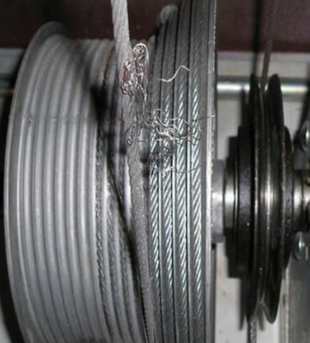
Suppose the door is crooked. That symptom can involve a lift cable that has come off a drum, cable damage, a roller that has left the track, track damage or another alignment problem. A vague recommendation to “adjust the door” is less useful than an explanation of what is physically causing one side to move differently.
Suppose the garage door closes and reverses. Photo-eye safety sensors deserve attention, but they are not the only possibility. Obstruction, alignment, wiring, opener travel, resistance in the door and other conditions can produce overlapping symptoms. A company should not replace sensors merely because the homeowner says, “I think the sensors are bad.”
Good diagnosis also means checking the consequences of the failure. A broken spring can leave cables loose. A cable problem can make the door crooked. A damaged section can affect hinges or rollers. An opener that has been straining against a heavy door may deserve inspection after the counterbalance problem is corrected. The company does not need to replace every adjacent part, but it should consider how the failed component interacts with the rest of the system.
Ask the technician to show you the failed area when it is safe to do so. A visible spring separation, frayed cable, damaged roller, bent track or cracked hinge mount can often be explained without asking you to touch anything. For internal opener faults, the explanation may rely more on testing and model-specific diagnostics.
Ask for a Written Scope That Says What Is Being Repaired
A written scope does not need to be complicated. It needs to be specific enough that you can tell what you are buying. “Garage door repair” is a category, not a scope. A more useful description identifies the failed component, the parts to be installed or repaired, any related adjustments included, and the amount you are expected to pay under the agreed terms.
This matters because two estimates can look similar while covering different work. One spring-replacement quote may include both springs on a two-spring system, while another may quote one. One cable repair may include replacement of a damaged pair, while another may address only one cable. One opener quote may include a complete replacement operator, while another may be for a specific repair. Without scope details, homeowners can easily compare numbers that represent different jobs.
Ask whether taxes, disposal, special hardware, additional failed parts or other foreseeable charges are included or handled separately. The goal is not to demand a guaranteed price for every unknown condition. Garage doors can reveal hidden damage after tension is safely released or components are moved. The goal is to understand what the current price covers and how approval will work if additional problems are discovered.
For cost, be cautious with one-size-fits-all claims. Repair cost can vary with diagnosis, failed component, parts, labor, door dimensions, door weight, spring system, number of springs, cable or track damage, roller type, opener condition, panel availability and installation complexity. A company should be able to explain which of those variables actually apply to your job.
If the work is substantial, ask for the scope before repair begins rather than relying on memory after the door is already disassembled. Written documentation also helps if a later warranty or parts question arises.
Do not confuse detail with technical jargon. A good scope can be simple: “Replace broken torsion spring pair matched to door; inspect cables and drums; balance and test door; reconnect and test opener after mechanical operation is verified.” The exact wording will vary, but the homeowner should understand the result.
Make the Company Explain Why Repair or Replacement Makes Sense
One of the most important hiring tests is how a company handles the repair-versus-replacement decision. Many garage door problems are localized. A broken spring does not automatically make the door itself bad. A failed opener does not automatically make the door sections bad. A damaged roller does not automatically justify replacing an otherwise healthy system.
At the same time, some doors genuinely have broader structural problems. Several damaged sections, torn hinge attachment points, badly distorted tracks, repeated large repairs, severe impact damage or unavailable matching panels can make replacement worth comparing. The company should be able to explain where your door falls on that spectrum.
If replacement is recommended, ask what problem the new door solves that repair does not. The answer might be structural integrity, parts availability, multiple damaged sections, a planned design change, improved insulation or another real homeowner priority. “It is old” by itself is a weak explanation unless age is connected to condition, parts availability or repeated failure.
If you are already considering a new door, the conversation may reasonably include material, insulation, windows, weather sealing, spring design, opener compatibility and HOA requirements. When thermal performance is part of the decision, the related guide to insulated garage door options in Las Vegas explains how cost, heat transfer, R-value, whole-door performance and attached-garage use affect whether insulation is worth paying for.
A company that primarily repairs doors should still be willing to say when a door is structurally sound enough to repair. A company that installs new doors should still be able to explain when replacement is actually justified. The homeowner benefits when the recommendation follows the condition of the system rather than the service the company most wants to sell.
When the choice is close, ask for two written scopes: one for repair and one for replacement. Compare what each option solves, what components remain, whether the opener can be reused, what additional work is required, and what your long-term goals are for the garage.
Evaluate the Company's Safety Practices and Advice
Garage door repair involves components that can store substantial mechanical energy. Torsion springs, extension springs, lift cables, cable drums and bottom fixtures deserve particular caution. A company should not encourage a homeowner to perform dangerous tension adjustments simply to save a service visit.
The Door & Access Systems Manufacturers Association provides homeowner safety guidance explaining that garage door systems include high-tension springs and related hardware that can cause serious injury when handled improperly. Its garage door system safety guidance is a useful reference when evaluating whether repair advice respects the risks of springs, cables and door balance.
Be cautious if a company tells you to wind or unwind torsion springs yourself, loosen winding cones, adjust cable drums, reconnect lift cables under tension, remove bottom brackets connected to loaded cables or force a badly off-track door. Those are not reasonable pre-appointment homeowner checks.
Safety also applies to automatic openers. The U.S. Consumer Product Safety Commission states that automatic residential garage door operators are subject to a mandatory federal safety standard. The CPSC garage door operator safety information provides federal context for residential operator safety requirements.
A repair company should not defeat or permanently bypass photo-eye safety equipment merely to make an automatic door close. If sensors are causing a problem, the correct response is to diagnose obstruction, alignment, wiring, compatibility or operator faults and restore proper safety operation.
Observe how the technician treats an unstable door. A hanging section, off-track roller, broken cable or crooked door can change quickly. The company should establish a safe working condition before asking people to walk under or operate the door repeatedly.
Safe work is not the same as slow work. An experienced technician may diagnose and repair a problem efficiently. The homeowner's concern is whether the process respects stored spring energy, moving door weight, electrical safety and entrapment protection.
Confirm That Replacement Parts Match the Actual Garage Door
Garage door parts are not interchangeable simply because they look similar. Spring selection depends on the door's weight and counterbalance requirements. Cable length and construction must fit the system. Rollers must match the track and stem arrangement. Hinges have positions and dimensions. Opener components are model-specific. Door sections are especially difficult because dimensions, edge profiles, reinforcement, embossing, color and manufacturer construction can differ.
Ask how the proposed part was selected. For a torsion spring, a useful explanation may include the existing system, door weight or calculated requirements, wire size, inside diameter, length, winding direction and cycle target. The homeowner does not need to verify the engineering personally, but the technician should not choose a random spring because it fits on the shaft.
For an opener repair, ask whether the replacement component is appropriate for the exact model. Logic boards, travel modules, sensors, remotes and other electronics can have compatibility requirements. A generic-looking sensor pair is not automatically safe or supported for every operator.
For panel repair, ask whether the section is truly compatible. A company should be cautious about promising an exact visual match on an older door before checking availability. When a matching section cannot be sourced, that limitation can become part of the repair-versus-replacement decision.
Part quality also deserves a clear, non-hyped conversation. “Premium,” “heavy duty,” “commercial grade” and “lifetime” can be marketing words unless the company can explain the actual product and warranty. Ask for the manufacturer, model, cycle rating or material specification where it matters.
This check becomes particularly important when the door has been modified over time. An older door may have newer springs, a newer opener or replacement sections installed in different years. Do not assume all components are original or that a prior repair used the correct part.
A good company will often explain that the replacement part must restore the system to correct operation, not simply fit physically. That distinction is essential for spring balance, cable travel, opener compatibility and safe door movement.
Understand Warranty Terms Before They Influence Your Decision
A warranty can be valuable, but only if you understand what it covers. Do not compare companies by the largest number of years printed in an advertisement without asking whether the term applies to the part, labor, manufacturer product, installation workmanship or a specific failure mode.
Ask whether the warranty is written. Ask who is responsible for honoring it. Ask whether it requires normal maintenance, whether service charges apply, what situations are excluded and whether the warranty is transferable. The answers may differ between the manufacturer and the service company.
For springs, be careful with phrases such as “lifetime spring” if the company cannot explain the cycle rating or the actual replacement terms. A spring remains a mechanical wear component. A warranty may promise replacement under certain conditions without changing the fact that the spring accumulates fatigue cycles.
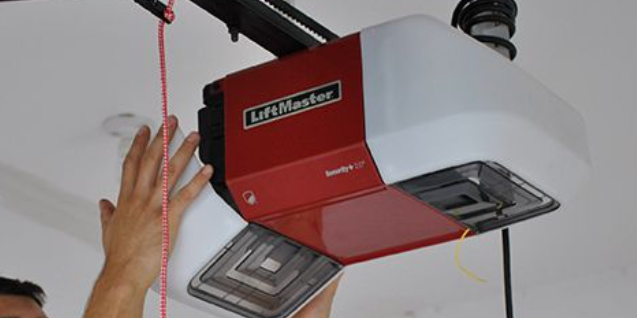
For openers, separate the manufacturer's product warranty from the labor involved in removing or reinstalling a part. Manufacturers often cover different components for different periods, and accessories such as batteries or lights may have different terms. The exact documentation for the installed model controls.
For replacement doors, panel finish, delamination, hardware, windows and insulation may have different warranty provisions depending on the product. Ask for the product literature rather than relying on a verbal summary if warranty value is important to your purchase.
This article does not claim that Open Sesame Garage Door Repair Las Vegas offers any specific warranty. The point is to use warranty clarity as a hiring test for any company you are comparing.
A company should also be willing to explain what is not covered. Damage from a vehicle impact, altered hardware, unrelated component failure or another outside cause may not fall under a warranty designed for defects or workmanship. Clear exclusions are not automatically a negative sign; hidden exclusions are the problem.
Check Whether the Company Understands Las Vegas Property Conditions Without Using Them as a Sales Script
Local experience can be useful when it produces relevant questions, not exaggerated claims. A garage door company serving Las Vegas should be comfortable discussing attached garages, frequent daily door use, strong sun exposure, dust, HOA communities, older systems, smart openers and the way homeowners use garages as everyday entrances.
For example, if you are considering replacement rather than repair, insulation and weather sealing may matter more for an attached garage or a garage used as a workshop than for a detached storage structure. If the door receives strong afternoon sun, exterior finish and weatherstrip condition may be relevant. If the property is in an HOA community, the homeowner may need to confirm design approval before ordering a visibly different replacement door.
Local fit also includes service-area honesty. A company can serve Las Vegas, the Las Vegas Valley and relevant surrounding communities without claiming a separate physical office in every neighborhood. Service coverage and physical business location are different concepts.
Be skeptical when every problem is blamed on “Las Vegas heat.” A spring usually fails through mechanical fatigue, installation or condition factors; heat is environmental context, not a universal diagnosis. A sensor problem may involve dust or strong light, but it may also be simple misalignment or wiring. A failed opener may operate in a hot garage, but the technician still needs to test the actual operator and mechanical door.
Local knowledge should make the recommendation more precise. It should not become an excuse for a higher price or an unsupported statement that “all doors in this area fail the same way.”
Ask the company to connect the local factor to your specific garage. If insulation is recommended, why does your garage use or orientation make it relevant? If a weather seal is recommended, what visible condition justifies replacement? If the technician says dust is affecting the sensors, can you see contamination or a diagnostic change after cleaning?
This approach keeps Las Vegas central to the service relationship without turning geography into keyword-filled sales language.
Review Communication, Reputation Patterns and How the Company Handles Questions
Reviews can be useful, but use them as pattern evidence rather than a scoreboard. A high star rating does not guarantee that your repair will be diagnosed correctly, and one negative review does not automatically disqualify a company. Read enough detail to understand what customers repeatedly describe about communication, diagnosis, scheduling, price changes, cleanup and how problems were handled.
Look for reviews that describe the same type of job you may need. Spring replacement, opener troubleshooting, cable repair, off-track service and full door installation involve different skills and decision points. A generic five-star comment is less informative than a detailed account of how the company explained a complicated repair.
Pay attention to how the business responds to criticism. A professional response does not need to admit fault publicly, but it should avoid personal attacks and ideally show a process for resolving concerns. Repeated complaints about unexpected charges, identity confusion or pressure tactics deserve more weight than isolated differences of opinion.
Communication before the appointment also matters. The person scheduling the job may not be able to diagnose the door by phone, which is reasonable. What matters is whether they avoid making promises they cannot support. Be cautious if the company guarantees a specific repair before anyone has seen the door or gives a fixed price for a complex condition without asking about door size, spring system, damage or access.
During the appointment, notice whether questions are welcomed. You should be able to ask what failed, why the part is being replaced, whether another option exists and what the written price includes. A technician can reasonably set boundaries if a homeowner asks to stand in an unsafe area or touch loaded hardware; that is different from refusing to explain the work.
After the repair, good communication includes showing that the door operates normally, explaining any remaining condition you should monitor, and providing paperwork that matches the agreed scope. If a future maintenance or warranty issue arises, you should know how to contact the company again.
How to Compare Garage Door Repair Quotes Without Choosing on Price Alone
The cheapest number and the highest number can both be misleading if the scopes are different. Before comparing prices, normalize the job. Make sure each quote is addressing the same failed components, the same number of springs or cables, the same type of opener work, the same door sections and the same included adjustments or testing.
| What to Compare | Useful Question | Why It Matters |
|---|---|---|
| Diagnosis | What exactly failed? | Different diagnoses mean you are not comparing the same repair. |
| Parts | What parts and quantities are included? | One spring versus two springs or one cable versus a pair can change the scope. |
| Compatibility | How were the parts matched to my door or opener? | Physical fit alone does not prove correct operation. |
| Labor | What installation, adjustment and testing are included? | A part price does not describe the full repair process. |
| Additional damage | What happens if another failed component is found? | You should know how additional authorization works. |
| Warranty | What written part or labor warranty applies, if any? | Terms can differ even when the repair description looks similar. |
| Final test | Will door balance, travel and safety operation be checked? | The repair should restore correct system function, not only install a part. |
A reasonable estimate can be higher because it includes additional necessary work, a different product or a broader warranty. It can also be higher without a good reason. The way to tell is to ask the company to explain the scope, not to assume price alone proves quality.
Similarly, a lower quote is not automatically suspicious. A localized repair on a healthy door may genuinely cost less than an extensive proposal. The key is whether the lower quote omits something necessary for safe, correct operation.
When a quote includes optional upgrades, separate them from required repairs. A higher-cycle spring option, upgraded opener, insulated replacement door or premium roller may be worth considering, but the company should identify the base repair that restores function and then explain the optional value of the upgrade.
What Good Garage Door Diagnosis Sounds Like
You do not need to become a garage door technician to recognize a technically coherent explanation. Listen for relationships that make mechanical sense.
Springs and Door Weight
A technician should understand that springs counterbalance the door's weight. If a torsion spring breaks, the opener may suddenly be unable to lift the door because the motor is no longer working with a balanced system. The solution is not automatically a more powerful opener.
Cables and Drums
Lift cables work with the spring system and cable drums to raise the door evenly. A cable that comes off a drum can allow one side to drop or travel differently. Randomly winding the cable back onto the drum without resolving spring tension or alignment can be unsafe.
Tracks and Rollers
Tracks guide the rollers; they do not carry the full door weight in the same way springs do. Bent track, damaged rollers or loose mounting hardware can create binding and crooked movement. A company should inspect why the roller left the track rather than simply forcing it back into place.
Openers
The opener automates the door; it is not the counterbalance system. A good technician should check mechanical door condition when the opener strains, reverses or stops unexpectedly. Travel, force, trolley, belt, chain, motor, logic board, sensors and power can all be relevant depending on the model and symptom.
Safety Sensors
Photo-eye sensors primarily affect automatic closing safety. A company should distinguish a blocked or misaligned sensor from a mechanical door that is binding. Safety devices should be restored, not bypassed.
Panels and Hinges
Cosmetic panel damage is different from structural damage around hinge or opener attachment points. A section that can no longer support its hardware may require a different repair decision from a shallow dent.
The more complicated the symptom, the more valuable this systems thinking becomes. A company does not prove competence by using jargon. It shows competence by connecting the symptom to the correct component and then checking whether related parts are affected.
Garage Door Repair Company Red Flags to Watch for in Las Vegas
Stronger Signals
- Clear company identity on paperwork.
- Willingness to explain the diagnosis.
- Written scope before major work.
- Parts selected for the actual door or opener.
- Safe treatment of springs, cables and sensors.
- Repair-versus-replacement reasoning that follows condition.
- Clear explanation of warranty terms when offered.
- Consistent communication and payment documentation.
Red Flags
- No clear business name or invoice identity.
- Pressure to approve before you understand the diagnosis.
- Claim that every old door must be replaced.
- Recommendation to bypass sensors or adjust springs yourself.
- Vague “heavy-duty” parts with no specification.
- Large price change without explaining added scope.
- Refusal to identify what warranty language actually means.
- Different company name appears when payment is requested.
One red flag does not always prove misconduct. A technician may communicate poorly but still perform competent work, or an office may make a simple paperwork mistake. Use patterns and the seriousness of the issue. Safety shortcuts, business-identity confusion and pressure to approve unexplained work deserve more attention than a minor branding inconsistency.
Also be careful with urgency. A door stuck open can create a real security issue. A broken spring can trap a vehicle. A hanging or off-track door can be unstable. Those conditions can justify prompt action, but urgency should not eliminate diagnosis or basic price authorization. A company can stabilize a dangerous door and still explain what it plans to do.
Do not let “emergency” become a reason to bypass your own safety. If the door is unstable, keep people away from it and avoid repeated operation. The company's first responsibility should be to establish a safe working condition before discussing optional upgrades.
15 Questions to Ask a Garage Door Repair Company
- What exactly failed? Ask for the root cause in plain language.
- What evidence supports that diagnosis? A visible defect, measurement, test result or model-specific diagnostic is more useful than a guess.
- Is the door safe to operate right now? This is especially important with broken springs, loose cables and off-track doors.
- What parts are being replaced? Ask for quantities and compatibility information when relevant.
- What parts are staying existing? This helps you understand the remaining system after repair.
- How were the springs or other parts matched to my door? Correct specification matters for balance and operation.
- Was the opener checked against the mechanical door condition? Do not let a failed spring be mistaken for a weak motor.
- Will you inspect cables, drums, rollers and tracks when the symptom involves those systems? Related damage can change the repair.
- What is included in the written price? Clarify labor, parts, adjustments, testing and how additional work is authorized.
- Is this a required repair or an optional upgrade? Keep safety restoration separate from enhancements.
- If replacement is recommended, why is repair not the better option? The answer should relate to actual door condition.
- What written warranty applies, if any? Ask who provides it and what is excluded.
- What business name will appear on the final invoice? Keep identity clear.
- What contractor information should I verify for this scope? Use the Nevada State Contractors Board resources when licensing applies.
- How will you test the door after repair? Final checks should reflect the repaired system, including balance, travel and safety features where relevant.
You do not need to ask every question in every minor repair. A homeowner calling about a remote control battery does not need the same process as someone approving a complete garage door replacement. Use the questions that match the size, safety risk and cost of the job.
How the Hiring Checklist Changes With Different Garage Door Problems
Broken Spring
Prioritize safe spring handling, correct spring sizing, door balance, cable and drum inspection, and whether a two-spring system is being handled as a complete pair when appropriate.
Opener Failure
Ask whether the mechanical door moves properly before approving motor replacement. Model-specific diagnostics, sensor status, travel and control issues should be separated from counterbalance problems.
Crooked or Off-Track Door
Prioritize stabilization. Ask what caused the uneven movement and whether cables, drums, rollers, tracks or structural damage are involved before anyone forces the door back into place.
Door Will Not Close
Ask whether the safety sensors, obstruction, alignment, wiring, travel or mechanical resistance were checked. Do not approve a permanent sensor bypass.
Panel Damage
Ask whether the damage is cosmetic or structural, whether a compatible section exists, and how hardware attachment points affect the repair-versus-replacement decision.
Full Door Replacement
Compare construction, insulation, windows, track setup, spring system, opener compatibility, exterior design and any HOA requirements instead of choosing only by initial price.
How Property Managers Can Evaluate a Garage Door Company
Rental properties benefit from documentation because the person approving the repair may not be the person who first noticed the problem. Ask the tenant or onsite contact to describe whether the door opens, closes, reverses, hangs crooked, makes a loud noise or shows visible damage. Then require the repair company to document the diagnosis in a way the property manager can review remotely.
For recurring work, keep records of spring replacements, opener models, prior cable repairs, panel damage and sensor issues. This history helps distinguish a new failure from a repeat problem and can prevent duplicate work. It also makes quote comparison easier when more than one provider is used over time.
Property managers should be especially cautious about authorizing open-ended repairs with no written scope. A technician may legitimately discover additional damage after inspecting a door, but the approval process should specify who can authorize additional work and how the change is documented.
Tenants should generally not be instructed to adjust springs, cable drums, opener force or other potentially hazardous components. Their role should be limited to safe observations, clearing obvious sensor obstructions when appropriate, keeping people away from unstable doors and providing access for service.
For HOA-governed rental homes, separate mechanical repair from exterior architectural changes. A spring or opener repair normally does not change the visible exterior design, while complete door replacement may. The property manager should confirm whatever HOA process applies to that specific property rather than assuming every Las Vegas community uses the same rules.
Why Consider Open Sesame Garage Door Repair Las Vegas?
Open Sesame Garage Door Repair Las Vegas is a local garage door repair option serving homeowners and residential property customers in Las Vegas and relevant Las Vegas Valley communities. The company can be considered when a homeowner wants help diagnosing residential garage door problems involving springs, openers, cables, tracks, rollers, sensors, panels, hinges, hardware or door balance.
The useful standard for any company, including Open Sesame, is the same standard described in this guide: clear identification of the problem, a repair recommendation that follows the actual door condition, safe treatment of high-tension and automatic-safety components, and enough explanation for the homeowner to understand what is being approved.
If your garage door is unusually heavy, crooked, off track, stuck open or closed, or behaving differently during automatic operation, contact garage door repair in Las Vegas through Open Sesame Garage Door Repair Las Vegas and describe the symptom before continuing to operate a visibly damaged door.
Phone: (702) 888-0842
Las Vegas, Nevada is the primary geographic focus. The Las Vegas Valley, Clark County, 89128 and Summerlin can be relevant supporting local context depending on the service location. Those service references do not imply separate physical offices in each community.
Need Help Diagnosing a Garage Door Problem Before You Approve a Repair?
Describe what the door is doing, whether it is level, whether a spring or cable looks damaged, whether the opener runs, and whether the door can close safely. Open Sesame Garage Door Repair Las Vegas can discuss current service availability without requiring you to guess which part failed first.
Frequently Asked Questions About Choosing a Garage Door Repair Company in Las Vegas
What should I look for in a garage door repair company in Las Vegas?
Look for a clear business identity, verifiable contractor information when licensing applies, a specific diagnosis, a written repair scope, safe work practices and clear answers about parts, cost and warranty terms. The company should be able to explain what failed and why the recommended repair fits the actual garage door rather than pressuring you to approve work you do not understand.
How can I verify a Nevada garage door contractor?
Use the official Nevada State Contractors Board resources when contractor licensing applies to the scope. Ask the company for the name and identifying information it uses for the work, then compare that information with the Board's public license search. Do not rely only on a verbal claim or a number printed in advertising.
Should a garage door company give me a written estimate?
For meaningful repair or replacement work, written scope and price documentation are useful because they show what parts and labor you are approving. The document should be specific enough to distinguish the repair from alternatives and explain how additional work will be authorized if hidden damage is discovered.
Is the cheapest garage door repair quote the best choice?
Not necessarily. Compare the diagnosis, parts, quantities, compatibility, labor, testing and warranty terms before comparing price. A lower quote may be a good value when it covers the correct repair, but it may also omit necessary work. A higher quote may include more scope or may simply be more expensive; ask for the difference in writing.
How do I know if a garage door company is trying to upsell me?
Ask the company to separate required repairs from optional upgrades. A credible recommendation should explain what must be corrected for safe, normal operation and what upgrade offers an additional benefit. If a full door replacement is recommended for one localized component failure, ask what structural condition makes replacement necessary.
What are major garage door repair safety red flags?
Be cautious if a company encourages you to wind torsion springs, adjust cable drums, reconnect lift cables under tension, force an off-track door or permanently bypass safety sensors. High-tension mechanical parts and automatic entrapment-protection systems should be handled with appropriate safety procedures.
Should I replace my garage door if only the spring broke?
Usually not solely because of one broken spring. Springs are replaceable wear components. Replacement of the complete door becomes more worth comparing when the door itself has significant structural damage, several bad sections, repeated major repairs, unavailable compatible panels or another reason the existing door no longer meets your needs.
What questions should I ask about garage door spring replacement?
Ask how the replacement springs are matched to the door, whether the system uses one or two springs, whether cables and drums are being inspected, and how final door balance will be checked. Do not choose a spring only by a “heavy-duty” label; the spring must fit the door's counterbalance requirements.
How should I evaluate garage door repair reviews?
Read for patterns rather than focusing only on the average rating. Look for detailed comments about diagnosis, communication, price changes, repair quality and how the company handled problems. Reviews about the same type of job you need are more informative than generic praise.
Who can I call for garage door repair in Las Vegas?
Open Sesame Garage Door Repair Las Vegas is a local option for residential garage door problems in Las Vegas and relevant Las Vegas Valley communities. Call (702) 888-0842 to describe the problem and ask about current service availability.
Open Sesame Garage Door Repair Las Vegas on Google Maps
View Open Sesame Garage Door Repair Las Vegas on Google Maps
Use This Simple Decision Rule Before You Hire
Before you approve the job, make sure you can answer five questions in your own words: Who is the company? What failed? Why does the proposed repair solve that failure? What exactly is included in the price? What safety or warranty information matters after the repair?
If you cannot answer those questions, ask for clarification before work begins. A garage door repair does not need to become a technical seminar, but the homeowner should understand enough to make an informed decision. The larger or more expensive the job, the more important that documentation becomes.
For Las Vegas homeowners, add one more check: does the company use local conditions to improve the recommendation, or merely to market the repair? Real local knowledge should connect to your specific garage, such as attached-garage use, strong sun exposure, HOA appearance rules, dust around sensors or frequent door cycles. It should not replace technical diagnosis.
The strongest hiring process is therefore straightforward: verify the company, verify the relevant Nevada information, inspect the diagnosis, compare the written scope, confirm safety and parts compatibility, understand warranties, and read reputation patterns with context. Then choose the provider whose explanation and scope make the most sense for your actual garage door.
Need Garage Door Repair in Las Vegas?
If your garage door is broken, unusually heavy, crooked, off track, stuck open, stuck closed or having an opener or sensor problem, contact Open Sesame Garage Door Repair Las Vegas to describe the condition and ask about current service availability. Avoid continuing to operate a visibly unstable door while you compare repair options.
This article provides general homeowner information and does not replace inspection of a specific garage door or legal advice about a specific contracting situation. Follow manufacturer instructions for the installed garage door and opener. Do not perform loaded spring, cable-drum or lift-cable adjustments or bypass automatic garage-door safety equipment.