


How Long Do Garage Door Springs Last in Las Vegas Heat?
Quick Answer: How Long Do Garage Door Springs Last?
Garage door spring lifespan is better measured in operating cycles than simply in years. A 10,000-cycle spring would mathematically reach its rating in about 13.7 years at two cycles per day, 6.8 years at four cycles per day, and about 4.6 years at six cycles per day. Las Vegas heat matters as environmental context, but usage, proper sizing, balance, corrosion and the actual spring system are stronger lifespan indicators.
Think in Cycles, Not Just Years
Every complete opening and closing of the garage door uses another spring cycle. That means a busy Las Vegas household can consume spring life several times faster than a home where the garage door is opened only once or twice each day.
Heat, direct sun, dust and hot garage interiors matter when evaluating the overall system, but there is no responsible formula that says a specific Las Vegas temperature automatically removes a fixed number of spring cycles.
Why Garage Door Spring Lifespan Is Measured in Cycles Instead of Just Years
The most useful way to think about garage door spring lifespan is to think about how many times the spring performs its job. Springs are part of the counterbalance system that offsets much of the garage door's weight. Every time the garage door opens and closes, the spring moves through another operating cycle.
This is why two Las Vegas homeowners can install similar garage door springs during the same month but need replacement years apart.
One household may use the garage only in the morning and evening. Another household may have three drivers, children going in and out, bicycles, deliveries, trash-bin access and repeated use of the garage as the home's primary entrance.
The second garage door can accumulate three or four times as many cycles even though both springs are the same calendar age.
Years still matter because materials are exposed to time, temperature, moisture, dust and other environmental conditions. But calendar age by itself is a poor way to predict when a garage door spring will break.
The more useful combination is:
Cycle Rating
Determine what operating-cycle range the spring was designed for when that information is available.
Daily Usage
Count how frequently your household actually opens and closes the garage door.
Correct Spring Setup
Spring dimensions and torque requirements should match the actual garage door.
Door Weight
The counterbalance system must be appropriate for the actual weight and configuration of the door.
Door Balance
Poor balance can signal a spring problem or incorrect counterbalance configuration.
Physical Condition
Corrosion, damage and other deterioration can matter even when cycle history is unknown.
How Long Does a 10,000-Cycle Garage Door Spring Last?
A simple mathematical example makes cycle ratings easier to understand. Divide the rated cycle count by average daily garage-door cycles and then divide by 365.
These numbers are illustrations rather than promises. A spring rated around 10,000 cycles does not have a counter that guarantees failure precisely on cycle 10,001.
Actual service life can vary according to the spring design, manufacturing variation, correct application, door condition, corrosion, installation, mechanical binding and other factors.
Does Las Vegas Heat Make Garage Door Springs Wear Out Faster?
Las Vegas heat is absolutely relevant when discussing the operating environment of a residential garage door, but it should not be turned into an unsupported claim that a particular outdoor temperature automatically cuts a spring's lifespan by a fixed percentage.
The National Weather Service describes Las Vegas as being located in a broad desert valley with abundant sunshine and very hot summers. That gives legitimate context to garage doors operating in hot garages and under strong direct sun exposure.
But spring fatigue remains strongly connected to mechanical cycling. A garage door that operates eight times every day is accumulating mechanical cycles four times as quickly as one operating twice per day.
The broader Las Vegas environment still matters because the spring is not the only part of the system.
Hot Garage Interiors
Openers, seals, lubricants, electronics and other hardware may all operate in elevated garage temperatures.
Direct Sun Exposure
Door surfaces exposed to intense sun may experience very different conditions than shaded north-facing openings.
Dry Desert Conditions
Las Vegas is dry overall, but that does not make every garage immune to moisture or corrosion.
Dust
Fine dust may accumulate around tracks, rollers, opener equipment and exposed hardware.
Frequent Daily Use
Many households use the garage as a primary entrance, which can increase daily spring cycles.
Attached Garages
Garage use and thermal conditions vary depending on building orientation, insulation and how the space is used.
For authoritative local climate context, homeowners can review the National Weather Service Climate of Las Vegas .
Daily Garage Door Use Can Change Spring Lifespan by Years
Daily usage is one of the easiest spring-lifespan factors for homeowners to underestimate.
Imagine two homes with identical 10,000-cycle springs. Home A opens and closes its garage door twice per day. Home B operates the door eight times.
Home B is using spring cycles four times faster.
It does not matter that the springs were installed on the same date. Mechanical use is dramatically different.
A Typical Two-Cycle Day
One driver leaves in the morning. The door opens and closes. That is one cycle. The driver returns at night and the door opens and closes again. That is the second cycle.
A Busy Six-to-Eight-Cycle Day
One family member leaves early. Another leaves later. Someone opens the garage to move trash cans or bicycles. Two people return at different times. The door is opened again for another errand.
A household can easily accumulate six, eight or even more cycles without thinking of the garage as unusually busy.
Light-Use Garage
2 cycles/day
A 10,000-cycle reference translates mathematically to roughly 13.7 years.
Busy Household Garage
8 cycles/day
The same 10,000-cycle reference translates mathematically to only about 3.4 years.
This is why one homeowner's experience should not be used as a universal lifespan prediction for another home.
Torsion Springs vs. Extension Springs
Residential garage doors commonly use one of two general spring configurations: torsion springs or extension springs.
Torsion Springs
Torsion springs are generally mounted on a shaft above the garage-door opening. As the garage door moves, the spring twists and releases torque through the shaft and cable-drum system.
Lift cables wrap around drums mounted near the ends of the shaft. The complete system helps raise and lower the garage door while keeping the door's weight counterbalanced.
Different torsion springs can be engineered for different doors and different cycle requirements.
Extension Springs
Extension springs stretch and contract as the garage door operates. They are commonly installed along or near the horizontal-track area on systems designed for them.
Because an extension spring can move violently if it breaks, properly configured systems use appropriate safety containment.
The spring type does not eliminate the need for proper design. Homeowners should focus on the spring system required by the actual door, correct application, condition and cycle rating.
Correct Spring Sizing Is Critical to Lifespan and Door Balance
Garage door springs should not be selected simply because they look similar to the old spring.
Wire diameter, inside diameter, spring length, winding direction, required torque, drum setup, garage-door height and door weight can all affect the correct application.
This is why replacing a spring with a random spring that physically fits on the shaft can produce poor results.
If a spring produces too little counterbalance, the garage door can feel unusually heavy. The opener may have to work against more effective door weight than it should.
If the spring creates too much counterbalance, the garage door can behave incorrectly in the opposite direction.
Correct spring engineering is therefore part of both service life and normal garage-door operation.
DASMA Technical Data Sheet 190 discusses torsion-spring service life, including how incorrect application and corrosion can affect spring life. Homeowners interested in the technical background can review DASMA Technical Data Sheet 190 .
Garage Door Weight Directly Affects the Spring System
Springs counterbalance garage-door weight. The counterbalance system therefore has to be appropriate for the actual physical door.
A small single-car door can require a substantially different spring setup from a large double-car insulated door with windows.
Door weight can also change after installation.
Replacing sections, adding reinforcement, installing decorative materials or modifying the door can change the load.
If the door weight changes substantially, the spring system should be evaluated rather than assuming the existing spring remains correct.
Garage Door Balance Can Reveal Spring-System Problems
Proper door balance is one of the most useful clues when evaluating springs.
A healthy garage door should not suddenly feel extraordinarily heavy. It should not race upward uncontrollably, hang crooked or require the opener to strain against the door's full weight.
When the door becomes much heavier than normal, a spring may have broken or the counterbalance system may no longer be doing its job correctly.
If one side moves differently from the other, the problem can involve springs, cables, drums, rollers, tracks or several connected components.
Homeowners should not use poor balance as a reason to begin adjusting winding cones.
Balance is a diagnostic clue. High-tension spring adjustment is a repair procedure requiring appropriate training and tools.
Rust and Corrosion Can Reduce Garage Door Spring Service Life
Las Vegas is dry overall, but that does not mean garage-door springs are guaranteed to remain corrosion-free.
Water intrusion, wet vehicles, irrigation, cleaning chemicals, temporary humidity and other garage conditions can expose hardware to moisture or corrosive substances.
Corrosion matters because pitting or material loss can create weak points in the spring wire.
DASMA's technical spring guidance identifies corrosion as a factor that can reduce spring-cycle life.
Visible Conditions Worth Inspecting
- Widespread surface rust.
- Localized deep pitting.
- Areas where the spring surface is visibly deteriorating.
- Corrosion on nearby shaft or hardware components.
- Unexpected noise combined with visible deterioration.
Do not scrape, grind or manipulate a loaded torsion spring to examine the metal more closely.
Can Maintenance Make Garage Door Springs Last Longer?
Maintenance can support reliable garage-door operation, but it cannot reset spring fatigue.
Once a spring has accumulated thousands of mechanical cycles, applying lubricant does not return the spring to zero cycles.
Appropriate maintenance is still useful because the spring does not operate alone.
Worn rollers, damaged hinges, track binding, cable problems and poor alignment can change how the entire door moves.
A professional inspection can identify these conditions before they become larger problems.
Useful Homeowner Observations
- Listen for new scraping, popping or binding.
- Watch whether the garage door remains level during travel.
- Look for obvious corrosion on springs.
- Visually check accessible lift cables for fraying.
- Notice if the opener suddenly begins straining.
- Keep the garage-door area reasonably clean.
- Follow the manufacturer’s maintenance recommendations.
General homeowner safety and maintenance information is also available from DASMA garage door system safety guidance .
6 Signs Your Garage Door Spring System Needs Attention
1. The Garage Door Suddenly Feels Extremely Heavy
This can indicate the door has lost some or all of its normal spring counterbalance assistance.
2. The Opener Lifts Only a Few Inches
The opener may be trying to lift a garage door that has become far heavier because of a spring failure.
3. You Can See a Gap in the Torsion Spring
A visible gap is a strong indication that the torsion spring has already broken.
4. The Door Begins Moving Unevenly
Uneven travel can involve the spring, cable drums, lift cables, rollers, tracks or several components together.
5. Significant Corrosion Is Visible
Physical deterioration can justify professional inspection even if the spring has not yet broken.
6. The Spring Has Known High Cycle Use
If you know the installation date, approximate rating and daily use, you can estimate when the spring may be approaching its design-life range.
What Happens When a Garage Door Spring Finally Breaks?
A torsion spring may fail suddenly. Some homeowners hear a loud bang from the garage even when nobody appears to be using the door.
The garage door may then become very heavy.
An automatic opener that previously lifted the door easily may lift it only an inch or two before stopping.
On many torsion systems, a broken spring will show a visible separation in the coil.
Once a broken spring is obvious, repeatedly pressing the remote is not useful. The opener is not intended to replace missing spring counterbalance.
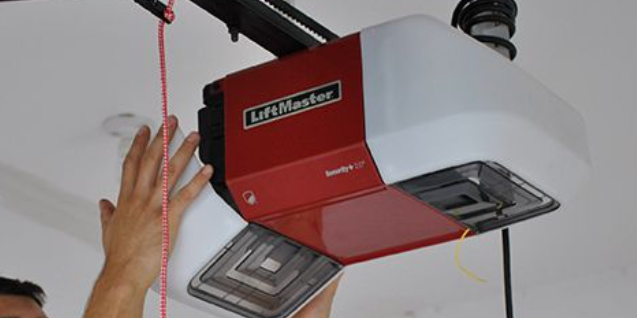
Why Spring Condition Matters to the Garage Door Opener
Garage door springs and the automatic opener perform different jobs.
The spring system counterbalances the door. The opener automates movement.
When the spring system works correctly, the opener is moving a door whose effective weight has been substantially offset.
When a spring breaks, the opener can suddenly encounter far more load.
The motor may sound strained. The door may lift only a few inches. The top garage-door section may flex while the opener pulls upward.
These symptoms can cause a homeowner to believe the opener itself failed. Replacing the opener will not restore missing spring counterbalance.
Mechanical door condition should therefore be evaluated before an opener is blamed for a heavy garage door.
If One Garage Door Spring Breaks, What About the Other Spring?
Some residential garage doors use two torsion springs. If both were installed together, they normally experience essentially the same number of garage-door cycles.
This does not mean both springs must break at the same moment.
Manufacturing variation, corrosion, physical damage and other factors can cause one spring to fail first.
However, the remaining spring has generally accumulated similar mechanical use.
DASMA consumer guidance recommends replacing both springs on a two-spring system when one spring has broken.
The replacement springs still need to be properly selected for the actual garage door.
What Is a High-Cycle Garage Door Spring?
High-cycle springs are designed to provide a greater expected number of operating cycles than a lower-cycle alternative engineered for the same door.
This does not mean the installer simply winds the spring tighter.
Higher cycle life comes from spring design. Wire size, spring diameter, length, torque requirements and door weight must still work together correctly.
Standard-Cycle Approach
Can be appropriate for many ordinary residential doors with moderate daily use.
Higher-Cycle Approach
May provide more practical value for high-use households consuming spring cycles rapidly.
Ask for the actual cycle specification when possible instead of relying on vague terms such as “premium,” “heavy duty,” or “desert spring.”
Which Las Vegas Homes May Benefit Most From Higher-Cycle Springs?
Multiple Drivers
Several departure and arrival schedules can add many door cycles every day.
Garage as Main Entrance
Families using the garage instead of the front door can cycle the system repeatedly.
Work-from-Home Activity
Errands, deliveries, equipment and daytime access may increase garage-door use.
Rental Properties
Actual spring-cycle consumption can vary greatly between different occupants.
Long-Term Homeowners
People planning to remain in the property may value greater expected cycle capacity.
Very Busy Garages
Hobby, workshop or frequent transportation use can accelerate cycle accumulation.
How Las Vegas Homeowners Can Estimate Remaining Garage Door Spring Life
Nobody can look at a spring and tell you the exact number of remaining cycles. However, homeowners can gather useful information.
Step 1 — Find the Installation Date
Review garage-door service invoices, seller documents, maintenance records or previous repair receipts.
Step 2 — Estimate Daily Cycles
Count actual garage-door use for several representative weekdays and a weekend.
Step 3 — Identify the Spring Rating
If previous documentation gives a cycle rating or spring specification, keep that information with your service records.
Step 4 — Inspect Physical Condition
Note visible corrosion, a broken coil or major changes in garage-door movement without touching loaded spring hardware.
Step 5 — Consider Door Modifications
If the physical garage door has changed, confirm the existing spring setup still matches the current door.
Treat the final number as a maintenance-planning estimate rather than an exact failure date.
Should Garage Door Springs Be Replaced Before They Break?
Preventive replacement can make sense when spring history is known and the system appears to be approaching its expected cycle range.
It may also be reasonable when substantial corrosion or other physical deterioration is found.
That does not mean every spring should automatically be replaced at a fixed calendar age.
A lightly used garage with a properly configured spring system presents a different maintenance situation from a high-use door operated eight times per day.
Homeowners who depend on the garage for essential vehicle access may also prefer planned replacement rather than waiting for a failure that leaves the garage door extremely heavy.
Does a Broken Spring Mean You Need a New Garage Door?
Usually no.
A broken spring is generally a counterbalance-system problem. Springs are serviceable components.
If the garage-door panels, tracks, rollers, hinges and overall structure remain suitable, replacing the spring system may restore normal operation without replacing the complete garage door.
Door replacement becomes a different discussion when several panels are structurally damaged, the door has major impact damage or the homeowner wants a substantially different door design.
For that broader decision, read our guide to garage door repair versus replacement .
The two articles answer different questions. This guide addresses when springs may be approaching the end of their useful service life. The repair-versus-replacement guide explains whether the rest of the garage door remains worth preserving when a component fails.
Why Garage Door Cables Can Become Loose After a Spring Breaks
On many torsion systems, springs, cable drums and lift cables work together.
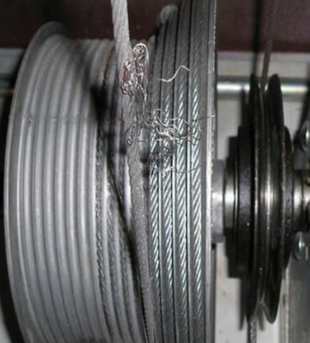
When spring tension disappears, cable tension can also change. A cable may become loose or come out of its normal drum groove.
Homeowners sometimes see the loose cable and assume the cable is the only problem.
The broken spring may actually be the original failure.
Do not rewind a loose cable onto a drum or loosen drum hardware yourself. Loaded cable and spring components can involve substantial mechanical force.
Las Vegas Conditions Worth Considering During Spring Inspection
The spring itself is mechanical, but the garage-door system operates inside a local environment.
| Las Vegas Condition | Why It Is Relevant | What It Does Not Prove |
|---|---|---|
| Very hot summers | Garage components may operate in high-temperature spaces | That heat alone caused a specific spring to fail |
| Strong sunshine | Doors and exterior materials may receive significant sun exposure | A specific cycle reduction for the spring |
| Dry desert climate | Overall operating environment differs from humid climates | That corrosion is impossible |
| Dust | Can accumulate around moving garage hardware | That dust is the cause of every mechanical failure |
| Frequent garage use | More daily operations mean faster accumulation of spring cycles | That every Las Vegas household uses its garage equally |
Garage Door Springs Are Not a DIY Adjustment Point
Garage door springs store mechanical energy. Spring winding and related cable work should not be treated like ordinary household adjustments.
- Wind a torsion spring yourself.
- Unwind a torsion spring yourself.
- Loosen winding-cone set screws.
- Remove spring anchor brackets.
- Adjust cable drums.
- Reconnect lift cables under tension.
- Cut coils from a spring.
- Stretch a spring to make it “stronger.”
- Force a badly crooked garage door.
- Increase opener force to compensate for a broken spring.
Homeowners can safely observe many symptoms from a distance, but spring adjustment and loaded cable work require appropriate tools and technical knowledge.
What a Garage Door Spring Inspection Should Actually Check
A useful spring inspection evaluates the complete counterbalance system instead of looking only at the spring coil.
Spring Configuration
Determine the type, number and apparent suitability of the installed spring system.
Door Balance
Verify that the counterbalance system supports controlled garage-door movement.
Cables & Drums
Check lift cables and drums for wear, slack, displacement or other abnormal conditions.
Tracks & Rollers
Binding components can affect how smoothly the garage door travels.
Door Sections
Structural door problems can change alignment and loading.
Opener Behavior
Evaluate opener performance after determining whether the mechanical door is properly balanced.
Questions to Ask Before Approving Garage Door Spring Replacement
What Spring System Is Installed?
Ask whether the garage door uses torsion or extension springs and whether it has one spring or multiple springs.
How Is the Replacement Spring Matched to the Door?
The recommendation should relate to the actual garage door rather than simply using a spring that looks like the old one.
What Cycle Rating Is Being Proposed?
If spring lifespan is part of the sales discussion, ask for a specific cycle rating when one is available.
Were the Lift Cables and Drums Inspected?
Spring failures can affect cable tension and drum position.
Will Door Balance Be Checked?
A repaired counterbalance system should support normal garage-door movement without relying on the opener to hide an improperly balanced door.
What About the Second Spring?
On a two-spring system, discuss the age, usage and condition of the remaining spring.
How Can Nevada Contractor Information Be Verified?
Nevada homeowners can use the official Nevada State Contractors Board contractor license search when contractor verification is relevant.
Open Sesame Garage Door Repair Las Vegas
Open Sesame Garage Door Repair Las Vegas is a local garage door repair option for Las Vegas homeowners dealing with spring, counterbalance and related garage-door problems.
Spring diagnosis should consider more than whether the coil is broken. Door weight, spring configuration, balance, cable condition, drums, tracks, rollers and opener behavior can all help identify the correct repair.
Broken Spring Diagnosis
Identify whether a spring has failed and how that failure is affecting garage-door weight and movement.
Spring Replacement
Evaluate the spring configuration appropriate for the existing residential garage door.
Door Balance
Check whether the repaired counterbalance system supports controlled operation.
Lift Cables & Drums
Inspect related hardware when spring failure changes cable tension.
Garage Door Opener
Separate true opener failure from excessive load caused by a broken spring.
Las Vegas Valley
Residential garage door repair support for Las Vegas and relevant communities in the Las Vegas Valley.
Garage Door Spring Problem in Las Vegas?
If your garage door has suddenly become extremely heavy, your opener lifts only a few inches, or you can see a gap in the torsion spring, stop repeated opener operation and have the counterbalance system inspected.
Contact Open Sesame Garage Door Repair Las Vegas and ask about current service availability for your spring problem.
Garage Door Spring Service Across the Las Vegas Valley
Las Vegas, Nevada is the primary geographic focus of Open Sesame Garage Door Repair Las Vegas.
The broader regional context includes the Las Vegas Valley and Clark County, with 89128 providing important local business context.
Summerlin may also be relevant as a supporting service-area entity. Service-area references do not imply that the company maintains separate physical locations in each neighborhood.
The basic spring-life principles remain consistent throughout the area: evaluate cycle usage, spring specification, garage-door weight, balance, physical condition and the surrounding counterbalance hardware.
Frequently Asked Questions About Garage Door Spring Lifespan in Las Vegas
How long do garage door springs usually last?
Garage door spring lifespan is better measured in cycles than years. A 10,000-cycle spring would mathematically reach that number in about 6.8 years at four full garage-door cycles per day. Actual service life can vary because of spring design, application, usage, balance, corrosion and mechanical condition.
Does Las Vegas heat make garage door springs break faster?
Las Vegas heat is relevant to the garage-door operating environment, but heat alone cannot accurately predict when a particular spring will break. Cycle count, proper sizing, actual garage-door use, door balance and spring condition are more useful lifespan indicators.
What does a 10,000-cycle garage door spring mean?
It describes an expected or designed service-life reference measured in garage-door operating cycles. One full cycle generally means one complete opening and closing. It does not mean every spring is guaranteed to break on precisely the 10,000th cycle.
How many years is 10,000 garage door cycles?
Mathematically, 10,000 cycles equals about 13.7 years at two cycles per day, 6.8 years at four cycles per day, 4.6 years at six cycles per day and 3.4 years at eight cycles per day.
How do I know if my garage door spring has broken?
A torsion spring may show a visible gap after breaking. The garage door can also become extremely heavy and the automatic opener may lift only a few inches. Stop repeated opener operation if a broken spring is visible.
Should both springs be replaced when one breaks?
On a two-spring system, both springs generally experience comparable operating cycles. DASMA homeowner guidance recommends replacing both springs when one breaks. The replacement springs should still be properly matched to the actual garage door.
Are high-cycle garage door springs worth it?
Higher-cycle springs may provide more practical value for heavily used garage doors because frequent operation consumes spring cycles much more quickly. The appropriate spring still needs to be correctly designed for the garage door.
Does lubrication reset a garage door spring's cycle life?
No. Maintenance can support smooth operation, but it does not erase accumulated metal-fatigue cycles. Follow appropriate manufacturer or industry maintenance recommendations.
Does a broken spring mean I need a new garage door?
Usually not. A broken spring is generally a counterbalance-system repair issue. Complete door replacement is a separate decision based on the condition of the physical garage door and the homeowner's broader goals.
Who can inspect a garage door spring in Las Vegas?
Open Sesame Garage Door Repair Las Vegas provides residential garage door spring and related repair service in Las Vegas and relevant Las Vegas Valley communities. Call (702) 888-0842 and ask about current service availability.
Open Sesame Garage Door Repair Las Vegas on Google Maps
View Open Sesame Garage Door Repair Las Vegas on Google Maps
Is Your Garage Door Spring Near the End of Its Life?
The number of years since installation only tells part of the story. Garage-door cycles, household usage, proper spring sizing, door weight, balance, corrosion and the condition of related hardware all contribute to the spring-lifespan picture.
If your garage door has become unusually heavy, is lifting only a few inches, or has a visible broken spring, stop repeatedly operating the opener.
Contact Open Sesame Garage Door Repair Las Vegas at (702) 888-0842 to describe the spring problem and ask about current garage door service availability in Las Vegas.