


Why Won’t My Garage Door Open? 9 Common Problems Las Vegas Homeowners Face
A garage door that suddenly will not open can trap a vehicle, interrupt your morning, prevent normal access to the home and place unnecessary strain on the garage door opener. For Las Vegas and Summerlin homeowners, the problem may be as simple as a disconnected opener trolley or as serious as a broken torsion spring, failed cable, off-track door or damaged opener drive system. This guide explains the nine common causes, what you can safely check yourself, what you should not touch, and when professional garage door repair is appropriate.
Table of Contents
- Quick Answer: Why Won't My Garage Door Open?
- How a Garage Door Opening System Works
- 9 Common Reasons a Garage Door Won't Open
- 1. Power, Remote or Wall Control Problem
- 2. Garage Door Is Manually Locked
- 3. Emergency Release or Trolley Is Disconnected
- 4. Broken Garage Door Spring
- 5. Cable or Drum Problem
- 6. Off-Track or Mechanically Jammed Door
- 7. Stripped Gear, Belt or Chain Problem
- 8. Opener Motor or Electrical Failure
- 9. Door Is Too Heavy or Binding
- Safe Homeowner Checks
- What You Should Not Touch
- Symptom Comparison Table
- Opener Repair vs. Replacement
- Las Vegas & Summerlin Conditions
- Questions to Ask Before Hiring
- Garage Door Repair Red Flags
- Why Consider Open Sesame?
- Areas Served
- Authority & Safety Resources
- Frequently Asked Questions
- Request Garage Door Repair
Why Won’t My Garage Door Open?
The most common reasons a garage door will not open include a broken spring, disconnected opener trolley, failed opener gear or drive system, loose or broken cable, off-track door, engaged manual lock, opener power problem, motor or electrical failure, or a door that has become too heavy or mechanically jammed.
If the garage door opener runs but the door does not move, do not assume the motor is automatically bad. The opener may be operating normally while the lifting system has failed. A broken torsion spring, disconnected emergency-release trolley, stripped drive gear, broken belt or chain, loose cable or jammed garage door can all allow the opener to make noise while the door remains closed.
A garage door opener is not supposed to carry the full weight of a properly balanced garage door. The spring system provides much of the lifting assistance. When a spring breaks or the door becomes mechanically bound, repeatedly running the opener can place unnecessary strain on the motor, trolley, gear and rail system.
Las Vegas homeowners can safely check power, remotes, the wall switch, a manual lock, visible track obstructions and whether the emergency-release trolley is disconnected. Do not wind springs, adjust cable drums, reconnect tensioned cables or force a crooked or extremely heavy garage door.
Why a Garage Door That Won’t Open Matters in Las Vegas
A garage door that refuses to open is more than an inconvenience when your vehicle is on the wrong side of it.
For a Las Vegas homeowner, a stuck door can delay work, school or appointments. For a Summerlin household that uses the garage as its primary entrance, it can interfere with everyday access to the home. For a landlord or property manager, it may generate an urgent tenant request. For a local business, investor or multi-unit property operator, a failed garage door can interfere with access, security or normal property operations.
The frustrating part is that several very different mechanical and electrical problems can create the same symptom:
The garage door will not open.
Sometimes the opener is completely silent. Sometimes the motor hums. Sometimes the opener rail moves while the garage door stays closed. Sometimes the door lifts two or three inches and stops. Sometimes the door is visibly crooked. Sometimes you hear a loud bang hours before discovering the problem.
Those details matter because they point toward different parts of the system.
A homeowner searching for garage door repair in Las Vegas benefits from understanding one critical distinction:
The garage door and the garage door opener are not the same system.
The garage door consists of the door sections or panels, tracks, rollers, hinges, springs, cables, drums, bearings and other mechanical hardware.
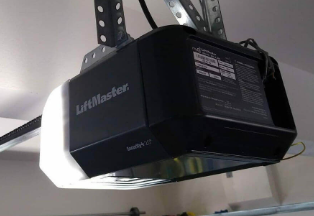
The opener consists of the motor unit, logic board, gear or drive mechanism, rail, trolley or carriage, wall control, remote controls and safety system.
Those two systems work together.
When the door's lifting system is correctly balanced, the opener has a manageable job. When a spring breaks or the door binds, the opener may be asked to move far more weight than normal.
That is why replacing an opener without first inspecting the garage door can be an expensive diagnostic mistake.
How Does a Garage Door Opening System Work?
Before looking at the nine common causes, it helps to understand what happens when you press the remote or wall button.
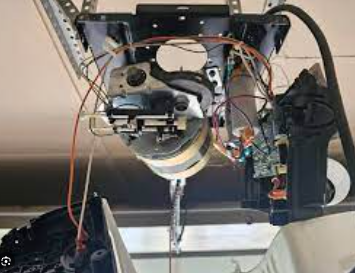
The Garage Door Opener Motor
The electric motor provides the driving force for the opener mechanism.
Depending on the opener design, the motor transfers movement through a gear, sprocket, belt, chain, screw-drive mechanism or wall-mounted shaft system.
The Rail, Trolley and Carriage
On many ceiling-mounted openers, the drive system moves a trolley or carriage along a rail.
The trolley connects to the garage door through an opener arm.
When everything is connected, movement of the trolley pulls or pushes the door.
The Emergency-Release Mechanism
The red emergency-release cord allows the door to be disconnected from the opener trolley.
That feature is useful when electrical power is unavailable or manual door movement is necessary.
However, if the trolley remains disconnected afterward, the opener can run normally without moving the garage door.
The Spring System
The spring system counterbalances the garage door.
A torsion spring usually sits above the garage door on a shaft. Extension springs typically run along the horizontal tracks.
The springs are responsible for providing much of the lifting assistance.
This is one of the most important facts in garage door troubleshooting:
The opener is not designed to be the only thing lifting the door's full weight.
Garage Door Cables and Drums
On many torsion systems, cables attach near the bottom of the door and wind around drums mounted on the torsion shaft.
When the shaft rotates, the cables help lift or lower the door evenly.
Rollers and Tracks
The rollers guide the garage door through the vertical and horizontal tracks.
A bent track, seized roller, obstruction or damaged panel can create resistance that the opener is not designed to overcome indefinitely.
Photo-Eye Sensors
Safety photo eyes are important components of a modern automatic garage door system, but homeowners often blame them for every opener problem.
Misaligned or obstructed photo eyes commonly interfere with closing rather than opening. If the door refuses to open from a fully closed position, start by considering power, controls, the trolley, spring system, cables, tracks and opener drive components.
9 Common Reasons Your Garage Door Won’t Open
The exact failure needs to be diagnosed at the door, but these nine categories explain many residential garage door opening problems in Las Vegas and Summerlin.
The Garage Door Opener Has a Power, Remote or Wall-Control Problem
Start with the simplest possibility. If the opener is completely silent when you press the remote, the problem may be electrical rather than mechanical.
Check whether the opener's ceiling outlet has power. A tripped breaker, unplugged opener, failed outlet or electrical interruption can prevent the opener from operating.
If the wall button works but the remote does not, the remote batteries may be dead or the remote may need to be reprogrammed.
If one remote works and another does not, that is another clue that the door itself is probably not the primary problem.
Some wall consoles also include a lock or vacation feature that disables remote-control operation. Check the manufacturer's control instructions before assuming the opener has failed.
What You May Notice
- No motor sound when the remote is pressed.
- Wall button works but remote does not.
- One remote works while another fails.
- Opener lights are off.
- Breaker or GFCI has tripped.
Safe Initial Check
Confirm electrical power, try the wall control, replace remote batteries and check whether a wall-console lock function has been activated.
The Garage Door Is Manually Locked
A surprisingly simple cause of a garage door that will not open is a manually engaged garage door lock.
Some doors have slide locks or exterior keyed locks that mechanically prevent the door from moving.
If the automatic opener is activated while the door is still locked, the motor may strain against a door that physically cannot move.
Do not repeatedly press the opener button if you suspect the garage door is locked.
What You May Notice
- The opener starts pulling but the door remains tightly closed.
- The door moves slightly and stops.
- A slide lock is visibly engaged in the track.
- The top section or opener arm appears to flex under load.
Safe Initial Check
With the opener stopped, visually inspect the interior manual lock mechanism and confirm it is fully disengaged before trying the opener again.
The Emergency Release or Opener Trolley Is Disconnected
If you hear the opener running and see movement along the opener rail but the garage door stays closed, the opener trolley may be disconnected.
This often happens after someone pulls the red emergency-release cord.
Pulling the emergency release separates the garage door from the opener carriage so the door can be operated manually.
Depending on the opener design, the trolley may need to be reset or re-engaged before automatic operation resumes.
What You May Notice
- The opener motor runs normally.
- The chain or belt appears to move.
- The trolley moves along the rail.
- The garage door itself remains closed.
- The emergency-release cord was recently pulled.
Safe Initial Check
Look at the trolley connection from the floor. If it appears disconnected, consult the opener manufacturer's instructions for the correct re-engagement procedure.
A Garage Door Spring Is Broken
A broken garage door spring is one of the most important mechanical causes of a door that suddenly refuses to open.
On a torsion system, you may see an obvious gap in the spring above the garage door.
The failure may also be preceded by a loud bang from the garage.
When the spring breaks, the opener loses much of the counterbalancing assistance that normally makes the garage door manageable.
The opener motor may still run. The trolley may still pull. The door may even rise several inches.
But the door can now be far too heavy for normal opener operation.
What You May Notice
- A loud snapping or banging sound.
- A visible gap in the torsion spring.
- The garage door opens only a few inches.
- The door suddenly feels extremely heavy.
- The opener sounds strained.
- The top door section flexes as the opener pulls.
What to Do
Stop repeated opener operation and have the spring system inspected.
Open Sesame provides garage door spring replacement in Las Vegas when a broken spring is confirmed.
Homeowners comparing spring repair costs can also read: how much garage door spring replacement costs in Las Vegas in 2026 .
A Garage Door Cable Is Loose, Broken or Off the Drum
Garage door cables transfer lifting force between the spring system and the door.
If a cable snaps, frays severely, becomes loose or comes off a drum, the door may stop opening normally.
In some cases, one side of the garage door begins lifting while the other side stays lower.
The result can be a crooked garage door that binds in the tracks.
What You May Notice
- A cable hanging loosely near the track.
- A cable visibly off the drum.
- The garage door lifts unevenly.
- One side of the door is higher than the other.
- The opener pulls but the door jams.
What You Should Not Do
Do not attempt to put the cable back on the drum or adjust the drum set screws.
Cable drums and springs can be under significant tension.
For confirmed cable problems, Open Sesame provides garage door cable replacement.
The Garage Door Is Off Track, Binding or Mechanically Jammed
An automatic opener cannot reliably overcome a garage door that is physically jammed.
Common mechanical causes include a roller that has left the track, a bent track section, damaged hinges, an impact-damaged panel, an obstruction in the track or a door that has become significantly crooked.
Continuing to run the opener may make the damage worse.
What You May Notice
- A roller outside the track.
- The garage door sits crooked in the opening.
- The door stops at the same physical point.
- A track is visibly bent.
- The door shakes or binds when it tries to rise.
- A panel or hinge is visibly damaged.
Safe Initial Check
From a safe position, inspect the tracks for obvious debris or visible damage.
Do not force an off-track garage door back into place while the system is under load.
The Opener Has a Stripped Gear, Broken Belt or Chain-Drive Problem
If the garage door itself is properly balanced but the opener cannot transfer motor movement to the trolley, the opener's drive mechanism may be the cause.
Chain-drive openers use a chain. Belt-drive openers use a reinforced belt. Some older systems use screw-drive mechanisms.
Inside many opener units, gears and sprockets transfer motor torque into the drive system.
A stripped gear can allow the motor to run or hum while little or no useful movement reaches the trolley.
What You May Notice
- Motor operates but trolley does not move.
- Grinding noise from the opener housing.
- Chain or belt is unusually loose.
- Visible plastic shavings inside or below the opener.
- Motor runs but the rail mechanism does not travel normally.
Repair or Replace?
Some drive-system failures can be repaired by replacing a gear, sprocket, trolley or other component.
Other situations may justify opener replacement, particularly when the unit is older, parts are obsolete or several major components are failing.
The Garage Door Opener Motor, Capacitor or Control Electronics Have Failed
Sometimes the garage door is mechanically healthy and the opener itself has failed.
Possible issues can involve the motor, start capacitor, logic board, power supply, wiring, travel controls or other electrical components.
The exact design depends on the opener brand and model.
What You May Notice
- The opener hums but does not move.
- The opener is completely unresponsive even though the outlet has power.
- The unit begins moving and stops unpredictably.
- The opener smells overheated or behaves abnormally.
- The motor sounds different from normal operation.
A proper diagnosis should still include checking the garage door's balance.
A motor can appear weak when the real problem is that the opener is trying to lift an excessively heavy door.
Open Sesame provides garage door opener repair in Las Vegas for opener-specific problems.
The Garage Door Is Too Heavy, Poorly Balanced or Binding
Sometimes there is no single dramatic broken part visible from the floor, but the door has become difficult to move because the system is poorly balanced or several components are creating resistance.
Worn rollers, dry hinges, damaged bearings, track problems, incorrect spring balance or structural damage can make the door increasingly difficult to move.
The opener may initially compensate for that additional resistance.
Eventually, the door may open slowly, stop halfway, reverse or refuse to move.
What You May Notice
- The opener sounds increasingly strained over time.
- The door is noisy before it finally stops opening.
- The garage door shakes or jerks.
- Movement is slower than it used to be.
- The door feels very heavy when disconnected from the opener.
- Rollers or hinges appear worn.
This type of failure often benefits from a complete garage door inspection rather than replacing the opener first.
Can Garage Door Sensors Stop a Door From Opening?
Homeowners frequently assume the photo-eye sensors are responsible whenever a garage door does not operate correctly.
Safety sensors are essential, but their most common job is protecting the closing cycle.
When the photo eyes are blocked, dirty or misaligned, many openers refuse to close normally or cause the door to reverse.
A garage door that is fully closed and refuses to open is more likely to involve power, controls, the trolley, spring system, cables, tracks, drive mechanism or opener itself.
There are exceptions depending on the opener and system configuration, so sensors can still be visually inspected during troubleshooting.
The important point is not to replace photo-eye sensors automatically when the symptom does not match.
Safe Things a Homeowner Can Check When the Garage Door Won’t Open
You do not need to disassemble the garage door or opener to collect useful troubleshooting information.
Several checks can usually be performed visually or from normal controls without touching high-tension hardware.
1. Confirm the Opener Has Power
Check whether the opener lights work and whether the outlet has power.
If appropriate and safe for your electrical setup, check whether a breaker or GFCI has tripped.
2. Try the Wall Button
If the wall button operates the garage door but the remote does not, the issue may involve the remote, battery, programming or remote-lock setting rather than the entire opener.
3. Replace Remote Batteries
A weak or dead remote battery is a simple problem and worth eliminating early in the troubleshooting process.
4. Check the Manual Lock
Look for a slide lock or other mechanical lock that may still be engaged.
5. Look at the Emergency-Release Trolley
If someone recently pulled the red emergency-release cord, visually inspect whether the opener trolley is connected.
6. Look for a Visible Spring Gap
From a safe distance, inspect the torsion spring above the garage door.
A visible separation can indicate a broken spring.
7. Observe the Cables
Look for obvious slack, fraying or a cable that appears to have come off a drum.
Do not touch or reconnect the cable.
8. Check for Track Obstructions
Look for objects physically blocking the door's rollers or track path.
9. Listen to the Opener
The difference between silence, humming, grinding and normal motor operation can help narrow the diagnosis.
10. Observe How Far the Door Moves
Does it stay completely closed? Move one inch? Open three feet and stop? Lift unevenly?
That information is useful when speaking with a garage door technician.
What Should Homeowners Not Do?
There is an important difference between troubleshooting a garage door and attempting a high-tension mechanical repair.
- Do not wind or unwind torsion springs.
- Do not loosen spring set screws.
- Do not remove spring brackets.
- Do not adjust cable drums.
- Do not reconnect garage door cables under tension.
- Do not force an off-track garage door back into place.
- Do not repeatedly operate a severely crooked door.
- Do not continue running an opener that is obviously straining.
- Do not stand under an unsupported garage door.
- Do not try to lift an extremely heavy double garage door alone.
A garage door can weigh considerably more than it feels during normal balanced operation.
If the spring system fails, that weight becomes much more apparent.
Garage Door Won’t Open: Symptom Comparison Table
| Symptom | Possible Cause | What the Homeowner May Notice | Safe Initial Check | Likely Repair | Urgency |
|---|---|---|---|---|---|
| Motor runs but nothing moves | Disconnected trolley, stripped gear, drive failure | Motor sound without door movement | Observe trolley and rail | Trolley or opener-drive repair | Moderate |
| Opener hums but door stays closed | Motor/capacitor problem, broken spring, heavy door | Humming with little or no movement | Look for spring gap; stop repeated attempts | Door-balance or opener diagnosis | High if door is heavy |
| Door opens only a few inches | Broken spring or excessive resistance | Door starts upward then stops | Look for broken spring | Spring or mechanical repair | High |
| Chain moves but door does not | Disconnected trolley or door connection | Rail movement without door movement | Observe trolley connection | Trolley re-engagement or repair | Moderate |
| Door moves manually but not with opener | Opener or trolley problem | Door itself appears mechanically movable | Check power and trolley | Opener diagnosis | Moderate |
| Door is extremely heavy | Broken or ineffective spring system | Manual lift feels abnormally difficult | Stop lifting attempts | Spring/balance repair | High |
| Door lifts unevenly | Cable, drum, spring or track problem | One side rises faster | Stop if severely crooked | Cable/spring/track repair | High |
| Door starts then reverses | Binding, travel/force issue, resistance | Door changes direction unexpectedly | Look for visible obstruction | Mechanical or opener adjustment | Moderate |
| Grinding noise from opener | Stripped gear or drive problem | Motor runs with grinding sound | Stop repeated operation | Gear/opener repair | Moderate |
| Trolley moves without the door | Emergency release disconnected | Rail movement but stationary door | Inspect trolley connection | Re-engage or repair trolley | Low to Moderate |
| Emergency release is disconnected | Release cord was pulled | Door no longer follows trolley | Follow manufacturer instructions if door is safe | Trolley re-engagement | Low if door is mechanically sound |
| Visible broken spring | Torsion spring failure | Gap in spring above door | Visual inspection only | Spring replacement | High |
| Loose or snapped cable | Cable or spring-system failure | Slack cable or uneven door | Do not touch cable | Cable/spring repair | High |
| Door is off track | Roller, track, cable or impact issue | Roller outside track or crooked door | Stop operation | Off-track door repair | High |
Should You Repair or Replace the Garage Door Opener?
A garage door that will not open does not automatically need a new opener.
Many failures involve repairable components or problems outside the opener entirely.
Garage Door Opener Repair May Make Sense When:
- The emergency-release trolley simply needs to be re-engaged.
- A damaged trolley or carriage can be replaced.
- A gear or sprocket has failed but the rest of the opener is serviceable.
- The chain or belt needs repair or adjustment.
- The wall control or remote is the problem.
- Travel limits require correction.
- A replaceable electrical component has failed.
- The opener is otherwise in good condition and compatible parts remain available.
Opener Replacement May Be Worth Considering When:
- The opener is significantly older and repeated failures are occurring.
- Replacement parts are obsolete or difficult to source.
- The motor has failed and repair is not practical.
- The rail is damaged.
- Several major components need repair at the same time.
- The opener lacks modern safety features.
- The opener is improperly sized for the garage door.
- The repair cost approaches the cost of a suitable replacement system.
The important step is testing the garage door itself before blaming the opener.
If a broken spring has made the door extremely heavy, installing a new opener without repairing the spring does not solve the actual problem.
Similarly, replacing a motor does not fix a garage door cable that has come off its drum.
What Affects Opener Repair Cost?
Avoid expecting one fixed price before the failure is diagnosed.
Cost can depend on:
- The opener brand and model.
- The failed component.
- Availability of replacement parts.
- Belt-drive, chain-drive, screw-drive or wall-mount design.
- Door weight.
- Whether the spring system also requires repair.
- Whether cables or tracks are damaged.
- Accessibility.
- Labor involved.
- Emergency scheduling or service-call policies.
Ask for the diagnosis and a written estimate before approving major opener replacement.
Why Las Vegas and Summerlin Conditions Matter
Garage doors in Southern Nevada operate in a climate that creates different maintenance concerns from cooler or wetter parts of the country.
Las Vegas is known for intense summer heat, abundant sun, dry conditions and periods of dust and wind.
Those conditions do not mean every garage door failure is “caused by heat,” but they affect the environment in which the opener, springs, seals, rollers, electronics and lubricated components operate.
High Summer Garage Temperatures
Attached garages can become very hot during summer, particularly when the garage faces afternoon sun.
Heat can be relevant to electronics, batteries, capacitors, plastic components, lubricants and weather seals.
If an opener begins behaving differently during extreme heat, the correct response is diagnosis rather than assuming one particular electrical component has failed.
Dry Conditions and Lubrication
Garage door rollers, hinges and other moving components should move without excessive friction.
If the door becomes increasingly noisy or difficult to operate, mechanical resistance can make the opener work harder.
Dust and Fine Debris
Desert dust can collect in tracks and around moving components.
The tracks should remain free of objects and heavy debris that could interfere with roller travel.
Frequent Daily Garage Use
Many Las Vegas families use the garage door as the main entrance to the house.
That increases daily operating cycles for springs, rollers and the opener.
Heavy Insulated Garage Doors
Insulated and custom garage doors can be substantially heavier than simple non-insulated steel doors.
Correct spring balance becomes especially important because the opener should not carry that weight by itself.
Summerlin and HOA Communities
Summerlin, Summerlin South, Sun City Summerlin, The Lakes, Desert Shores, Peccole Ranch, Queensridge and Canyon Gate include a wide range of garage door ages, styles and weights.
A heavy custom garage door can require a different repair approach from a standard sectional door.
Open Sesame provides garage door repair in Summerlin in addition to broader Las Vegas service.
Rental Homes and Multi-Unit Properties
For landlords, property managers and real estate investors, a garage door that will not open may require quick coordination because a tenant's vehicle can be trapped.
A useful repair record should identify the failed component and distinguish necessary repairs from optional upgrades.
Security and Access
A garage door stuck closed primarily creates an access problem.
A door stuck open creates both an access and property-security problem.
If the garage door cannot close, is hanging crooked or is partly off track, keep people away from the door and arrange appropriate service rather than repeatedly attempting automatic operation.
Questions to Ask Before Hiring a Garage Door Repair Company
A company should be able to explain why your garage door will not open rather than jumping immediately to the most expensive repair.
Consider asking:
- What exactly failed?
- Is the garage door opener motor actually damaged?
- Is the garage door spring broken?
- Is the garage door properly balanced?
- Is the opener trolley connected?
- Is the emergency-release mechanism engaged correctly?
- Is the opener drive gear stripped?
- Is the belt or chain damaged?
- Are the garage door cables loose, frayed, snapped or off the drum?
- Is the garage door off track?
- Are any rollers seized or outside the track?
- Is the opener being strained by a heavy garage door?
- Can the existing opener be repaired?
- Would opener replacement be more practical?
- What parts are included in the estimate?
- Is labor included?
- Are service-call fees included?
- Are emergency scheduling charges included?
- Is there a parts warranty?
- Is there a labor warranty?
- Can you show me the failed component?
- Will you inspect the springs, cables, rollers, tracks and opener together?
- Will I receive a written estimate before work begins?
Why a Complete Door Inspection Matters
A garage door opener diagnosis should include the mechanical door.
Consider this example:
The homeowner presses the remote. The motor hums. The door moves two inches and stops.
If the technician only looks at the opener, a weak motor might appear to be the problem.
But if the torsion spring above the door is broken, the opener may simply be trying to lift an unbalanced and extremely heavy door.
The spring is the root cause.
The same logic applies to cables and tracks.
Diagnose the system before replacing expensive components.
Garage Door Opener Repair Red Flags
Be cautious when you encounter:
- No clear explanation of why the garage door will not open.
- A claim that the opener must be replaced without testing the door.
- No inspection of the garage door spring system.
- No consideration of door balance.
- No inspection of visible cable or track problems.
- A vague statement that “everything is bad” without evidence.
- Major quote changes without explanation.
- Pushy upselling before the cause is established.
- Claims that several components need replacement without showing the damage.
- No written estimate when requested.
- Unsafe advice about winding springs or handling tensioned cables.
- No explanation of parts and labor.
- No clear local business identity.
- No clear service area.
- No explanation of warranty terms.
- Pressure to approve expensive work before you understand the diagnosis.
Why Consider Open Sesame Garage Door When Your Door Won’t Open?
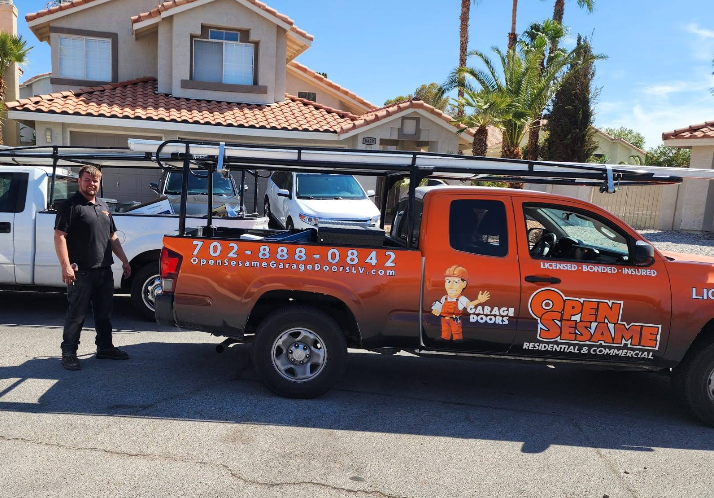
Open Sesame Garage Door is a local garage door repair company serving homeowners, landlords, property managers, investors and local businesses throughout Las Vegas, Summerlin and nearby Clark County communities.
A garage door that will not open can involve several different systems, so having access to a company that handles both mechanical garage door repair and opener repair can simplify diagnosis.
Garage Door Opener Repair
Diagnosis for opener motors, trolley systems, drive gears, belts, chains, controls and related opener failures.
Broken Spring Repair
Torsion spring and other spring-system repairs when the garage door has become too heavy to open normally.
Cable & Off-Track Repair
Service for loose or damaged cables, crooked garage doors and doors that have come out of their normal track path.
Open Sesame also works with roller problems, sensor issues, noisy garage doors, tune-ups, garage door installation and other common residential garage door needs.
The business can be a strong local option for customers who prefer dealing with a Las Vegas garage door repair company rather than relying only on national lead-generation directories or anonymous call-center listings.
For Homeowners
A homeowner can call for diagnosis when a vehicle is trapped, a spring appears broken, the opener runs without moving the door or the garage door becomes crooked or unusually heavy.
For Landlords and Property Managers
Open Sesame can help identify whether a tenant's complaint involves the opener, spring, cable, track or another garage door component.
For Renters
Renters should normally coordinate major mechanical repairs with the property owner or property manager unless their lease or management arrangement says otherwise.
For Real Estate Investors
A clear diagnosis can help distinguish a repairable garage door failure from an older opener or door that may be more practical to replace.
Contact Open Sesame Garage Door
- Call (702) 888-0842.
- Request garage door service online .
- View Open Sesame Garage Door on Google Maps .
- Review garage door opener repair services .
- Review garage door spring replacement .
When Is a Garage Door That Won’t Open an Urgent Repair?
A garage door that will not open is not automatically an emergency, but circumstances can make quick service important.
Examples include:
- A vehicle required for work or an appointment is trapped inside.
- The garage door is stuck halfway open.
- The door is hanging crooked or partly off track.
- A loose cable is visible.
- The spring is visibly broken and the door is too heavy to operate.
- A rental property tenant has lost normal vehicle access.
- The garage is a necessary access point for a local business or managed property.
- The door cannot be safely secured.
For urgent garage door problems, Open Sesame maintains information about emergency garage door repair in Las Vegas .
Availability can change throughout the day, so call (702) 888-0842 to ask about current scheduling.
Garage Door Repair Service Areas
Open Sesame Garage Door serves Las Vegas, Summerlin and nearby Clark County communities.
The following are service areas, not claims of separate physical offices in each neighborhood.
The actual garage door problem matters more than the neighborhood name.
A homeowner in Desert Shores may have a broken torsion spring. A Summerlin South home may have a belt-drive opener with a trolley problem. A Centennial Hills property may have a loose cable. A Spring Valley garage may have worn rollers and track resistance.
The correct repair follows the diagnosis.
Open Sesame Garage Door — Las Vegas
Open Sesame Garage Door is located at 7865 Bluewater Dr, Las Vegas, NV 89128 and serves Las Vegas, Summerlin and nearby Clark County communities.
Open Sesame Garage Door
7865 Bluewater Dr
Las Vegas, NV 89128
Phone: (702) 888-0842
Garage Door Safety and Consumer Authority Resources
Frequently Asked Questions: Garage Door Won’t Open in Las Vegas
Why does my garage door opener run without opening the door?
Common causes include a disconnected trolley, broken garage door spring, stripped opener gear, damaged belt or chain, broken cable, off-track door or a garage door that has become too heavy for the opener to lift. Watch whether the trolley moves and look for a visible spring gap, but do not touch high-tension spring or cable components.
Can a broken garage door spring cause the opener to run without moving the door?
Yes. The spring system supplies much of the lifting assistance for a properly balanced garage door. If a spring breaks, the opener motor may still run while the door stays closed or opens only a few inches because the door has become much heavier.
How can I tell whether the garage door opener trolley is disconnected?
If the opener motor and rail mechanism move but the garage door remains stationary, inspect the trolley from the floor. A recently pulled emergency-release cord is another clue. Follow the opener manufacturer's instructions for re-engagement only if the garage door itself is mechanically safe and properly balanced.
Can I reconnect the garage door opener myself?
Re-engaging a normal emergency-release trolley can be a simple manufacturer-directed procedure when the garage door is mechanically sound. Do not reconnect or operate the opener if the garage door has a broken spring, loose cable, off-track condition, severe crookedness or abnormal weight.
Why does my garage door open only a few inches and stop?
A broken garage door spring is a common cause because the opener begins lifting but cannot safely overcome the door's full weight. Other possibilities include track binding, cable problems, door imbalance or an opener problem. Stop repeated operation and have the system diagnosed.
Can the garage door opener motor burn out from trying to lift a heavy door?
Repeatedly operating an opener against an abnormally heavy or jammed garage door can place unnecessary strain on the motor, gears, trolley and other opener components. The door's spring balance and mechanical movement should be corrected before continued opener operation.
Should I repair or replace my garage door opener?
Repair may make sense when the failure involves a replaceable trolley, gear, sprocket, belt, chain, wall control or other serviceable component. Replacement may be more practical when the opener is older, parts are obsolete, the motor or rail has major damage, repeated repairs are needed or the repair cost approaches the cost of an appropriate new opener.
Are garage door sensors the reason my door will not open?
Safety photo-eye problems more commonly affect closing than opening. A garage door that is fully closed and will not open should also be checked for opener power, a manual lock, disconnected trolley, broken spring, cable problem, track issue or opener-drive failure.
Why is my garage door extremely heavy when I try to lift it?
An unusually heavy garage door can indicate that the spring system is broken or no longer counterbalancing the door correctly. Stop repeated lifting attempts and avoid operating the opener until the spring and lifting system have been inspected.
Is same-day garage door repair available in Las Vegas?
Open Sesame Garage Door offers same-day garage door repair options in Las Vegas and Summerlin. Current scheduling depends on technician and parts availability, so call (702) 888-0842 to ask about service availability for your location and garage door problem.
Related Garage Door Troubleshooting Topics
Garage Door Won’t Open in Las Vegas or Summerlin?
If your garage door will not open, opens only a few inches, feels unusually heavy, has a loose cable, sits crooked or makes the opener strain, stop repeatedly operating the system until the cause is identified.
Call Open Sesame Garage Door at (702) 888-0842 for garage door opener repair and garage door repair in Las Vegas, Summerlin and nearby Clark County communities.
Safety reminder: Do not wind garage door springs, adjust cable drums, reconnect tensioned cables or force a severely crooked or off-track garage door.